

Why Stay Near Local Surf Spots: Real Benefits


TL;DR:
Staying near local surf spots saves time and protects your gear by offering direct access to the ocean. It fosters a community feeling through shared experiences, local knowledge, and organized social events. Surf-specific accommodations improve your experience with practical features and tailored design, making every session more enjoyable.
Staying near local surf spots is the single most effective way to maximize your time in the water and connect with an authentic surf culture. Proximity to surf breaks removes the logistical friction that eats into your day, from long drives to missed tide windows. Travelers who choose surf-specific accommodations near the ocean wake up steps from the water, ready to paddle out when conditions are perfect. Riparsurfschool, based at Praia Areia Branca near Peniche and Ericeira, has built its entire model around this principle since 2001. The result is a surf experience that feels less like a vacation and more like a genuine way of life.
Why stay near local surf spots: the practical case
The most immediate benefit of staying close to surfing beaches is time. Every minute you spend in a car or on a bus is a minute you are not surfing. Beachfront access lets you time your sessions perfectly around tides and swell windows, which change by the hour. A 30-minute drive to the beach means you will miss the best part of a morning glass-off more often than not.
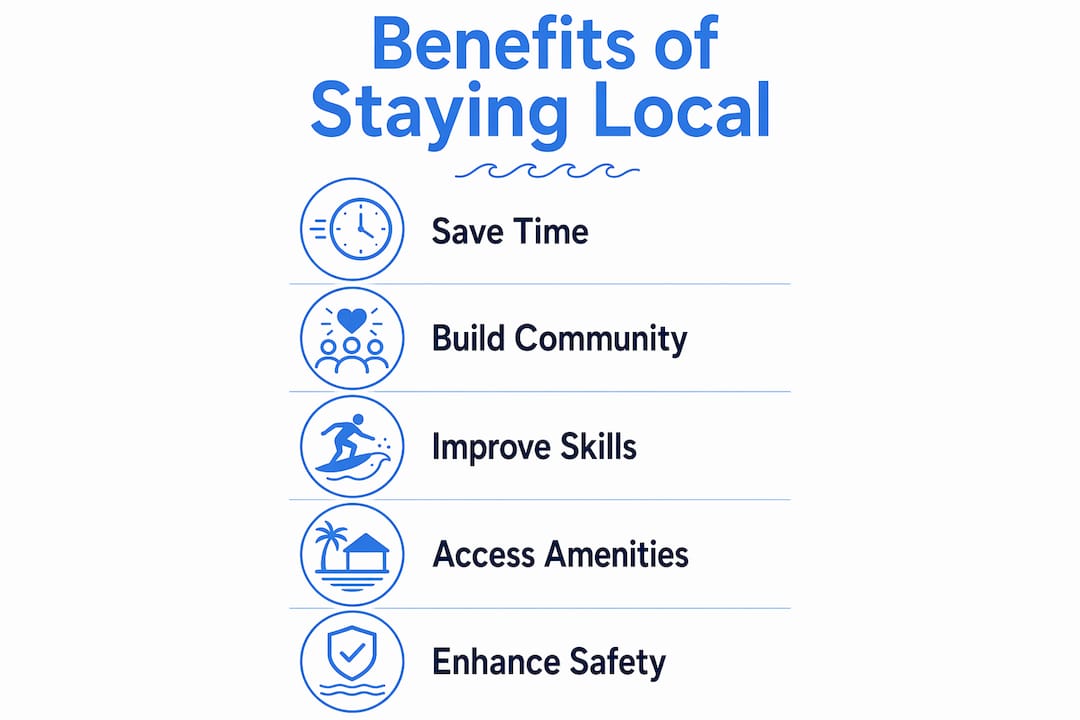
Beyond timing, surf-specific lodging solves gear problems that generic hotels ignore entirely. Wetsuits need to dry. Boards need secure storage. Salt air corrodes equipment left in the wrong conditions. Accommodations built for surfers include outdoor showers, board racks, and drying areas that protect your gear and keep it ready for the next session.
The practical benefits of staying near local surf spots include:
Spontaneous sessions: You can paddle out for an hour between meals without planning a trip.
Tide optimization: You check the surf from your window and go when it is right, not when it is convenient.
Gear care: Board racks, rinse stations, and drying lines protect your equipment from salt and humidity.
Local knowledge: Hosts and instructors share insider tips on breaks, currents, and hidden spots.
Bundled logistics: Surf camps bundle accommodation, lessons, and board hire into one booking, cutting planning stress significantly.
Pro Tip: When booking surf lodging, ask specifically about board storage and wetsuit drying facilities. A place without these features will cost you time and gear lifespan.
How does staying near local surf spots build community?
Surf culture is built on shared experience, and that experience concentrates near the water. When you stay at a surf house or camp, you are surrounded by travelers who share your priorities. Conversations at breakfast turn into sessions at the beach. Sessions turn into friendships that outlast the trip.

Surf houses and camps foster a community of like-minded surfers, turning what could be a solitary vacation into a shared, growth-oriented experience. That social layer is something a standard hotel simply cannot replicate. The common areas, shared meals, and evening debriefs create a rhythm that pulls people together naturally.
Understanding local surf etiquette is another benefit that only comes from proximity. Localism is a cultural practice where local surfers protect their breaks and expect visiting surfers to respect community norms. Staying in a surf-specific lodge puts you in contact with locals and experienced coaches who teach you how to read a lineup, communicate in the water, and earn respect rather than friction.
Community feature | What it provides |
Shared common areas | Daily social interaction with fellow surfers |
Group lessons | Peer learning and mutual encouragement |
Local instructor access | Real-time etiquette coaching and break knowledge |
Evening gatherings | Storytelling, trip planning, and cultural exchange |
Surf camp structure | Organized community events and group sessions |
Riparsurfschool’s setup at Praia Areia Branca reflects this model directly. The small-beach-village location keeps the atmosphere intimate, far from the noise of mass tourism, and the community atmosphere that develops there is a core part of what guests remember most.
Who benefits most from staying near local surf spots?
Every traveler profile gains something different from proximity to surf breaks, and the advantage shifts depending on skill level and travel style.
Beginners gain the most from staying close to safe, accessible beaches. Beginners should prioritize stays with immediate beach access to safe swim and surf zones to simplify logistics and reduce stress. When your first surf lesson is a two-minute walk from your bed, the mental barrier to showing up drops dramatically. Riparsurfschool’s beginner surf lessons are designed around exactly this kind of frictionless access.
Experienced surfers have different needs. They want variety, less crowded lineups, and access to breaks that reward skill. Periphery locations often serve more seasoned, independent travelers who are chasing less-crowded waves and a more adventurous experience. Staying near a hub like Peniche gives experienced surfers quick access to multiple world-class breaks without committing to one spot.
Families prioritize safety and walkability. Families with young children prefer walkable beaches and a village atmosphere with gentle waves ideal for beginners. A surf town with a calm beach, local cafes, and a relaxed pace suits families far better than a resort with a shuttle to the ocean. The family surfing guide from Riparsurfschool covers exactly how to match beach conditions to your family’s comfort level.
Traveler type | Key priority | Best lodging choice |
Beginner | Safe beach access, lessons nearby | Surf camp with integrated instruction |
Experienced surfer | Varied breaks, less crowded lineups | Surf house near multiple breaks |
Family | Walkable beach, gentle waves, village feel | Surf lodge in a small coastal village |
Pro Tip: Match your lodging location to your actual surf goal, not your aspirational one. A beginner who books near a heavy reef break will spend more time watching than surfing.
What design features should surf accommodations have?
The physical design of a surf accommodation either supports your trip or fights against it. Generic beach hotels are built for sunbathers. Surf-specific lodging is built for people who spend hours in saltwater and need their gear ready every morning.
Coastal accommodations designed for surfers include outdoor showers, board storage racks, and drying areas for wetsuits. These features are not luxury extras. They are functional necessities that protect equipment worth hundreds of dollars and save you time every single day. A wetsuit that dries properly lasts significantly longer than one stuffed in a bag overnight.
Durability matters too. Salt air, high humidity, and wind degrade materials quickly. Surf-specific accommodations prioritize materials and construction that hold up in coastal conditions, which means less maintenance disruption during your stay. The best surf lodges also include social common areas, because the community experience is part of what you are paying for.
Key design features to look for in surf-friendly lodging:
Outdoor rinse stations: Essential for washing off salt and sand before entering the building.
Board storage racks: Secure, covered storage that keeps boards safe from sun and impact.
Wetsuit drying lines: Shaded, ventilated areas that dry neoprene without UV damage.
Durable finishes: Tile, treated wood, and rust-resistant hardware that survive salt air.
Social common areas: Decks, shared kitchens, or lounge spaces that encourage interaction.
How to choose the best local surf spot lodging
Choosing the right lodging is a decision that shapes every day of your trip. The wrong choice means long drives, missed waves, and a disconnected experience. The right choice means waking up ready to surf and going to bed with stories worth telling.
Follow these steps to make the right call:
Define your surf goal. Are you learning to surf, chasing specific breaks, or taking a family trip? Your goal determines everything else.
Research local breaks. Identify the beaches near your target destination and check their suitability for your skill level. Portugal’s Atlantic coast, for example, offers everything from gentle beach breaks to powerful reef waves within a short distance.
Check amenity lists carefully. Look for board storage, rinse stations, and drying areas. If a place does not list these, ask directly before booking.
Assess the community atmosphere. Read reviews for mentions of group sessions, shared meals, and social events. These signal a genuine surf community rather than a hotel with a surfboard in the lobby.
Match proximity to your needs. Choosing surf lodging based on your surf skill level and travel style maximizes the value and enjoyment of your trip. A beginner needs to be steps from a gentle beach. An experienced surfer might prefer a base that puts multiple breaks within reach.
Riparsurfschool at Praia Areia Branca checks every box on this list. The location sits between Peniche and Ericeira, two of Portugal’s most celebrated surf zones. The surf lodge experience there combines certified instruction, surf-ready facilities, and a village atmosphere that keeps the focus on surfing and community rather than logistics.
Key Takeaways
Staying near local surf spots delivers the most value when your lodging, skill level, and surf goals are aligned from the start.
Point | Details |
Proximity saves time | Staying steps from the water lets you surf optimal tide windows without planning a commute. |
Gear-ready facilities matter | Board racks, rinse stations, and drying areas protect equipment and simplify daily routines. |
Community is a core benefit | Surf camps and lodges create shared experiences that solo travel and standard hotels cannot replicate. |
Match lodging to skill level | Beginners need safe beach access; experienced surfers benefit from proximity to varied breaks. |
Design signals quality | Surf-specific construction features like durable finishes and social areas indicate a purpose-built stay. |
What 20 years of surf travel taught me about staying local
I have watched travelers book beautiful hotels two towns away from the surf and spend half their trip in a car. The math never works out in their favor. The surfers who get the most out of a trip are almost always the ones who accepted a simpler room in exchange for walking distance to the water.
The mental load reduction is real and significant. When you do not have to plan transportation, pack a bag for the beach, or worry about parking, your brain stays in surf mode. You think about the swell forecast, not the shuttle schedule. That shift in focus changes the quality of your sessions in ways that are hard to quantify but impossible to miss.
The cultural depth surprised me too. Staying in a surf village means eating where locals eat, hearing stories about breaks that are not on any map, and understanding why certain spots are treated with reverence. That knowledge does not come from a guidebook. It comes from the person next to you at the outdoor shower who has been surfing that beach for 15 years. Surf-specific hosts act as local guides, adding cultural depth that no resort can manufacture.
The uncomfortable truth is that most travelers undervalue proximity until they experience it. Once you have woken up, checked the surf from your window, and paddled out within 10 minutes, you will never book a surf trip any other way.
— Fernando
Riparsurfschool: surf stays built around the water
Riparsurfschool has operated at Praia Areia Branca since 2001, and the entire setup reflects the principles covered here. The location sits between Peniche and Ericeira, giving guests access to world-class surf without the crowds of larger resort towns.

Accommodations include surf-ready facilities with board storage, outdoor showers, and a deck area that doubles as a social hub. Certified local instructors run lessons for every skill level, from first-timers to experienced surfers working on specific techniques. The village atmosphere keeps the experience intimate and genuine. You can book a surf camp that bundles lodging and instruction, or reserve surf lessons separately to complement your own accommodation. Either way, the ocean is right there.
FAQ
Why does staying near surf spots improve your sessions?
Staying near surf breaks lets you paddle out during the best tide and swell windows without planning a commute. Spontaneous, well-timed sessions consistently produce better surfing than scheduled trips built around transportation.
What amenities should a surf accommodation include?
The most important features are outdoor rinse stations, board storage racks, and wetsuit drying areas. These protect your gear and keep it ready for daily use without extra effort.
Is staying near local surf spots better for beginners?
Beginners benefit most from immediate access to safe, gentle beach breaks combined with on-site instruction. The reduced logistics let them focus entirely on learning rather than managing travel.
How does surf localism affect visiting surfers?
Localism is a cultural practice where local surfers protect their breaks and expect respect from visitors. Staying in a surf-specific lodge gives you direct access to coaches and locals who teach you the unwritten rules of the lineup.
Are surf camps worth the cost compared to standard hotels?
Surf camps bundle accommodation, lessons, and board hire into one booking, which reduces planning stress and typically delivers more water time per day than a standard hotel stay near the beach.
Recommended
Comments