

How to Choose Kids Surf Gear: A Parent's Guide
- Fernando Antunes

- 23 hours ago
- 8 min read
TL;DR:
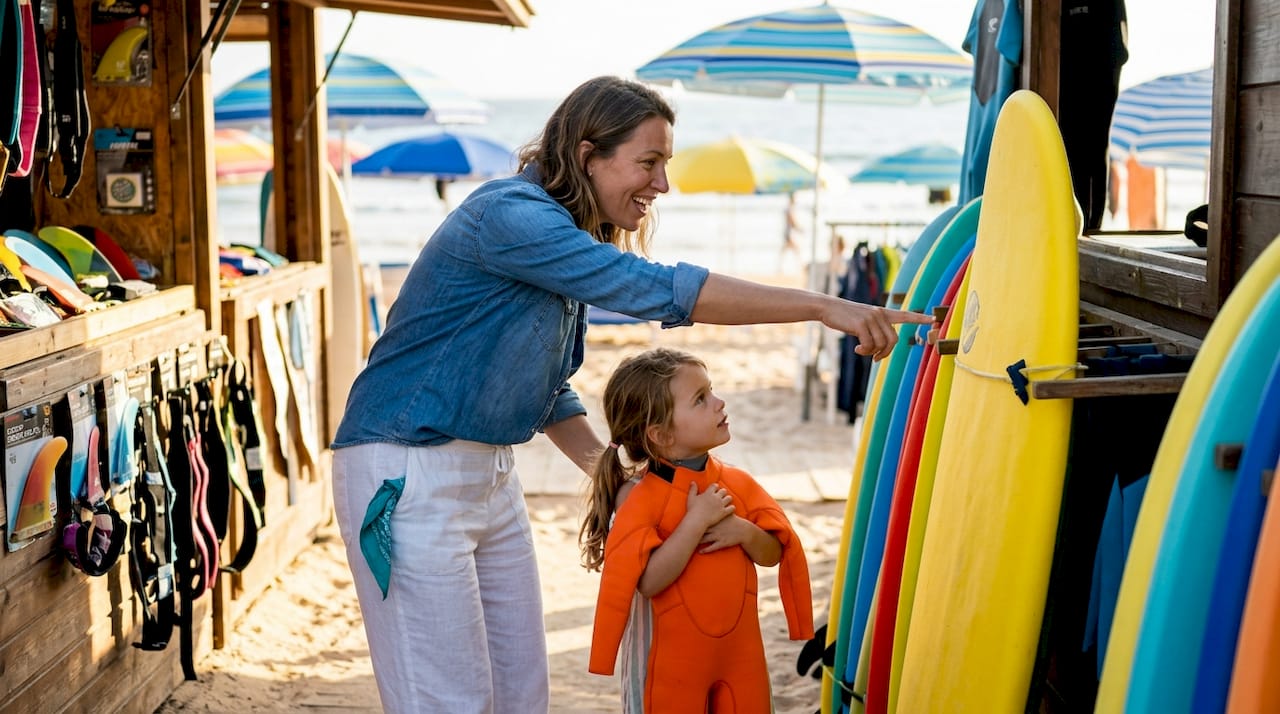
Choosing the right kids’ surf gear ensures safety, comfort, and skill development from the first wave.
Properly fitted boards and wetsuits support confidence and prevent quitting due to discomfort or fatigue.
Choosing kids surf gear means selecting items that fit correctly, protect from environmental hazards, and support skill development from the very first wave. The right gear reduces injury risk, builds confidence, and keeps children coming back to the water. Ill-fitting or improper gear is the primary reason children quit surfing due to discomfort or fatigue, not lack of interest. This guide walks you through how to choose kids surf gear by covering boards, wetsuits, accessories, and maintenance in plain, practical terms.
How to choose kids surf gear: start with the right surfboard
The surfboard is the single most important piece of equipment your child will use. Getting it wrong makes learning miserable. Getting it right makes every session feel like progress.
Why board volume matters more than age or length
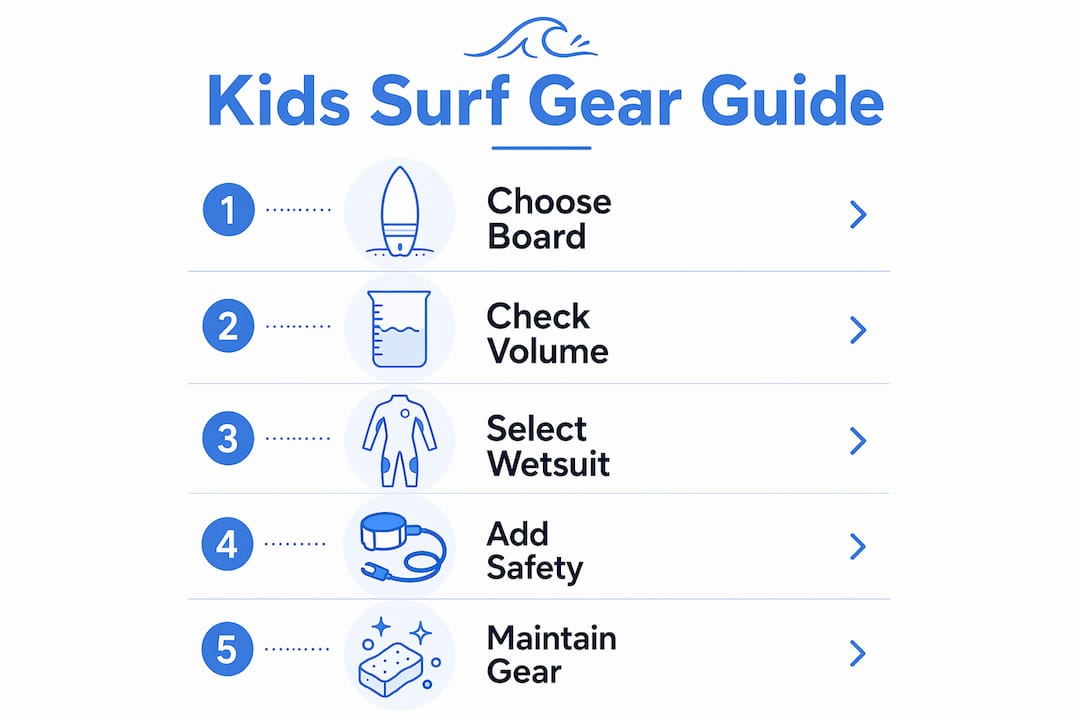
Board volume in liters is the only reliable metric for choosing a surfboard that supports a child’s weight. Age and length charts give you a starting point, but volume tells you whether the board will actually float your child well enough to paddle and pop up. A board with too little volume sinks under the child’s weight, making paddling exhausting and standing nearly impossible.
For beginner kids, focus on white water boards with adequate volume. These are wide, thick, and stable enough to catch small broken waves without requiring advanced technique. A child weighing around 55–65 lbs needs a board with roughly 40–50 liters of volume. Heavier or taller children need more volume, not just a longer board.
Foam soft-top boards: the clear choice for beginners
Soft-top foam boards are the default for early years due to safety and durability against frequent impacts during the learning phase. Fiberglass boards crack and ding easily, and repairs get expensive fast. Foam boards absorb impacts, which matters when your child falls on the board repeatedly, as every beginner does.
Key points when selecting a beginner board:
Length: Choose a board at least 1–2 feet longer than your child’s height for stability.
Width: Wider boards (21 inches or more) give more balance on the wave.
Volume: Match volume to your child’s weight, not their age.
Material: Foam soft-tops for safety, durability, and buoyancy.
Fins: Soft rubber fins reduce injury risk compared to hard plastic or fiberglass fins.
Pro Tip: When your child falls between two size ranges, always choose the longer, higher-volume board. More stability means faster progression and fewer frustrating sessions.
A beginner surf kit including a foam surfboard, wetsuit, leash, and wax typically costs $165–$280 USD. Renting first is a smart move. It lets your child try different board sizes before you commit to a purchase.
What to look for in kids’ wetsuits and protective clothing
A wetsuit keeps your child warm, protects skin from reef and board rash, and extends session time in cold water. Choosing the wrong one leads to shivering, restricted paddling, or a child who refuses to get back in the water.
Neoprene thickness and water temperature
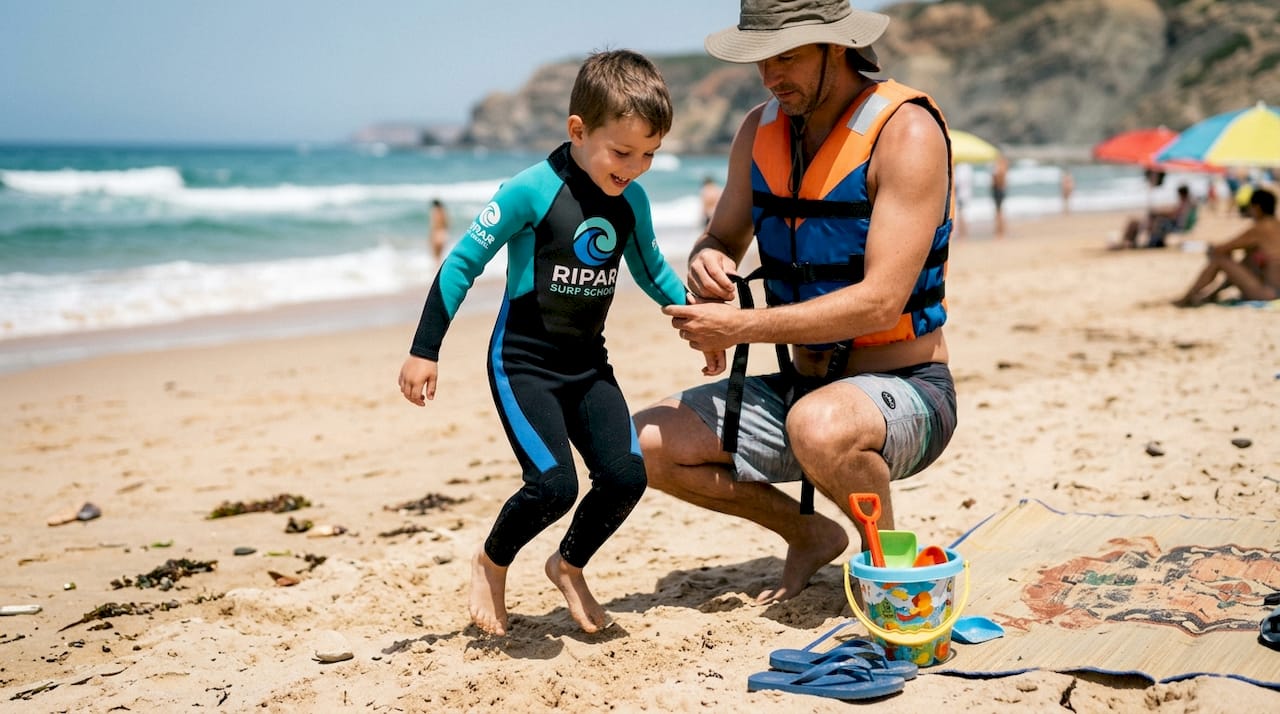
Wetsuit thickness is measured in millimeters and listed as two numbers, such as 3/2 or 4/3. The first number is the thickness across the torso; the second is the thickness at the arms and legs. For water temperatures above 68°F, a 2mm shorty or a 3/2 full suit works well. For water below 60°F, a 4/3 or 5/4 suit with sealed seams is necessary.
Getting the fit right
Wetsuit fit is a balance: too tight restricts paddling, and too loose lets cold water flush through, reducing warmth. The suit should feel snug across the shoulders and chest without pinching. Your child should be able to lift both arms overhead without the suit pulling down at the crotch. If it does, size up.
Back-zip models are the best choice for children. They are easier to put on and take off independently, which matters when your child is cold and tired after a session. Front-zip and zipperless suits offer better water sealing but require more flexibility to get into.
Essential clothing checklist:
Rash guard: Choose UPF 50+ rated fabric. UPF 50+ rash guards block over 98% of harmful UV rays, making them far more reliable than sunscreen alone.
Mineral sunscreen: Use a mineral-based formula with 20% non-nano zinc oxide. It stays effective up to 80 minutes in water.
Reef booties: Protect feet on rocky beaches without sacrificing grip on the board.
Wetsuit: Match thickness to water temperature and prioritize back-zip for ease of use.
Pro Tip: Buy a high-quality youth wetsuit rather than a budget model. Quality wetsuits are durable enough to pass down to younger siblings, making the higher upfront cost worthwhile over time.
What safety accessories does your child actually need?
The board and wetsuit get most of the attention, but the accessories are where safety is won or lost. A leash alone can be the difference between a scary situation and a safe one.
Leashes: the most important safety item
A properly attached surf leash reduces surf-related drowning risk by 40% for children. The leash keeps the board attached to your child after a wipeout, so the board acts as a flotation device. Leash length should equal or be slightly shorter than the board length. A padded ankle strap reduces bruising and discomfort during long sessions. A double swivel design prevents the leash from tangling around your child’s legs.
A surf leash is not optional equipment for a child learning to surf. It is the single item that keeps a lost board from becoming a lost child. Every session, every time, no exceptions.
Surf wax, sun hats, and earplugs
Surf wax gives your child grip on the board deck. Apply it in a crosshatch pattern before each session. Getting your child involved in waxing their own board builds ownership and excitement before they even hit the water.
Sun hats with chin straps protect the face and neck during beach time between sessions. Standard hats blow off immediately in ocean wind, so the chin strap is not optional. Pair the hat with the mineral sunscreen mentioned above for full coverage.
Earplugs are underused and undervalued. Repeated cold water exposure causes a bony growth in the ear canal called surfer’s ear, a condition that can eventually require surgery. Surf-specific earplugs seal out water while still allowing your child to hear clearly. Start using them early, before the damage accumulates.
For families planning a surf family trip, packing this full accessories kit before departure saves money and avoids last-minute beach shop markups.
How to care for kids’ surf gear after every session
Good gear lasts years with basic maintenance. Skipping the care routine shortens the life of expensive equipment and can create safety issues if damage goes unnoticed.
Rinse everything with fresh water. Salt crystals break down neoprene and foam over time. Rinse the wetsuit, board, leash, and booties after every single session.
Use cool or lukewarm water only. Hot water degrades the glue that seals wetsuit seams. Cold or cool water is always the right choice.
Hang the wetsuit inside out in the shade. Direct sunlight breaks down neoprene. Hang it by the waist, not the shoulders, to prevent stretching.
Inspect the board for dings after each session. Water gets into foam through cracks and causes delamination, where the top layer separates from the core. Small dings are easy to repair with a foam repair kit. Ignored dings become expensive problems.
Store accessories flat or coiled loosely. Leashes stored in tight coils develop kinks that weaken the cord over time.
Pro Tip: Make gear rinsing a post-session ritual your child does themselves. It teaches responsibility and gives you a natural moment to check the equipment together for any damage.
For a complete list of what to pack and maintain for beach trips, the beach packing essentials guide covers everything families need before heading to the coast.
Key Takeaways
Proper fit and safety-rated equipment are the two factors that determine whether a child thrives or quits surfing in the first season.
Point | Details |
Board volume over age | Match surfboard volume in liters to your child’s weight, not their age or height alone. |
Foam soft-tops first | Choose foam boards for safety, durability, and buoyancy during the learning phase. |
Wetsuit fit is critical | A snug but unrestricted fit keeps kids warm and paddling freely; back-zip models aid independence. |
Leash is non-negotiable | A properly fitted leash reduces drowning risk by 40% and keeps the board within reach after wipeouts. |
Rinse and inspect after every session | Fresh water rinses and regular ding checks protect your gear investment and catch safety issues early. |
What years of teaching kids to surf taught me about gear
I have watched hundreds of kids show up at Riparsurfschool excited to surf, only to struggle through their first session because their gear was working against them. A wetsuit two sizes too big. A board borrowed from an older cousin that had far too little volume. A leash so long it tangled around their ankles on every wipeout. The gear was not dangerous enough to stop the session, but it was uncomfortable enough to make the child decide surfing was not for them.
The uncomfortable truth is that parents often spend more time researching the surf destination than the gear their child will actually use. That is backwards. The destination matters far less than whether your child can paddle comfortably, stay warm, and feel safe in the water.
My honest advice: rent before you buy. Most families visiting surf camps in Portugal can rent quality gear on-site and get instructor feedback on fit before spending money on equipment their child may outgrow in six months. Once you know the right board volume and wetsuit size, then buy quality and buy once.
The other thing I tell every parent: do not buy down on the wetsuit. A cheap wetsuit that lets cold water in will end a session in 20 minutes. A quality wetsuit keeps a child in the water for two hours. That extra time in the water is where surfing actually gets learned. The gear is not a luxury. It is the foundation.
— Fernando
Riparsurfschool makes gear selection easier for families
Choosing the right equipment is only half the equation. Pairing good gear with qualified instruction is what actually gets kids standing on waves.

Riparsurfschool has been running surf lessons and surf camps at Praia Areia Branca, near Peniche, since 2001. The certified instructors work with children at every level, from first-timers to kids ready to move beyond white water. Group surf lessons give children a social, confidence-building environment, while private surf lessons offer individual attention for kids who need a slower pace or have specific goals. The team can also advise parents on gear fit and board selection during lessons. Book your child’s first lesson and let the instructors handle the rest.
FAQ
What type of surfboard is best for a beginner child?
A foam soft-top board with sufficient volume for the child’s weight is the best choice. Foam boards are safer, more durable, and more buoyant than fiberglass alternatives during the learning phase.
How do I know if a wetsuit fits my child correctly?
The wetsuit should feel snug across the chest and shoulders without restricting arm movement overhead. If the suit pulls down at the crotch when your child raises both arms, size up.
Does my child really need a surf leash?
A surf leash is required safety equipment. A properly attached leash reduces drowning risk by 40% by keeping the board attached to your child after a wipeout.
Should I buy or rent surf gear for my child?
Renting first is the smarter move for most families. It lets you confirm the right board volume and wetsuit size before spending $165–$280 on a full beginner kit. Once sizing is confirmed, buy quality gear that can be passed to younger siblings.
What sun protection do kids need for surfing?
Use a UPF 50+ rash guard combined with a mineral sunscreen containing 20% non-nano zinc oxide. The rash guard blocks over 98% of UV rays, and the mineral sunscreen stays effective up to 80 minutes in water.
Recommended
Comments