

Surf Spot Accessibility Explained for Surfers and Families

TL;DR:
Surf spot accessibility depends on infrastructure, environmental conditions, and social dynamics working together. Proper planning includes verifying routes, tide windows, and respecting local surf etiquette to ensure safe, enjoyable experiences.
Surf spot accessibility is defined as the full range of physical, environmental, and social factors that determine how easily a surfer or traveler can reach, enter, and enjoy a surf break. Getting to the water is rarely as simple as parking and walking. Tidal windows close fast, reef entries demand timing, and local surf culture can open or shut doors more effectively than any signage. Surf spot accessibility explained properly means looking at infrastructure, ocean conditions, and community dynamics together, not in isolation. Riparsurfschool, based at Praia Areia Branca near Peniche, Portugal, has guided surfers through these layers since 2001.
What does surf spot accessibility explained really cover?
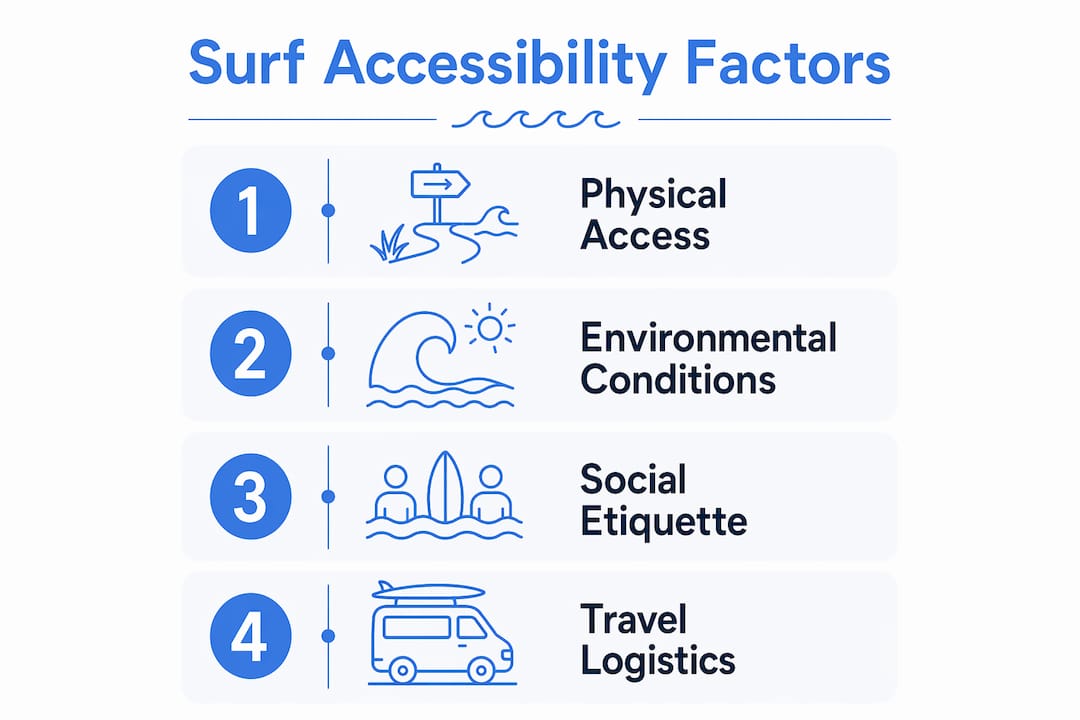
Surf location accessibility covers three distinct layers: physical infrastructure, environmental conditions, and social factors. Most surfers focus only on wave quality and ignore the other two. That gap causes missed sessions, safety incidents, and friction with local communities. A complete picture of surf spot access treats accessibility as a spectrum, not a checkbox.
Physical infrastructure includes parking, paths, ramps, and equipment. Environmental conditions include tides, wave type, and hazards. Social factors include localism, etiquette, and community relationships. Each layer affects the others. A beach with perfect ramps becomes inaccessible when the tide floods the boardwalk. A well-marked break becomes unwelcoming when visitors ignore local rules.
What infrastructure features define accessible surf spots?
Accessible surf spots share a set of physical features that go well beyond a parking sign. True accessibility requires a continuous, unbroken route from the parking lot to the waterline, with no gaps in surface coverage.
The core infrastructure elements at well-equipped surf locations include:
Designated accessible parking close to the beach entry point, with a paved surface and curb cuts leading directly to the path
Continuous paved or boardwalk paths from the parking area to the sand, with no abrupt transitions or loose gravel sections
Beach access mats laid over sand to allow wheelchair and mobility aid movement toward the water
Amphibious or beach wheelchairs available for loan, typically through local surf life saving clubs or municipal programs
Accessible restrooms within reasonable distance of the main entry point
The catch is that access labels are often aspirational. A beach listed as “accessible” may offer only a scenic overlook with no path to the sand. Beach wheelchairs may only be available during lifeguard hours, typically 9 AM to 5 PM in peak season. Mats may stop well short of the waterline. Parking meters may still apply even with a disability placard. Always call ahead and verify the specific operational details before you arrive.
Pro Tip: Ask the local surf school or lifeguard station directly whether the beach mat reaches the wet sand. That single question saves more frustration than any online review.
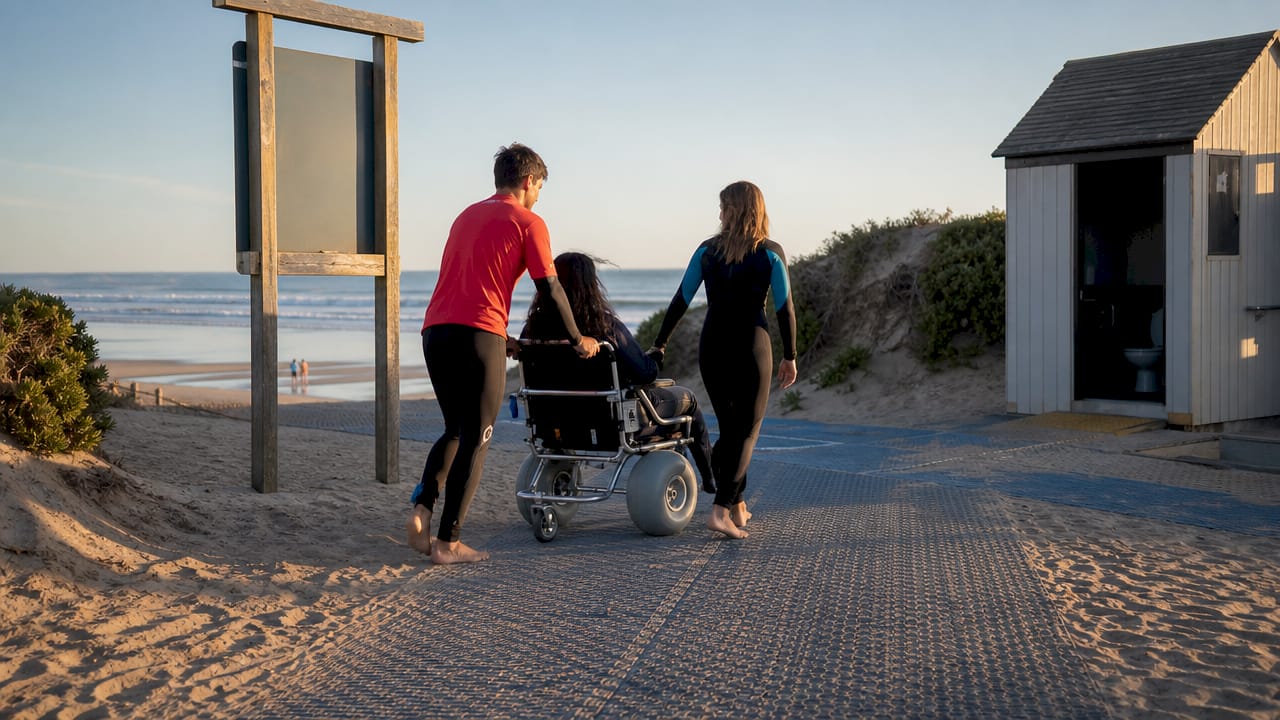
Adaptive surfing programs add another layer. Adaptive surfers use specialized boards and modified techniques across categories including prone, kneel, sit, and visually impaired surfing. Trained instructors manage risk and support real ocean experiences, not simulated ones. This means the infrastructure at the beach must support not just entry but also equipment staging and water entry assistance.
How do tides, wave breaks, and conditions affect access?
Environmental conditions change surf spot accessibility on an hourly basis. Tides are the most common and most underestimated factor. A path that is clear and dry at low tide can be submerged or dangerously slippery at high tide, particularly at reef and point breaks.
The three main break types carry different access profiles:
Beach breaks offer the most forgiving access. Sand entry points shift with the tide but rarely become completely impassable. These are the best surf spots for beginners and families because the entry is gradual and the hazards are more predictable.
Point breaks require walking along rocky or uneven shoreline to reach the lineup. Tidal height directly affects how much of that shoreline is exposed. A low tide walk of five minutes can become a dangerous scramble at high tide.
Reef breaks present the highest access challenge. Tidal fluctuations can require wading over sharp coral or submerged rock at certain tide heights. Packing water-resistant footwear and gear is not optional at reef breaks.
The table below summarizes how break type and tide interact with access difficulty:
Break type | Low tide access | High tide access | Best for beginners |
Beach break | Easy | Moderate | Yes |
Point break | Moderate | Difficult | No |
Reef break | Difficult | Very difficult | No |
Beyond tides, rip currents are the most critical hazard to identify before entering any break. Experts recommend observing a break for 12 seconds to identify sets, lulls, and rip current channels before paddling out. That 12 seconds of observation is one of the most effective safety habits in surfing. Surf forecast apps like Surfline and Magicseaweed provide tide charts, swell direction, and wind data that directly inform access planning.
What social and etiquette factors affect access to surf spots?
Social dynamics control access to many surf breaks more effectively than any physical barrier. Localism, the informal system by which regular surfers at a break assert priority, shapes who feels welcome and who does not. Ignoring this reality leads to conflict, dropped waves, and sometimes outright hostility.
The good news is that engaging with local communities unlocks better access than any online forum tip. Locals respond well to surfers who show respect, follow the lineup order, and take time to introduce themselves. The strategies that actually work include:
Surf with a local guide or instructor first. Being introduced to a break by a known local changes how you are received immediately.
Follow the lineup rules without exception. Do not drop in, do not snake, and do not paddle around others to gain position.
Observe before paddling out. Watching the break from shore shows respect and gives you real information about the session.
Avoid publicizing lesser-known spots. Posting GPS coordinates or tagging locations on social media erodes the goodwill that makes those spots accessible in the first place.
Pick up trash. Environmental respect is a universal signal of good faith in surf communities worldwide.
Pro Tip: The fastest way to gain access to a local break is to spend one session just watching from the beach. Locals notice who pays attention and who charges in blind.
Secret spot hunting through unreliable online sources carries real risks. Directions are often outdated, hazards go unmentioned, and arriving at a tightly held local break without an introduction creates immediate tension. A certified surf instructor with local knowledge is a far more reliable and safer guide to spots that are not on the tourist map.
How do you plan logistics and travel for accessible surf spots?
Successful surf travel is driven primarily by logistics, not wave quality chasing. Recon sessions of up to 90 minutes focused on access routes, tide behavior, and hazard identification consistently produce better surf trips than sessions planned around swell forecasts alone.
For families and beginners, the logistics checklist looks like this:
Check the tide window first. Identify the two-hour window around low tide when beach access is easiest and the break is most forgiving.
Map the full route from accommodation to water. Confirm parking surface type, path continuity, and any equipment reservation requirements.
Build in 40–50 minutes of setup time. Surf sessions require travel, gear prep, warm-up, and observation before anyone enters the water.
Book accommodations within walking or short driving distance of the break. Proximity cuts logistics complexity and allows for flexible session timing based on conditions.
Contact the local surf school before arrival. Schools like Riparsurfschool provide current, ground-level information about access conditions, equipment availability, and session timing that no app can match.
For surfers traveling with mobility needs, accessible beach vacation rentals near surf locations require the same granular verification as the beach itself. Confirm that the rental property has step-free entry, accessible bathrooms, and a clear path to the vehicle. The beach access chain is only as strong as its weakest link.
Families planning surf-focused vacations should also read the family surfing safety guide for specific advice on choosing breaks, timing sessions around children’s energy levels, and selecting the right instruction format. Group lessons at beach break locations remain the most accessible entry point for families with no prior surf experience.
Key takeaways
Surf spot accessibility is determined by infrastructure, tidal conditions, and social dynamics working together, not by any single factor alone.
Point | Details |
Accessibility is a spectrum | Verify continuous routes from parking to waterline, not just parking availability. |
Tides change access hourly | Plan sessions around low tide windows and always check forecasts before arrival. |
Beach breaks suit beginners | Sand entry points are more forgiving and predictable than reef or point breaks. |
Social etiquette opens doors | Surfing with a local guide or instructor is the fastest path to respected access. |
Logistics drive trip success | Recon sessions and route planning matter more than chasing the perfect swell. |
What I’ve learned about surf access that most guides skip
Most accessibility guides focus on ramps and parking. After years of surfing and teaching at Praia Areia Branca, I can tell you the real bottleneck is almost never the infrastructure. It is the gap between what a beach is labeled and what it actually delivers when you show up with gear, a family, or a mobility need.
I have watched experienced surfers arrive at a “wheelchair accessible” beach and find that the mat stops 30 meters short of the wet sand. I have seen beginners paddle out at a point break because the tide looked fine from the parking lot, without realizing the entry had changed completely in the two hours since the forecast was checked. These are not edge cases. They happen constantly.
The adaptive surfing community has pushed the industry to think more carefully about what access actually means. Instructors who work with adaptive surfers manage real ocean conditions, not controlled pools. That standard of preparation, verifying every link in the access chain, is the right model for all surfers, not just those with disabilities.
My honest advice: treat your first visit to any new break as a recon session. Do not plan to surf. Plan to observe, check the path, talk to the lifeguard, and identify the tide window. The session you plan for day two will be dramatically better and safer than anything you could have managed on day one.
— Fernando
Riparsurfschool and accessible surf experiences in Portugal
Riparsurfschool has operated at Praia Areia Branca since 2001, and the location itself is one of the strongest arguments for choosing it as a base for accessible surf travel. The beach is a beach break, which means the most forgiving entry conditions for beginners, families, and surfers returning after a long break.

The school offers private surf lessons tailored to individual skill levels and physical needs, as well as group surf lessons that work well for families and small groups. Certified local instructors handle logistics, equipment, and session timing so you can focus on the water. Surf camp and surf house accommodations place you within minutes of the break, eliminating the commute problem entirely. Book your session directly online and confirm your access requirements at the time of booking.
FAQ
What does surf spot accessibility mean?
Surf spot accessibility refers to how easily a surfer or visitor can physically reach, enter, and use a surf break. It covers infrastructure like paths and parking, environmental factors like tides, and social factors like local etiquette.
What are the best surf spots for beginners?
Beach breaks are the best surf spots for beginners because sand entry is gradual, hazards are more predictable, and the break is more forgiving at most tide heights. Praia Areia Branca near Peniche, Portugal is a well-regarded example.
How do tides affect surf spot access?
Tides change surf spot accessibility on an hourly basis. Paths clear at low tide can become submerged or dangerous at high tide, especially at reef and point breaks, so always plan sessions around the tide window.
How can I access a local surf break respectfully?
Surf with a local instructor or guide on your first visit, follow lineup rules without exception, and avoid publicizing the location on social media. Building relationships with the local surf community is the most reliable path to respected access.
Do I need to reserve beach wheelchairs in advance?
Beach wheelchairs at accessible surf locations are typically available through local surf life saving clubs or municipal programs, but availability is tied to lifeguard hours, usually 9 AM to 5 PM in peak season. Reservations or advance calls are strongly recommended.
Recommended
Comments