

Why Shoulder Season Surfing Beats Peak Season Every Time
- Fernando Antunes

- 2 days ago
- 8 min read
TL;DR:
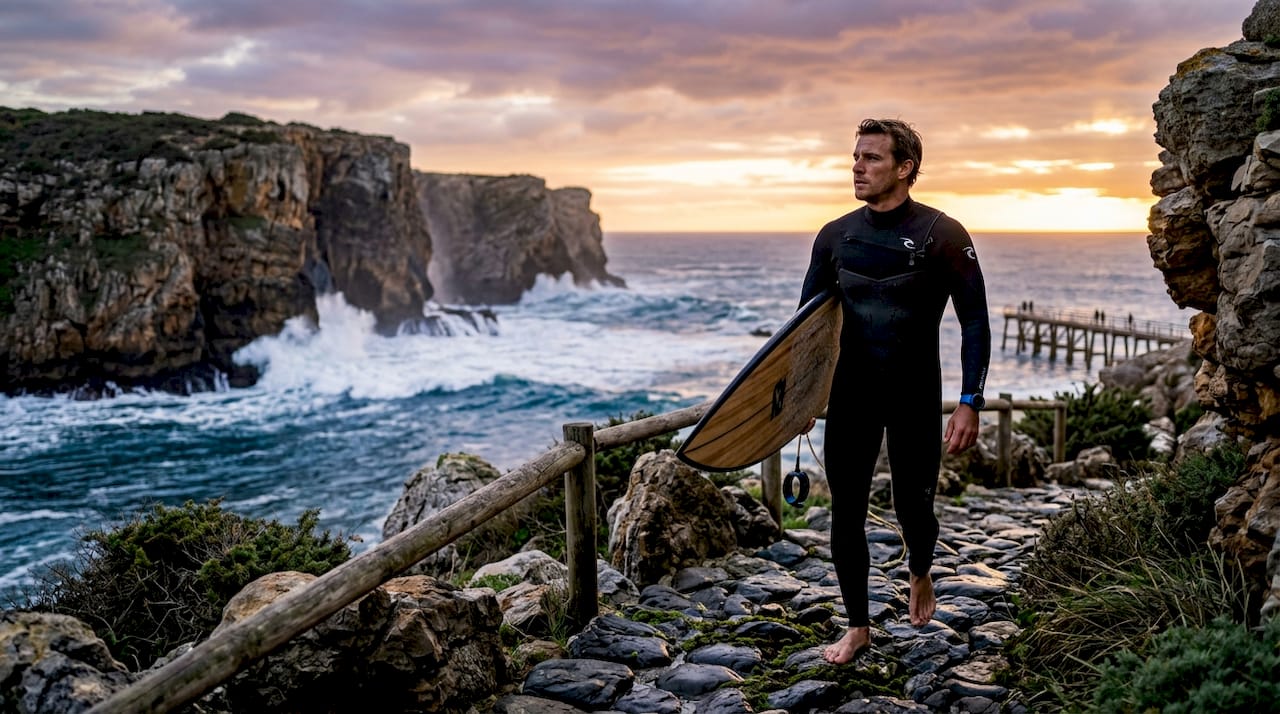
Surfing during the shoulder season offers cleaner waves, fewer crowds, and better opportunities for skill development. Traveling in these months provides more authentic experiences, personalized instruction, and lower costs. Matching your trip to each destination’s specific shoulder window enhances your surf quality and enjoyment.
Shoulder season surfing is defined as surfing during the transitional months between peak tourist season and the off-peak rainy period, when waves are cleaner, crowds are thinner, and conditions favor both learners and experienced surfers alike. In surfing, a “shoulder” refers to this in-between window, not a part of the wave. Destinations like Bali, Morocco, Cabo, and the Mentawais each have their own shoulder windows, and those windows consistently deliver some of the best surf experiences of the year. The reasons why shoulder season surfing outperforms peak season come down to three things: wave quality, crowd levels, and cost. This article breaks all three down with specifics.
Why shoulder season surfing delivers better conditions
The core advantage of off-season surfing is atmospheric stability. During shoulder months, transitional weather patterns produce offshore winds that groom waves into glassy, smooth surfaces ideal for longer rides and cleaner barrels. Peak season often brings onshore winds that chop up the surface and reduce wave quality. The shoulder window sits in the sweet spot between those extremes.
Wave energy improves from november through march across many global surf regions, including Australia, Europe, and the US. That means bigger, more consistent swells arrive precisely when tourist crowds have thinned out. You get better waves with fewer people competing for them.
In Cabo, november brings the most waves for learners, with settled sandbars and predictable peaks. May adds atmospheric stability and warmer water temperatures. Both months sit squarely in Cabo’s shoulder window and offer conditions that peak season simply cannot match for consistency.
Pro Tip: Check wind direction forecasts on Windguru or Surfline before booking. Shoulder season offshore winds are more predictable than peak season patterns, so you can plan sessions with greater confidence.
Wave condition comparison by season
Destination | Peak season | Shoulder season | Off season |
Bali | Crowded, consistent | Clean, less crowded | Rainy, choppy |
Morocco | Busy, strong swells | Consistent Atlantic swells, warm water | Cold, stormy |
Cabo | Hot, crowded | Settled sandbars, predictable peaks | Flat or stormy |
Mentawais | Packed lineups | October and march offer quality waves | Monsoon conditions |
Portugal | Summer crowds | Autumn swells, offshore winds | Heavy winter storms |
How does shoulder season improve the surfer’s experience?
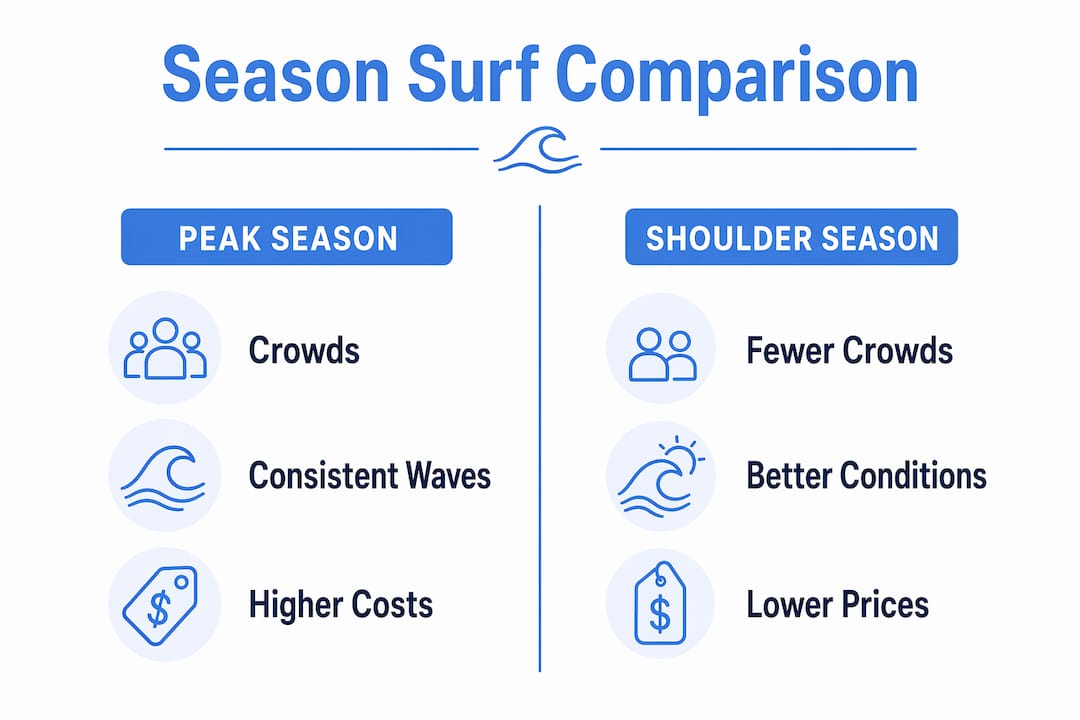
Fewer surfers in the water means more waves per session, less aggression in the lineup, and a more relaxed atmosphere overall. For learners and intermediate surfers, a crowded peak-season lineup is genuinely intimidating. Shoulder season removes that pressure entirely.
Morocco’s shoulder window in january and february illustrates this perfectly. Wavelength Surf Magazine describes the experience as a mental reset from technology and cold climates, with consistent Atlantic swells and warmer water than you would expect. The slower pace of a quieter destination reconnects surfers with why they started surfing in the first place.
“Shoulder months are calmer, cheaper, and often have the right conditions for surf, sun, and exploring.” — Kala Surf Camp
The lifestyle benefits extend beyond the water. Shoulder season travel costs less across the board, from flights and accommodation to surf lessons and equipment rentals. Local surf communities are also more accessible when they are not overwhelmed by peak-season tourism. You get a more genuine connection to the place and its people.
Key lifestyle and social benefits of shoulder season surfing:
Quieter lineups with more wave opportunities per session
Lower accommodation rates at surf camps and surf houses
Easier access to local surf communities and instructors
Reduced travel costs on flights and transfers
More relaxed beach culture and authentic local interactions
Better availability at quality surf schools and camps
Opportunities for surf retreats with smaller groups
Is shoulder season the best time to develop surf skills?
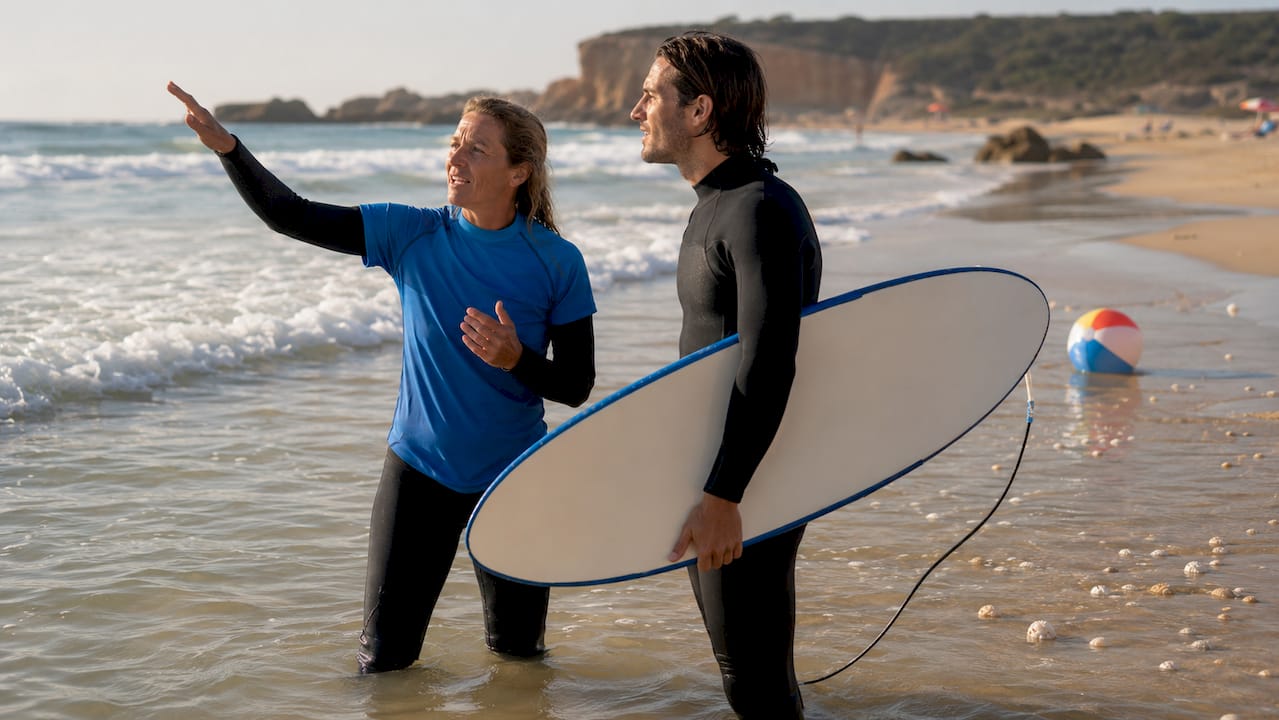
Shoulder season is the single best period for skill development, and the reasons are practical. Calmer, more manageable waves give learners room to practice without the chaos of heavy peak-season surf. Intermediate surfers can work on specific techniques without the pressure of a packed lineup watching every wipeout.
Surf instructors provide more personalized feedback during shoulder seasons because they have fewer students competing for their attention. That direct coaching accelerates confidence and technique faster than any peak-season group lesson can. The ratio of instructor to surfer improves dramatically, and that matters for progression. Off-season surfing genuinely makes you a better surfer in measurable ways.
Shoulder season swells also stabilize beach breaks. Settled sandbars create predictable peaks that repeat session after session. Learners can study the same break over multiple days and build real pattern recognition, which is how surfers actually improve.
Pro Tip: Book a private lesson during your first shoulder season session to get a baseline assessment from your instructor. That feedback shapes every session that follows and cuts weeks off your learning curve.
Steps to maximize skill progression during shoulder season:
Arrive early in the shoulder window before any late-season crowds return.
Book at least two private lessons to get targeted feedback on your technique.
Surf the same break for three or more consecutive days to learn its patterns.
Use the quieter evenings to watch surf videos and study wave reading.
Ask your instructor to film one session per day for self-review.
Focus on one specific skill per session rather than trying to improve everything at once.
What are the best shoulder season surf spots globally?
Popular shoulder season surf spots include Bali, the Mentawais, Morocco, Costa Rica, and Cabo, with timing varying significantly by region. Choosing the right destination means matching your travel dates to the specific shoulder window of that location, not applying a universal calendar.
The Mentawais shoulder falls in october and march, just outside the peak dry season. Those months deliver quality waves without the full boat-charter crowds of peak season. Bali’s shoulder sits just before and after its peak tourism window, offering consistent surf and a noticeably quieter atmosphere. Morocco shines in january and february with hyper-consistent Atlantic swells and water temperatures warmer than most European surfers expect. Portugal’s shoulder season in autumn brings powerful Atlantic swells and offshore winds that rival any destination in Europe. Riparsurfschool, based at Praia Areia Branca near Peniche and Ericeira, operates through Portugal’s shoulder months with full instructor availability and significantly smaller groups than summer. For a detailed breakdown of Portugal’s surf season timing, the regional conditions shift meaningfully between september and november.
Top shoulder season surf spots by region
Destination | Shoulder months | Typical conditions | Best for |
Bali, Indonesia | april to may, september | Clean, moderate swells | All levels |
Mentawais, Indonesia | october, march | Quality reef breaks | Intermediate to advanced |
Morocco | january to february | Consistent Atlantic swells | All levels |
Costa Rica | may, november | Fun, consistent beach breaks | Beginners to intermediate |
Cabo, Mexico | november, may | Settled sandbars, warm water | Learners |
Portugal (Peniche) | september to november | Powerful Atlantic swells | Intermediate to advanced |
Water temperature is a real consideration. Morocco in january is warmer than most surfers expect, but Portugal in october still requires a 3/2mm wetsuit. Factor in local culture too. Costa Rica and Nicaragua shoulder seasons bring consistent fun waves and a relaxed local vibe that peak season crowds tend to disrupt. Off-peak luxury travel consistently delivers more authentic access to local culture precisely because the infrastructure is not strained by peak demand.
Aligning your travel dates to a spot’s specific shoulder window takes about 20 minutes of research and saves you from arriving during a crowded or flat period. Check regional surf forecasting sites and cross-reference with local surf school availability. If a school is fully booked, you are probably looking at peak season.
Key Takeaways
Shoulder season surfing delivers better waves, fewer crowds, and faster skill progression than peak season at nearly every major global surf destination.
Point | Details |
Cleaner wave conditions | Offshore winds during shoulder months produce glassy, groomed waves ideal for all skill levels. |
Fewer crowds, more waves | Reduced lineups mean more wave opportunities per session and a less intimidating environment. |
Faster skill development | Instructors give more personalized feedback when student numbers are lower, accelerating progression. |
Lower travel costs | Flights, accommodation, and lessons cost less during shoulder windows at every major destination. |
Better spot selection | Matching travel dates to a destination’s specific shoulder window is the single most important planning decision. |
What shoulder season taught me about surfing and travel
Surfers who chase peak season are chasing the idea of surfing, not the reality of it. I have surfed Peniche in august and in october, and they are not the same experience. August is crowded, competitive, and exhausting in ways that have nothing to do with the waves. October is something else entirely. The lineups are manageable, the instructors are present, and the town feels like it belongs to the people who actually live there.
The mental reset that Morocco and similar shoulder destinations offer is real, not marketing language. Disconnecting from a packed tourist circuit and sitting in a quieter lineup for a week does something to your relationship with surfing that no peak-season trip can replicate. You remember why you wanted to surf in the first place. That clarity carries back into your regular life in ways that are hard to quantify but easy to feel.
My honest advice is to stop treating shoulder season as a compromise. It is not the second-best option. For most surfers, it is the best option. The waves are often better, the instruction is always better, and the experience is more genuine. The only thing you give up is the social validation of saying you went during peak season. That trade is worth making every time.
— Fernando
Surf lessons and camps at Riparsurfschool during shoulder season
Riparsurfschool runs surf lessons and surf camps at Praia Areia Branca through Portugal’s shoulder months, when Atlantic swells are powerful and lineups are quiet. The school’s certified local instructors have more availability during these periods, which means more time with you in the water and faster results.

Group lessons and private surf lessons are both available with flexible scheduling. The surf houses near Peniche offer a genuine community atmosphere without the summer crowds. Whether you are a first-time surfer or working on your intermediate technique, shoulder season at Riparsurfschool gives you the conditions, the coaching, and the space to actually improve. Book your surf lessons directly online and check current availability for autumn and spring sessions.
FAQ
What is a shoulder season in surfing?
A shoulder season in surfing is the transitional period between peak tourist season and the off-peak rainy or flat period. It typically offers cleaner waves, fewer crowds, and lower travel costs than peak season.
What are the main benefits of off-season surfing?
The main benefits of off-season surfing include quieter lineups, more personalized instructor attention, lower costs, and often better wave quality due to offshore winds and consistent swells.
Which destinations are best for shoulder season surf trips?
Bali, Morocco, the Mentawais, Costa Rica, Cabo, and Portugal are the top shoulder season surf destinations. Each has a different shoulder window, so matching your travel dates to the specific location is critical.
Is shoulder season good for beginner surfers?
Shoulder season is the best time for beginners. Calmer waves, less crowded lineups, and greater instructor availability combine to create faster learning outcomes than peak season conditions allow.
How do I find the shoulder season for a specific surf spot?
Check regional surf forecasting sites and contact local surf schools directly. If a school has strong availability and lower rates, you are likely looking at a shoulder window rather than peak season.
Recommended
Comments