

Beginner Surf Workflow: Step-by-Step Guide for 2026

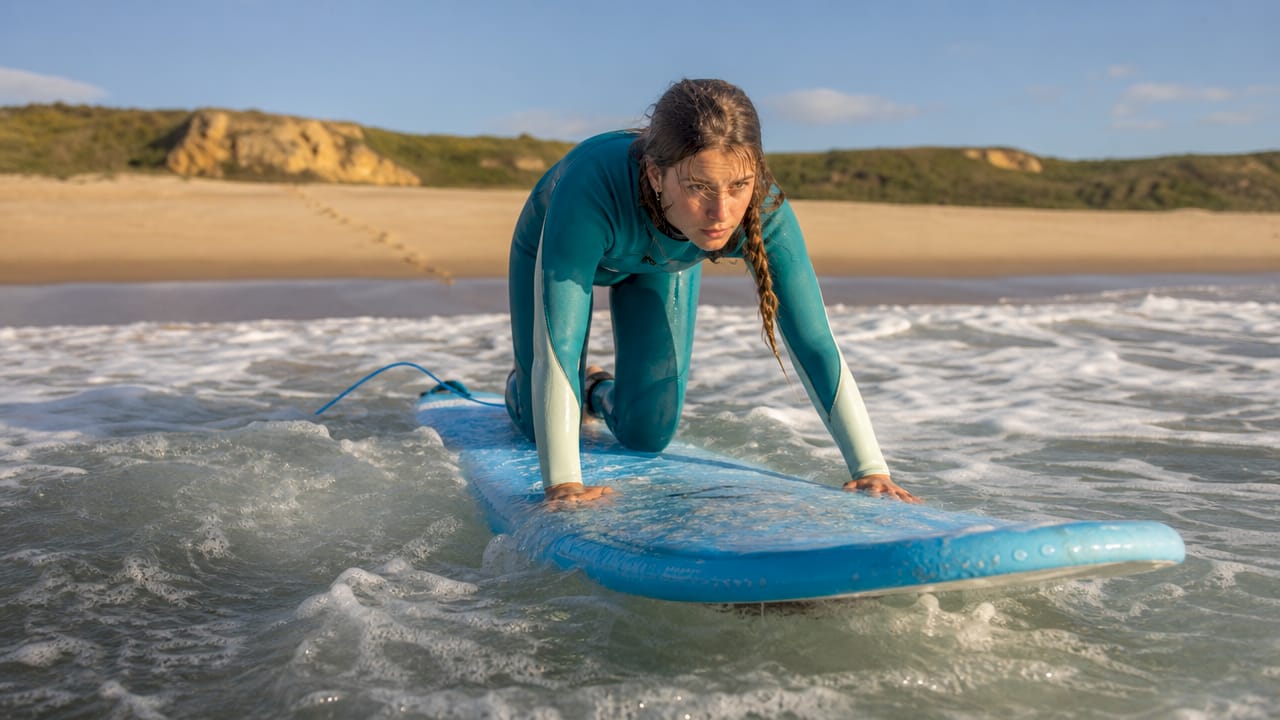
TL;DR:
A beginner surf workflow involves learning paddling, wave selection, and etiquette sequentially to build confidence. Following this structured progression reduces mistakes, prevents injuries, and accelerates skill development. Prioritizing foam wave practice and respecting wave priority are essential for safe and effective learning.
A beginner surf workflow is the process of sequentially learning paddling, wave selection, pop-up execution, and etiquette to safely catch and ride waves. Most new surfers fail not because of poor fitness, but because they skip steps in this sequence. Surfing is learned by building one reliable, repeatable flow rather than relying on strength or raw athleticism. Master the sequence, and confidence follows naturally. This guide walks you through every stage, from picking the right board to reading the lineup, so you can progress faster and stay safe in the water.
What does a beginner surf workflow actually look like?
A beginner surf workflow is a step-by-step skill progression, not a collection of random tips. The sequence runs like this: choose the right gear, learn to paddle correctly, practice the pop-up on land, catch whitewater waves, then apply basic etiquette in the lineup. Each step builds directly on the one before it. Skipping paddling technique to rush into catching green waves is the single most common mistake beginners make. Treat the workflow like a checklist, and you will move through each stage with far less frustration.
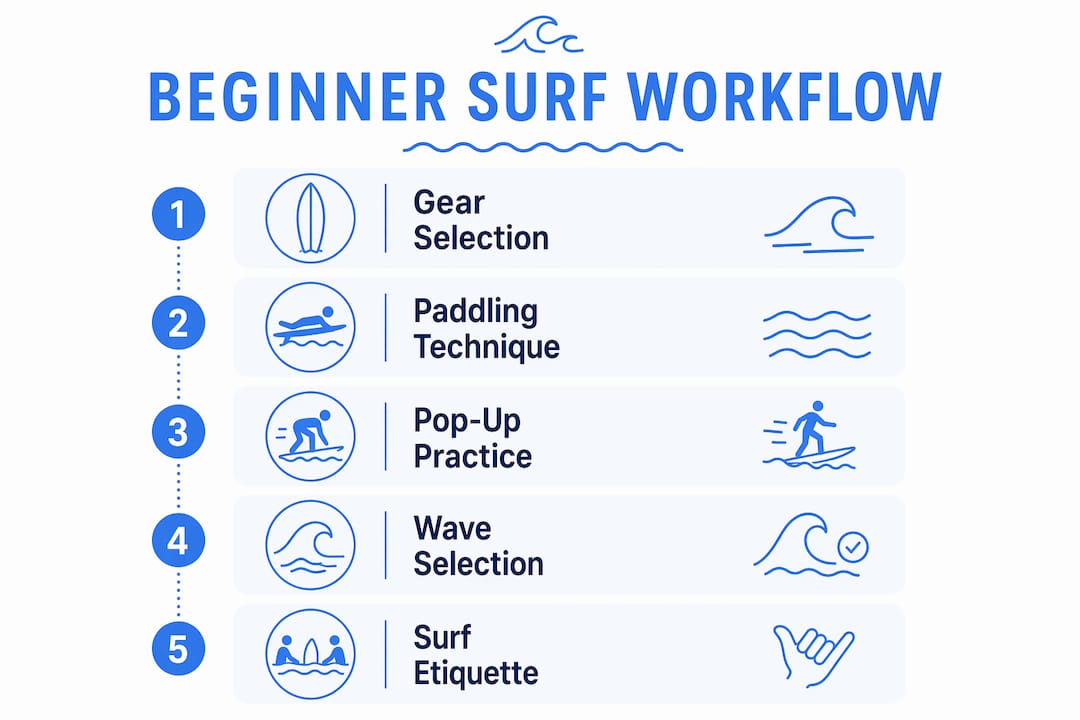
The workflow also shifts your mindset. Instead of measuring success by how many waves you ride, you measure it by how cleanly you execute each step. That mental shift is what separates surfers who plateau after a few sessions from those who improve every time they paddle out.
What essential gear do beginners need to start surfing?
The right board is the foundation of any effective learning process. A soft-top longboard between 8’0 and 9’0 gives beginners the stability and volume they need to catch waves easily and practice the pop-up without fighting the board. Smaller, thinner boards look cool but actively slow down beginner progress. Volume equals forgiveness, and forgiveness is exactly what you need in the first weeks.
Beyond the board, three accessories are non-negotiable.
Leash: Keeps the board attached to your ankle so it does not become a hazard to others after a wipeout.
Surf wax: Applied to the deck of the board to prevent your feet from slipping during the pop-up.
Wetsuit: Required depending on water temperature. Portugal’s Atlantic coast, for example, calls for a 3/2mm wetsuit for most of the year.
Gear item | Function | Beginner priority |
Soft-top longboard (8’0–9’0) | Stability and easy wave catching | High |
Leash | Safety, board retention | High |
Surf wax | Grip on deck | High |
Wetsuit | Thermal protection | Depends on location |
Rash guard | Sun and board rash protection | Medium |
Pro Tip: Rent a soft-top board for your first three sessions before buying anything. You will learn faster on a big, forgiving board, and your preferences will be clearer once you have actual water time.
How to perform the paddling and pop-up flow
Paddling is the engine of your entire surf session. Proper paddling technique uses long, deep strokes with the head up and chest slightly raised, engaging the core rather than collapsing flat on the board. Short, splashy strokes waste energy and reduce your speed at the exact moment you need it most. Position yourself centered on the board so the nose sits about two inches above the water surface.
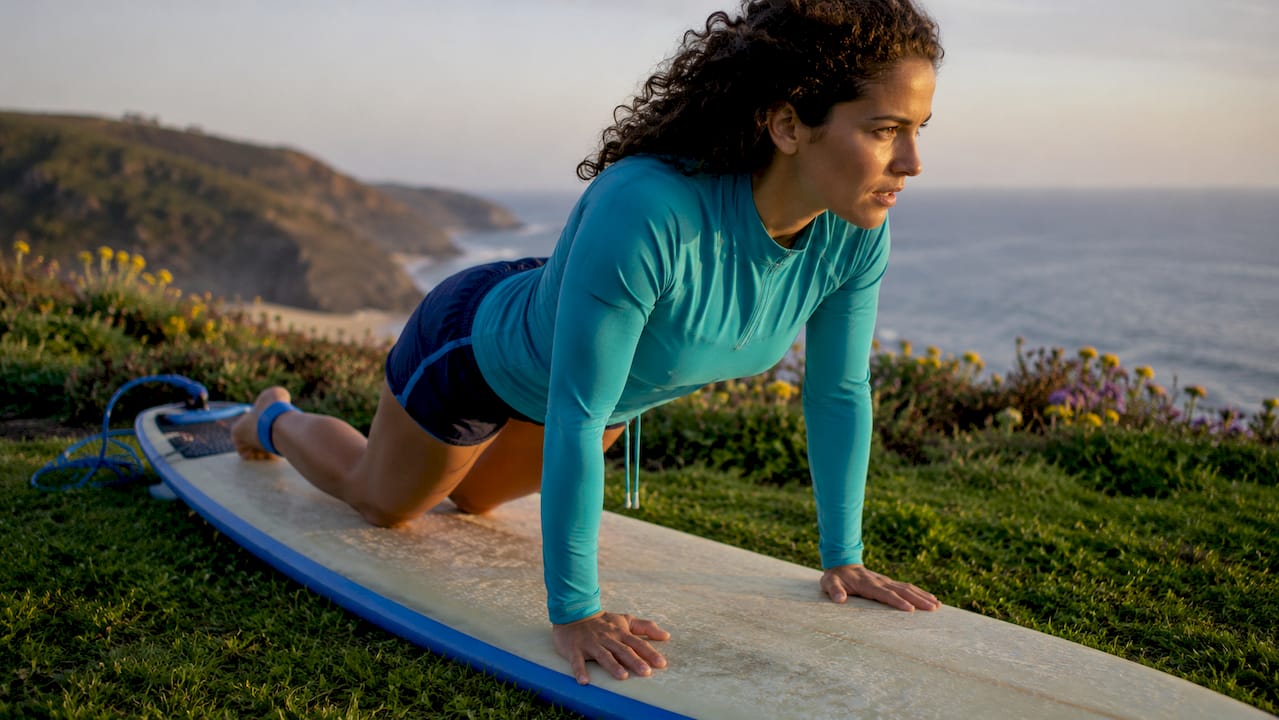
The pop-up is the most practiced skill in the beginner surf progression workflow. The pop-up works best as a single fluid motion: push up with both hands simultaneously, bring both feet up in one swift movement, and land in a balanced stance while looking forward. The most common mistake is using the knees as a stepping stone, which slows the movement and destroys balance before you even stand up.
Practice this sequence on land before entering the water:
Lie flat on your board or a towel with hands placed beside your chest.
Push up explosively with both arms, keeping elbows close to the body.
Snap both feet forward in one motion. Front foot lands between your hands. Back foot lands over the fins.
Land with knees bent, feet shoulder-width apart, and eyes looking down the wave, not at your feet.
Hold the stance for three seconds. Repeat until the movement feels automatic.
Muscle memory is built through repetition on dry land. Ten clean pop-ups on the beach are worth more than fifty sloppy attempts in the water.
Pro Tip: Film your pop-up on land with your phone. Most beginners are shocked to see how much they rely on their knees. Watching the footage once fixes the habit faster than any verbal correction.
For a deeper breakdown of the movement, the pop-up beginner guide from Riparsurfschool covers body positioning in detail.
What surf conditions suit beginner workflow practice?
Wave selection is where most beginners either accelerate or stall. Starting in whitewater, or foam waves, lets beginners practice the pop-up and balance using waves with already-released energy. Foam waves are slower, more predictable, and far more forgiving than unbroken green waves. They give you a clear signal of when to paddle hard and when to pop up.
Treat whitewater sessions as dedicated training blocks focused on timing cues, board acceleration, and pop-up initiation. Each foam wave is a controlled repetition. The goal is not to ride the wave all the way to shore every time. The goal is to execute the pop-up cleanly and hold your stance for at least two seconds.
The ideal beginner surf conditions checklist looks like this:
Small, consistent waves: Knee to waist-high foam waves are perfect. Overhead surf is dangerous and unproductive for beginners.
Offshore or light onshore winds: Offshore winds groom wave faces and make waves more predictable. Strong onshore winds create choppy, unpredictable conditions.
Low crowd density: Fewer surfers in the water means fewer collision risks and more waves to practice on.
Sandy bottom: Sand is far more forgiving than reef or rock if you fall.
Gradual beach slope: A gently sloping beach creates longer, slower-breaking waves that give you more time to react.
Praia Areia Branca near Peniche, Portugal, checks most of these boxes for beginners, which is one reason Riparsurfschool has operated there since 2001. The whitewater surfing basics guide from Riparsurfschool explains how to read these conditions before you paddle out.
What surfing etiquette rules must every beginner follow?
Surfing etiquette is not optional. It is the safety system that keeps the lineup functional and injury-free. The surfer closest to the peak of the wave has the right of way, and dropping in on that surfer is the most serious violation in the water. Respecting wave priority prevents the majority of collisions before they happen.
“Respecting wave priority is the foundational safety rule that prevents lineup chaos more effectively than memorizing many individual tips.” — Billabong Expert Guides
Beyond priority, four rules define safe beginner behavior in the lineup:
Paddle wide around the takeoff zone. Paddling around the main takeoff zone reduces collision risk even when you are unsure about complex etiquette situations. Go around, not through.
Control your board at all times. Never let go of your board in a crowded lineup. A loose board traveling at speed is a serious hazard.
Call your wave. If you are paddling for a wave, a simple “going left” or “going right” signals your intention to nearby surfers.
Apologize when you make a mistake. Every surfer has dropped in on someone accidentally. A quick acknowledgment defuses tension immediately.
The surfer habits guide from Riparsurfschool covers these rules with practical examples from real sessions.
How do beginners progress beyond the basics?
Once you can pop up consistently on foam waves and paddle back out without exhaustion, the next phase of your beginner surf progression workflow begins. This stage introduces angled takeoffs, trimming along the wave face, and reading unbroken green waves. Each of these skills requires the same approach as the basics: isolate the movement, practice it deliberately, and build repetitions.
The most common mistakes at this stage are:
Looking down at the board instead of down the wave line, which kills balance and direction.
Standing too upright with locked knees, which removes the ability to absorb bumps in the wave.
Paddling straight for green waves without angling the board slightly toward the direction of the wave’s break.
Giving up on foam waves too early. Building smooth, repeatable mechanics in small waves builds confidence and skill systematically. Rushing to bigger surf before the basics are automatic creates bad habits that take months to undo.
Reading wave behavior is the skill that separates intermediate surfers from beginners. Watch how a wave breaks from the beach before paddling out. Identify where the peak is, which direction it peels, and how fast it moves. That observation takes two minutes and saves you thirty minutes of paddling to the wrong spot.
Pro Tip: Structured surf lessons accelerate skill acquisition through expert feedback in ways that solo practice simply cannot replicate. If you have been surfing for three or more sessions and still cannot pop up cleanly, one lesson with a certified instructor will fix more in an hour than a week of self-guided practice.
Key Takeaways
A beginner surf workflow succeeds when you follow the correct sequence: gear selection, paddling mechanics, pop-up practice, foam wave training, etiquette, and gradual progression to green waves.
Point | Details |
Start with the right board | A soft-top longboard between 8’0 and 9’0 gives beginners the stability needed to learn faster. |
Master the pop-up on land first | Practice the single-motion pop-up on dry land until it is automatic before attempting it in the water. |
Begin in whitewater | Foam waves provide controlled, repeatable practice for timing and balance without the unpredictability of green waves. |
Respect wave priority | The surfer closest to the peak always has the right of way. This one rule prevents most lineup collisions. |
Progress deliberately | Build clean mechanics in small waves before moving to bigger surf to avoid forming habits that slow long-term progress. |
What I have learned coaching beginners at Praia Areia Branca
The surfers who improve fastest are almost never the most athletic ones. They are the ones who treat every foam wave as a real training opportunity rather than a warm-up to something more exciting. After years of watching beginners at Praia Areia Branca, the pattern is clear: patience in the whitewater translates directly into confidence in the lineup.
The hardest thing to teach is not the pop-up. It is the willingness to slow down. Most beginners want to skip the foam wave phase and paddle straight to where the “real” surfers are. That instinct is understandable, but it costs weeks of progress. The mechanics you build in the whitewater are the exact mechanics you will use on every wave for the rest of your surfing life.
Etiquette is the other area where beginners consistently underestimate the stakes. Dropping in on someone is not just rude. It is dangerous. I have seen collisions that resulted in broken boards and cuts from fins. Learning the priority rule before you paddle out is not optional preparation. It is the minimum standard for sharing the ocean responsibly.
My honest advice: spend your first five sessions entirely in the whitewater. Do not apologize for it. The surfers who do this consistently arrive at green waves with a pop-up that works, a paddle that has power, and a mindset that is ready for the real thing.
— Fernando
Riparsurfschool: where beginners learn the right way from day one
Riparsurfschool has been teaching beginner surfers at Praia Areia Branca, near Peniche and Ericeira, since 2001. Every lesson follows the same structured workflow covered in this article: gear selection, paddling mechanics, whitewater practice, pop-up training, and etiquette. Certified local instructors guide each session with direct, practical feedback that accelerates your progress.

Both group surf lessons and private surf lessons are available, so you can choose the pace and format that fits your learning style. The small-beach-village setting keeps crowds low and waves consistent. Book your surf lesson directly online and arrive ready to surf.
FAQ
What is a beginner surf workflow?
A beginner surf workflow is a step-by-step sequence covering gear selection, paddling technique, pop-up practice, wave selection, and etiquette. Following the sequence in order builds confidence and reduces injury risk.
What is the best surfboard for a beginner?
A soft-top longboard between 8’0 and 9’0 is the best choice for beginners. The extra volume provides stability and makes catching waves significantly easier than shorter, thinner boards.
Should beginners start in whitewater or green waves?
Beginners should always start in whitewater. Foam waves have already released their energy, making them slower and more predictable for practicing the pop-up and building balance.
How do I avoid dropping in on other surfers?
The surfer closest to the peak of the wave has the right of way. Before paddling for any wave, check that no one is already riding or positioned closer to the peak than you are.
When should a beginner take surf lessons?
Take surf lessons from the first session if possible. Structured lessons help beginners avoid common mistakes and build correct mechanics faster than self-guided practice alone.
Recommended
Comments