

Why Adventure Travelers Love Surfing: The Full Picture
- Fernando Antunes

- 2 days ago
- 8 min read
TL;DR:
Surfing provides physical fitness and mental clarity by requiring full attention in unpredictable ocean conditions. It fosters authentic community through shared experiences and breaks social barriers more effectively than most sports.
Surfing is the adventure sport that delivers physical challenge, mental clarity, and genuine social connection in a single session. That combination is exactly why adventure travelers love surfing above nearly every other outdoor pursuit. Unlike hiking or rock climbing, surfing places you inside an unpredictable natural force that demands your full attention every second. Gen Z and Millennials are seeking active, immersive experiences that deliver personal reward, and surfing checks every box on that list.
Why adventure travelers love surfing: the physical and mental case
Surfing builds the body and repairs the mind at the same time. Clinical evidence confirms that surfing improves cardiorespiratory fitness, strength, flexibility, and balance while also reducing anxiety, depression, and stress across diverse populations. That dual payoff is rare in a single sport, and it explains why thrill-seeking surfers keep coming back even after a brutal wipeout session.
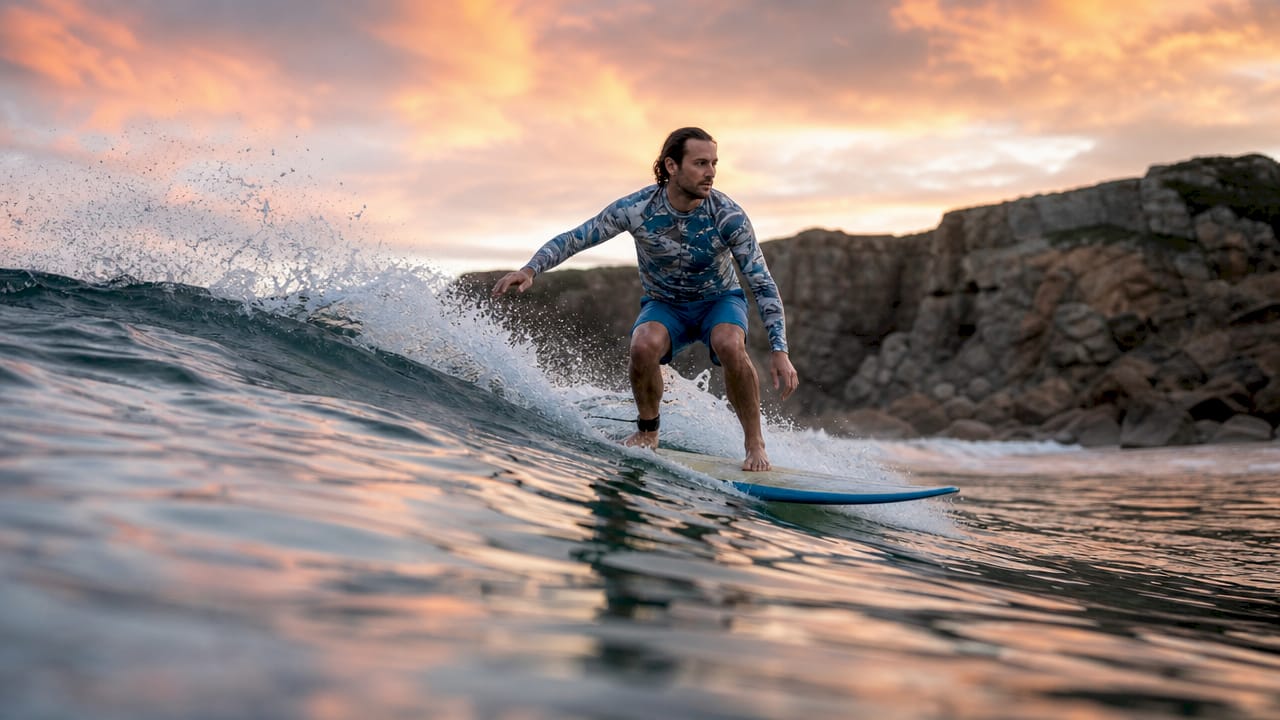
The mental benefits go deeper than simple stress relief. Psychologists describe surfing as producing enforced mindfulness because the ocean’s unpredictability leaves no mental space for distraction or worry. You cannot think about your inbox when a six-foot set is rolling toward you. That forced presence triggers a flow state, a psychological condition where time collapses and performance peaks, that athletes and meditators spend years trying to reach through other means.
The therapeutic evidence is striking. Surf therapy programs for veterans with PTSD show a 58% remission rate after just six weeks of four-hours-per-week sessions. Traditional first-line psychotherapies achieve remission rates of 33–50% by comparison. That gap shows surfing does something neurologically distinct, not just physically tiring.
Here is what the physical and mental benefits look like in practice for adventure seekers:
Cardio and strength: Paddling out works the shoulders, back, and core continuously, building functional fitness that transfers to other adventure sports like kayaking or climbing.
Balance and coordination: Reading wave timing and adjusting body position trains proprioception faster than most gym programs.
Anxiety reduction: The ocean environment lowers cortisol levels, and the post-surf calm is measurable and repeatable.
Flow state access: Surfing’s unpredictability triggers flow more reliably than controlled-environment sports because the challenge level adjusts itself automatically.
Acceptance mindset: Surfing’s learning curve rewards surrendering to ocean rhythms rather than forcing control. That acceptance mindset carries real psychological value off the water.
Pro Tip: If you want the mental benefits faster, take a yoga class alongside your surf sessions. Riparsurfschool pairs surf and yoga at its Portugal camp specifically because the two practices reinforce each other’s mindfulness benefits.
How does surfing build community unlike any other adventure sport?
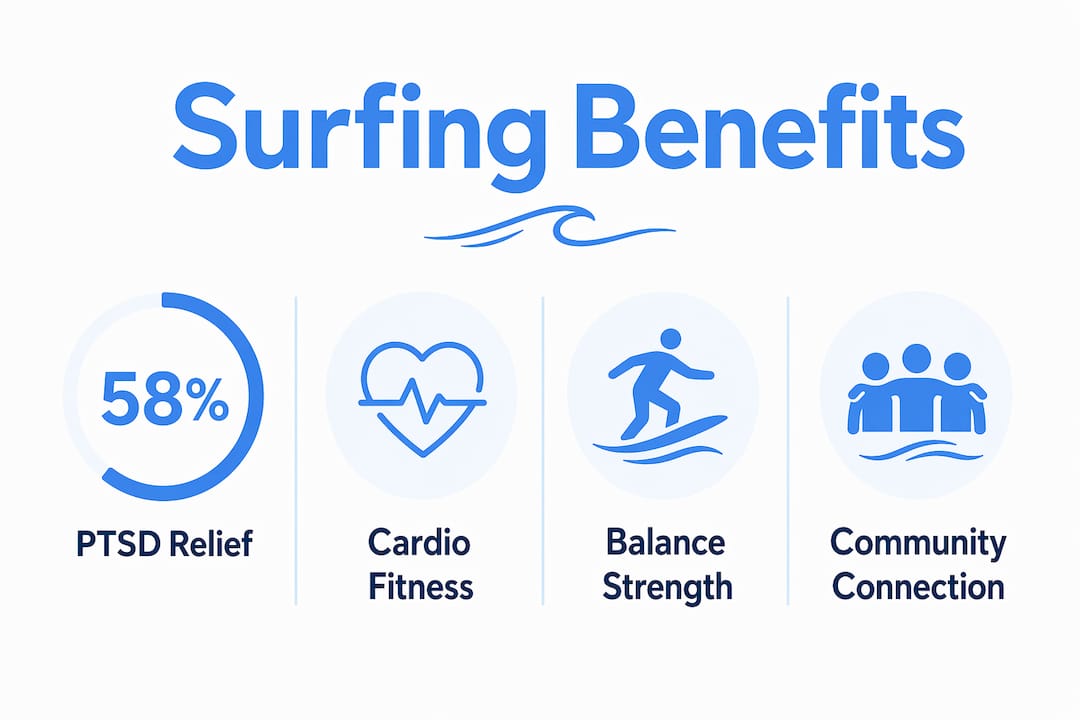
Surfing democratizes social interaction in a way that few sports match. Beginners and champions share the same ocean space, which removes the social segregation common in sports like golf or tennis where skill level determines who you interact with. A first-timer paddling out at Praia Areia Branca sits in the same lineup as a surfer who has been riding waves for twenty years. That physical proximity creates conversation and connection almost automatically.
Surf camps amplify this effect. Solo adventure travelers who might feel isolated at a standard resort find themselves embedded in a group with shared goals, shared wipeouts, and shared celebrations. Younger solo adventurers report returning to surf camps repeatedly, not primarily for the waves, but for the community and lifestyle they find there. Belonging is a foundational human need, and surf camps deliver it efficiently.
“Social barriers quickly dissolve in the lineup. The ocean is the great equalizer, and that shared vulnerability is the foundation of real friendship.” — Adventure.com on surf tourism community economics
The social architecture of a surf camp is worth understanding. A typical day at a place like Riparsurfschool includes:
Morning surf sessions where instructors and guests paddle out together
Group debriefs on the beach where everyone reviews what worked and what did not
Shared meals and access to local cafes that connect travelers to the actual village culture
Evening social time that builds on the day’s shared physical experience
That structure creates friendship faster than almost any other travel format. You can read more about surf camp community culture to understand why the social environment at a dedicated surf camp differs so sharply from a standard beach holiday.
What makes surfing the right fit for adventure travelers’ lifestyle?
Adventure travelers are not looking for passive experiences. Millennials and Gen Z prioritize travel that offers active challenge, meaningful engagement, and genuine disconnection from work stress. Surfing satisfies all three simultaneously, which is why surf travel has grown into a distinct category within adventure tourism rather than a subset of beach tourism.
Surfing also fits the adventure traveler’s appetite for cultural authenticity. Surf seasons are driven by winter storms and ocean swells, which means surf travel often peaks during traditional off-seasons. That timing injects economic activity into local communities when they need it most and gives travelers access to destinations without the crowds of peak summer tourism. You get a more honest version of a place when you visit it in february or november alongside locals rather than in august alongside everyone else.
The lifestyle alignment between surfing and adventure travel breaks down clearly:
Active engagement: Every session requires physical effort, skill development, and real-time decision-making.
Nature immersion: The ocean is not a backdrop. It is the primary actor, and reading it builds environmental awareness that changes how travelers see natural spaces.
Skill progression: Unlike sightseeing, surfing offers measurable personal growth from day one to year ten.
Cultural exchange: Surf communities are local and rooted. Connecting with them gives travelers access to authentic regional identity.
Adventure travel priority | How surfing delivers it |
Physical challenge | Paddling, balance, and wave reading demand continuous effort |
Mental presence | Enforced mindfulness eliminates distraction during every session |
Social connection | Shared lineups and camp culture build friendships quickly |
Cultural authenticity | Surf seasons align with off-peak local life |
Personal growth | Skill progression is visible and measurable from day one |
You can see how this plays out in practice by looking at adventure travel in Portugal, where surfing anchors a broader active travel experience that includes hiking and coastal exploration.
How does surfing compare to other adventure sports?
Surfing sits in a unique position among adventure sports. Hiking delivers nature immersion but limited social interaction. Rock climbing builds community but requires significant gear investment and controlled environments. Skiing and snowboarding offer speed and thrill but are expensive, seasonal, and geographically restricted. Surfing combines the best elements of all of them while adding something none of them provide: a living, unpredictable partner in the ocean itself.
The comparison sharpens when you look at accessibility. Surfing is accessible across skill levels, with beginners and experts coexisting in the same water. Most adventure sports segregate participants by ability. A beginner climber does not share a route with an expert. A new skier does not share a black diamond run. In surfing, the lineup is shared, and that shared space is where the sport’s unique social energy comes from.
Pro Tip: If you are comparing surf travel to other adventure trips, factor in the benefits of surf retreats beyond the sport itself. The combination of physical training, mindfulness practice, and community building makes a surf retreat more efficient than most multi-activity adventure trips.
The mindfulness dimension also sets surfing apart. Rock climbing requires focus, but the route is fixed. A mountain trail is predictable. The ocean is not. Every wave is different in height, speed, angle, and power. That constant variation forces a quality of attention that psychologists specifically identify as the mechanism behind surfing’s mental health benefits. No other mainstream adventure sport replicates it.
Key takeaways
Surfing delivers physical fitness, mental clarity, and authentic community in a single sport, making it the most complete adventure travel experience available.
Point | Details |
Physical and mental benefits | Surfing builds cardio, strength, and balance while reducing anxiety and triggering flow states. |
Therapeutic power | Surf therapy achieves a 58% PTSD remission rate, outperforming many traditional treatments. |
Community access | Shared lineups and surf camp culture dissolve social barriers and build lasting friendships fast. |
Lifestyle alignment | Surfing matches adventure travelers’ demand for active, immersive, and culturally authentic experiences. |
Competitive advantage over other sports | Surfing’s unpredictable ocean environment creates mindfulness benefits no controlled-environment sport replicates. |
What I’ve learned from watching adventure travelers discover surfing
After years of watching travelers arrive at surf destinations with a checklist mentality and leave with something they did not expect, I am convinced that surfing changes how people travel permanently. The first thing that shifts is their relationship with control. Most adventure travelers are planners. They research routes, book guides, and manage risk. Surfing teaches them, sometimes brutally, that the ocean does not care about their plan. That lesson transfers directly to how they approach every trip afterward.
The second shift is social. Travelers who arrive as solo adventurers leave as part of a network. I have seen people who booked a one-week surf camp extend their stay by two weeks purely because of the friendships they formed in the lineup. That is not a coincidence. It is the predictable result of shared vulnerability and shared achievement in a natural environment.
What surprises me most is how quickly the mental benefits show up. By day three of consistent surfing, most travelers report sleeping better, thinking more clearly, and feeling less anxious. That is the enforced mindfulness effect working in real time. You cannot fake it and you cannot rush it. The ocean delivers it on its own schedule, which is exactly the point.
My honest recommendation: if you are an adventure traveler who has not surfed, do not treat it as a bucket-list checkbox. Treat it as a practice. Book a camp, not just a lesson. Give it a week. The physical challenge will hook you on day one. The community will keep you coming back for years.
— Fernando
Riparsurfschool: where adventure travelers start surfing in Portugal
Riparsurfschool has been running surf lessons and surf camps at Praia Areia Branca, near Peniche and Ericeira, since 2001. The location sits inside Portugal’s most consistent surf corridor, giving travelers access to world-class waves without the crowds of larger resort towns.

Riparsurfschool offers group surf lessons and private surf lessons for all skill levels, led by certified local instructors who know these breaks intimately. The camp format builds exactly the community dynamic described throughout this article, with shared sessions, beach debriefs, and a relaxed village atmosphere that connects travelers to authentic Portuguese coastal life. Book your surf camp online and choose the package that fits your schedule and experience level.
FAQ
What are the main benefits of surfing for adventure travelers?
Surfing delivers cardiorespiratory fitness, strength, balance, and mental clarity through enforced mindfulness in a single activity. It also builds authentic social connections through shared lineups and surf camp culture.
Is surfing accessible for beginners with no experience?
Surfing is accessible across all skill levels, with beginners and experienced surfers sharing the same ocean space. Certified instructors at surf schools like Riparsurfschool structure lessons to build confidence and technique from the first session.
How does surf travel differ from standard beach tourism?
Surf travel is active, skill-based, and community-oriented rather than passive. Surf seasons often align with off-peak periods, giving travelers more authentic local experiences and less crowded destinations.
Can surfing genuinely improve mental health?
Clinical evidence shows surf therapy achieves a 58% remission rate for PTSD in veterans after six weeks. The ocean’s unpredictability forces full mental presence, which psychologists identify as the primary mechanism behind surfing’s mental health benefits.
Why do solo adventure travelers choose surf camps over other travel formats?
Surf camps create structured social environments where solo travelers build friendships through shared physical challenge and daily group sessions. Younger travelers specifically report returning to surf camps repeatedly for the community as much as the surfing itself.
Recommended
Comments