

Dryland Surf Training: Build Real Skills on Land

TL;DR:
Dryland surf training develops reactive balance, stability, and coordination that enhance surfing performance. Consistent, short, reactive drills on unstable surfaces transfer better to the water than static exercises. It supports water skills but should complement regular ocean practice for best results.
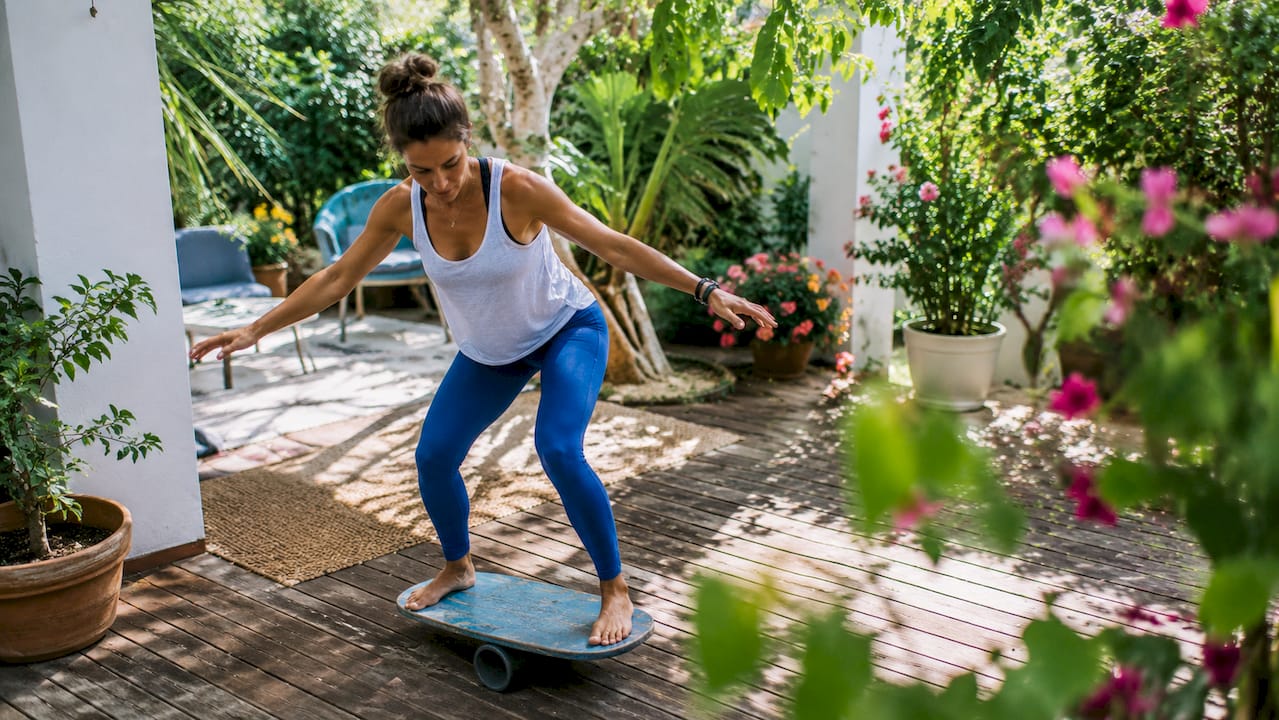
Dryland surf training is a land-based workout practice designed to build the balance, reactive stability, and coordination that directly transfer to surfing performance in the water. The industry term for this approach is surf-specific conditioning, and it goes far beyond push-ups and paddle simulations. Structured programs of two 20-minute sessions per week over 8–12 weeks produce measurable gains in wave count and ride duration. That means you can get meaningfully better at surfing without ever touching the ocean, as long as your training targets the right physical systems. Riparsurfschool has built this principle into its instruction approach since its founding in 2001.
What is dryland surf training and what does it actually target?
Dryland surf training is not a generic gym routine with a surf label on it. The physical demands of surfing center on reactive ankle stability, dynamic balance, core strength, and the ability to coordinate movement under unpredictable conditions. Most athletes underestimate how specific those demands are. Surfing performance bottlenecks more often trace back to reactive ankle stability than to paddle power or pop-up strength. That single insight should reshape how you structure every training session.
The core exercises in surf-specific conditioning address these demands directly. The most effective dryland surfing exercises documented in conditioning trials include:
Single-leg balance with perturbations: Stand on one leg while a partner delivers light pushes, or while you close your eyes. This forces your ankle and hip stabilizers to react, not just hold.
Squat-to-stand on unstable surfaces: Performing a BOSU squat-to-stand trains the hip and knee chain under shifting load, mimicking the compression and extension of riding a wave.
Lateral hops on unstable surfaces: Single-leg hops build the reactive power and landing control you need when a wave shifts direction beneath you.
Pop-up practice: Transitioning from prone to standing in one explosive movement. Keep this drill short. It matters, but it is not the priority.
The distinction between static and dynamic balance training is critical. Holding a balance board still for 60 seconds trains your postural system to resist movement. True surfing balance is dynamic and requires movement during training, such as lateral hops and ankle perturbation, not static holds. Static drills have a place in early progression, but they should not dominate your sessions.
Pro Tip: Neurological adaptation for balance improves faster with frequent short sessions of 15–20 minutes, five days per week, rather than one long weekend workout. Treat balance training like language learning. Short, daily exposure builds the neural pathways faster than marathon sessions.
How does dryland training improve your surfing in the water?
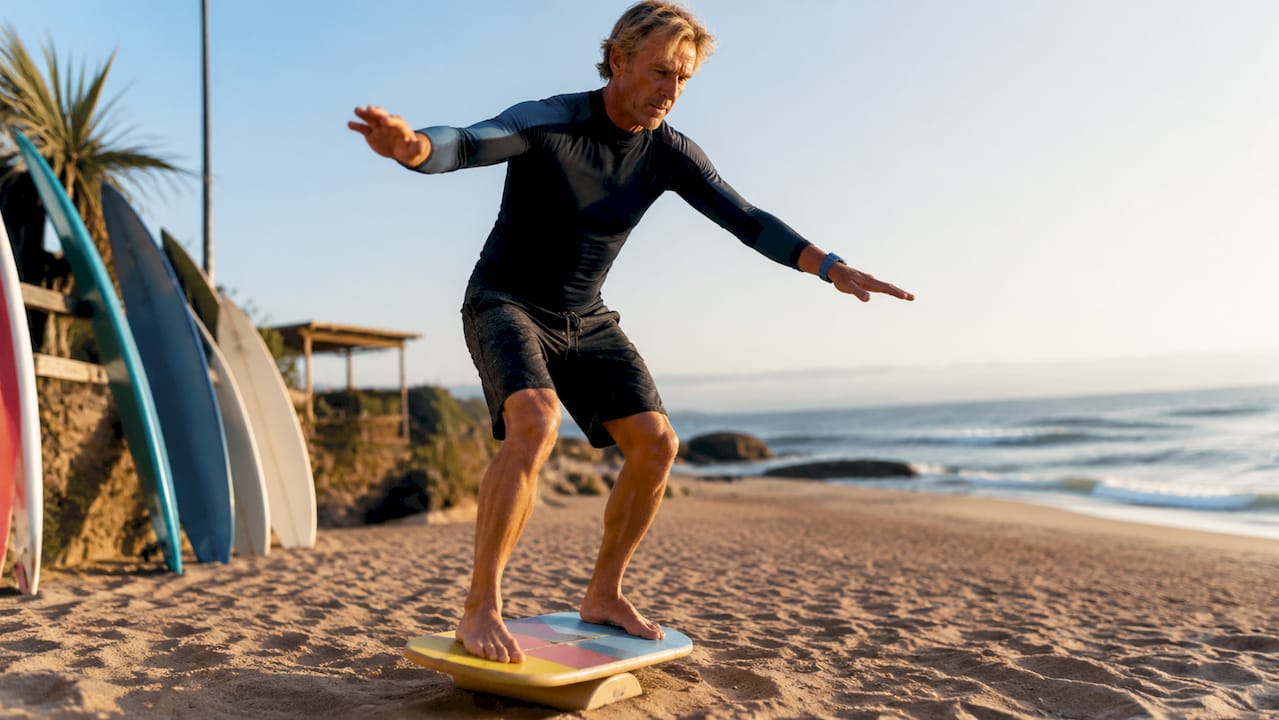
The transfer from land to water is the central question, and the evidence is clear. A 4-week balance program on multi-axis wobble platforms accelerates beginners’ ability to stand on a surfboard. The mechanism is neurological. Your nervous system learns to predict and correct for instability, and that skill carries directly into the ocean.
The table below shows what the research says about training outcomes:
Training method | Primary benefit | Transfer to surfing |
Perturbation-based reactive drills | Reactive ankle and hip stability | High. Simulates wave unpredictability directly. |
Static balance holds | Postural endurance | Moderate. Builds base but does not simulate wave chaos. |
Lateral hops on unstable surfaces | Explosive lateral control | High. Mirrors direction changes on a moving wave. |
Pop-up repetition on stable floor | Movement pattern memory | Low to moderate. Misses the balance demand of real waves. |
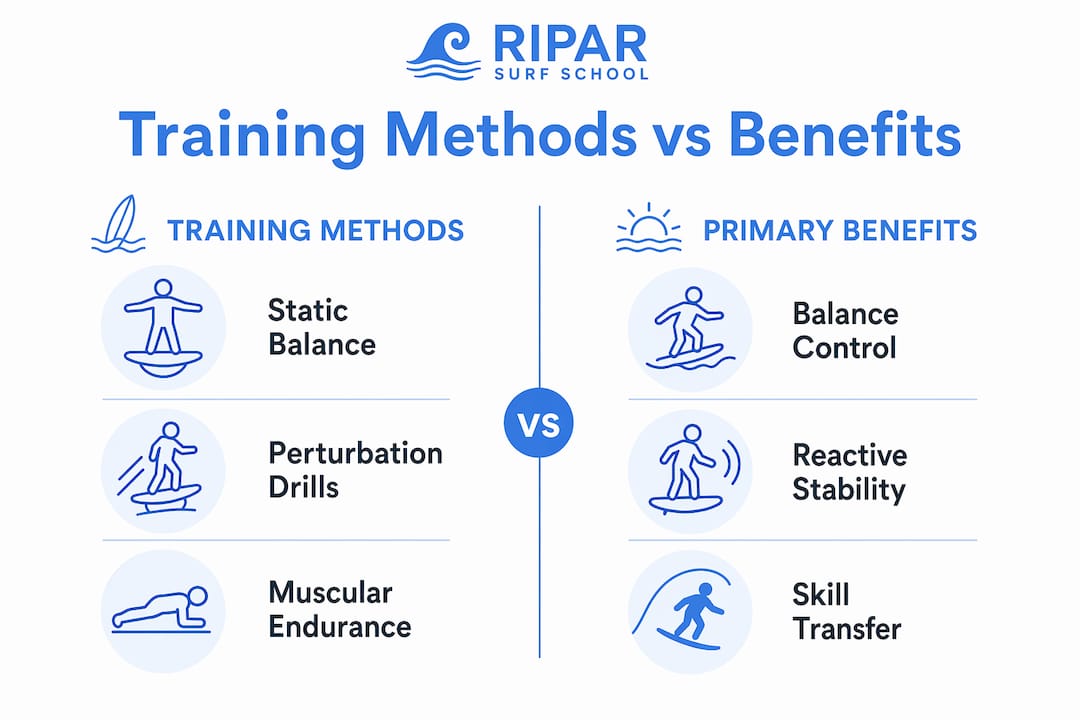
Perturbation-based balance training yields 1.4 times better sport transfer than static balance work. That gap is significant. It means the athlete who trains reactive drills for four weeks will outperform the one who spent the same time on a static balance board, even if both put in equal hours.
Dryland training also builds the muscular coordination and endurance that let you express your skills when you are tired. Dryland builds stability and resilience necessary for surfing under fatigue and pressure. Fatigue is when technique breaks down. If your stabilizers are conditioned on land, they hold up longer in the water.
Pro Tip: Do not treat dryland training as a replacement for ocean time. It is a support system. The goal is to arrive at the water with a more capable body, not to skip the water entirely. Pair your surf fitness work with regular sessions in the ocean for the best results.
What equipment and progression strategies work best?
The right equipment depends on where you are in your training. Starting with the wrong tool wastes weeks. Home-based dryland progression starts with roller-style boards for foundational stability, then advances to dynamic unstable surfaces that simulate realistic wave motion.
A practical progression looks like this:
Roller board (weeks 1–3): Learn to control a single axis of movement. The goal is a stable, controlled 60-second hold before you advance. This is not a shortcut milestone. It is a genuine readiness signal.
FLO cushion or multi-directional wobble platform (weeks 4–6): These surfaces move in multiple directions simultaneously, which is far closer to what a wave actually does. Add perturbation drills here. Have a training partner push your shoulders lightly while you hold your stance.
Eyes-closed drills (weeks 5–8): Removing vision forces your proprioceptive system to do all the work. This is one of the most effective ways to accelerate neurological adaptation.
Dynamic movement on unstable surfaces (weeks 7–12): Add lateral hops, squat-to-stand transitions, and single-leg landing drills on the wobble platform. This is where the training starts to feel genuinely surf-specific.
Integrated sessions with pop-up practice (ongoing): Once your reactive balance is solid, add pop-up drills at the end of each session. Keep them to five minutes. The session structure that maximizes surfing skill transfer dedicates 25 minutes to reactive balance work and 5 minutes to pop-ups in a 30-minute block.
Surf schools and hospitality providers increasingly integrate these tools into their programs. Riparsurfschool uses structured dryland components as part of its beginner surf lessons to accelerate the learning curve before students ever paddle out. The result is that beginners reach a stable standing position faster and with more confidence.
What are the most common mistakes in dryland surf training?
Most surfers who do dryland training get it wrong in the same predictable ways. Knowing these pitfalls saves weeks of wasted effort.
Over-relying on static balance boards. Standing still on a balance board feels productive. It is not surf-specific. Over-reliance on static exercises fails to simulate ocean wave unpredictability. The ocean never holds still, and your training should not either.
Spending too much time on pop-up drills. The pop-up is one movement. Repeating it on a stable floor builds muscle memory for that one movement, but it does not train the balance system that determines whether you stay on the board after you pop up.
Focusing only on paddle strength. Paddle conditioning matters, but it does not address the reactive ankle stability that limits most surfers’ performance. Prioritizing paddle work at the expense of balance training produces a surfer who can paddle hard but falls off the board.
Training infrequently in long sessions. A two-hour Saturday session does not build neurological adaptation as effectively as five 20-minute sessions spread across the week. The nervous system learns through repetition over time, not volume in a single day.
Training muscles instead of movements. Isolated leg press or calf raises do not transfer to surfing. The goal is to train movement patterns under unstable conditions. Your surf stance and balance on the board depend on coordinated movement, not isolated muscle strength.
The fix for all of these is the same. Build your sessions around reactive, perturbation-based balance drills. Keep sessions short and frequent. Reserve pop-up practice for the final five minutes. That structure is what the evidence supports.
Key Takeaways
Dryland surf training works because it trains reactive balance, neurological adaptation, and movement coordination, which are the exact physical systems that determine surfing performance.
Point | Details |
Reactive balance is the priority | Perturbation-based drills transfer 1.4× better to surfing than static balance holds. |
Session structure matters | Dedicate 25 minutes to reactive balance and 5 minutes to pop-ups in a 30-minute session. |
Frequency beats duration | Short sessions five days per week build neurological adaptation faster than long weekend workouts. |
Progress equipment gradually | Master a 60-second stable hold on a roller board before advancing to multi-directional surfaces. |
Dryland supports water time | Land training builds the stability and resilience you need to perform under fatigue in the ocean. |
What I have learned from watching surfers train on land
I have watched a lot of surfers approach dryland training the wrong way, and the pattern is almost always the same. They buy a balance board, stand on it while watching TV, and wonder why their surfing does not improve. The problem is not the equipment. The problem is that they are training the wrong thing.
The surfers who improve fastest are the ones who treat balance training as a skill, not a workout. They practice it the way a musician practices scales: short, focused, and daily. They add perturbation. They close their eyes. They make it uncomfortable on purpose. That discomfort is the signal that the nervous system is adapting.
Consistent practice in surfing, both in and out of the water, is what separates surfers who plateau from surfers who keep progressing. I have seen beginners at Riparsurfschool go through structured dryland preparation before their first lesson, and the difference in how quickly they find their feet on the board is striking. They are not stronger than other beginners. They are more neurologically prepared.
The other thing I would push back on is the idea that dryland training is only for serious athletes. The benefits of dryland training are actually most dramatic for beginners and intermediate surfers, because their balance systems have the most room to adapt. If you are just starting out, a few weeks of reactive balance work before your first surf trip will pay off more than any amount of paddle conditioning.
— Fernando
Riparsurfschool’s approach to surf skill development
Riparsurfschool, based at Praia Areia Branca near Peniche, Portugal, integrates land-based balance and stability work into its surf instruction for all levels. The school’s certified instructors use structured dryland components to prepare surfers before they enter the water, which shortens the learning curve and builds confidence faster.

Whether you are booking a group surf lesson or a private surf lesson, the instruction at Riparsurfschool is built around the same evidence-based principles covered in this article. Reactive balance, proper movement patterns, and structured progression are part of every session. If you are ready to put these methods to work in one of Portugal’s best surf locations, you can book your lesson directly online.
FAQ
What is dryland surf training?
Dryland surf training is a land-based conditioning practice that builds the balance, reactive stability, and coordination needed for surfing. It uses exercises like single-leg perturbation drills, lateral hops, and unstable surface squats to develop surf-specific physical skills.
How often should I do dryland surf training?
Short sessions of 15–20 minutes, five days per week, produce faster neurological adaptation than longer, infrequent workouts. Frequency is more important than session length for balance skill development.
Can dryland training replace time in the water?
Dryland training complements water time but does not replace it. It builds the stability and resilience you need to perform better in the ocean, but actual surfing skills still require practice on real waves.
What equipment do I need to start dryland surf training at home?
A roller-style balance board is the best starting point. Once you can hold a stable position for 60 seconds, progress to a multi-directional wobble platform or FLO cushion for more realistic wave simulation.
How long before I see results from dryland surf training?
A 4-week balance program on multi-axis platforms accelerates beginners’ ability to stand on a surfboard. Structured programs of 8–12 weeks produce measurable improvements in wave count and ride duration for surfers at all levels.
Recommended
Comments