

How Currents Affect Surfing: Techniques and Safety
- Fernando Antunes

- Jun 28
- 8 min read
TL;DR:
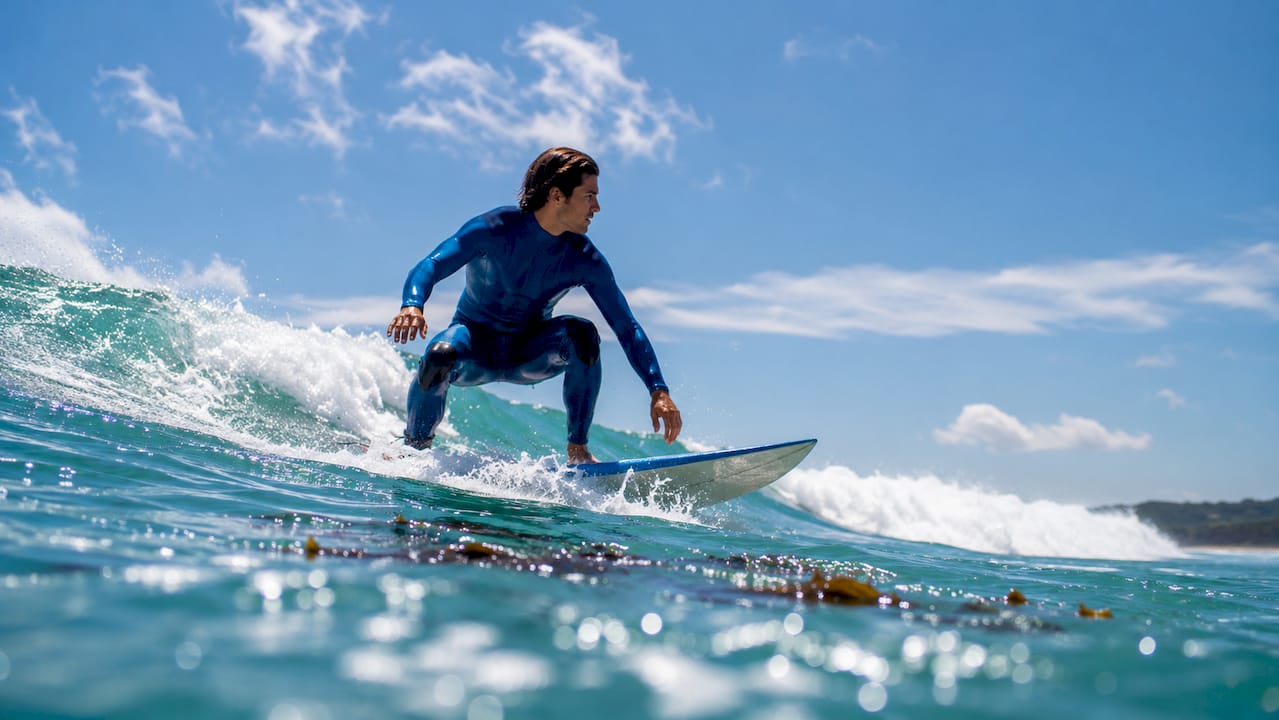
Ocean currents shape surf conditions by altering wave speed, height, and steepness, making current awareness essential for surfers. Rip channels serve as efficient routes to the lineup, while tide phases influence wave quality and safety. Understanding and reading these forces enhances surf performance and minimizes hazards.
Ocean currents are the single most underestimated force shaping your surfing experience, directly controlling wave height, steepness, and the speed at which waves reach the shore. Understanding how currents affect surfing separates surfers who read the ocean from those who simply react to it. The National Oceanic and Atmospheric Administration (NOAA) classifies rip currents as the leading cause of beach rescues worldwide, making current awareness a safety skill, not just a performance edge. From the giant waves at Nazaré to the sandbars of Praia Areia Branca, ocean currents and wave behavior are inseparable. Riparsurfschool has taught surfers to read these forces since 2001.
How do currents affect surfing conditions and wave shape?
The impact of ocean currents on surfing starts with a fundamental physics principle: currents change how fast waves travel, and that speed change reshapes the wave itself. Opposing currents reduce wave ground speed by up to 26% in water as shallow as 20 feet. That reduction compresses the wavelength and pushes wave energy upward, making waves steeper, taller, and more powerful. This is why some breaks fire on an ebb tide and go flat on a flood.
Following currents do the opposite. When a current moves in the same direction as the swell, it stretches the wavelength and flattens the wave. The result is a mushy, slow-rolling wave that is harder to ride with power. Surfers who do not account for current direction often paddle into sessions expecting solid waves and find nothing worth riding.
The practical takeaway is direct: check current direction before you paddle out, not just swell height and period. A 6-foot swell running into a strong opposing current can produce steep, fast walls. That same swell with a following current can produce barely rideable rollers.
Current Type | Effect on Wave | Surfing Impact |
Opposing current | Compresses wavelength, increases steepness | Steeper, more powerful, faster waves |
Following current | Stretches wavelength, reduces amplitude | Flatter, slower, less rideable waves |
Longshore current | Rotates wave crest angle | Shifts peak position along the beach |
Tidal ebb current | Drains water over sandbars | Increases wave speed and sharpness |
Tidal flood current | Deepens water over breaks | Softens and slows wave shape |
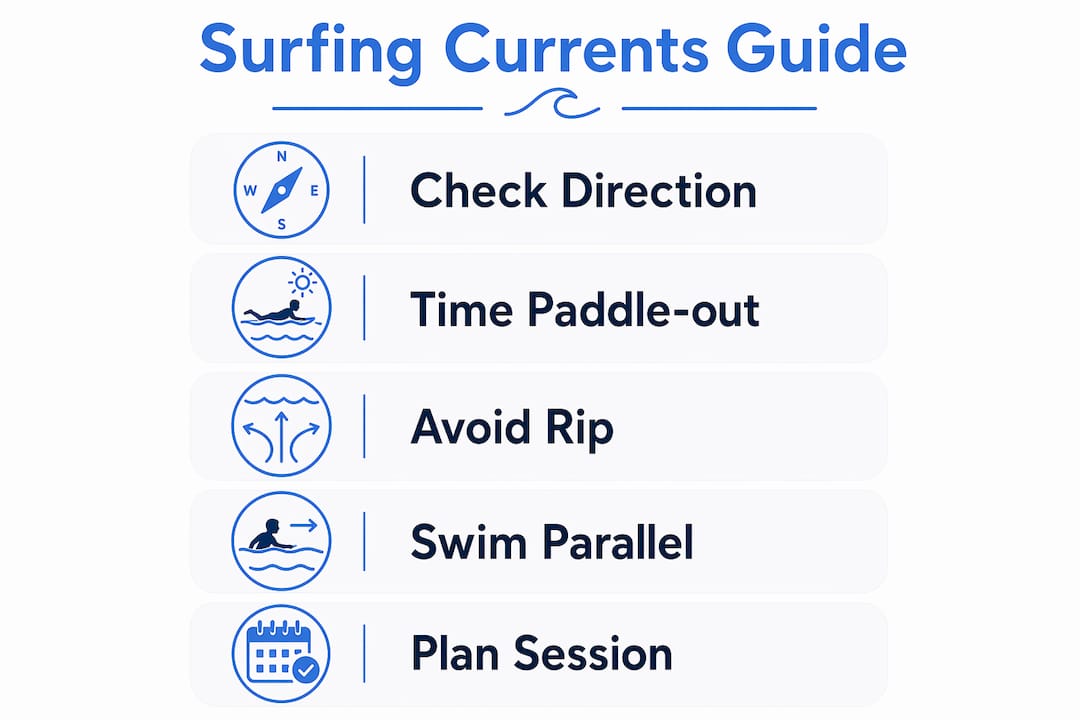
Pro Tip: Time your paddle-out to coincide with an incoming tidal flow. The current carries you toward the lineup with less effort, saving energy for the actual surfing.
What are rip currents and how do you surf them safely?
Rip currents are fast-moving channels of water flowing offshore, not downward pulling forces. This distinction matters enormously. Rip currents cause beach rescues primarily because swimmers exhaust themselves fighting the current head-on rather than escaping it laterally. Surfers who understand the mechanics of rip currents can use them as tools rather than threats.
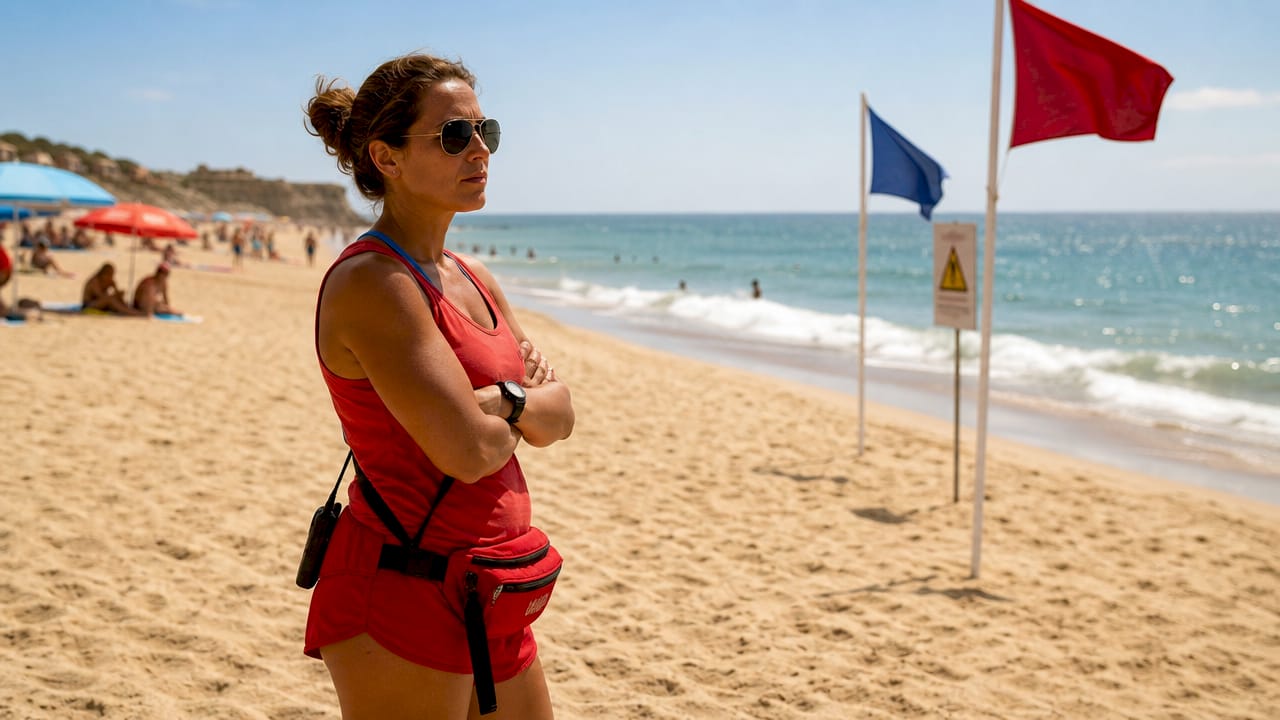
Spotting a rip current before you enter the water is a learnable skill. The visual cues are consistent across most beaches:
Discolored water: A rip channel often appears darker, murkier, or a different shade than the surrounding water due to stirred-up sand and debris.
Non-breaking wave sections: Rip channels cut through the surf zone, so you will notice a gap in the breaking waves where the current is moving water offshore.
Foam and debris lines: Floating material moves steadily seaward in a narrow band, tracing the current’s path.
Choppy, disturbed surface: The outgoing water creates a textured, irregular surface distinct from the cleaner water on either side.
The escape technique is straightforward: swim parallel to the shoreline until you exit the channel, then angle back toward the beach. Never swim directly against the current. Experienced surfers treat rip channels as transit routes to reach the lineup efficiently, paddling into the channel and riding it offshore before exiting laterally. This approach conserves energy and reduces paddle fatigue significantly.
Pro Tip: Before entering the water, spend five minutes watching the beach from a high vantage point. Rip channels are far easier to identify from elevation than from water level.
How do tidal currents influence wave quality and session timing?
Tidal currents are the most predictable current type surfers encounter, and they follow a reliable pattern. Flood tides deepen the water over sandbars and reefs, which softens wave shape and reduces power. Ebb tides drain that water away, exposing shallower sections that cause waves to steepen and break more sharply. Knowing this cycle lets you plan sessions around the best wave windows rather than guessing.
The relationship between tides and rip currents adds another layer. As tidal flow strengthens during ebb, rip currents intensify and shift position. A channel that was mild at high tide can become a strong offshore flow two hours later. Surfers who track tide times alongside swell forecasts make better decisions about where to position themselves in the lineup.
Here is a practical sequence for using tidal knowledge before a session:
Check the local tide chart the night before. Identify the ebb and flood windows and note when the tide transitions occur.
Match the tide phase to the break type. Reef breaks often work best on mid to low tide. Beach breaks with sandbars typically improve on a falling tide.
Arrive 30 minutes before the optimal tide window. This gives you time to observe the water before committing to a paddle-out.
Reassess mid-session. Tides shift wave shape continuously. A break that was working at the start of your session may change significantly within an hour.
Note rip current position as the tide drops. Channels intensify on ebb tide, so update your mental map of safe entry and exit points.
How does current-induced wave refraction shape surf breaks?
Wave refraction is the bending of a wave crest as different parts of it travel at different speeds. Currents cause refraction independently of the seafloor, which surprises many surfers who assume bathymetry alone determines where waves break. Longshore currents rotate wave crests by creating differential ground speeds across the wave face, steering the peak toward or away from your usual takeoff spot.
At Nazaré in Portugal, this interaction reaches its extreme. Submarine canyons and converging currents focus swell energy arriving from specific angles into concentrated, massive peaks. The canyon amplifies the wave height while the current interaction determines exactly where that energy surfaces. This is why Nazaré produces some of the largest rideable waves on the planet during specific swell and current combinations.
For everyday surfers, the lesson from Nazaré scales down directly. When a longshore current is running, the peak shifts along the beach. Surfers who stay fixed at one spot miss the best waves. Dynamic repositioning, moving with the current’s influence rather than fighting it, is the difference between catching sets and watching them break 30 meters away.
Coupled wave-current forecasting models now account for these refraction effects, improving storm swell predictions significantly. Surf forecasting apps that integrate current data give more accurate wave height and timing predictions than swell-only models. Checking a current-aware forecast before a session is now a standard part of surfer safety habits at a serious level.
Refraction Cause | Mechanism | Surfer Action Required |
Longshore current | Rotates wave crest angle along shore | Reposition laterally to track the shifting peak |
Submarine canyon | Focuses swell energy into narrow peak | Learn the canyon’s influence on specific swell angles |
Opposing current | Steepens and slows wave propagation | Adjust takeoff timing for faster, steeper entry |
Following current | Flattens and speeds wave travel | Paddle earlier and harder to match wave speed |
Key Takeaways
Ocean currents control wave steepness, peak position, and rip current intensity, making current awareness the most practical skill a surfer can develop beyond basic paddling technique.
Point | Details |
Opposing currents improve waves | They compress wavelength and increase steepness, making waves faster and more powerful. |
Rip currents are escape routes | Swim parallel to shore to exit, or use channels as efficient pathways to the lineup. |
Ebb tides sharpen wave shape | Falling tides drain water over sandbars, producing steeper and faster breaking waves. |
Refraction shifts peak position | Longshore currents rotate wave crests, requiring dynamic repositioning during a session. |
Current-aware forecasts are more accurate | Models combining swell and current data predict wave height and timing better than swell-only tools. |
What 20 years of reading currents actually taught me
Most surfers spend years chasing swell forecasts and ignoring the current data sitting right next to it. I made that mistake for longer than I care to admit. The shift happened for me at a beach break near Peniche, where I watched a solid swell go completely flat within 45 minutes of the tide turning. The swell had not changed. The current had.
Once I started treating current direction as the first variable to check, not the last, my wave count per session went up noticeably. Rip channels stopped being things I avoided and became my preferred entry route. Paddling into a channel, riding it offshore, and exiting laterally before the lineup takes a fraction of the energy of fighting whitewater for 10 minutes. The qualities of a good surf instructor include teaching this skill early, because it changes how students experience the ocean from their very first sessions.
The part that still surprises newer surfers is how much tides affect the same break on the same day. I have surfed spots that were genuinely excellent at low tide and completely unrideable two hours later at high tide. The wave height was identical. The current and water depth over the sandbar made all the difference. Respecting that variability is not just a performance insight. It is a safety mindset. The ocean does not hold its shape for you.
— Fernando
Riparsurfschool: learn to read the ocean, not just the waves
Understanding currents in theory is one thing. Applying that knowledge in real surf conditions is where the learning actually happens. Riparsurfschool has been teaching surfers to read the ocean at Praia Areia Branca, near Peniche and Ericeira, since 2001.

Every lesson at Riparsurfschool covers ocean awareness alongside technique, including how to spot rip channels, time sessions around tidal windows, and adjust positioning when longshore currents shift the peak. Certified local instructors bring years of experience reading the specific current patterns of Portugal’s Atlantic coast. Whether you prefer group surf lessons with a social atmosphere or focused one-on-one coaching, Riparsurfschool structures each session around the actual conditions on the day. Book your surf lessons and start reading the water with confidence.
FAQ
What is the main way currents affect wave quality?
Opposing currents compress wavelength and increase wave steepness, producing more powerful and rideable waves. Following currents flatten waves, reducing their rideability.
How do you escape a rip current safely?
Swim parallel to the shoreline to exit the current channel, then angle back toward the beach. Never swim directly against the current, as exhaustion is the primary cause of rip current rescues.
Does tide affect rip current strength?
Yes. Rip currents intensify during ebb tide as draining water accelerates through offshore channels. Surfers should reassess channel positions as the tide drops during a session.
Why do waves break in different spots when a current is running?
Longshore currents rotate wave crests by creating differential wave speeds across the break. This shifts the peak position along the beach, requiring surfers to reposition dynamically rather than stay fixed.
How do currents create big waves at places like Nazaré?
Submarine canyons focus swell energy into narrow, concentrated peaks. When currents interact with that bathymetry at specific angles, wave height amplifies dramatically, producing the giant waves Nazaré is known for.
Recommended
Comments