

What is a surf lodge? Community, learning, and experience
- Fernando Antunes

- May 9
- 10 min read
TL;DR:
A surf lodge provides dedicated accommodation that combines comfort, surf culture, and a vibrant community atmosphere. It offers surf access, lessons, equipment, and social activities aimed at building connections and improving skills. Choosing the right lodge depends on your skill level, coaching needs, social preferences, and travel priorities.
Most people booking their first surf trip quickly run into a frustrating wall: surf lodge, surf camp, surf school, surf house. The terms get tossed around interchangeably, and almost nobody explains the difference. A surf lodge is actually one of the most rewarding formats for a surf trip because it combines real accommodation comfort with surf culture, guided coaching, and the kind of social energy that makes a week feel like a month of memories. This guide breaks down exactly what a surf lodge offers, how the community works, what the learning looks like, and how to find the right fit for your skill level and travel style.
Table of Contents
Key Takeaways
Point | Details |
Surf lodges blend community and surf | They aren’t just hotels—they foster connections and the surfer lifestyle. |
Learning options vary widely | Ask detailed questions about coaching structure and progression before booking. |
Amenities support surfers | From communal kitchens to gear storage, surf lodges offer features designed for wave chasers. |
Choose for the experience you want | Some lodges excel at community, others at surf progression; find the right fit for your travel style. |
What is a surf lodge?
A surf lodge is a dedicated accommodation built around the needs and lifestyle of surfers. It is not just a place to sleep near the beach. It bundles surfing access, a surf-oriented culture, and a community atmosphere all under one roof. The idea is simple: you arrive as a stranger, and by the end of the week, you are swapping wave stories over dinner with people from a dozen different countries.
Core features of a proper surf lodge typically include:
Surf-inspired lodging: rooms or dorms designed with surfers in mind, usually near the water
Surf lessons or coaching sessions: organized through the lodge or in partnership with a nearby surf school
Equipment access: boards, wetsuits, and leashes either included or available to rent
Surf-friendly facilities: board storage, gear drying areas, outdoor showers, and communal hangout spaces
Social programming: group dinners, beach bonfires, sunrise sessions, and movie nights
“A surf accommodation experience can be purely social and casual or fully structured for progression. The difference comes down to the lodge’s philosophy and the programs it offers.”
Here is the key misconception to clear up: not every surf lodge delivers intensive coaching. Some focus mainly on creating a great atmosphere with great wave access and leave the hard technical work to you. Others operate almost like surf schools with a place to sleep attached. Choosing a surf camp means matching coaching structure, wave type, and season to your actual skill level and goals.
Surf lodges differ from regular hotels because hotels simply offer accommodation without any surf culture, community programming, or wave-focused amenities. They differ from traditional surf camps because surf camps often use bunk dorms in basic facilities, while lodges typically offer a step up in comfort, design, and social organization.
Surf lodge accommodations and amenities
With the basics defined, the next step is seeing what you actually get when you book a surf lodge. The range is wide, but most lodges follow a similar format with some variation based on price point and location.
Room types typically include:
Dorm beds shared with 4 to 8 travelers (great for solo travelers on a budget)
Private rooms with en-suite or shared bathrooms
Shared apartments or bungalows for small groups or couples
Surf lodge amenities go well beyond the basics. Good lodges create a social hub with relaxed common areas and quality facilities designed specifically for surfers. You can expect communal kitchens, surfboard storage rooms, gear drying spaces, comfortable lounges, and outdoor terraces. The better lodges add extras like yoga decks, pools, guided hikes, and organized group meals.
Here is a quick overview of what lodges typically offer across different tiers:
Feature | Budget lodge | Mid-range lodge | Premium lodge |
Room type | Dorm beds | Private rooms | Suites or apartments |
Meals | Breakfast only | Breakfast and dinner | Full board |
Equipment | Basic rental | Boards and wetsuits included | Full quiver with guides |
Extras | Common room | Yoga, pool | Spa, video coaching, excursions |
Coaching | Optional add-on | Included sessions | Daily structured lessons |
Community vibe | Strong | Strong | Varies by crowd |
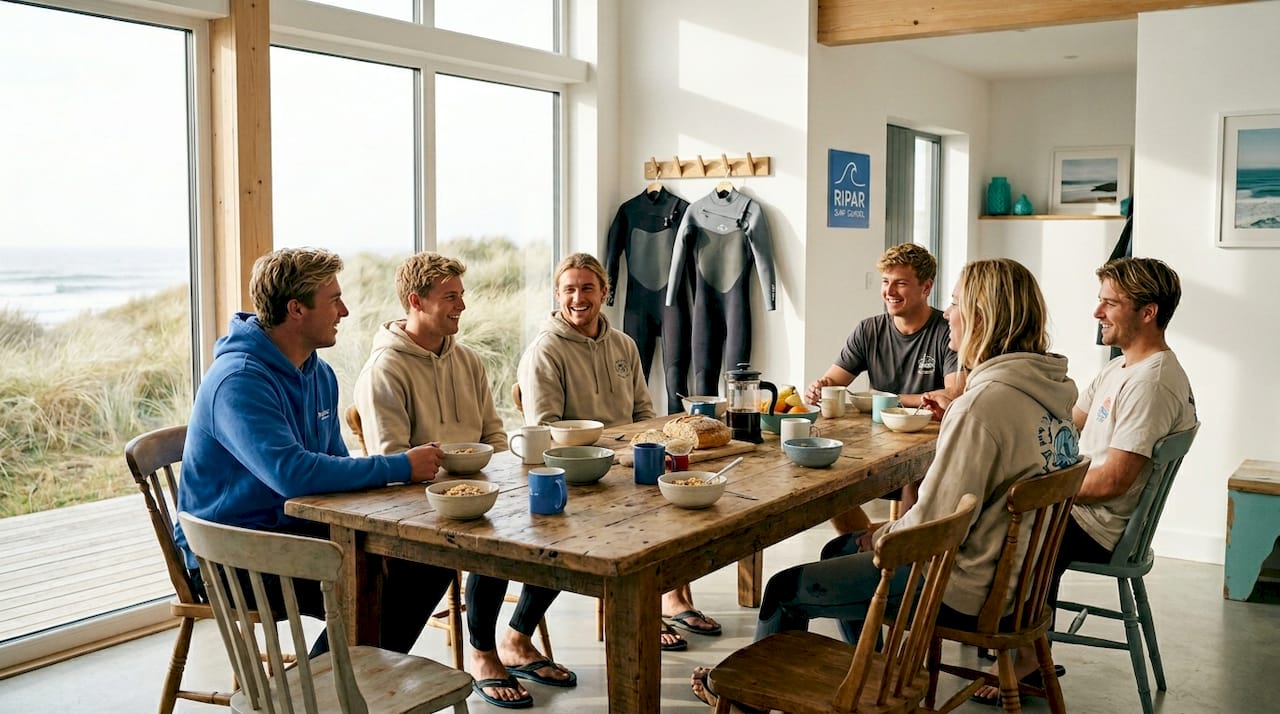
The hospitality best practices that define a memorable stay come down to design intent. The best surf lodges deliberately build spaces that force positive interaction. Long communal tables, shared cooking areas, and open-air decks make it easy to meet people without any awkwardness. You do not have to try hard to connect. The environment does it for you.
A well-designed surf lodge near Portugal’s coast, for example, will have a deck positioned toward the ocean so that guests naturally gather there after sessions to compare notes on the waves. That detail alone can shape the entire social dynamic of your trip.
Learning to surf at a lodge: Coaching, courses, and progression
Accommodation is just the beginning. What really shapes your experience is how you will learn to surf. This is where many travelers make expensive mistakes. They book a lodge assuming the coaching will be structured and progressive, only to find it is more of a “follow the instructor into the water and do your best” situation.
Quality surf coaching at a lodge looks like this:
Level-based group sorting: Beginners, intermediates, and advanced surfers are kept in separate groups so instructors can tailor feedback appropriately.
Theory or land drills before the session: Good programs spend time on the beach explaining positioning, pop-up mechanics, and how to read waves before anyone gets wet.
In-water coaching with real-time feedback: Instructors watch your technique in the water, not from the shore with sunglasses and a coffee.
Video analysis sessions: Some lodges film your surfing and review the footage as a group, which dramatically accelerates your progression.
Progression tracking: The best programs note where you started and check whether you improved by the end of the week.
Coaching quality and intensity vary widely between lodges. Some are genuinely structured for fast progression with small groups, theory sessions, and video review. Others are more casual and social, where getting waves and having fun is the clear priority over technical improvement.
Neither approach is wrong. But knowing which one you are paying for matters a lot.
Pro Tip: Before booking, ask the lodge three direct questions: How many students per instructor? Do you use video analysis? How do you separate guests by level? If they cannot answer clearly, that tells you something important about their program.
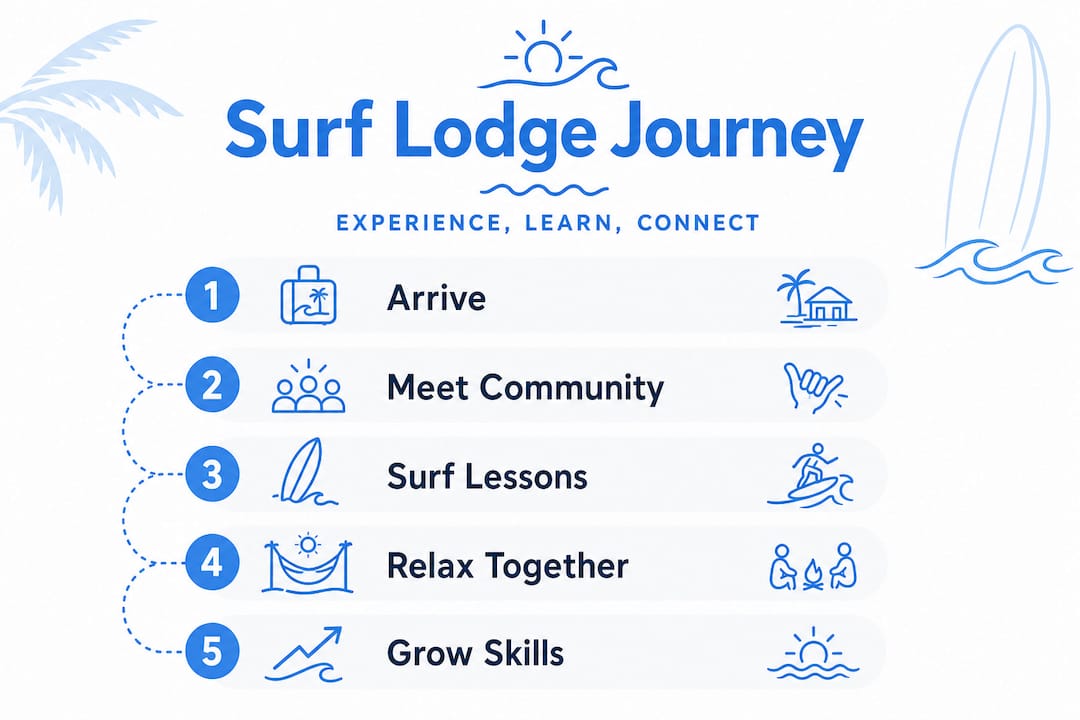
Your answers will tell you everything. A qualified surf instructor who works with small, level-matched groups and tracks your progress will get you standing on a wave far faster than a larger group with a casual guide. That difference can mean catching your first green wave on day two instead of day five.
Surf lodge community: Making friends and sharing the stoke
Beyond accommodations and lessons, there is something all surf lodges aim to deliver: genuine community and shared stoke. This is harder to advertise than a swimming pool, but it is often the thing guests remember most.
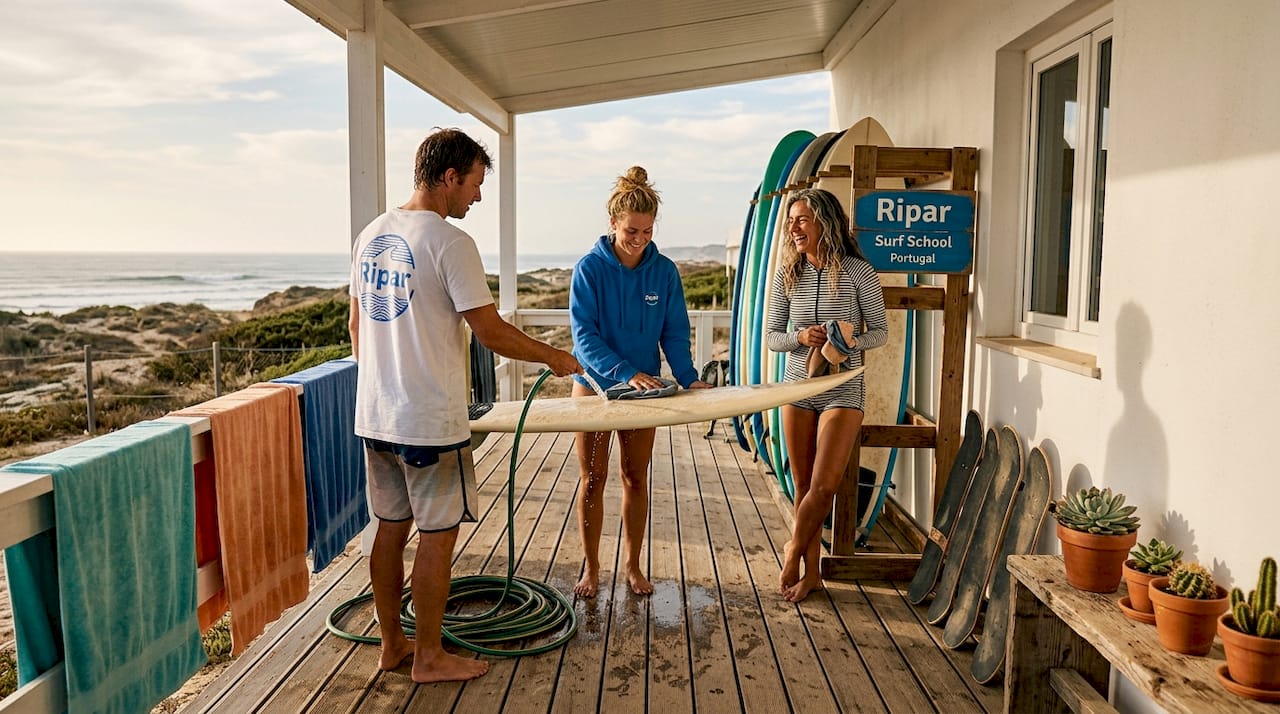
Surf lodges attract a genuinely interesting mix of people. Solo travelers looking for an adventure without loneliness. Friend groups who want an active trip. Couples who want something more meaningful than a resort holiday. Intermediate surfers looking to level up. Beginners who are terrified but excited. What brings them together is the shared experience of the ocean.
Common community events and activities at surf lodges include:
Group dinners with communal seating and shared dishes
Sunrise or sunset surf sessions followed by breakfast together
Movie nights with classic surf films
Yoga sessions on the deck or beach
Informal board-waxing clinics and gear talks
Day trips to nearby points, breaks, or coastal villages
“Surf camps can be more casual and social, with an emphasis on group activities and shared experiences, though the energy varies depending on the group and how the lodge manages its social programming.”
Community is not automatic. It depends on the lodge’s design, staff energy, and the current group of guests. Good guest experience tips from the hospitality world consistently point to the same insight: shared activities at specific times create connection far better than hoping guests will naturally mingle. The best surf lodges create structured moments for people to meet without making it feel forced.
The honest truth is that some weeks you will land in a lodge with an incredible group, and some weeks the chemistry is quieter. Reading recent reviews specifically about the social atmosphere, not just the waves or food, gives you the most realistic picture of what to expect.
Surf lodges vs surf camps and other options: What’s right for you?
To make a confident decision, let’s stack up surf lodges against other popular options so you can see clearly where each fits.
Option | Comfort level | Coaching focus | Community | Best for |
Surf lodge | Medium to high | Varies (ask upfront) | Strong | Intermediate travelers, social learners |
Surf camp | Low to medium | Often structured | Medium to strong | Beginners focused on fast learning |
Surf school (day only) | N/A | High | Low | Locals or guests staying nearby |
Regular hotel near beach | High | None | None | Independent surfers with own boards |
Surf house / rental | Medium | None (self-organized) | Low | Experienced surfers, groups |
A surf camp vs surf lodge comparison comes down to priorities. Surf camps tend to be more affordable and more focused on maximizing water time and technical improvement. Surf lodges typically invest more in comfort, design, and social experience, sometimes at the expense of structured coaching intensity.
Matching wave type, season, and coaching structure to your skill level is the most important decision you will make when choosing between these options.
Pro Tip: Write down your top priority before comparing lodges. Is it fast skill progression? Social connection? Comfort? Access to specific waves? Once you know your number one priority, the right choice usually becomes obvious quickly.
Your skill level also shapes the decision significantly. True beginners benefit from highly structured daily coaching, which some lodges do not provide in depth. Intermediate surfers who already know how to ride waves often get more out of a lodge’s relaxed social environment, freedom to surf independently, and occasional coaching sessions to work on specific skills.
The truth about surf lodges: What most guides leave out
Here is the honest take after years of watching surfers arrive excited and leave either transformed or disappointed. The biggest mistake people make is assuming that a surf lodge with great photos, a rooftop terrace, and an impressive Instagram presence will automatically deliver great surfing progression. It often does not.
Pretty facilities do not teach you how to generate speed on a wave or read a swell. The real measure of a surf lodge is the teaching quality and the practical coaching insights behind every session. Even within lodge-style stays, coaching intensity varies enormously. Some programs run tight, level-based groups with theory, video review, and real progression tracking. Others put twelve people in the water and hope for the best.
Atmosphere and personal fit matter more than most travelers realize going in. If you are an introvert who finds communal dinners exhausting, a lodge with heavy social programming might drain rather than energize you. If you are a fast learner who wants daily technical improvement, a lodge with a casual “just go surf” philosophy will frustrate you after day two.
Ask pointed questions before you book. Read reviews that mention the instructor names, the group sizes, and specific moments rather than just “great vibes.” The lodges that produce genuinely happy guests are the ones that are honest about what they offer, match guests to the right experience level, and keep their promises about coaching quality and community.
Comfort and location matter, but they are table stakes. Any good lodge can offer clean sheets and a nice sunset view. What separates a memorable surf trip from an average one is whether you got better at surfing and whether you made real connections with people who love the ocean as much as you do.
Ready to experience a surf lodge for yourself?
If this guide has helped clarify your surf travel plans, here’s where to find your next adventure.
At Ripar Surf School and Surfcamp Portugal, we have been running surf experiences since 2001 from our home base at Praia Areia Branca, just minutes from some of Europe’s most celebrated waves near Peniche and Ericeira. Our Ripar surf house is designed around exactly the kind of community-first, coaching-serious experience this guide describes.

Small groups, certified local instructors, and genuine village atmosphere are what we offer. You will not be lost in a crowd of fifty. You will surf with people at your level, get real feedback, and spend your evenings in a place that actually feels like home. When you are ready to stop researching and start paddling out, you can book a surf lodge stay directly and choose the package that fits your schedule, skill level, and travel style. Questions are always welcome before you commit.
Frequently asked questions
What is typically included in a surf lodge package?
Most surf lodge packages include accommodation, surf lessons or guiding, equipment use, and access to communal facilities and social events. Package contents vary by lodge and tier, so always confirm what is included in writing before booking.
Do surf lodges provide equipment rental?
Yes, surf lodges almost always offer surfboard and wetsuit rentals as part of the package or for an additional fee. Many lodges bundle boards and wetsuits with transport and coaching to simplify logistics for traveling surfers.
Are surf lodges suitable for solo travelers?
Yes, surf lodges are very popular among solo travelers because they foster a communal atmosphere and organized group activities. The social and group-focused nature of lodge life makes it easy to meet people without any prior connections.
How do I know if a surf lodge fits my skill level?
Check if the surf lodge offers level-based coaching and a clear progression system, and ask how they organize lessons by ability. Matching skill level to structure and wave type is the most reliable way to find the right fit.
Recommended
Comments