

Your guide to surf-friendly villages in Portugal

TL;DR:
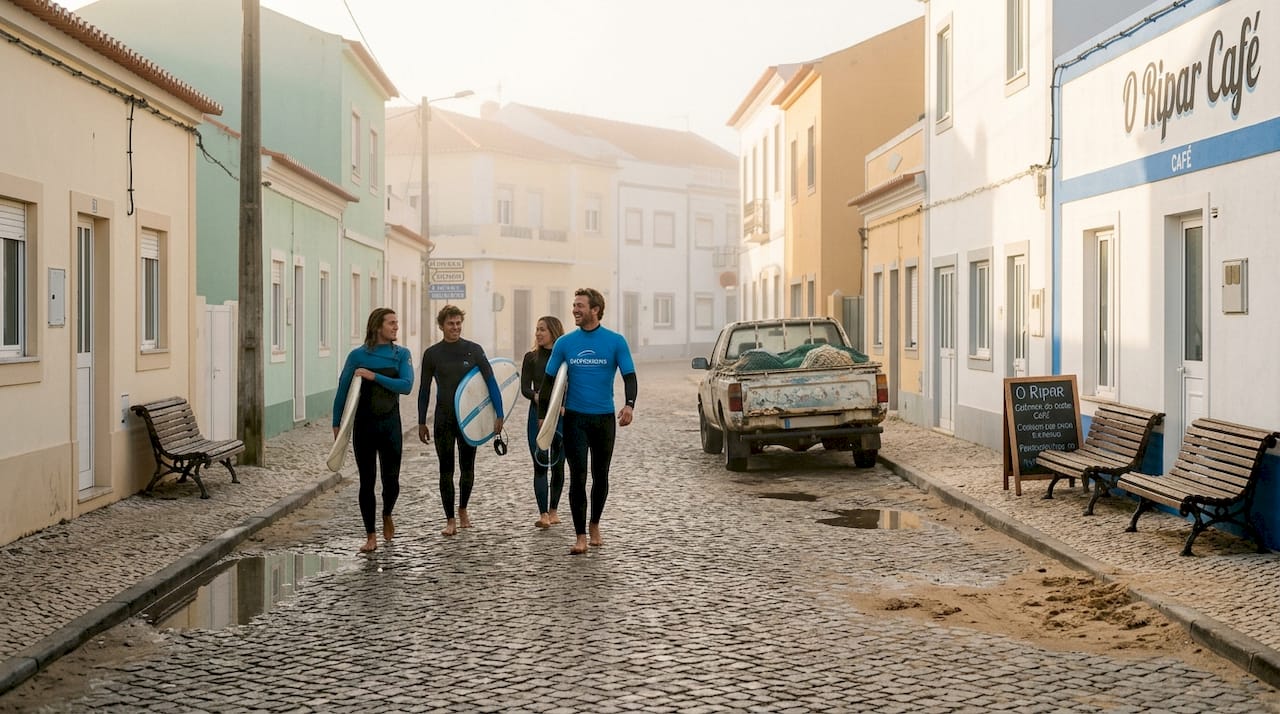
Genuine surf-friendly villages in Portugal are small, walkable coastal communities where surf access is part of everyday life and locals maintain an authentic, community-driven culture. They contrast with larger, tourist-oriented surf towns that lack the close-knit atmosphere and cultural depth of true villages, providing a more relaxed and immersive experience. To maximize your trip, prioritize staying within walking distance, engaging with local businesses, and respecting surf etiquette, ensuring an authentic and rewarding surf experience rooted in community.
Most people planning a surf trip spend weeks obsessing over wave forecasts, swell charts, and break reputations. But the surfers who come back year after year rarely talk about a single perfect wave. They talk about the village where the bakery owner saved them a pastel de nata, the morning they paddled out alongside the same fisherman for the third day in a row, and the way the whole community moved to the rhythm of the tides. A surf-friendly village is typically a small, walkable coastal settlement where surf access is woven into everyday life, not bolted on as a tourist attraction. This guide breaks down exactly what that means, why it matters, and how to find it in Portugal.
Table of Contents
Key Takeaways
Point | Details |
Village integration | The best surf-friendly villages blend daily life, local culture, and easy surf access for a lived-in experience. |
Community matters | A strong sense of belonging and shared passion makes surf villages ideal for both learning and connecting. |
Differences to big towns | Surf villages are more intimate, while busy surf towns offer variety but less local character. |
Practical planning | Staying near surf, booking early, and engaging with the community amplifies your trip’s value. |
Defining a surf-friendly village
Not every coastal town with a surf school qualifies. The term gets tossed around loosely in travel blogs, but there is a meaningful difference between a village that has grown organically around surf culture and a beach resort that rented a few foam boards.
A genuine surf-friendly village shares a specific set of traits. According to surf travel research, the definition centers on a small, walkable, locally centered coastal settlement where surf access is integrated into everyday life. That means the surf break is not a 30-minute taxi ride away. It means the surf school instructor probably grew up there. It means the café serves breakfast at 7 a.m. because that is when the surfers want to eat.
Here are the clearest signs you have found a genuine surf-friendly village:
You can walk from your bed to the water in under 10 minutes
Surf equipment rentals and local lessons are available, not just imported tour packages
The community includes working locals, not just visiting tourists and resort staff
Restaurants and cafés serve food locals actually eat, not just “tourist menus”
There is a mix of generations in the water, from young groms to retired fishermen
Local events, markets, and festivals happen independently of surf tourism
The table below captures the core characteristics shared by Portugal’s most authentic village surf culture destinations.
Feature | What it looks like in practice |
Size | Small to medium, typically under 10,000 residents |
Walkability | Beach, cafés, and basic amenities all within walking distance |
Surf access | Breaks within or directly adjacent to the village boundary |
Community integration | Locals surf, fish, and live there year-round |
Surf infrastructure | Surf schools, board rentals, and repair shops embedded in village life |
Cultural depth | Fishing heritage, local markets, historic architecture |
The beach village essentials that make these destinations work are not accidental. They are the product of communities that were there long before the surf industry arrived, and that have managed to welcome surfers without losing their identity.
“A lived-in surf village does not need to advertise its soul. You feel it the moment you arrive. The salt is in the air, the boards are propped against the houses, and nobody is performing for the camera.” This kind of organic atmosphere is what no resort can manufacture, no matter the budget.
Surf-friendly villages vs. busy surf towns
Understanding what makes a surf-friendly village special, it is important to see how these differ from larger, busier surf destinations.
Bigger surf towns have real advantages. More breaks, more variety, more nightlife, and usually better international transport links. But size and variety come at a cost. The sense of belonging fades. The local café gets replaced by a chain coffee shop. The surf school is no longer run by someone who learned to surf on that exact beach.
Some travel guides actually describe certain popular Portuguese destinations as extended beach zones, meaning places that offer access to multiple breaks across a wide stretch of coastline, rather than a tightly defined village with a unified community feel. You can get excellent surf variety in these spots without ever experiencing the intimacy of a real surf village.
The comparison table below makes the contrast concrete.
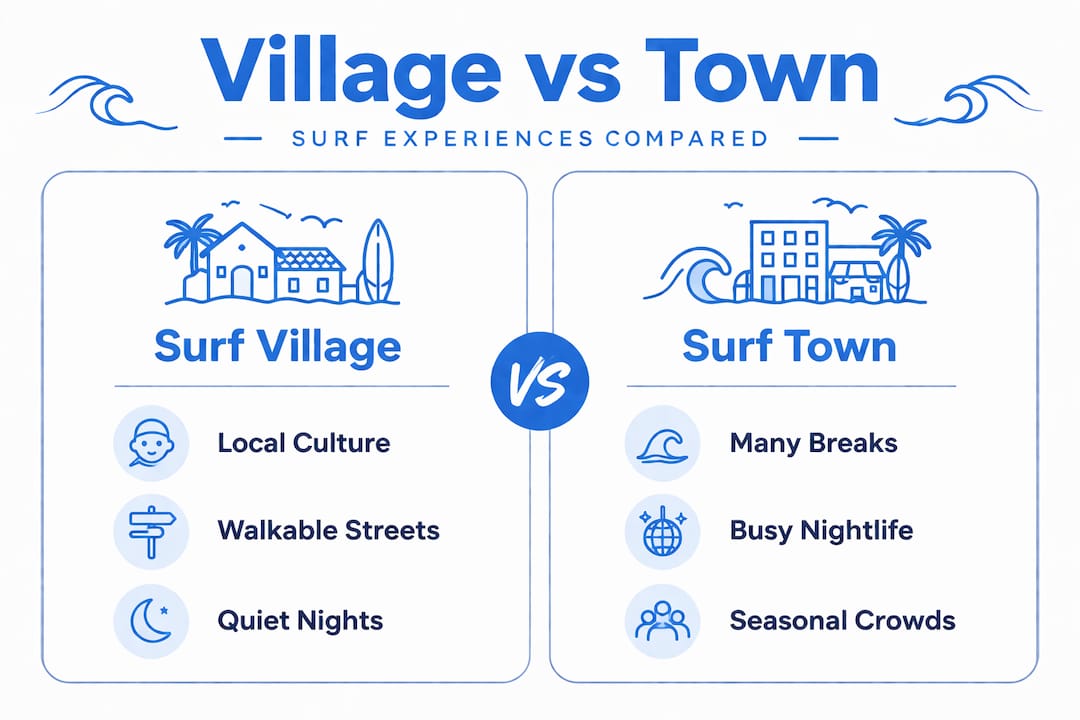
Factor | Surf-friendly village | Busy surf town |
Population | Small, stable | Larger, seasonal swings |
Pace | Relaxed, local rhythm | Fast, tourist-driven |
Surf access | Walk to the break | Often requires transport |
Community feel | Tight-knit, inclusive | Fragmented, transient |
Local integration | High | Low to moderate |
Price level | Generally lower | Higher in peak season |
Crowds in water | Manageable | Can be intense |
Accommodation | Small guesthouses, surf camps | Hotels, large resorts |
The right choice depends on what you want from your trip. But if your goal is to actually improve your surfing while genuinely relaxing, surf accommodation inside a real village dramatically changes the experience. When your instructor knows which bank is working at low tide and has been reading those waves since childhood, your learning curve shortens fast.
Pro Tip: If a place calls itself a “surf village” but the majority of its businesses opened in the last five years, all cater exclusively to tourists, and there are no visible signs of a working local economy like fishing boats, small farms, or year-round residents, you are probably looking at a resort cluster with a rebrand. Authentic surf villages have layers. Look for them.
Local culture and the community vibe
Beyond just the surf, the heart of these villages lies in their strong community ties and authentic lifestyle.
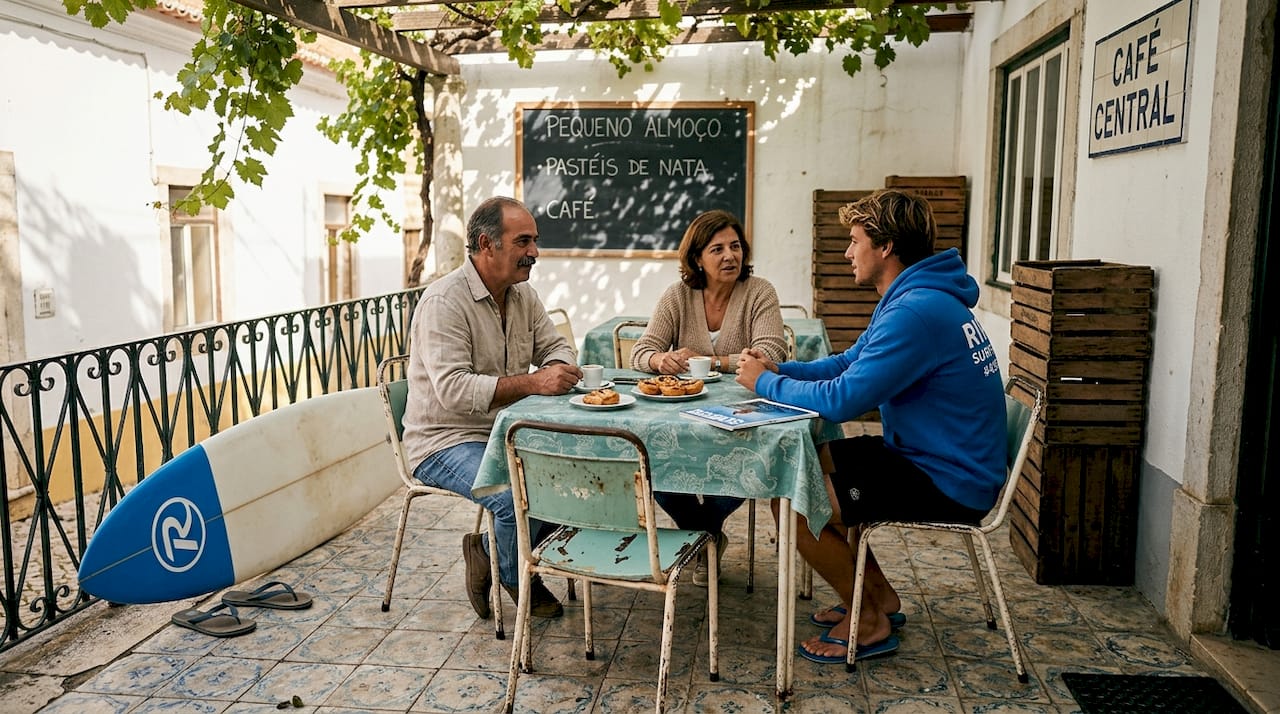
Portugal’s surf villages carry centuries of coastal culture. Places like Ericeira and Peniche sit on top of working fishing harbors and everyday coastal life, combining traditional livelihoods with surf schools and nearby breaks in a way that makes your stay feel genuinely lived-in rather than purpose-built for visitors. That layering of old and new is what makes Portuguese surf villages hard to replicate anywhere else in Europe.
The cultural ingredients that matter most include:
Morning fish markets: Fresh catch sold at dawn, often steps from the beach
Local cafés and tascas: Family-run spots where locals eat lunch for under 10 euros
Weekly markets: Produce, crafts, and conversation happening independently of surf season
Religious and cultural festivals: Tightly tied to local identity, not the tourist calendar
Fishing heritage: Boats, nets, and boathouses that predate surf tourism by generations
Community surf events: Informal competitions, clean-up days, and beginner sessions organized by locals
Roughly 70 to 80 percent of Portugal’s most celebrated surf destinations still retain an active fishing or maritime economy alongside their surf tourism scene. That is not a coincidence. The infrastructure built for fishing towns, the early morning routines, the physical intimacy with the ocean, creates exactly the grounded, real-world context that makes surfing in these villages feel different from surfing in a purpose-built resort.
The community atmosphere in surf camps located in these villages reflects that same energy. You are not just signing up for lessons. You are stepping into a daily rhythm that was there before you arrived and will continue after you leave. That permanence is what gives it weight.
Pro Tip: Introduce yourself to at least two local business owners in the first 24 hours of your stay. Ask the bakery where the locals swim. Ask the surf shop which break is best avoided on a southwest wind. These conversations cost nothing and will give you better information than any travel app. They also begin the process of actually belonging somewhere, even for a week.
The benefits of surf retreats in culturally rich villages go well beyond skill development. People come for the waves and stay for the feeling of being genuinely welcomed somewhere.
Maximizing your surf village visit: Practical tips
Knowing what makes these villages special, here is how you can plan your surf trip for the most authentic and relaxed experience.
The ecosystem of surf schools, rentals, and community-oriented activities that defines a great surf village works best when you engage with it intentionally. Being passive and treating it like any other beach vacation means missing the most valuable parts.
Follow these steps to build your ideal surf village trip:
Choose location first, wave stats second. Research the village itself before fixating on surf conditions. Does it have year-round residents? Local businesses? A fishing port or old town center? These details matter more than the swell chart for your overall experience.
Book surf lessons with a local school, not a travel platform. Local schools are run by instructors who actually live there. They know the seasonal variations, the safest beginner zones, and which mornings are worth waking up early for. Browsing the photo gallery of a surf school gives you a clear read on whether the vibe matches what you are looking for.
Stay within walking distance of both surf and village center. This sounds obvious but makes a dramatic difference. When your accommodation is walkable to the beach and to the main village street, your whole trip changes. You stop being a day visitor and start being a temporary local. Check out surf house options in Peniche for a good example of what centrally placed, community-embedded accommodation looks like in practice.
Eat where locals eat, not where menus are in five languages. The food will be better and cheaper, and you will meet people who actually live there. Ask your surf instructor for one restaurant recommendation. That question alone usually sparks a longer conversation.
Respect the local surf etiquette. Every break has unwritten rules. In a village, those rules are enforced not by lifeguards or signs but by the community itself. Watch before you paddle out. Learn the pecking order. Give way. Say good morning. These small gestures earn real respect in tight-knit surf communities.
Plan your trip for shoulder season if possible. May through June and September through October offer great surf conditions in Portugal without the peak-summer crowds. Class sizes at local surf schools are smaller, beaches are calmer, and locals are more available to talk.
Pro Tip: Book your surf lessons at least four to six weeks ahead if you are visiting between June and September. Small local schools fill up fast, and the best instructors often have returning students who book the same slots year after year. Early booking also gives you better choices for class times and group sizes.
Why finding the right vibe matters: An insider’s take
After more than two decades running surf lessons and camps out of Praia Areia Branca, near Peniche, we have seen one pattern repeat itself more than any other. The surfers who make the fastest progress are almost never the ones who chased the biggest, most prestigious breaks. They are the ones who found a place where they felt comfortable enough to fall, get back up, and try again without an audience of advanced surfers rolling their eyes.
That comfort comes from vibe. And vibe is not a soft, unquantifiable thing. It is the direct result of community, pace, and the feeling that you belong somewhere, even temporarily.
There is a myth in surf culture that only world-class waves produce world-class surfers. But the vast majority of people reading this guide are not training for a professional tour. They want to stand up confidently, feel the ocean beneath them, and carry that memory home. For those goals, a supportive, welcoming village environment consistently outperforms a technically superior but socially hostile break.
The authentic surf village stories we hear most often from guests are not about the day they caught their biggest wave. They are about the evening they had dinner with their instructor’s family, or the morning a local surfer spotted their mistake and spent 20 minutes helping them fix it for no reason other than community goodwill. Those moments are only possible in villages where people actually know each other.
Choosing a place based on wave quality alone is like choosing a school based only on its exam scores. The environment, the relationships, and the daily rhythm are what actually shape you. That is as true in surf education as anywhere else.
Ready to experience a true surf-friendly village in Portugal?
Everything covered in this guide, the walkability, the local culture, the community connections, the early-morning sessions with instructors who know the water like their own backyard, is exactly what we have built at Ripar Surf School and Surfcamp Portugal. Based in Praia Areia Branca, between Peniche and Ericeira since 2001, we offer the real surf village experience: certified local instructors, small groups, and accommodation that puts you at the center of it all.

Whether you are a complete beginner or returning to improve your skills, our group surf lessons are designed to get you progressing in a supportive, low-pressure environment. Our Peniche surf house keeps you steps from the beach and the village. When you are ready to stop reading about surf village life and start living it, book online and we will take care of the rest.
Frequently asked questions
What makes a village truly surf-friendly in Portugal?
A surf-friendly village in Portugal is compact, walkable, rich in local life, and integrates surf schools, rentals, and nearby breaks so that everything you need is part of the daily rhythm, not a separate tourist service.
Is it better to stay in a busy surf town or a small surf village?
Smaller surf villages usually offer stronger community and quieter conditions, while some larger destinations function more as an extended beach zone, giving surf variety but less of the intimate, locally rooted feeling that defines a true surf village.
What else can you do in a surf-friendly village besides learning to surf?
You can explore local markets, eat in family-run cafés, and join village festivals, since places like Ericeira and Peniche combine fishing harbor life with surf culture in a way that gives every day genuine cultural depth.
Are surf-friendly villages suitable for beginners?
Absolutely. Most surf-friendly villages offer gentle, accessible breaks and an ecosystem of surf schools and rentals specifically designed to support first-timers learning in a relaxed, community-oriented setting.
Recommended
Comments