

Top Nature-Friendly Surf Habits for Sustainable Adventures

TL;DR:
Loving the ocean requires surfers to adopt responsible habits that protect marine ecosystems. Choosing mineral-based, chemical-free sunscreens and practicing leave-no-trace beach routines are essential for minimizing environmental impact in Portugal’s surf zones. Embracing repairs, second-hand gear, community clean-ups, and mindful travel habits further supports sustainable surf experiences.
Loving the ocean and surfing it responsibly are not always the same thing. For eco-conscious surfers heading to Portugal’s celebrated breaks near Peniche and Ericeira, the tension is real: you want powerful Atlantic sessions, but you also know your choices ripple outward into the water, sand, and wildlife you love. The problem is that the surf industry is cluttered with half-truths, from misleading “reef-friendly” labels to vague green marketing on gear, making it genuinely hard to know what actually helps. This guide cuts through the noise with science-backed, practical habits you can start applying on your very next surf day in Portugal.
Table of Contents
Key Takeaways
Point | Details |
Read sunscreen labels | Choose only mineral-based sunscreens and avoid misleading reef-friendly marketing claims. |
Leave beaches cleaner | Pack out all items and join quick beach cleanups to protect Portugal’s coast. |
Prioritize repair and reuse | Favor fixing gear or choosing second-hand before buying new for biggest eco impact. |
Adopt daily sustainable habits | Small, mindful choices add up—practice nature-friendly habits every surf day. |
Support eco-minded surf communities | Seek out lessons and trips with surf schools that champion true environmental responsibility. |
1. Choose genuine reef-friendly sun protection
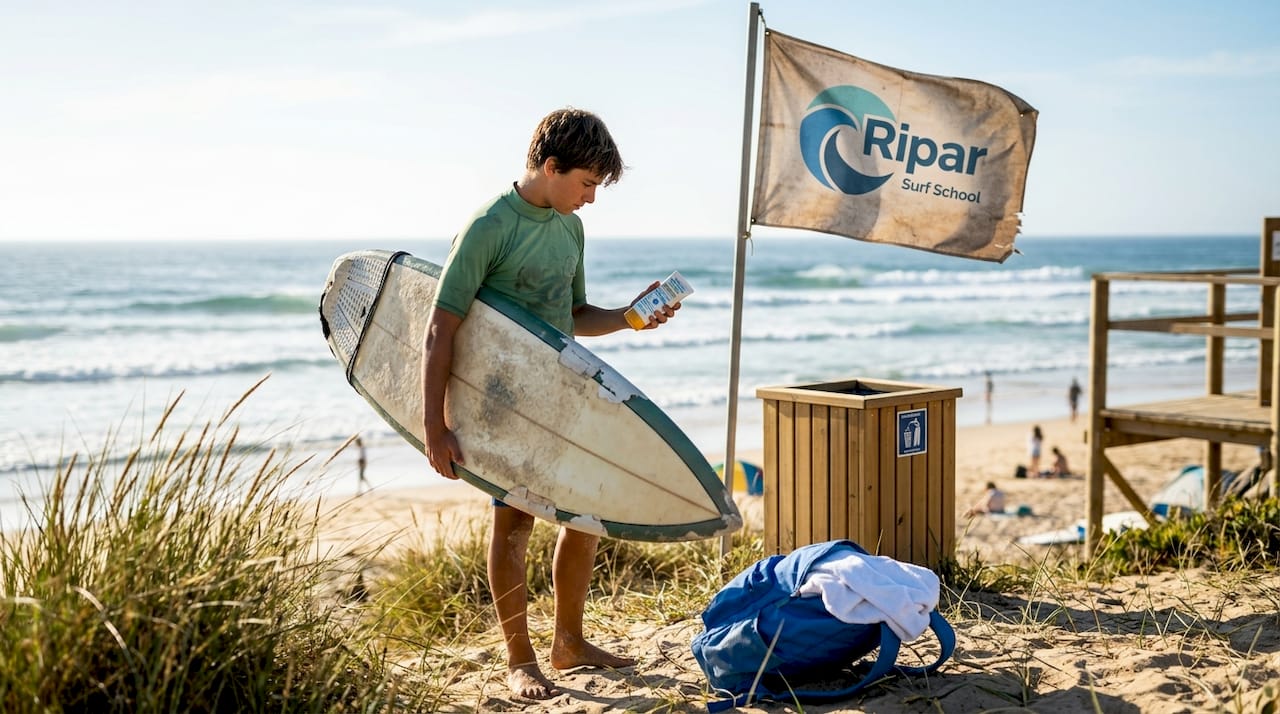
Sunscreen is the first place most surfers unknowingly cause harm. Walk into any surf shop and you’ll see bottles stamped “reef-safe” or “ocean-friendly,” but here’s the uncomfortable truth: those labels mean almost nothing. No legal standard currently governs what qualifies a sunscreen as reef-safe, so brands use the phrase as a marketing tool rather than a factual claim.
Surfrider Foundation’s clear-cut test cuts through the confusion: only mineral actives like zinc oxide and titanium dioxide qualify as genuinely reef-friendly. Any sunscreen relying on chemical UV filters fails that standard, regardless of what the label says.
“Surfers can reduce reef impacts from sun protection by choosing only non-chemical mineral actives (zinc oxide and/or titanium dioxide) and avoiding ingredients often labeled ‘reef-friendly’ without meeting criteria.” — Surfrider Foundation, 2025 Reef Friendly Sunscreen Guide
What to avoid when you read the ingredients panel:
Oxybenzone — linked to coral bleaching and disruption of marine hormone cycles
Octinoxate — damages coral larvae and reduces their reproduction rates
Octocrylene — accumulates in coral tissue and marine organisms
Avobenzone — breaks down into harmful compounds when exposed to sunlight in water
When shopping before your surf trip to Areia Branca or Supertubos, flip the bottle over and read the “Active Ingredients” line. If you see any of the four names above, put it back. A simple formula with non-nano zinc oxide as the only active will do the job without poisoning the tidal pools you paddle through.
Portugal’s Atlantic coast supports rich intertidal ecosystems. The rocky reef sections at Peniche and the sandstone reefs near Ericeira are home to sea urchins, starfish, small fish, and delicate algae communities that are genuinely vulnerable to chemical accumulation. Your sunscreen enters that water every single session.
Pro Tip: Wear a long-sleeve rashguard or sun hoodie made from UV-protective fabric. Covering more skin means applying far less sunscreen, which reduces your reef impact dramatically and keeps you cooler in Portugal’s summer sun at the same time.
2. Practice ‘leave no trace’ on Portuguese beaches
Sun protection sorted, the next big shift happens on land. Portuguese beaches are strikingly clean by European standards, but they stay that way only because enough people care. As a surf traveler, your daily habits either contribute to that culture or quietly undermine it.
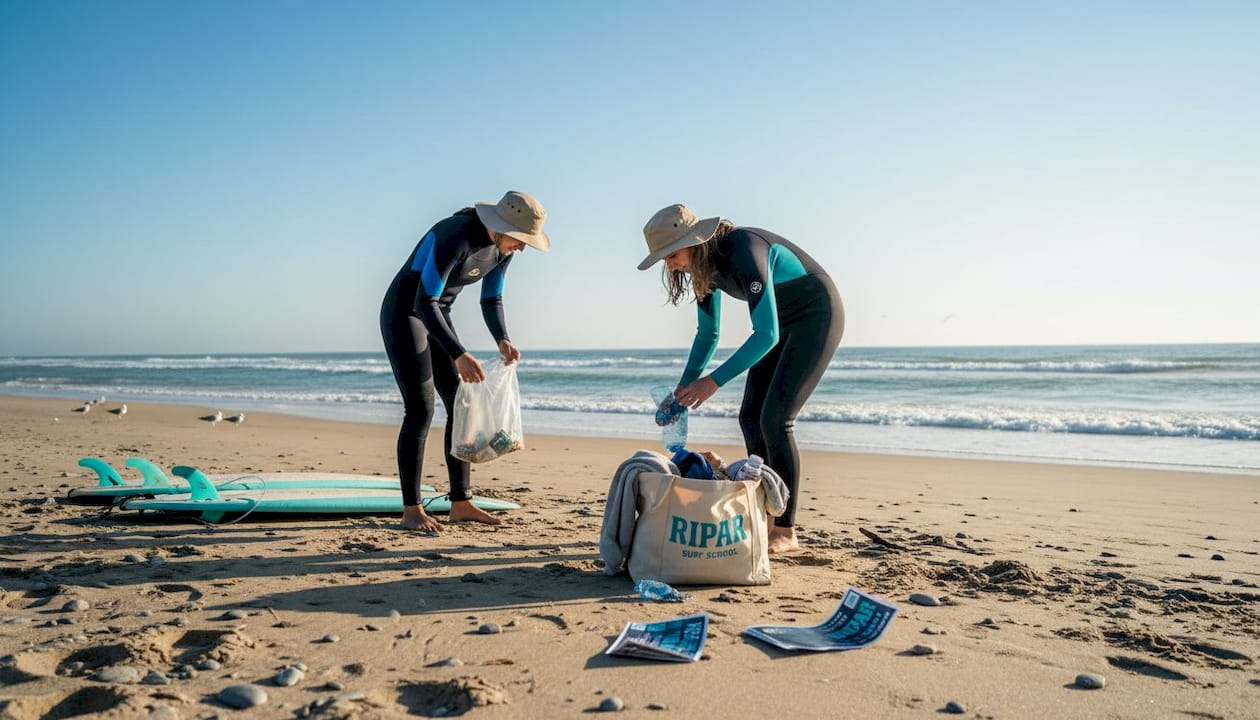
Beach sustainability starts with simple personal discipline. When you arrive at the beach, you’re essentially a temporary guest in a wild space, and leaving it exactly as you found it is the minimum standard. But with a small deliberate effort, you can actually leave it better.
A practical leave-no-trace routine for every session:
Pack your supplies in reusable containers. Bring water in a stainless steel bottle, wax in a reusable tin, and snacks in cloth bags.
Audit your pockets and bag before you paddle out. Remove any small wrappers, ticket stubs, or packaging that could blow away.
Spend two minutes scanning your immediate area when you arrive and pick up any micro-litter you see, regardless of who left it.
Never leave wax scraps, broken leash strings, or old fin screws in the sand. These become persistent micro-plastic or metal pollution.
Respect wildlife with real distance. Seabirds nesting near Baleal or monk seal sightings along the coast deserve at least 50 meters of clearance from your presence.
If you witness harassment of wildlife by other visitors, a calm and polite word often makes a difference.
Minimizing impact at surf lineups also means practicing respectful behavior in the water. Crowding, aggressive paddling, and fin collisions can disturb shallow reef habitats and cause injury to both surfers and marine life that shelters near breaks.
Research consistently shows that coastal damage is reduced when surfers combine immediate trash removal with genuine wildlife distance protocols. The combination is more effective than either habit practiced alone.
Pro Tip: Pair up with a surf buddy and commit to a two-minute cleanup together before entering the water and again after your session. It takes almost no time, and two people cover far more ground than one.
3. Opt for sustainable surf gear and circular economy choices
The surfboard under your arm has a significant environmental history before it ever touches the water. Conventional polyurethane foam blanks and polyester resin are petroleum-based, energy-intensive to produce, and nearly impossible to recycle at end-of-life. A standard wetsuit is made from neoprene, a synthetic rubber that generates CO2 during production and sheds microplastics every session.
Fortunately, circular economy practices offer real alternatives. The key insight from gear sustainability research is that buying new “eco” products is always secondary to repairing and reusing what you already own. The most sustainable board is the one you already have, properly maintained.
Gear choices that genuinely reduce impact:
Buy second-hand boards and wetsuits. A used 6’2" thruster already has its production carbon sunk; buying it prevents a new one from being manufactured.
Repair before replacing. Ding repair, leash plug fixes, and wetsuit patching kits are cheap and extend gear life by years.
Ask local surf shops about take-back programs. Some Portuguese shops now partner with recycling initiatives that grind old wetsuits into insulation material or repurpose foam.
Explore boards made from bio-resin, recycled EPS, or balsa wood. These are increasingly available and perform comparably to conventional boards.
Gear type | Environmental impact | Best practice for surfers |
New conventional board | High (petroleum foam, polyester resin) | Avoid unless necessary; extend life with repairs |
New “eco” board (bio-resin, recycled EPS) | Moderate (reduced but still resource-intensive) | Good choice when buying new is unavoidable |
Second-hand board | Low (production carbon already sunk) | Best first choice for any surfer |
Upcycled or repaired gear | Very low | Ideal; extend life as long as possible |
Standard neoprene wetsuit | High (microplastics, CO2 production) | Repair and use longer; explore limestone-based alternatives |
When you book through eco-conscious surf equipment providers at your surf school, ask what materials they stock and whether they offer board rental versus pushing you toward new purchases. Similarly, choosing sustainable surf lodging that shares gear, encourages repairs, and avoids single-use plastics amplifies your personal impact considerably.
4. Bring nature-friendly habits on your Portuguese surf adventures
Multi-day surf trips are where individual habits either compound into something meaningful or quietly fall apart. It is easy to be disciplined for one session. Maintaining it across a week-long surf camp in Areia Branca, through shared meals, evening social time, and multiple daily sessions, is where genuine commitment shows.
Sustainable travel behaviors that apply consistently across your entire stay make a far larger difference than any single eco-product purchase.
Daily checklist for low-impact surf travel:
Use public transport or a shared van to reach surf spots rather than solo rental cars.
Carry a reusable coffee cup to local cafes before morning sessions.
Eat at locally owned restaurants that source from Portuguese farms and fisheries.
Shop for snacks and supplies from markets rather than convenience stores that push single-use packaging.
Conserve water during showers after sessions, especially during Portugal’s drier summer months.
Community-level actions that multiply your impact:
Sign up for any organized beach clean-ups coordinated through your surf camp or local municipality.
Share boards, fins, and wax with fellow travelers rather than everyone bringing full kits.
Actively support businesses with visible green credentials: solar power, bulk dispensers instead of plastic toiletries, and composting programs.
Share knowledge with new surfers you meet. A short conversation about reef-friendly sunscreen or litter habits spreads impact far beyond your own session.
Sustainable surf retreats in Portugal increasingly build these habits into the camp structure itself, with group clean-ups, shared transport, and guided conversations about local marine ecology. That community format is one of the most effective vehicles for turning individual awareness into lasting behavioral change. Reading eco-focused surf trip stories from people who have already done it can give you realistic expectations and fresh ideas before you arrive.
Pro Tip: Organize a carpool schedule at the beginning of your camp week. One van carrying six surfers to Supertubos emits a fraction of what six separate cars would produce, and the shared ride usually produces the best stories of the trip.
5. Nature-friendly surf habits: Quick comparison table
Here is a quick reference to the core habits covered in this guide. Use it to identify where your current practice is strongest and where your biggest opportunity for improvement lies.
Habit | Environmental impact | Portugal-specific tip |
Mineral-only sunscreen | High positive impact on reefs and tidal pools | Buy before arrival; options limited in small village shops |
UV surf clothing | Reduces chemical input significantly | Lightweight options work well in Portugal’s mild climate |
Leave no trace daily routine | Prevents micro-plastic and litter accumulation | Especially important at Peniche and Ericeira during peak season |
Second-hand or repaired gear | Cuts production emissions and landfill waste | Local Facebook groups near Peniche trade boards regularly |
Shared surf transport | Reduces trip carbon footprint per person | Most surf camps can arrange group transport on request |
Supporting local eco businesses | Redirects spending toward sustainable operators | Ask your surf school which local suppliers they prioritize |
Joining beach clean-ups | Community-level impact greater than individual action | Peniche hosts regular clean-ups through Surfrider Europe |
As sustainability researchers note, gear innovations are a valuable part of the toolkit but must always complement, not replace, lower-consumption behaviors. The table above makes clear that the highest-impact habits cost nothing at all.
What most surfers miss: Real sustainability starts with mindfulness
Here is the perspective we hold at Ripar Surf School after more than two decades on Areia Branca: the single most powerful thing you can do for Portugal’s coastline is not buy a more expensive eco-board. It is to show up paying attention.
The surf industry is brilliant at monetizing guilt. Every few years a new product promises to solve the problem for you. Reef-safe sunscreen. Bio-resin boards. Limestone neoprene. These innovations are real and worth supporting. But they are sold as solutions when they are actually improvements. The problem they are improving is consumption itself, and buying more stuff to solve a consumption problem has a ceiling.
What actually moves the needle, in our experience watching thousands of surfers come through this stretch of Atlantic coastline, is consistent mindfulness. The surfer who quietly picks up a bottle cap on their way to the water every single day does more cumulative good than someone who buys the most expensive “sustainable” board on the market and then flies cross-country for every swell.
Community matters enormously here. One person practicing these habits can easily start to feel isolated, especially when surrounded by mass-tourism surf crowds who are not thinking about any of this. That is exactly why we invest in small-group, community-oriented sessions at our school. When everyone in your group is using mineral sunscreen, sharing gear, and spending two minutes on a beach clean-up before paddling out, it stops feeling like self-sacrifice and starts feeling like the obvious way to surf.
The challenge we put to every surfer who surfs with us: try one session where you are genuinely observant. Watch where your wax scraps go. Notice whether your leash cord leaves marks on the reef. Pay attention to whether your entry and exit disturb anything living near the break. That single session of conscious attention will teach you more than any guide, including this one.
Connecting with the eco-minded surf community at places like ours gives you the social infrastructure to maintain that mindfulness across a whole trip rather than just a single inspired session.
Try sustainable surfing with local experts
Portugal’s Atlantic coast rewards surfers who approach it with respect. At Ripar Surf School, we operate from Praia Areia Branca with small groups, local certified instructors, and a genuine connection to this stretch of coastline that goes back to 2001.

When you book online with us, you step into a surf culture that already embeds many of the habits this guide covers. Our instructors talk about the local environment, we share gear thoughtfully, and our small-village setting encourages the kind of slow, community-oriented travel that reduces impact naturally. If you want a full week immersed in that culture, our eco-conscious surf camp gives you the structure and the company to make sustainable habits stick. Browse our Portugal surf gallery to get a feel for what a mindful surf holiday here actually looks like.
Frequently asked questions
How do I know if my sunscreen is really reef-friendly?
Check the ingredients list and confirm that only zinc oxide or titanium dioxide appear as active ingredients. Any chemical active ingredient, regardless of front-of-label claims, means the product is not genuinely reef-friendly.
What simple gear swap has the biggest eco impact for surfers?
Repair or buy second-hand surfboards and wetsuits rather than buying new, even eco-labeled new gear. Extending the life of existing equipment cuts emissions and waste more effectively than any single product upgrade.
Are there nature-friendly surf camps or schools in Portugal?
Yes, several surf camps and schools along the Peniche and Ericeira coastlines emphasize sustainability through leave-no-trace principles, group transport, nature education, and eco-friendly facility management. Ask any operator directly about their specific practices before booking.
Does ‘leave no trace’ mean I have to pick up other people’s trash, too?
You are not required to, but picking up litter you find during your routine two-minute clean-up multiplies your positive impact at almost zero extra effort and sets a visible example for other beach users.
What habits help protect wildlife near surf spots?
Maintain respectful distance from all wildlife and never feed or approach animals on the beach or in the water. This applies especially to nesting seabirds, monk seals, and coastal raptors that occasionally visit Portugal’s surf beaches.
Recommended
Comments