

The Role of Surf Video Analysis in Skill Development
- Fernando Antunes

- Jul 6
- 8 min read
TL;DR:
Surf video analysis objectively identifies technical errors and tracks progress through filmed surf sessions. It accelerates skill improvement by providing visual evidence, setting clear targets, and reinforcing correct movements. Consistent, multi-day review with expert coaching enhances long-term surfing development.
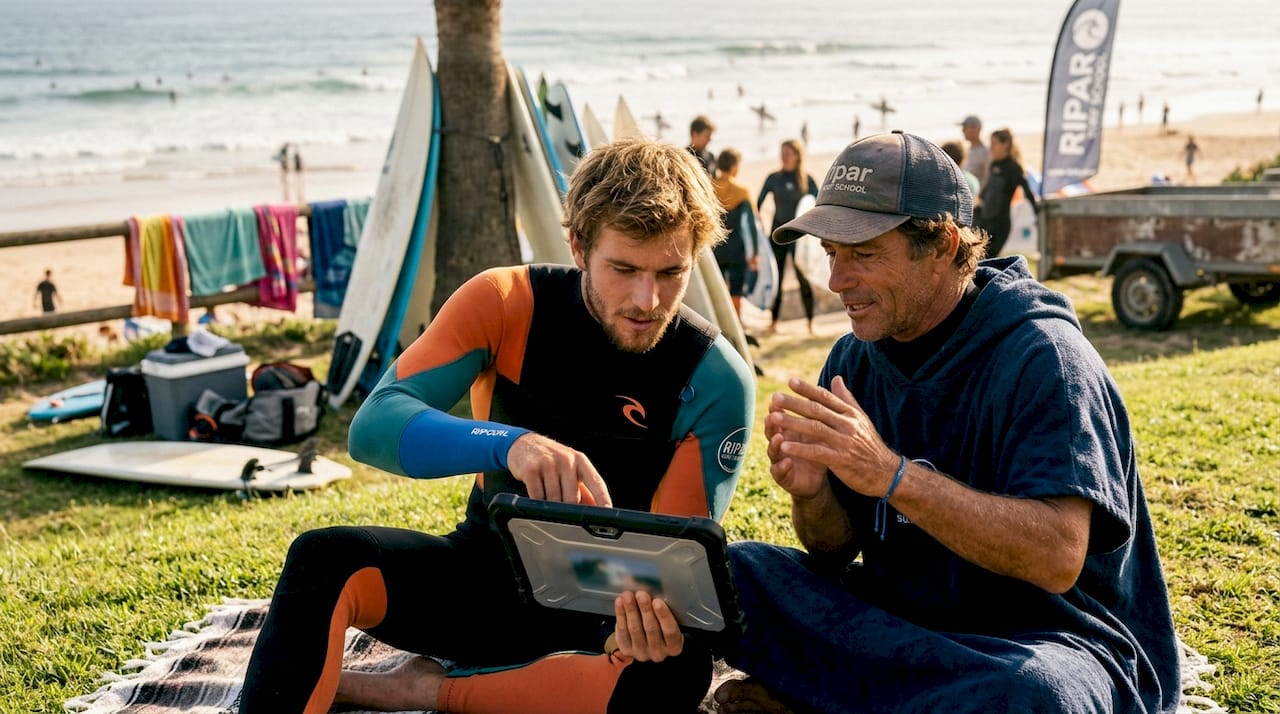
Surf video analysis is defined as the systematic review of filmed surf sessions to identify technical errors, track progress, and deliver objective feedback to surfers and coaches. The role of surf video analysis goes far beyond simply watching yourself ride waves. It replaces subjective feelings with hard visual evidence, turning vague goals like “surf better” into specific targets such as correcting a late head turn or fixing hand placement during the pop-up. Riparsurfschool and certified coaches worldwide now treat video review as a core training method, not an optional add-on. When used correctly, it is the fastest path from guesswork to measurable skill improvement.
What are the primary benefits of surf video analysis?
Video analysis replaces subjective feel-based feedback with objective evidence, giving surfers a clear picture of what is actually happening on the board. Most surfers believe their pop-up is clean and their stance is solid. The camera almost always disagrees.
The benefits of surf video analysis fall into four concrete categories:
Objective error identification. Footage reveals specific faults, such as a staggered hand position or a late head turn into a bottom turn, that a surfer cannot feel in real time.
Specific technical targets. Video helps surfers set clear technical targets rather than chasing vague goals. “Angle your takeoff and set your rail earlier” is a target. “Surf more aggressively” is not.
Measurable progress. Side-by-side comparison of footage from day one versus day five shows concrete change. That visual proof motivates continued effort.
Muscle memory reinforcement. Watching correct movement patterns on screen creates a mental reference point. Surfers can replay that image before paddling out, which accelerates physical repetition.
Pro Tip: After each filmed session, write down one specific technical target before reviewing the footage. Then check whether the video confirms or contradicts your self-assessment. The gap between the two is where your biggest gains live.
Video also clarifies complex surf dynamics by correlating wave behavior, board movement, and body positioning simultaneously. A missed cutback that felt like a timing problem often turns out to be a weight distribution issue visible only on screen. That kind of diagnosis is impossible through verbal coaching alone.
How do professional video analysis sessions typically operate?
A standard professional surf video coaching session follows a clear structure. Professional packages typically include a 1.5-hour filming session followed by a 30-minute personalized video debrief with a certified instructor. Higher-end programs recommend at least five sessions across a week to achieve measurable progress. That frequency matters because technique corrections need repetition across multiple surf sessions to stick.
The session structure generally runs as follows:
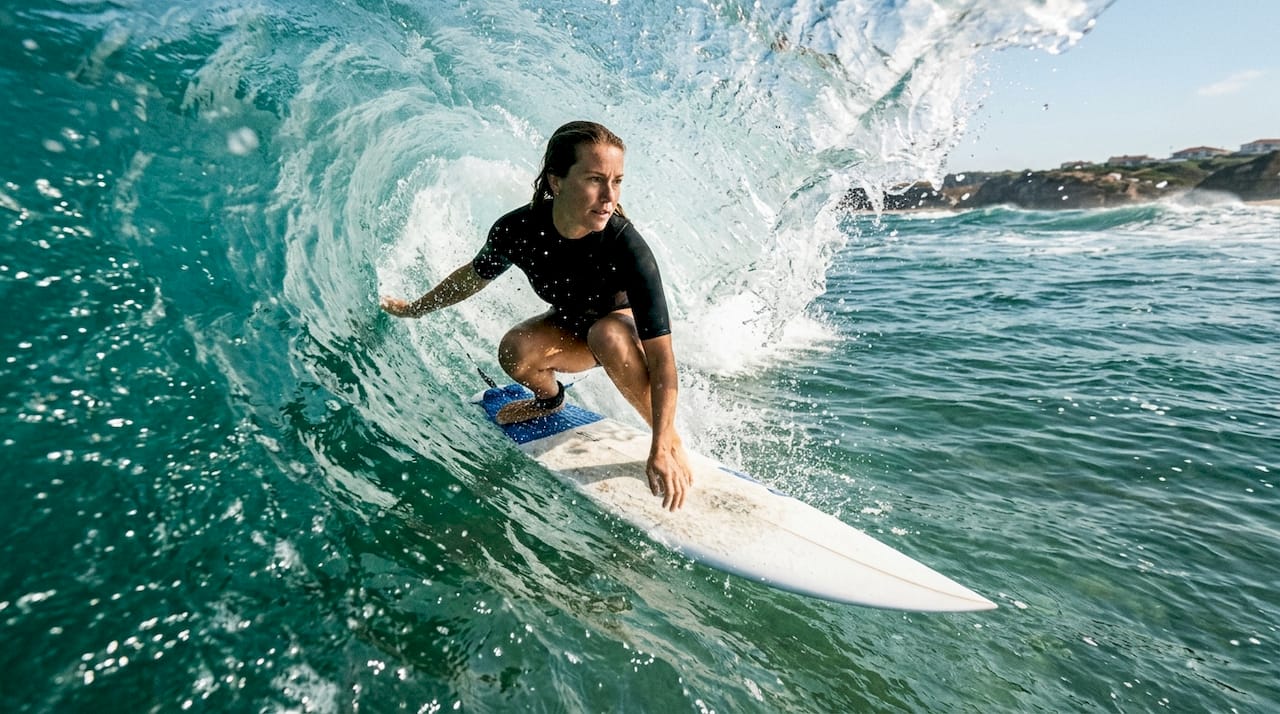
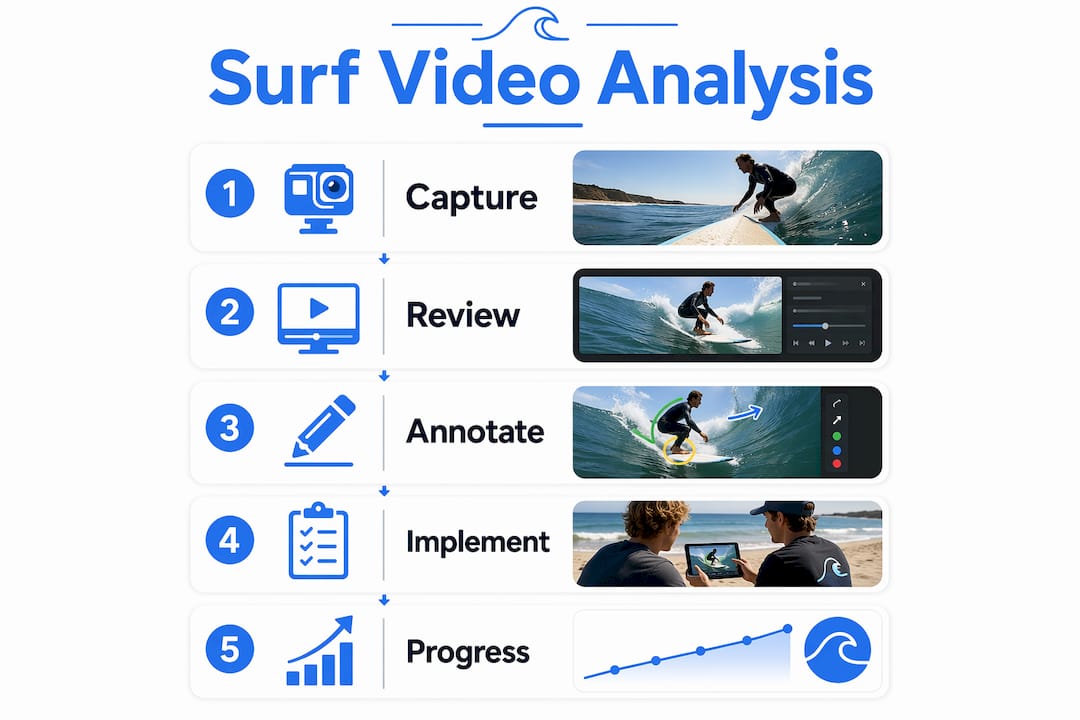
In-water filming. A coach films from the beach or water using a wide angle to capture the full wave ride, including the paddle, pop-up, and all maneuvers.
Frame-by-frame review. Coaches dedicate 10–15 minutes per session to in-depth analysis, pausing on critical moments and annotating the footage.
Color-coded annotations. Experienced coaches use color-coded annotations with varying line thickness to illustrate movement priorities. This visual coding helps surfers focus on the most critical adjustments first.
Dry-land drill assignment. The coach prescribes specific drills based on the footage. Examples include adjusting hand placement in the pop-up or changing gaze direction during turns.
Next-session target setting. The debrief ends with one or two clear technical goals for the next surf.
Session component | Purpose | Typical duration |
In-water filming | Capture full rides for review | 60–90 minutes |
Frame-by-frame analysis | Identify specific technical errors | 10–15 minutes |
Dry-land drill practice | Anchor corrected movements before next surf | 10–15 minutes |
Target setting | Define focus for next session | 5 minutes |
This structure turns a surf session into a training loop rather than a recreational outing. Each component feeds the next, and the result compounds across multiple days.
What common pitfalls should surfers avoid when using video analysis?
Passive video watching is the most common pitfall in surf video training. Watching footage without a specific analytical goal produces the same result as watching a surf movie. It is entertaining, but it does not change your technique.
Surfers and coaches should avoid these specific mistakes:
Focusing only on the obvious error. Identifying the movement preceding a visible error often yields better correction results than fixing the error itself. A collapsed back knee during a turn usually starts with a weight shift two seconds earlier.
Delaying the review. Reviewing footage within two hours of filming and completing dry-land drills before the next surf session cements corrections faster. Waiting until the next morning breaks the feedback loop.
Treating AI tools as a complete solution. AI-based surf video tools assist in counting turns or measuring ride length, but they cannot replace expert human coaching for nuanced biomechanical feedback. Human interpretation remains essential to understand the why behind a technical error.
Reviewing too much footage at once. Watching an entire session without a focus point creates information overload. Pick two or three waves per review and analyze them thoroughly.
Pro Tip: Before your next session, watch only your pop-ups from the previous day’s footage. Count how many times your back foot lands in the same position. Consistency in that single movement predicts everything that follows.
The goal of video review is active problem-solving, not passive observation. Every minute spent watching footage should produce a specific correction to practice.
How can surfers and coaches build an effective progressive video plan?
Video analysis is most effective as part of a multi-day progressive plan, not a one-off session. A single review gives you a snapshot. A week of structured review gives you a trajectory.
A practical five-day progression plan works like this:
Day 1: Pop-up and stance. Film and review the fundamentals. Identify the single biggest error in the pop-up sequence and assign a dry-land drill to correct it.
Day 2: Balance and weight distribution. Sessions typically progress from pop-up and stance to bottom turns and rail work in subsequent days. Compare day two footage directly against day one to measure the pop-up correction.
Day 3: Bottom turn and rail engagement. Focus the review on how early the surfer sets the rail and whether body rotation precedes or follows the board.
Day 4: Top turn and maneuver completion. Analyze whether maneuvers are driven from the hips or the arms, and whether the surfer’s gaze leads the movement.
Day 5: Full-session review and self-assessment. The surfer watches the footage first and identifies errors independently before the coach adds input.
That final step is the most important one. The ultimate goal is a self-sustaining feedback loop where the surfer learns to self-assess and self-correct using video training. A surfer who can read their own footage accurately no longer needs a coach present at every session.
Technology accelerates this process significantly. Slow-motion playback reveals weight shifts invisible at normal speed. Split-screen comparison places current and previous footage side by side. Frame-by-frame annotation lets coaches mark exact moments of error. These tools do not replace coaching judgment. They make coaching judgment more precise.
For surfers building real skill through surf progression, a progressive video plan is the structure that turns isolated surf sessions into a coherent training program.
Key Takeaways
Surf video analysis delivers measurable skill improvement when it combines objective footage review, coach-led annotation, immediate dry-land drills, and a structured multi-day progression plan.
Point | Details |
Replace feel with evidence | Video reveals specific errors like late head turns that surfers cannot detect in real time. |
Review within two hours | Timely review followed by dry-land drills cements corrections before the next surf session. |
Focus on precursor movements | The movement before a visible error usually causes it; fixing the root produces faster results. |
Build a five-day plan | Progressive sessions targeting pop-up, stance, turns, and self-assessment compound technical gains. |
Human coaching is irreplaceable | AI tools count moves but cannot interpret biomechanical causes; expert feedback remains essential. |
What video analysis taught me about honest surfing
Coach Iván Villalba describes video as a “digital mirror” that reveals true performance, humbling surfers and aligning their perception with reality. That description is exactly right, and it is also the reason many surfers resist it.
After years of working with surfers at Praia Areia Branca, I have watched the same pattern repeat itself. A surfer paddles in convinced their bottom turn is powerful. We pull up the footage. The turn is flat, the weight is back, and the rail never engages. The surfer goes quiet for a moment. Then they get back in the water and surf better than they did all morning.
That moment of honest reckoning is where real improvement begins. The surfers who progress fastest are not the most talented. They are the ones who watch the footage without defensiveness and immediately ask, “What do I fix first?”
The biggest mistake I see is treating video review as a reward after a good session. It is most valuable after a frustrating one. When something is not working and you cannot figure out why, the footage almost always shows you the answer within the first two minutes.
Dry-land drills matter more than most surfers expect. Watching the correction on screen and then physically rehearsing it on land before paddling back out creates a direct connection between visual understanding and physical execution. Skipping that step cuts the benefit of the review in half.
My advice: treat every filmed session as a training document, not a highlight reel. The waves you rode well are less useful than the waves you rode badly. Those are the ones worth watching twice.
— Fernando
Riparsurfschool video coaching: what a week in Portugal looks like
Riparsurfschool has been coaching surfers at Praia Areia Branca since 2001, and video analysis is built into the coaching process, not offered as an upgrade.

Each private surf lesson includes in-water filming and a personalized debrief with a certified local instructor who knows the break. The coach-to-student ratio stays small so feedback is specific, not generic. Dry-land drills follow every review session, and each day builds on the corrections from the day before. For surfers who want a full week of structured progression, the surf camp booking packages combine daily coaching, video review, accommodation, and access to some of Portugal’s best waves. The result is a training week, not just a surf holiday.
FAQ
What is surf video analysis?
Surf video analysis is the structured review of filmed surf sessions to identify technical errors and deliver objective feedback. It replaces subjective feel-based coaching with visual evidence that both surfer and coach can examine together.
How often should surfers use video analysis?
Daily filming and review across a minimum of five sessions produces measurable progress. A single session provides useful feedback, but a multi-day progressive plan compounds technical gains significantly faster.
Can AI replace a human coach in surf video analysis?
AI tools can count turns and log ride data, but they cannot interpret the biomechanical causes behind technical errors. Human coaching remains essential for nuanced feedback and correction planning.
When is the best time to review surf footage?
Reviewing footage within two hours of filming and completing dry-land drills before the next session produces the fastest corrections. Delayed review breaks the feedback loop and reduces retention of technical changes.
What should surfers focus on during a video review session?
Surfers should focus on the movement that precedes a visible error, not just the error itself. Identifying the root cause, such as a weight shift before a collapsed turn, produces more effective corrections than treating the symptom.
Recommended
Comments