

The Role of Physical Fitness in Surfing Performance


TL;DR:
Physical fitness is essential for surfing success, as it improves paddling, pop-up speed, and endurance. Training strength, balance, and mobility on land results in measurable performance gains and reduces injury risk. Consistent off-water conditioning enhances surfing longevity and boosts confidence in the lineup.
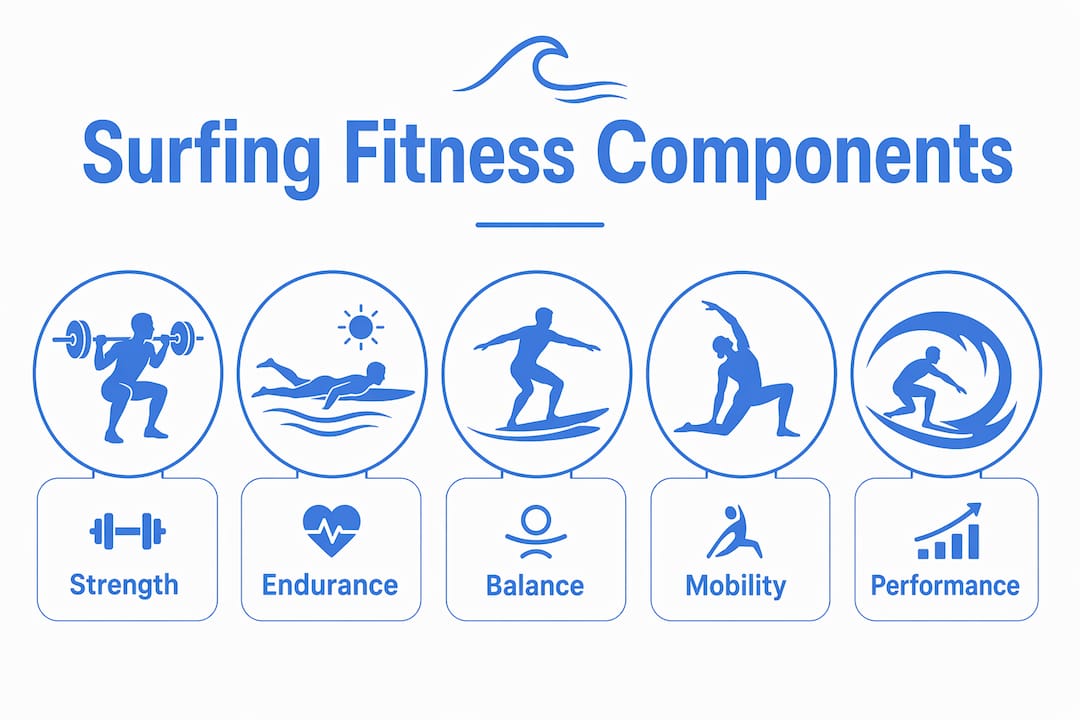
Physical fitness is the single most important off-water factor determining how well you surf. Stronger surfers achieve pop-up times of 1.05 seconds on average, compared to 1.30 seconds for weaker surfers. That 0.25-second gap decides whether you catch a wave or watch it pass. The role of physical fitness in surfing covers four pillars: strength, cardiovascular endurance, dynamic balance, and mobility. Each one directly shapes your ability to paddle hard, stand up fast, hold your line, and stay in the water longer without breaking down.
Which physical fitness components most impact surfing?
Surfing performance depends on four distinct physical qualities working together. Weakness in any one of them shows up immediately in the water.
Upper body and core strength
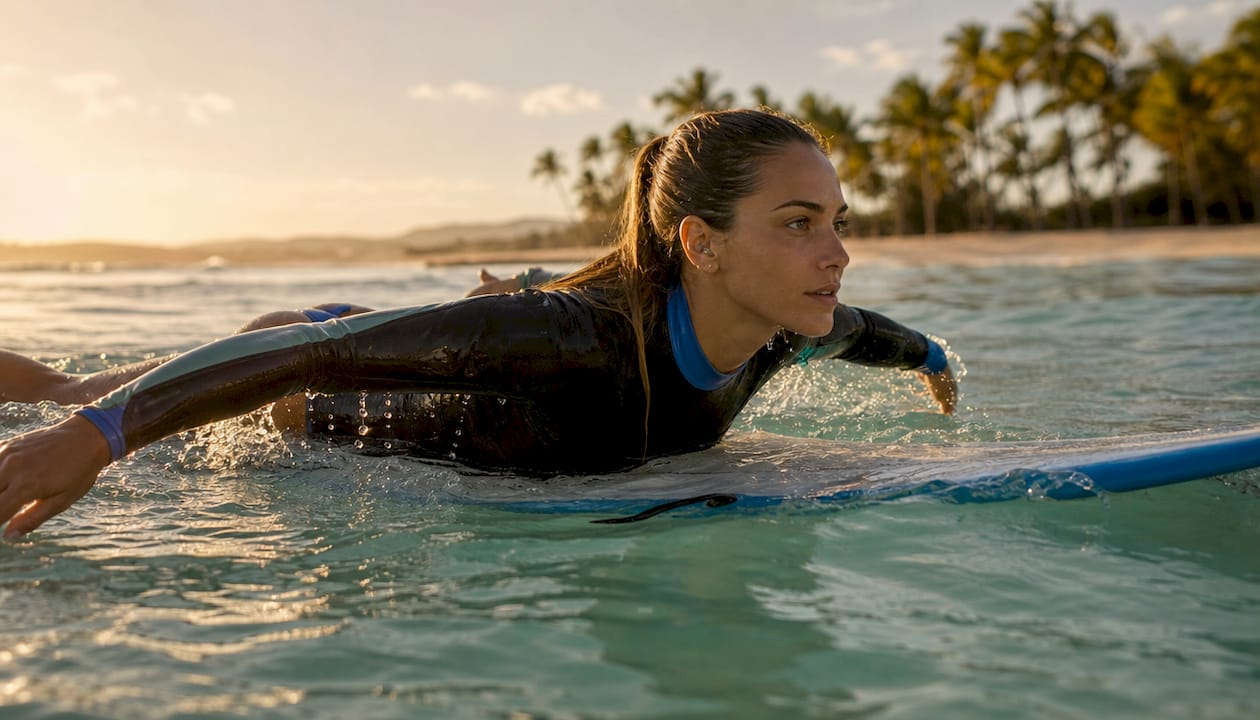
Paddling accounts for about 90% of time spent surfing. That statistic reframes the entire sport. Most surfers think about riding waves, but the physical demand is almost entirely in the paddle. Shoulder, back, and core muscular endurance determine whether you can sustain your pace, recover between sets, and generate the burst speed needed to catch a wave. Surf-specific strength also includes holding knee flexion under load during pop-ups and bottom turns, which is critical for executing maneuvers cleanly.
Cardiovascular endurance
Surfing is a high-intensity intermittent sport. Short explosive efforts, like paddling into a wave or popping up, alternate with lower-intensity recovery periods. This pattern closely resembles rugby or football in its physiological demand. Training your cardiovascular system to handle that rhythm means you arrive at each wave fresher and with more power available.
Dynamic balance and proprioception
Static balance on a wobble board does not transfer well to surfing. Dynamic balance from perturbation training is a stronger predictor of surfing success. Reactive balance exercises that involve unpredictable movements train your nervous system to respond to a moving board, which is exactly what the ocean demands. Proprioception, your body’s sense of position in space, is what keeps you upright when a wave shifts beneath you.
Mobility
Restricted thoracic spine and hip rotation forces your body to compensate. Those compensations cause lower back strain and reduce your ability to control the board. Focused mobility work on the thoracic spine and hips reduces injury risk and improves both paddling mechanics and turning effectiveness.
Fitness component | Primary surfing benefit | Key training focus |
Upper body and core strength | Paddling power and pop-up speed | Pull-aparts, push-ups, rows |
Cardiovascular endurance | Sustained sessions, faster recovery | HIIT circuits, interval paddling |
Dynamic balance | Board stability, wave riding control | Perturbation drills, single-leg work |
Mobility | Injury prevention, turning range | Thoracic rotation, hip mobility |
How does fitness training translate to measurable surfing improvements?
The connection between land training and water performance is well documented. Specific protocols produce specific, measurable results.
Two weekly 20-minute perturbation-based dryland sessions over 8–12 weeks improve both wave count and ride time. That is a significant return for 40 minutes of weekly training. The key is that these sessions target reactive ankle stability and single-leg balance under unpredictable load, which mirrors what happens on a board. Static balance training, like standing on a flat balance board, does not produce the same transfer effect.
Strength training produces equally clear results. The statistically significant correlation between strength and pop-up speed carries a large effect size (d=1.29), meaning the relationship is strong, not marginal. Surfers who train their lower body and core pop up faster, which directly increases wave count per session.
Training protocol | Performance metric improved | Time to measurable result |
Perturbation balance drills | Wave count, ride time | 8–12 weeks |
Strength training (progressive overload) | Pop-up speed, maneuver power | 6–10 weeks |
HIIT circuits (surf-pattern intervals) | Session endurance, recovery speed | 4–8 weeks |
Thoracic and hip mobility work | Paddling mechanics, turning range | 3–6 weeks |
Pro Tip: Prioritize reactive stability drills over static balance exercises. Single-leg perturbation work, where a partner or band introduces unpredictable resistance, transfers to the board far better than standing on a wobble board.
For surfers who want to build these skills before hitting the water, dryland surf training gives you a structured path to real, measurable gains on land.
What practical fitness routines can surfers adopt?
A well-structured routine does not require hours in the gym. The goal is surf-specific conditioning that fits around your time in the water.
The most effective structure uses three weekly strength sessions alternating between power-focused work (heavy weights, low reps) and endurance-focused work (moderate weights, high reps). Rest at least 48 hours between sessions to allow full recovery. Add 15–45 minutes of HIIT or circuit training tailored to surfing’s intermittent demands on two of those days.
Every session should begin with a proper warm-up. A RAMP warm-up involves light cardio, joint mobility, and dynamic movements that mimic surf actions. This primes your nervous system and reduces injury risk before heavier work begins. Skipping the warm-up is the most common mistake surfers make in the gym.
Key exercises to include in your weekly routine:
Single-leg perturbation balance: Stand on one leg while a partner introduces light, unpredictable pushes. This trains reactive ankle stability directly.
Banded pull-aparts: Targets the rear deltoids and rotator cuff, protecting the shoulder joint during heavy paddle sessions.
Push-ups with rotation: Builds the pressing strength needed for pop-ups while adding thoracic mobility.
Hip 90/90 stretches: Addresses internal and external hip rotation, which is critical for bottom turns and cutbacks.
Thoracic rotation drills: Reduces the compensation patterns that lead to lower back pain after long sessions.
Moderate progressive overload with bands and weights helps surfers maintain lean muscle and power without excessive fatigue. You do not need to lift heavy to see results. Consistency and specificity matter more than load.
Pro Tip: Add yoga or targeted surf mobility work twice a week. Even 20 minutes of focused hip and thoracic work prevents the most common surfing injuries and keeps you in the water longer across a season.
For surfers who want to understand how to structure their surf fitness exercises, a progressive plan built around these movements produces the fastest improvement.
Nutrition also plays a role in sustaining energy across long sessions and travel. Eating well on a surf trip supports recovery and keeps your training consistent even when you are away from home.
Why do surfers underestimate off-water training?
Most surfers believe that more time in the water is the only path to improvement. That belief is understandable, but it is wrong.
Surfing demands intermittent high-intensity efforts comparable to rugby or football. Without dedicated land conditioning, surfers hit a fitness ceiling early in each session. Fatigue sets in before skill does, and the result is poor wave selection, slow pop-ups, and reduced enjoyment. The surfer who paddles out with a stronger aerobic base simply gets more out of every session.
The mental dimension is equally underappreciated. Physical confidence reduces anxiety in the lineup and improves focus. A surfer who knows their body is prepared takes off on bigger waves, commits to maneuvers, and recovers from wipeouts without panic. Fitness does not just make you stronger. It makes you braver.
“The goal of training for surfing is not just performance. It is increasing your capacity for joyful action in the water. A fitter surfer stays out longer, takes more risks, and has more fun. That is the real return on every gym session.”
Even surfers with limited time can extend their surfing longevity by adding surf-specific mobility and resistance training. Two sessions per week of targeted work produces real results over a season. The barrier is not time. It is the mistaken belief that water time alone is enough.
Key Takeaways
Physical fitness is the foundation of surfing performance, and surfers who train strength, endurance, balance, and mobility consistently outperform and outlast those who rely on water time alone.
Point | Details |
Strength drives pop-up speed | Stronger surfers pop up in 1.05 seconds vs. 1.30 seconds for weaker surfers. |
Paddling dominates surf time | About 90% of surfing is paddling, making upper body endurance the top physical priority. |
Perturbation training beats static balance | Reactive balance drills over 8–12 weeks measurably improve wave count and ride time. |
Mobility prevents injury | Thoracic and hip mobility work reduces lower back strain and improves turning range. |
Off-water training extends longevity | Two targeted sessions per week extend your surfing capacity across a full season. |
What I’ve learned from watching fitness change surfers
Fernando here. After years of watching surfers of all levels come through Riparsurfschool, the pattern is unmistakable. The surfers who improve fastest are almost never the ones who surf the most. They are the ones who show up already conditioned.
The biggest misconception I see is that surfing itself is enough training. It is not. Surfing is the test, not the preparation. When a surfer arrives with strong shoulders, a mobile thoracic spine, and reactive balance, they progress in days what others take weeks to achieve. The water reveals what the gym built.
What surprises most people is how quickly the mental game shifts when the body is ready. Surfers who have done the conditioning work are calmer in the lineup. They are not fighting their own fatigue. They are actually watching the waves.
My honest recommendation is to treat your surf fitness foundations as seriously as your time in the water. Three sessions a week, focused on the four pillars, will change your surfing faster than three extra hours of paddling. The ocean rewards preparation.
— Fernando
Surf lessons at Riparsurfschool: fitness meets real waves
Riparsurfschool has been running surf lessons and camps at Praia Areia Branca, near Peniche and Ericeira, since 2001. The instructors here understand that physical conditioning and surf technique are inseparable. Every lesson is structured to meet you at your current fitness level and push you forward.

Whether you are a beginner building your first pop-up or an experienced surfer working on maneuvers, the right lesson format makes a real difference. Private surf lessons give you one-on-one coaching tailored to your strength and mobility profile. Group sessions build fitness alongside community. Riparsurfschool also offers surf yoga classes to complement your conditioning and keep your body ready for more time in the water. Book your lesson and arrive ready to surf better.
FAQ
How does physical fitness improve surfing performance?
Fitness improves paddling power, pop-up speed, board stability, and session endurance. Stronger surfers pop up in 1.05 seconds on average, compared to 1.30 seconds for weaker surfers, which directly increases wave count.
What type of balance training is best for surfers?
Perturbation-based balance training, which uses unpredictable reactive movements, transfers far better to surfing than static balance exercises. Two 20-minute sessions per week over 8–12 weeks measurably improve wave count and ride time.
How often should surfers train on land?
Three strength sessions per week, alternating power and endurance focus, with at least 48 hours of rest between sessions, produces the best results for surfing performance and injury prevention.
Does mobility training really matter for surfing?
Restricted thoracic spine and hip mobility causes lower back strain and limits board control. Targeted mobility work on these areas reduces injury risk and improves both paddling mechanics and turning range.
Can fitness training help beginner surfers?
Fitness training accelerates progress at every level. Beginners with stronger upper bodies and better reactive balance learn to pop up and control the board significantly faster than those who rely on water time alone.
Recommended
Comments