

Real Benefits of Small Beach Villages for Travelers
- Fernando Antunes

- Jul 5
- 8 min read
TL;DR:
Small beach villages prioritize local culture and natural rhythms over mass tourism, offering authentic and sustainable travel experiences. They provide benefits like lower costs, healthier environments, stronger community ties, and protected ecosystems. Visiting these villages requires preparation and respect to preserve their unique qualities and natural beauty.
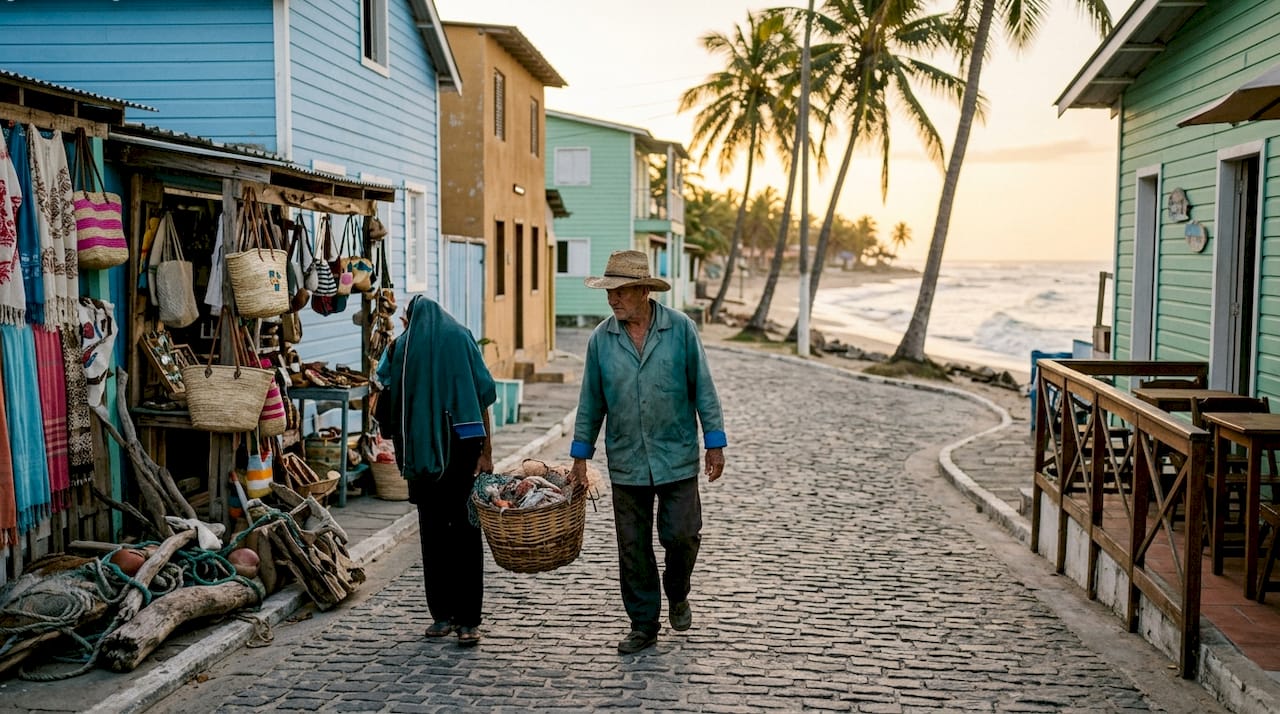
Small beach villages are defined as compact, community-centered coastal settlements where local life, natural rhythms, and authentic culture take priority over mass tourism infrastructure. The benefits of small beach villages go far beyond a quieter shoreline. Travelers who choose these destinations gain real advantages: lower costs, stronger community connections, better mental health outcomes, and access to ecosystems that large resorts have long since paved over. Riparsurfschool, based in Praia Areia Branca near Peniche, Portugal, operates directly inside this kind of setting and has seen firsthand how much richer the experience becomes when a village, not a resort complex, is your base.
1. How small beach villages improve mental and physical well-being
Coastal village living delivers measurable mental health benefits, including reduced stress, greater happiness, and increased mindfulness. The mechanism is simple: fewer crowds, cleaner air, and natural light cycles give your nervous system room to reset. You are not fighting noise or navigating a theme-park-scale resort. You are walking to the water in ten minutes, breathing salt air, and sleeping when it gets dark.
Physical activity increases naturally in small coastal settings. Without a car-dependent layout or a packed resort pool, travelers walk more, swim in open water, and spend more time outdoors. Vitamin D exposure rises. Sleep quality improves. These are not minor perks. They are the difference between a vacation that leaves you tired and one that genuinely restores you.
Uncrowded beaches allow open-water swimming without safety concerns from boat traffic or crowds
Natural light exposure regulates sleep cycles better than blackout curtains in a hotel room
Walking-based village layouts add daily movement without any effort
Cleaner coastal air, away from urban pollution, supports respiratory health
Slower pace reduces cortisol levels linked to chronic stress
Pro Tip: Pack a reusable water bottle and plan your mornings around the tide schedule. Early low-tide walks on empty beaches are the single best way to reset after a long travel day.
2. Why small beach villages cost less than resort destinations

Traveling to smaller coastal villages reduces trip costs by about 50% compared to major resort cities. That figure reflects lower accommodation rates, affordable local dining, and the near-total absence of tourist markups on everyday goods. A meal at a family-run cafe in a small fishing village costs a fraction of what a beachfront resort restaurant charges for the same grilled fish.
Lodging in small villages follows the same pattern. Guesthouses, surf camps, and locally owned rentals price based on local economics, not on what the market will bear from package-tour visitors. Riparsurfschool’s surf camp lodging in Praia Areia Branca reflects this model: comfortable, well-located, and priced for travelers who want value without sacrificing access to world-class surf.
Expense category | Large resort city | Small beach village |
Nightly accommodation | High, with resort fees | Lower, locally priced |
Dining (per meal) | Tourist-menu pricing | Local market rates |
Activities | Packaged, marked up | Direct from providers |
Transport within area | Taxi or shuttle dependent | Walkable or bike-friendly |
Community-led tourism models reinforce this affordability. In sustainably managed villages, guesthouses command rates two to three times higher than luxury hotels in commercial zones, with tourism spread across the full year rather than concentrated in peak weeks. That year-round spread keeps prices stable and prevents the price spikes that hit resort towns every summer.
Pro Tip: Book directly with local guesthouses or surf camps rather than through large booking platforms. You pay less, the host earns more, and you often get local knowledge that no algorithm can provide.
3. The role of small beach villages in preserving culture and ecosystems
Small beach villages preserve cultural authenticity because their economies depend on it. When a village’s identity is its product, residents protect local traditions, food, language, and architecture with real economic motivation. Social capital and community cohesion critically enable this sustainable tourism transformation. Active local management balances development and prevents the social tensions that erode authenticity in over-touristed destinations.
The Velas village in India’s Konkan coast offers the clearest example of this dynamic. Residents transformed egg poaching into community-led turtle conservation, creating an annual turtle festival that now drives sustainable tourism and multiple livelihood opportunities. The village protected biodiversity and built an economy around that protection. No resort developer engineered this. The community did.
Travelers carry real responsibility in these settings. Small coastal ecosystems are fragile. Foot traffic, waste, and noise affect nesting wildlife, coral, and dune vegetation in ways that take years to reverse. Responsible visitors follow these principles:
Stay on marked paths near dune systems and nesting areas
Carry out all waste, including biodegradable items that attract wildlife
Follow local rules on nighttime lighting near turtle nesting beaches
Buy directly from local producers rather than imported souvenir shops
Ask before photographing residents, ceremonies, or private fishing operations
Riparsurfschool’s guide to nature-friendly surf habits covers the specific behaviors that protect coastal ecosystems around surf breaks, where foot traffic and wax runoff create localized environmental pressure.
4. The unique community atmosphere travelers find in small villages
Small beach villages offer a social experience that large resorts cannot replicate. Close-knit communities shape daily life around fishing schedules, tidal rhythms, and seasonal traditions rather than check-in times and poolside entertainment. Travelers who adapt to that rhythm gain access to a version of coastal life that most tourists never see.
The slower pace is not a limitation. It is a feature with a specific function. Visitors who align with local schedules, eating when the kitchen opens, swimming when the tide is right, and resting during the midday heat, experience a depth of place that a packed itinerary destroys. This shift from checklist tourism to connection-based travel defines why small beach villages matter to a growing segment of travelers.
Here is what that community atmosphere looks like in practice:
You recognize the same fisherman at the dock every morning and learn what he caught
The cafe owner remembers your order by day two and asks where you are from
Local kids teach you the best tide pool to visit at low tide
A neighbor invites you to watch a traditional festival preparation
You leave knowing the names of people, not just the name of the place
Villages like Las Catalinas in Costa Rica and similar car-free coastal communities design their infrastructure to make these interactions inevitable. Walkable layouts, shared public spaces, and the absence of car traffic push residents and visitors into the same streets, the same cafes, and the same conversations.
5. Practical tips for visiting small beach villages
Preparation separates a frustrating visit from a great one. Small villages operate on different rules than resort towns, and travelers who arrive expecting resort-level convenience often miss the point entirely.
Carry cash. Many local vendors do not accept credit cards. ATMs may be scarce or unreliable. Withdraw enough before you arrive to cover several days of meals, activities, and small purchases.
Expect limited hours. Shops, restaurants, and services follow local rhythms tied to fishing, daylight, and tradition. A restaurant closed at 2:00 PM is not failing you. It is operating on a schedule that predates tourism.
Respect wildlife rules. Nesting seasons, protected zones, and local conservation programs exist for specific ecological reasons. Ignoring them causes real harm.
Learn five words of the local language. Greeting someone in their own language changes the entire interaction. Locals in small villages notice the effort and respond warmly.
Slow down your expectations. Small villages actively resist rapid commercialization to protect authenticity and environmental integrity. That resistance is the reason the place is worth visiting.
The beach village experience guide from Riparsurfschool covers the full range of coastal travel styles and helps travelers match their expectations to the right kind of destination before they book.
Key takeaways
Small beach villages deliver the most meaningful coastal travel experiences when travelers arrive prepared to engage with local rhythms, spend locally, and protect the ecosystems that make these places worth visiting.
Point | Details |
Health benefits are real | Coastal village settings reduce stress and increase physical activity through natural, uncrowded environments. |
Cost savings are significant | Small village travel cuts trip costs substantially compared to major resort destinations. |
Culture depends on community | Sustainable tourism in small villages works because local residents actively manage and protect their own heritage. |
Slow pace is intentional | Village rhythms tied to tides, fishing, and tradition create deeper travel experiences than packed itineraries allow. |
Preparation matters | Carrying cash, respecting local rules, and adapting to limited services defines a successful small village visit. |
Why I keep coming back to small villages over big resorts
After years of working in surf education at Praia Areia Branca, I have watched hundreds of travelers arrive expecting a resort experience and leave having found something they did not know they were looking for. The village does that. It is not the waves, though the waves here are world-class. It is the fact that by day three, you know the woman who makes the best pastel de nata in the village, you have talked to the fishermen about the swell, and you feel like a person in a place rather than a guest in a facility.
What surprises most travelers is how quickly the slower pace stops feeling like a sacrifice. The first afternoon without a schedule feels uncomfortable. By the second day, you stop checking your phone. By the third, you are planning your morning around the tide chart instead of a tour bus pickup. That shift is not trivial. It is the whole point of this kind of travel.
The villages that survive and thrive are the ones where residents stayed in control of their own story. Velas protected its turtles. Çıralı protected its coastline. Praia Areia Branca kept its fishing culture alive alongside its surf culture. These places are not accidents. They are the result of communities choosing authenticity over easy money, and travelers who understand that will always find more here than those who do not.
— Fernando
Surf the village life with Riparsurfschool
Riparsurfschool has operated out of Praia Areia Branca since 2001, which means the school is part of the village, not just located near it. Certified local instructors, surf equipment, a deck with showers, and direct access to one of Portugal’s best Atlantic breaks make this the kind of surf experience that a large resort simply cannot offer.

Whether you are a first-timer or an experienced surfer looking to improve, book surf lessons directly through Riparsurfschool and get access to a genuine small-village coastal experience. The school also offers surf camp packages that combine instruction, lodging, and community access in one straightforward booking. This is what small beach village travel looks like when it is done right.
FAQ
What are the main benefits of small beach villages for travelers?
Small beach villages offer lower travel costs, better mental health outcomes from natural and uncrowded settings, authentic cultural experiences, and direct access to local communities. These advantages are consistently absent from large resort destinations.
Why do small beach villages cost less than resort towns?
Traveling to smaller coastal villages reduces trip costs by about 50% compared to major resort cities, driven by lower accommodation rates, affordable local dining, and the absence of tourist markups on everyday goods.
How do small beach villages support sustainable tourism?
Community cohesion and active local management are the core drivers of sustainable tourism in small villages. When residents control development decisions, they balance visitor access with environmental and cultural protection, as demonstrated by conservation-led tourism models in villages like Velas, India.
What should travelers prepare before visiting a small beach village?
Carry cash, since many local vendors do not accept credit cards. Expect limited service hours tied to local rhythms, and research any wildlife protection rules in the area before you arrive.
Are small beach villages good for learning to surf?
Small beach villages near quality surf breaks offer the best learning conditions: uncrowded lineups, local instructor knowledge, and a relaxed pace that supports skill development. Riparsurfschool at Praia Areia Branca near Peniche, Portugal, is a direct example of this model in practice.
Recommended
Comments