

Ocean Safety Checklist: Beach and Water Activity Guide


TL;DR:
An ocean safety checklist emphasizes the importance of proper gear, safe behaviors, and emergency preparedness for water activities. Proper planning, such as checking weather and informing someone of your plans, greatly reduces risks and increases survival chances. Practicing rip current responses and always supervising children closely are essential for safety in open water.
An ocean safety checklist is a proactive tool that prevents accidents and improves emergency readiness for every beach outing and water activity. Rip currents, cold water shock, and hazardous marine life create real risks for swimmers, surfers, and boaters of all experience levels. The U.S. Coast Guard, American Red Cross, and Riparsurfschool all emphasize that preparation before you enter the water is the single most effective way to stay safe. This guide covers the gear, behaviors, and emergency responses that belong on every water safety list, whether you are planning a family beach day or a full surf session in Portugal.
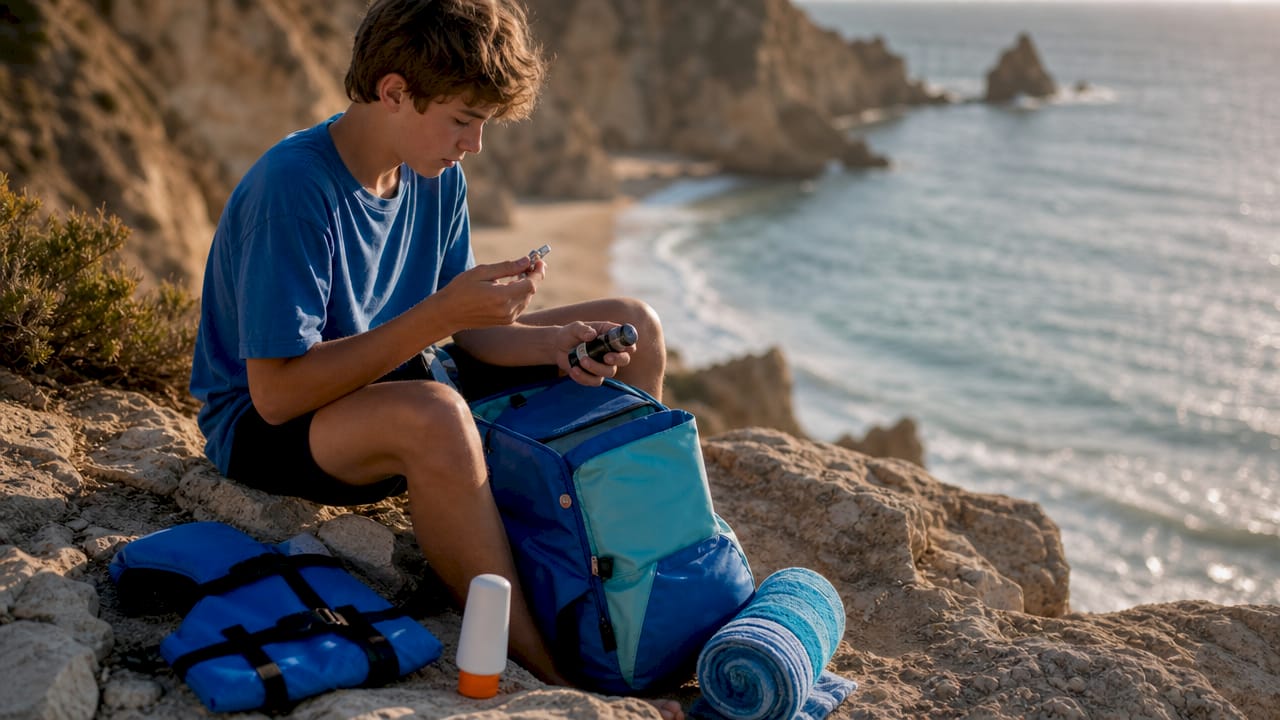
1. What belongs on your ocean safety checklist for gear?
The right ocean safety gear is the foundation of any marine safety plan. Without it, even experienced swimmers face unnecessary risk.
U.S. Coast Guard-approved life jacket. Every person in the water or on a boat needs one that fits correctly. A life jacket stored in a bag does nothing.
LED visual distress signals. Modern LED flares operate continuously for 60+ hours and are visible up to approximately 10 nautical miles at night. That range makes them far more reliable than traditional pyrotechnic flares in extended emergencies.
Throwable flotation device. A ring buoy or throw bag gives you a way to assist someone in distress without entering the water yourself.
Whistle. A simple pealess whistle carries farther than a shouted voice and costs almost nothing.
Mineral sunscreen, SPF 30 or higher. A UV Index above 8 is classified as very high to extreme risk. At that level, unprotected skin burns in minutes. Pair sunscreen with UV-protective clothing and a wide-brim hat.
First aid kit. Stock it with bandages, antiseptic wipes, tweezers for sea urchin spines, and any personal medications.
Pro Tip: Pack your beach bag the night before and run through this gear list item by item. Rushing out the door is how life jackets and sunscreen get left behind. A full beach packing checklist takes less than five minutes to review.
2. What behavioral safety practices reduce ocean risk the most?
Gear matters, but behavior is what keeps most people alive. The majority of drowning incidents involve predictable, preventable decisions.
Swim near certified lifeguards. Rip currents are powerful, narrow channels that pull swimmers offshore with surprising speed. A lifeguard on duty cuts emergency response time from minutes to seconds.
Never swim alone. Solo swimmers have no one to call for help or signal rescuers. This rule applies at any skill level.
Obey night swimming restrictions. Many beaches prohibit swimming after dark for good reason. Visibility drops, currents shift, and lifeguard coverage ends.
Assign a dedicated water watcher for children. Young children must stay within arm’s reach in or near water, not just within eyesight. Drowning is silent and fast. The water watcher’s phone stays in the bag.
Learn to recognize rip currents. Look for choppy, discolored water moving away from shore in a narrow channel. If you get caught, swim parallel to the shore until you feel the pull release, then angle back to the beach.
Avoid inflatables as safety devices. Pool floaties and inflatable rings are toys, not life-saving equipment. They deflate, flip, and drift offshore faster than most swimmers can follow.
Watch for marine wildlife warnings. Posted signs about jellyfish, stingrays, or sharks are not suggestions. Heed them.
Pro Tip: Before your group enters the water, spend two minutes watching the waves. Experienced surfers at Riparsurfschool always read the ocean before paddling out. That habit alone prevents most avoidable incidents. Check how currents affect surfing to understand what you are looking at.
3. How to prepare before heading to the beach or ocean
Pre-trip planning is the part of water sports safety that most people skip entirely. It is also where the biggest risks get eliminated before they start.
Check the weather and ocean conditions. Look up the UV Index, tide schedule, and any current advisories for your specific beach. Conditions change fast, especially in exposed Atlantic locations like Praia Areia Branca near Peniche.
Tell someone your plan. Share your location, the activity you are doing, and your expected return time with someone who is not coming with you. This is the simplest ocean rescue checklist item and the most ignored.
Apply the one-third fuel rule for boating. Use one-third of your fuel going out, one-third returning, and keep one-third in reserve for emergencies. Running out of fuel offshore is a preventable crisis.
Wear appropriate gear from the start. Put on your life jacket before you launch, not after you feel unsafe. Apply sunscreen 20 minutes before sun exposure so it bonds to skin properly.
Locate safety infrastructure. Before you set up your towel, identify the nearest lifeguard station, emergency phone, and first aid post. Knowing where these are saves critical time if something goes wrong.
Check your equipment. Inspect life jackets for tears, test your whistle, and confirm your LED flare has battery charge. A pre-departure check takes three minutes and catches failures before they matter.
Families with children benefit from a written version of this list. Riparsurfschool recommends reviewing a family surf trip guide before any group outing with young swimmers.
4. What to do in common ocean emergencies
Knowing the right response before an emergency happens is what separates a close call from a tragedy.
Rip current response. Do not fight the current by swimming directly to shore. Swim parallel to the shoreline until the pull stops, then swim back at an angle. If you are exhausted, float on your back and signal for help.
Cold water shock response. Cold water shock triggers an involuntary gasp reflex that can cause drowning within seconds of immersion. Enter cold water slowly, feet first, and give your body 30–60 seconds to adjust before swimming.
Stay with your flotation device. Staying with a floating device dramatically improves your visibility to rescuers compared to swimming alone. A person in the water is hard to spot. A person clinging to a bright buoy is not.
Signal for rescue. Use your LED flare, whistle, or phone to call for help. Apps like What3words give rescuers your exact three-meter location anywhere on earth, which is far more useful than a vague description.
EPIRB activation for boaters. An activated EPIRB transmits GPS coordinates to rescue services. Response times in coastal waters typically run 2–4 hours. That window is why staying calm and conserving energy matters so much.
“If caught in a rip current, do not panic and do not swim against the current. Swim parallel to shore until free, then swim back to the beach or float to attract attention.” Source: BBC News water safety guidance
Key Takeaways
A complete ocean safety checklist combines the right gear, smart behavior, solid pre-trip planning, and practiced emergency responses to reduce risk at every stage of a beach or water activity.
Point | Details |
Gear up before you go | Carry a Coast Guard-approved life jacket, LED flare, whistle, and SPF 30+ sunscreen on every outing. |
Swim near lifeguards | Lifeguard-patrolled beaches cut emergency response time from minutes to seconds when rip currents strike. |
Assign a water watcher | One dedicated adult, phone away, must keep children within arm’s reach at all times near water. |
Plan before you leave | Check tides, UV Index, and fuel levels, and tell someone your location and return time before departure. |
Know your emergency moves | Swim parallel to escape a rip current, enter cold water slowly, and stay with your flotation device to aid rescue. |
What 20 years of ocean time taught me about safety checklists
Most people treat ocean safety like a legal disclaimer. They skim it, nod, and walk straight into the water. After years of watching guests arrive at Praia Areia Branca with no sunscreen, no plan, and no idea what a rip current looks like, I have come to believe that the checklist is not the boring part. It is the whole game.
The single most underrated item on any water safety list is telling someone your plan. Not posting it on social media. Telling a specific person your exact location and when you will be back. That one habit has saved lives in places where phones had no signal and no one knew where to look.
LED flares changed emergency outcomes in ways that most recreational swimmers do not realize. The old pyrotechnic flares burned for 60 seconds. A modern LED signal runs for 60+ hours. That is the difference between being found and not being found on a dark night offshore.
The behavioral habits matter more than the gear, though. A dedicated water watcher who puts the phone down is worth more than any flotation device. And learning to read the ocean before you enter it, the way every instructor at Riparsurfschool teaches from day one, is a skill that protects you for life.
— Fernando
Surf safely with Riparsurfschool in Portugal

Riparsurfschool has been teaching ocean safety and surf skills at Praia Areia Branca since 2001. Every lesson starts with the same foundation: understanding the ocean before you enter it. Certified local instructors cover rip current awareness, wave reading, and proper use of surf equipment in both group surf lessons and one-on-one sessions. Whether you are a first-time swimmer or experienced water sports enthusiast, building your skills with qualified guidance is the most direct way to apply everything on this safety checklist. Book your surf lesson online and arrive at the water with real confidence, not just good intentions.
FAQ
What is an ocean safety checklist?
An ocean safety checklist is a structured list of gear, behaviors, and emergency procedures that reduce risk during beach outings and water activities. It covers items like life jackets, sun protection, rip current awareness, and pre-trip planning steps.
How do you escape a rip current?
Do not swim against the current. Swim parallel to the shoreline until you feel the pull release, then angle back toward the beach. If you are too tired to swim, float on your back and signal for help.
What gear is required for ocean safety?
The core items are a U.S. Coast Guard-approved life jacket, a whistle, an LED visual distress signal, mineral sunscreen with SPF 30 or higher, and a basic first aid kit. Boaters should also carry an EPIRB.
How close should children be supervised near the ocean?
Children must stay within arm’s reach of a dedicated adult water watcher at all times. Eyesight supervision is not enough because drowning is silent and happens in seconds.
What is cold water shock and why is it dangerous?
Cold water shock triggers an involuntary gasp reflex immediately after immersion in cold water, which can cause drowning within seconds. Entering the water slowly, feet first, gives your body time to adjust and prevents this reflex.
Recommended
Comments