

Surfboard Fins Explained: Types, Setups & Performance

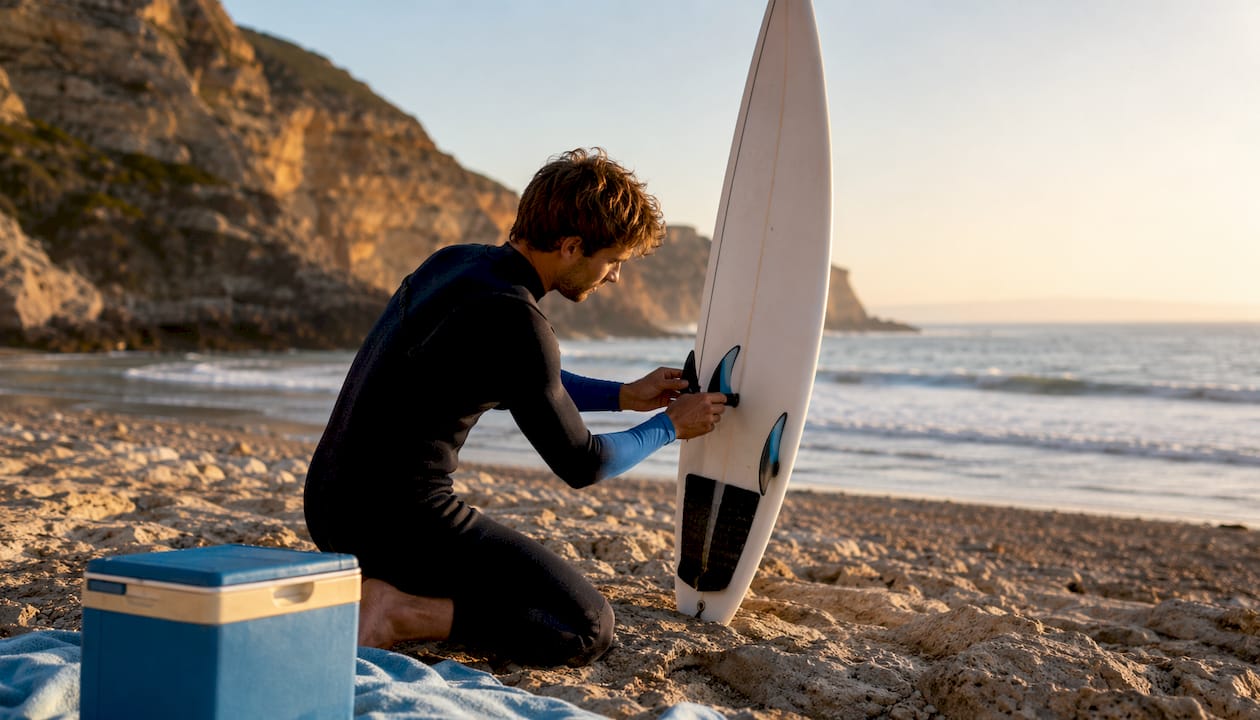
What are surfboard fins and which types do you need?
Surfboard fins are hydrofoils mounted at the tail of your board to control direction, generate speed, and hold your line through turns. Without them, your board slides sideways across the wave with zero control. With the right setup, you grip the water, drive through carves, and generate speed down the line.
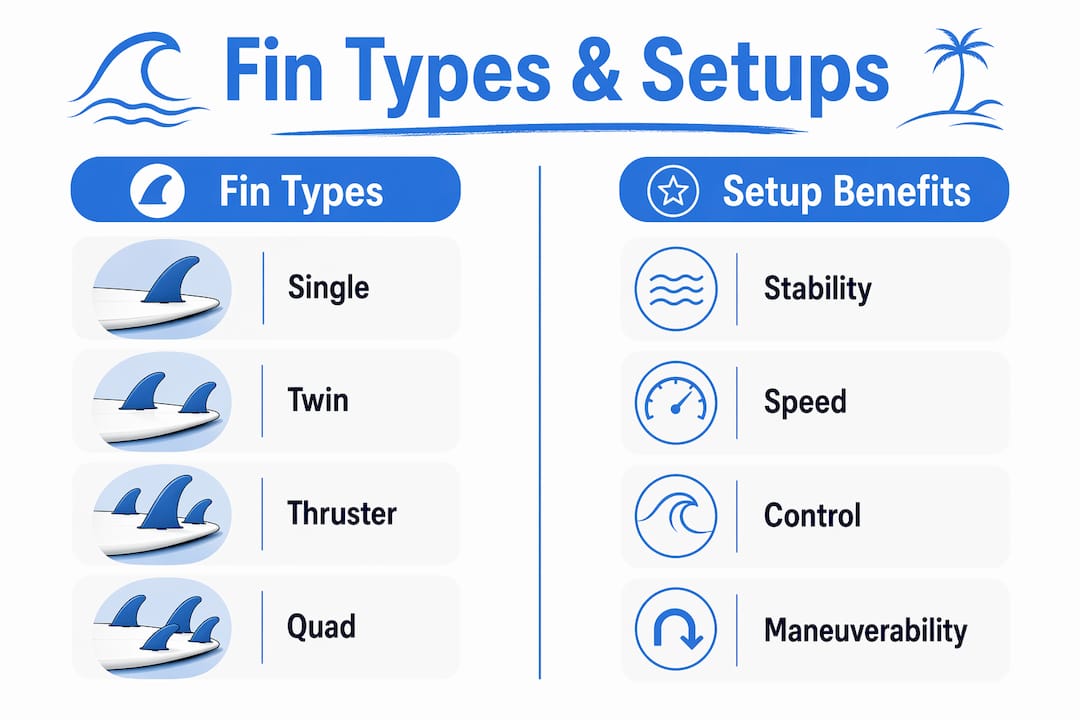
The four primary fin configurations are:
Single fin: One central fin, classic smooth style, long sweeping turns. Standard on longboards and retro shapes.
Twin fin: Two rail fins, no center fin. Fast, loose, and skatey. Best for small, punchy waves and fish-shaped boards.
Thruster: Three fins, two rail fins plus a smaller center fin. The most popular setup in the world, offering balanced drive, control, and pivot. The thruster remains dominant on performance shortboards.
Quad: Four fins, two on each side. Generates serious speed, especially in hollow or powerful surf. Looser through turns than a thruster.
Many modern boards come with five fin boxes, letting you switch between a thruster and quad setup without buying a new board. That flexibility alone makes five-fin boards worth considering if you surf varied conditions.
How fin size, shape, and rake affect your surfing
Fin geometry is where most surfers leave performance on the table. Every dimension changes how the board feels underfoot, and the differences are not subtle.
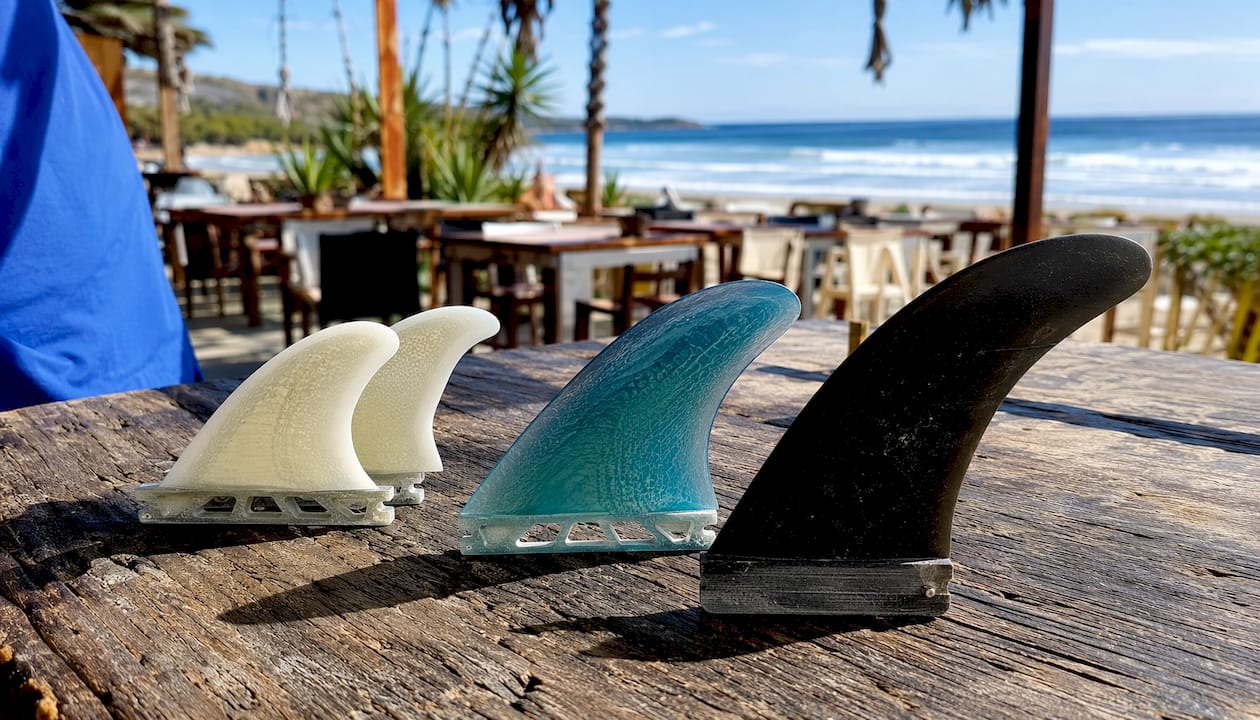
Size is the most immediate variable. Larger fins provide more hold but create drag; beginners on oversized fins often find the board stiff and unresponsive. Slightly smaller fins help novices feel natural rail transitions. Advanced surfers in powerful surf go bigger for hold on steep faces.
Key shape elements:
Base length: A longer base drives speed and drawn-out turns. A shorter base pivots faster and suits snappy, tight maneuvers.
Height (depth): Taller fins grip harder and hold on steep waves. Shorter fins release more easily, giving a looser, freer feel.
Rake (sweep): How far the fin tip curves back relative to its base. Upright fins permit tight pivots; high-rake fins produce long, arcing carves. Matching rake to wave shape unlocks what your board can actually do.
Foil: The cross-sectional shape of the fin. Center fins use a symmetrical 50/50 foil for stability. Side fins use a flat or concave inside face for lift and drive through turns.
Cant: The outward tilt of a fin. Zero cant means more straight-line speed. More cant increases responsiveness through turns but adds drag.
Pro Tip: If you surf beach breaks with short, punchy sections, go with a more upright fin template. If you’re riding a point break with long walls, a higher-rake fin will let you draw out those turns properly.
What fin materials actually change about your board
Changing fin material can make a board feel entirely different, and that’s not an exaggeration. Fiberglass tends to be stiffer, while flexible composite fins help generate speed in soft, weak waves.
Plastic: Stock on most beginner boards. Stiff, durable, and consistent. No lively flex response, but perfectly adequate while you’re learning fundamentals.
Fiberglass: The standard for intermediate and advanced surfers. Loads up through turns and releases energy at the critical moment. Most quality aftermarket fins use fiberglass construction.
Carbon: Lightest and stiffest option available. Used by experienced surfers in powerful or fast waves who want maximum responsiveness. Noticeably direct and sharp underfoot, and priced accordingly.
Honeycomb and composite cores: Premium fins use these to hit a specific stiffness-to-flex ratio. Popular among competitive surfers dialing in for particular wave types.
Stiffer fins suit powerful waves and experienced surfers, while flexible fins aid speed generation in softer conditions. A beginner in small summer surf has no business riding a stiff carbon set. The material should match both the wave and the surfer.
Which fin setup works best for your level?
Setup choice shapes the entire feel of a session. Here’s how the main configurations break down:
Single fin: Smooth, flowing, and forgiving. Best for longboards and anyone learning classic style. Moving the fin forward in the box loosens the tail; moving it back adds drive and hold.
Twin fin: Loose and fast. Great for small waves and surfers who want a skatey, free feel. Not ideal for powerful or overhead surf.
Thruster: Recommended for beginners because it balances speed, stability, and maneuverability. Three fins on a 9.6-foot board is common for performance longboards. Most beginners progress fastest on a thruster.
Quad: Speed-focused. Channels water out the tail for acceleration. Better in hollow or fast waves than in weak, crumbly surf.
2+1: A longboard single fin box in the center with two side fin boxes. Increasingly common on eggs, funboards, and SUPs. Gives you the glide of a single with added stability from the side fins.
Five-fin: Not surfed with all five fins in. The boxes let you swap between thruster, quad, or twin setups depending on conditions. Excellent for surfers who travel or surf varied breaks.
Beginner tips:
Start with your board’s stock thruster setup before experimenting.
Match fin size to your body weight. Most fin brands publish weight guides.
Avoid going too large. Oversized fins make the board feel locked in and hard to turn.
For more on how board shape interacts with fin choice, the surfboard shape guide at Riparsurfschool covers the relationship in detail.
Expert insights from Riparsurfschool on selecting and tuning fins
Riparsurfschool’s instructors at Praia Areia Branca have been coaching surfers since 2001, working with beginners through to advanced surfers across the powerful beach breaks and point breaks near Peniche and Ericeira. That volume of water time produces clear patterns in what goes wrong with fin choices.
The most common mistake beginners make is ignoring fins entirely, riding whatever came with the board regardless of their weight or the wave conditions. The second most common mistake is going too big. A fin that’s too large for your size locks the board up and kills your ability to feel the rail. Start with a medium template thruster, match the size to your weight, and only experiment once you’re reading waves consistently.
Pro Tip: Before changing your fin template or material, try adjusting fin size first. It’s the lowest-cost change and often produces the biggest difference in feel.
Riparsurfschool instructors also flag fin system compatibility as a frequent source of frustration for traveling surfers. FCS II and Futures are not interchangeable without adapters. FCS II uses a tool-free click-in system for fast swaps; Futures uses a single screw and longer base engagement, which many surfers feel gives a more connected sensation in powerful surf. Neither is objectively better. The right system is whichever one your board already has.
If you want hands-on guidance matching fins to your level and local conditions, Riparsurfschool offers private surf lessons where instructors work through equipment choices alongside technique.
How to attach and remove surfboard fins
Most modern boards use either FCS II or Futures fin systems, and the process differs between them.
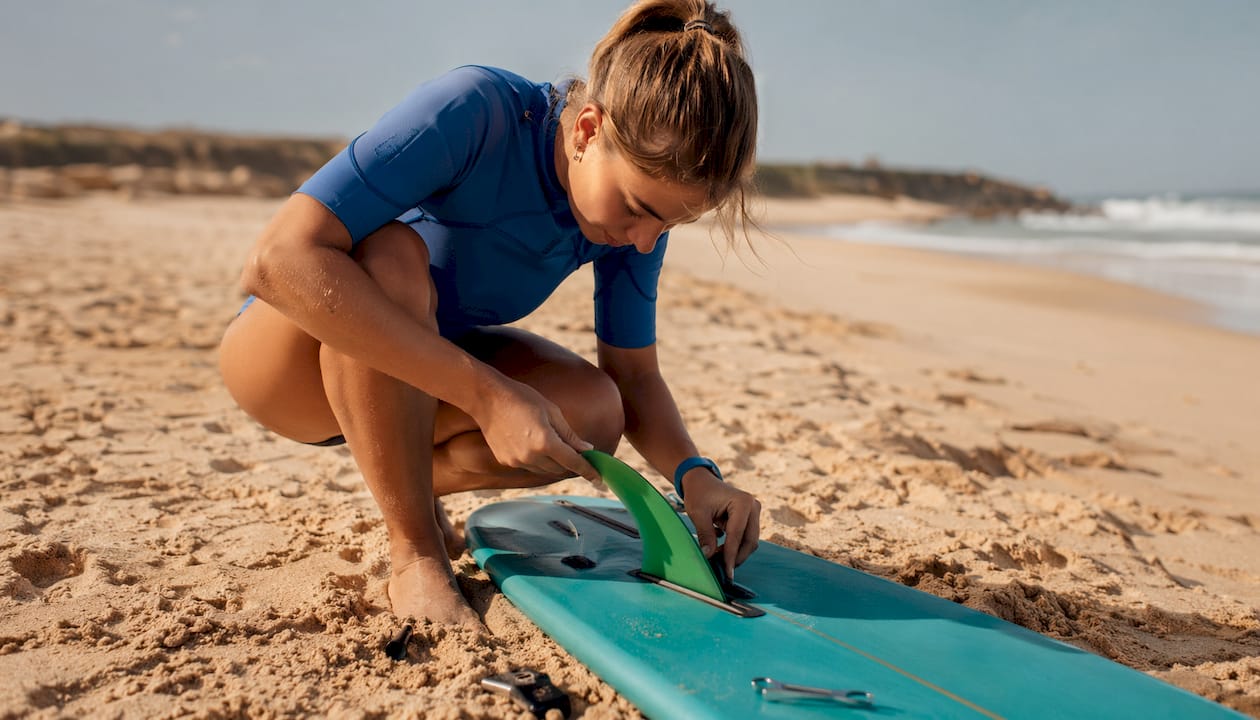
FCS II: No tools needed. Angle the fin into the box at roughly 45 degrees, press the front tab down until it clicks, then press the rear tab. To remove, press both tabs simultaneously and lift. Quick, clean, and easy mid-session.
Futures: Slide the fin base into the box from the rear, align it, then tighten the single front screw with a fin key. Don’t overtighten. To remove, loosen the screw and slide the fin back out.
Older FCS (two-tab): Uses two small screws tightened with a fin key. Loosen both screws, remove the fin, reverse to install. Make sure the fin faces the right direction before tightening. Center fins and side fins have different shapes, so double-check before you force anything.
A few things worth knowing: never force a fin into a box that doesn’t feel right. Check that the fin system matches your board before buying. Some five-fin boards mix systems, with FCS boxes for side fins and a Futures box for the center, so always verify each position.
Maintenance and care tips for surfboard fins
Fins take more abuse than most surfers realize. A few simple habits keep them performing and extend their life considerably.
Rinse fins with fresh water after every salt water session. Salt buildup accelerates corrosion on fin screws and degrades the fin box over time. Pay attention to the screw threads on Futures and older FCS systems.
Inspect fins regularly for cracks, chips, or delamination, particularly along the leading edge. A small crack in a fiberglass fin can spread under load and cause the fin to fail mid-session. If you spot damage, replace the fin before it becomes a safety issue.
Store fins out of direct sunlight when not in use. UV exposure yellows and weakens plastic and fiberglass fins faster than most people expect. A simple board bag handles this automatically.
Keep a spare fin key in your board bag. Losing a Futures fin mid-trip because you can’t loosen the screw is a frustrating and avoidable problem. Carry a spare set of fin screws too. They strip occasionally, and replacements are cheap.
For removable fins, check the tightness of screws before paddling out. A fin that works loose in the water changes your board’s feel immediately and can be lost entirely in a wipeout.
Key Takeaways
The thruster setup on a medium-template fiberglass fin, matched to your body weight, is the most effective starting point for the majority of surfers at any level.
Point | Details |
Four core fin types | Single, twin, thruster, and quad each deliver a distinct feel; thruster suits most surfers. |
Rake drives turn shape | Upright fins produce tight pivots; high-rake fins produce long, drawn-out carves. |
Material changes everything | Fiberglass is stiffer; flexible composite fins generate speed in soft, weak waves. |
FCS II vs. Futures | These systems are not interchangeable without adapters; always match fins to your board’s boxes. |
Beginners: start smaller | Oversized fins lock the board up; slightly smaller fins help novices feel natural rail transitions. |
Ready to put your fin knowledge to work?

Understanding fins on paper is one thing. Feeling the difference between a raked fin and an upright one in actual surf is another. Riparsurfschool’s certified instructors at Praia Areia Branca, near Peniche, have been helping surfers make exactly that connection since 2001. Whether you’re picking up a board for the first time or fine-tuning your setup for Portugal’s powerful Atlantic breaks, the team works with your equipment, your weight, and your goals.
Book your surf lessons online and get in the water with guidance that goes well beyond which fins to buy. Check the beginner surf workflow if you want a clear picture of what to expect before you arrive.
Recommended
Comments