

October: Local Tips for Autumn Surf in Portugal, Experienced Surfers

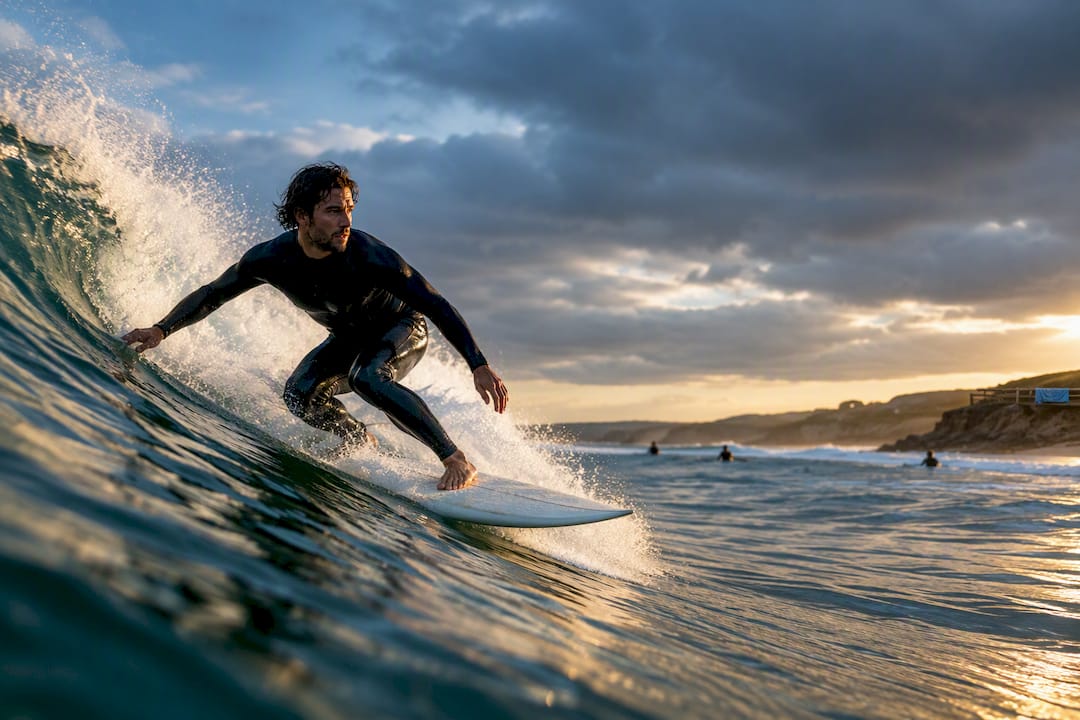
Autumn, from September through November, is the best all-round window to surf Portugal, and October is the single month worth building a trip around. Expect groundswells typically ranging from moderate to larger sizes, water still holding at comfortable autumn temperatures around 17 to 19°C, and mornings that go light and offshore before the crowds show up. Base yourself in Peniche or Ericeira for variety and infrastructure, or head to the Algarve if warmer water matters more to you than wave count.
TL;DR:
Autumn offers the most consistent swell and longer period waves of 14 seconds or more, which travel farther and break with more push than summer swells.
Water temperatures drop from around 19 to 21°C in September to 16 to 17°C by late November, influencing wetsuit choices from 3/2mm to 4/3mm.
Regional differences mean Peniche and Baleal provide year-round options for mixed skill groups, while Ericeira’s reef points peak in autumn for intermediate to advanced surfers.
Flexibility in travel dates, checking local forecasts, and choosing a base near multiple breaks increase chances of catching optimal surf conditions.
Autumn weather and swell conditions bring stronger currents, so surfers should observe safety protocols, respect line-up etiquette, and consider lessons to navigate the more challenging conditions.
Table of Contents
Why Autumn Is Portugal’s Best Surf Window
Something shifts in the Atlantic once summer ends. North Atlantic storm systems start firing off more regularly, and Portugal starts receiving cleaner, longer-period groundswell instead of the wind-chopped leftovers of high summer. That period length matters more than most traveling surfers realize: swells with a period of 14 seconds or longer travel farther, hold their shape better, and break with noticeably more push than a short-period wind swell of the same height.
Water temperature tells its own story through the season. September still sits around 19 to 21°C, comfortable enough for a spring suit on a warm afternoon. By October it drops to 17 to 19°C, and by late November you’re looking at 16 to 17°C, cool enough that most surfers reach for a full suit without thinking twice.
Three things stack in your favor during these months:
Swell consistency: groundswell averages moderate to substantial size on the Silver Coast, arriving more predictably than the hit-or-miss wind swell of summer.
Wind behavior: mornings tend to run light or offshore before the sea breeze fills in later in the day.
Crowd levels: tourist numbers drop noticeably once the June to August peak passes, which means shorter waits and more waves per session.
None of that guarantees a perfect day. It means the odds tilt your way more often than in any other season.
Which Region Fits Your Autumn Surf Trip?
Portugal’s coastline doesn’t behave the same way from north to south, and picking the wrong base for your skill level wastes days you don’t get back.
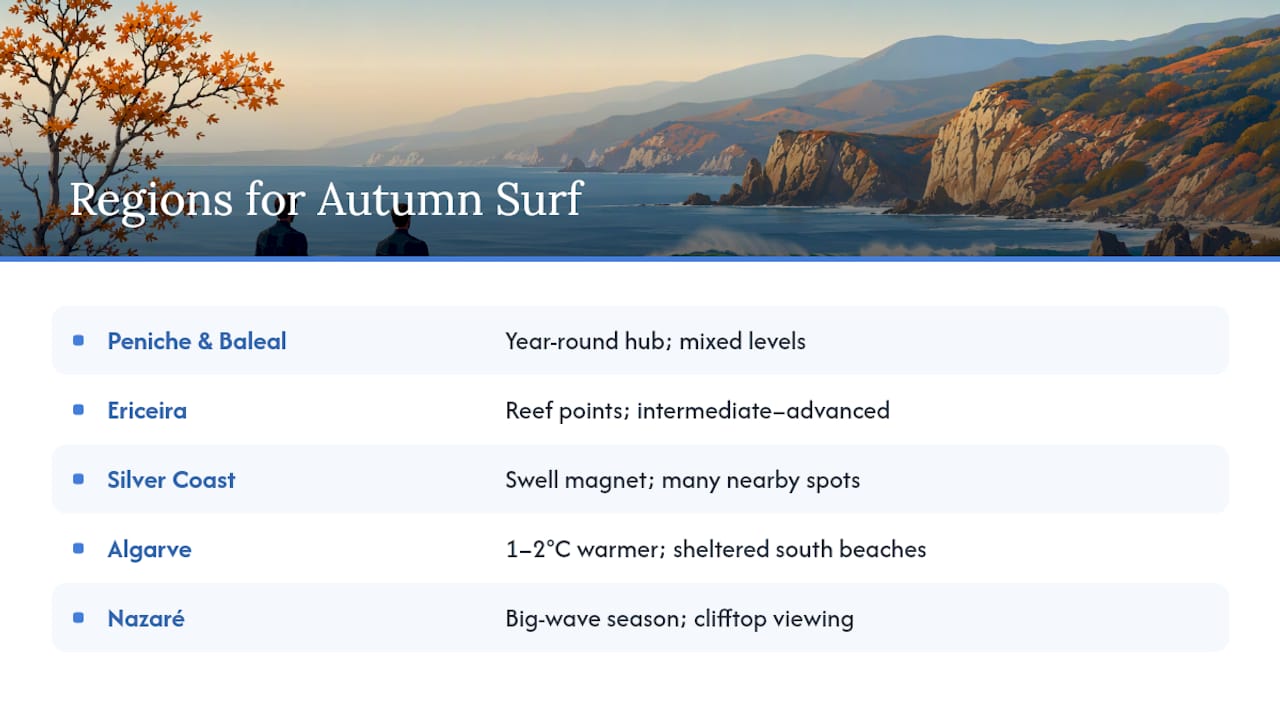
Peniche and Baleal work as a genuine year-round hub because the peninsula faces multiple directions at once. When Supertubos is firing for experts on the south side, Baleal’s beach breaks on the north side are often still manageable for less experienced surfers. That geographic quirk is why mixed-ability groups and traveling couples with different skill levels keep coming back here.
Ericeira, a World Surfing Reserve, wakes up in autumn as its reef points start receiving the longer-period swell they need to work properly. This is intermediate-to-advanced territory for the most part, though Foz do Lizandro and Praia do Sul nearby stay friendlier for lessons and smaller-swell days.
The Silver Coast stretches between Ericeira and Figueira da Foz, and it functions almost like a swell magnet, concentrating groundswell energy across a dense run of beach breaks and points. If you want to surf multiple spots without driving hours between them, this stretch delivers.
The Algarve runs 1 to 2°C warmer than the Silver Coast through autumn, with sheltered south-facing beaches that stay rideable even when the west coast turns messy. When a big storm system wraps far enough south, the Algarve’s west-facing spots can turn on too, giving you the best of both coasts in one region.
Nazaré deserves a mention, though not as a paddle-out destination. Big-wave season effectively starts in autumn, and watching a heavy swell hit Praia do Norte from the clifftop is worth the drive even if you never touch the water there.
What to Pack: Wetsuits, Boards, and Gear for Autumn
Your wetsuit choice through autumn is really a month-by-month decision, not a single answer for the whole season.
September: a 3/2mm full suit handles water still sitting near 20°C comfortably.
October: stick with 3/2mm as the baseline, since it stays adequate through most autumn even as temperatures ease down.
Late November: consider stepping up to 4/3mm, especially for early sessions or if you’re surfing north of Peniche where water runs slightly cooler.
Board-wise, a mid-length or mid-volume shortboard handles the 1.5 to 2.5 meter groundswell autumn typically delivers, giving you enough paddle power for punchy peaks without sacrificing maneuverability. If your trip lands on an inconsistent swell window, bring something with a little extra volume. It’ll keep you catching waves on the smaller, patchier days that inevitably show up between the good ones.
Round out your kit with reef booties for the rockier points around Ericeira, a spare leash (autumn’s bigger swells put more strain on gear), a drybag for the inevitable rain shower, and reef-safe sunscreen. Rinse your wetsuit in fresh water after every session and hang it away from direct sun. Salt and UV are what actually kill neoprene, not the surfing itself.
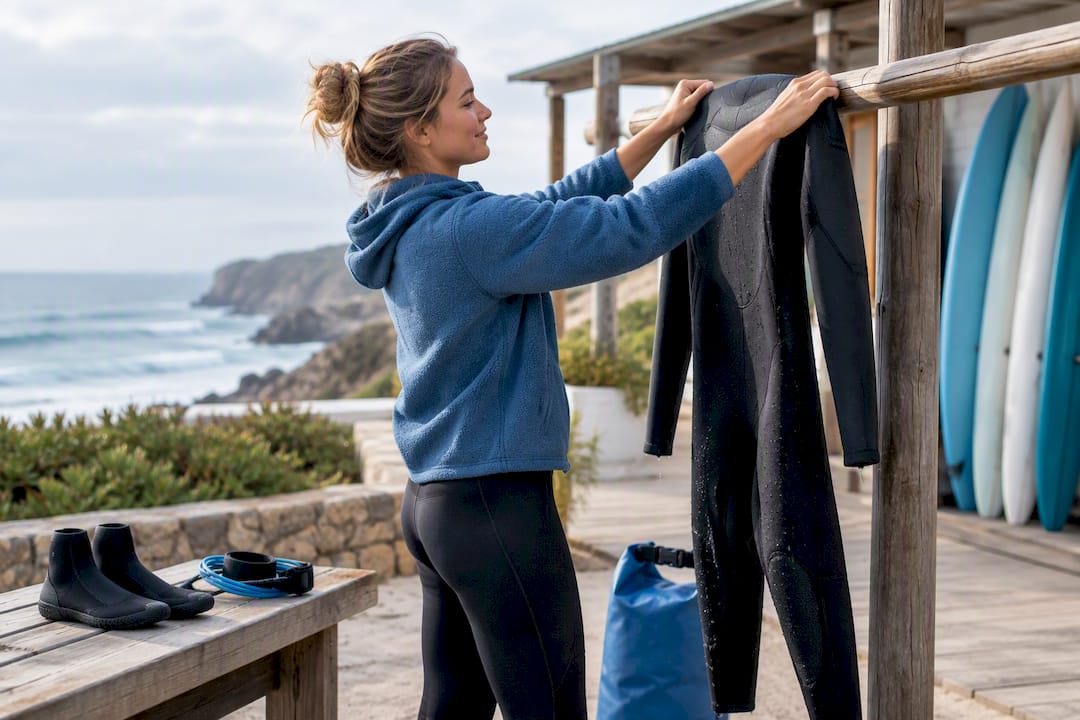
Pro Tip: Pack a lightweight change of clothes for the drive between spots. Autumn temperatures swing more than summer’s, and sitting in a wet suit in the car for an hour after a session gets uncomfortable fast.
How to Read Autumn Forecasts Like a Local
Two tools cover almost everything you need: Windy for swell height, period, and direction, and IPMA for local wind and weather forecasts specific to Portugal. Scan for significant wave height (Hs), swell period, and wind direction every time, in that order.
Run this checklist before you leave your base each morning:
Check swell direction. West to northwest favors most west-coast breaks.
Check period. Aim for 14 seconds or longer for powerful, well-organized peaks rather than short-period mush.
Check wind at your target spot specifically, not just the regional forecast. Morning offshore or light wind is what you want.
Check the tide window for that particular beach, since some breaks only work on a rising or falling tide.
Ask around locally. Surf shops and instructors know if a spot broke well yesterday, which a forecast alone won’t tell you.
Treat autumn as a volume dial rather than a promise. Local surfers check forecasts nightly because conditions can flip within a day, and building in the flexibility to change spots is often what separates a good trip from a frustrating one.
Safety and Etiquette in Autumn Line-Ups
Autumn’s bigger, more consistent swells come with real teeth. Rips run stronger and currents shift faster than they do in the gentler summer swell, so give exposed, unprotected breaks a wider margin of caution when the swell jumps in size.
Scout your entry and exit points before paddling out, especially at reef breaks around Ericeira.
Wear reef booties where locals recommend them, and respect any posted or verbal guidance about tricky sections.
Learn the line-up priority system before you paddle for your first wave: whoever is closest to the peak generally has right of way.
Stay polite and patient in a crowded peak. A friendly nod goes further than you’d think with local surfers.
If any of this feels uncertain, booking a lesson with local instructors removes most of the guesswork.
Ripar Surf School’s Autumn Playbook
Ripar Surf School bases its autumn recommendations on one simple fact: Praia Areia Branca gives you access to multiple breaks within a short drive, which matters when autumn conditions can vary from one beach to the next on the same morning. Being close to Peniche means you’re never far from a sheltered option if the main swell turns too heavy for your level.
Every autumn lesson and camp booking includes:
Instructors who read that day’s conditions before deciding which beach to use.
Full equipment, so you don’t need to travel with a board or wetsuit.
A safety briefing specific to that day’s swell, wind, and tide, not a generic script.
Dates stay flexible around swell windows, since autumn surf can open up on short notice, and a rigid booking schedule works against you here.
Where to Stay for an Autumn Surf Trip
Autumn accommodation in Portugal’s surf towns works differently than summer booking. Rooms that sell out weeks ahead in July often have availability with just a few days’ notice in October, which gives you room to book once you’ve actually seen a promising forecast rather than gambling on dates months in advance.
That flexibility cuts both ways, though. Some smaller guesthouses and surf camps start reducing staff or shifting to weekend-only operation later in November, so it’s worth confirming a property is running full service before you lock in dates deep into the shoulder season.
Location matters more in autumn than in summer, when good surf is nearly guaranteed everywhere. Staying within a short drive of two or three different breaks, rather than committing to a single beach town, gives you the flexibility to chase whichever spot is working on a given morning. Peniche’s central position on its peninsula is part of why it functions so well as an autumn base. Ericeira’s reef points and Praia Areia Branca’s mix of shelter and access do similar work for surfers who want variety without long drives.
Pack for temperature swings, not just water temperature. Autumn evenings on the coast turn cool once the sun drops, even on a warm surf day, and a lot of first-time autumn visitors underpack for that gap.
Autumn Surf Events and Competitions in Portugal
Autumn is competition season for a good reason: the swell is more reliable than summer’s, which means event organizers can schedule around actual wave windows instead of hoping for the best. Portugal’s national and regional surf federations typically run qualifying events and championship legs through September and October, timed to take advantage of the same groundswell consistency that makes autumn attractive for recreational surfers.
Ericeira, given its World Surfing Reserve status and reef-point quality, sees some of the more notable competitive action in the region during this window. Peniche’s Supertubos, known for its punchy, hollow waves, has also hosted high-level competitive surfing when swell and timing line up, drawing a different crowd than the typical autumn lesson-goer.
For traveling surfers, these events cut two ways. Watching a heat at a spot you already know from a morning session adds a different dimension to a surf trip, and it’s worth checking local event calendars before you lock in dates. On the flip side, a competition running at your target beach means that break is off-limits to the public for the day, so it pays to have a backup spot in mind if your trip overlaps with an event window. Local surf shops and instructors usually know the schedule well before it’s widely posted online, so asking around on arrival beats trying to track it down remotely.
Autumn Surf in Portugal: What Experienced Surfers Need to Know
The conventional advice on this topic treats autumn as a footnote to summer, something you settle for once the school-holiday crowds thin out. That undersells it badly. The actual data on swell consistency and period length says autumn isn’t the compromise season. It’s the better one, and summer is what most casual travelers settle for because it fits their vacation calendar.
Where the standard advice really falls short is on flexibility. Most guides tell you to pick a date months out and hope. Autumn punishes that approach, because the best windows can open with only a few days’ warning. If you can build slack into your travel dates, even a three or four day buffer, you’ll surf better waves than someone who locked in a fixed week back in June.
Prioritize base location over everything else. A spot within reach of two or three different breaks beats a beautiful house next to one beach that might not be working when you arrive. Chase the forecast, not the postcard.
— Fernando
Book Your Autumn Surf Lesson or Camp with Ripar
Ripar Surf School is the local alternative to guessing your way through Portugal’s autumn conditions alone: certified instructors who already know which of the nearby breaks is working that morning, so you’re not burning trip days on the wrong beach.

If you’re new to surfing or coming back after time off, the Beginner Surf Lesson starts at €40 and gets you into the water with proper guidance from day one. Surfers planning a longer autumn stay tend to get better value from the 5 Lessons Surf Pack, which spreads instruction across your trip instead of cramming it into one session. Want more attention on your technique? Private Lessons run €100 to €190 and let an instructor tailor the session to exactly what you need to fix. For a full autumn trip with lodging handled, the Surf Camp package bundles lessons with accommodation so you’re not separately booking a place to stay and a place to surf.
Every booking includes equipment and a briefing on that day’s specific conditions, not a generic rundown. Given how quickly autumn swell windows can shift, dates stay flexible once you book online, so you can adjust around the forecast rather than around a fixed reservation.
Sources
Check Windy for swell period and direction, and IPMA for Portugal-specific wind and weather before any autumn session. For deeper regional detail, see Ripar’s guides to Baleal and Peniche.
FAQ
What Is the Best Beach for Surfing in Portugal?
There’s no single “best” beach since it depends on your level and the day’s swell, but Supertubos in Peniche is widely regarded as Portugal’s premier wave for experienced surfers, while Baleal offers gentler, more forgiving breaks for learners. Ericeira’s reef points round out the short list for intermediate-to-advanced surfers seeking quality over ease.
What Are the Best Beaches for Surfing Along the Costa Vicentina?
The Costa Vicentina, running along Portugal’s southwest coast, is known for exposed, powerful beach breaks that pick up west and southwest swell with little interference. It tends to suit intermediate and advanced surfers more than beginners, since the breaks here are generally more open and less sheltered than spots around Peniche or the Algarve’s south coast.
Which Portugal Beaches Have the Most Reliable Waves?
Peniche and Ericeira consistently rank among the most reliable because their geography lets them pick up swell from multiple angles, unlike single-direction beaches that only work on specific swell windows. The Silver Coast as a whole benefits from this same swell-concentrating effect between Ericeira and Figueira da Foz.
What Are the Best Surf Beaches in the Algarve?
The Algarve’s south coast offers sheltered, beginner-friendly beaches that stay rideable even when the Atlantic turns rough elsewhere, while its west-facing beaches can produce strong waves when storm systems wrap far enough south. Water here runs about 1 to 2°C warmer than the Silver Coast in autumn, which makes it an appealing choice for surfers prioritizing comfort over wave size.
Is October Really the Best Month to Surf in Portugal?
October is frequently cited as the strongest single month because it blends consistent groundswell, water still around 17 to 19°C, and noticeably thinner crowds than summer. September and November are both solid alternatives, but October tends to hit the sweet spot between all three factors most reliably.
How Much Does a Surf Lesson Cost in Portugal?
Pricing varies by provider and package, but Ripar Surf School’s Beginner Surf Lesson starts at €40, with Private Lessons running €100 to €190 depending on group size and duration. Multi-lesson packs and surf camp pricing are available on Ripar’s pricing page for surfers planning a longer autumn stay.
Recommended
Comments