

Get Glassy Mornings in Portugal's Oeste: When to Go, What to Wear

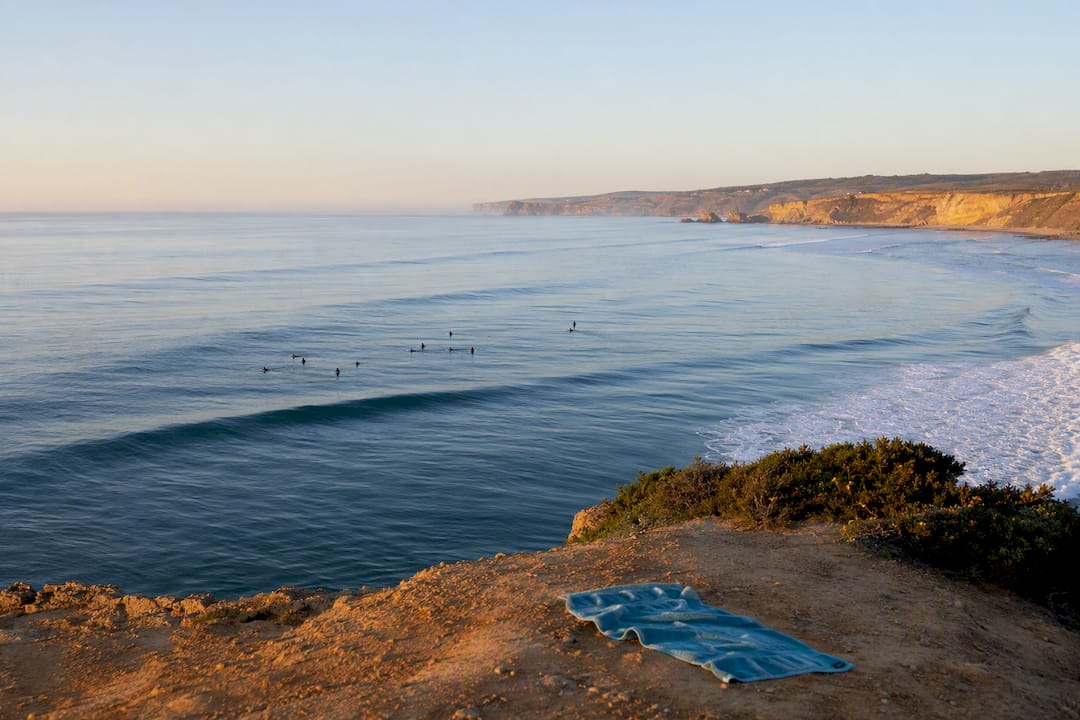
The Oeste coast runs several degrees cooler than inland Portugal, and its afternoon nortada wind is predictable enough to plan around. Surf early, before the sea breeze builds past mid-morning, and you’ll consistently find cleaner, glassier waves than anyone paddling out after lunch. Check the forecast the night before, pack a wetsuit rated for the season, and treat dawn as your default session time.
TL;DR:
Surf early in the morning to avoid the strengthening nortada wind, which typically peaks in early to mid-afternoon during summer.
Cold upwelling can make the water feel five to six degrees cooler than air temperature forecasts suggest, requiring appropriate wetsuits.
Different beaches in the Oeste coast vary greatly in surf quality based on orientation and topography, with sheltered spots offering better conditions during strong nortada.
Timing with the season is crucial: beginners should aim for smaller waves in summer mornings, while advanced surfers seek larger swell from autumn to winter.
Checking the forecast, wind, swell, and tide just before paddling out saves time and prevents wasted trips to choppy or unprofitable spots.
Table of Contents
What Creates Microclimas Do Oeste Surf Conditions
The nortada, a strong northwesterly sea breeze, drives most of what surfers experience along this stretch of coast. Warm inland air rises during the day and pulls cooler ocean air behind it, and that pressure difference accelerates through the afternoon until it’s blowing sideways across the lineup by 1 or 2 p.m. This same northwester wind pattern strengthens through Portuguese coastal afternoons, which is why so many local surfers treat morning sessions as non-negotiable rather than a preference.
Coastal upwelling compounds the effect. Wind pushes surface water offshore, and colder water rises up from below to replace it, which keeps sea temperatures noticeably lower than what you’d guess from the air temperature on the beach. That temperature contrast between cold sea and warmer land air is also what generates neblina, the coastal fog that rolls in with little warning.
A few things worth knowing before your first Oeste session:
Sea breeze builds gradually through the morning and typically peaks in early-to-mid afternoon during summer.
Cold upwelling can make the water feel five or six degrees colder than a sunny sky would suggest.
Fog can sit thick on the coast while towns ten minutes inland stay clear and warm, so layered packing matters even in July.
Wind direction relative to a beach’s orientation determines whether nortada ruins the surface or barely touches it.
Daily and Seasonal Patterns Worth Tracking
Two rhythms govern almost every session decision on the Oeste: what happens over a single day, and what changes across the calendar year.
Dawn to mid-morning. Winds are usually light or glassy, offshore, or side-offshore, giving waves their cleanest shape of the day.
Mid-morning to early afternoon. The nortada starts filling in, and by June through September it often arrives earlier and hits harder than in the shoulder seasons.
Afternoon. Chop dominates most exposed beaches, though sheltered corners can still hold decent shape depending on swell angle.
Summer months. Expect smaller, more manageable swell with clean mornings, ideal for building confidence.
Autumn through winter. Atlantic storm systems send larger, more powerful W to NW swell, and water temperatures drop several degrees from their summer peak.
Fog typically clears by mid-morning once the sun warms the coastline, but on humid summer days it can linger and quietly reduce visibility in the lineup longer than you’d expect.
Pro Tip: If dawn looks calm with low cloud cover, treat that as your cue to get in the water immediately. That stillness rarely lasts past mid-morning once summer nortada patterns kick in.
Water temperatures swing from the high teens Celsius in winter to the low 20s in peak summer. That range is exactly why wetsuit thickness guidance tied to water temperature matters more here than in warmer surf destinations. A suit that felt fine in August will leave you shivering by November.
Why Peniche, Baleal, and Areia Branca Surf Differently
Microclimate isn’t uniform along the coast. Orientation and local topography change how the same wind and swell event plays out from one beach to the next, even when the spots sit only a few kilometers apart.
Peniche and Baleal sit on a peninsula with breaks facing multiple directions, so when nortada wrecks one side, another angle often stays protected. That variety is part of why these two spots function as consistent, year-round options for surf camps building reliable lesson schedules.
Praia Areia Branca, tucked near Peniche and Ericeira, benefits from local sheltering that softens the harshest nortada gusts, making certain sessions there more forgiving for learners.
West-facing beaches absorb the sea breeze almost head-on and degrade fastest once the wind fills in.
Beaches with a WNW or NW-facing headland nearby tend to hold cleaner conditions longer into the afternoon because the landform blocks the wind’s direct path.
The practical rule of thumb: when nortada is already strong by mid-morning, look for a break tucked behind a point or headland rather than a fully exposed beach. That single decision often separates a fun surf day from a frustrating paddle-around. BreakFinder’s regional listing covers 29 spots across Zona Oeste, which gives you options when your first-choice beach turns choppy.
Planning Your Session Around the Oeste Clock
Timing decisions come down to two variables: what season you’re visiting and what time you get in the water on any given day.
Beginners generally do best May through September, when swell size is smaller and mornings are consistently clean.
Advanced surfers chasing power and size should target October through March, accepting colder water and less predictable weather windows.
Daily target: be in the water within an hour or two of sunrise. Mid-morning brings rising wind; by afternoon, most exposed beaches have gone choppy.
Before leaving your accommodation, run through a quick check: swell height and period, wind direction and speed, tide stage, and a live cam if one’s available for your target beach.
A short pre-session checklist saves wasted trips. Confirm the forecast, confirm the wind hasn’t already shifted, and confirm the tide isn’t working against the spot you have in mind. Fifteen minutes of checking beats an hour driving to a beach that’s already blown out.
Gear That Matches Oeste Conditions
Cooler water and shifting fog change what belongs in your bag here compared to warmer surf destinations.
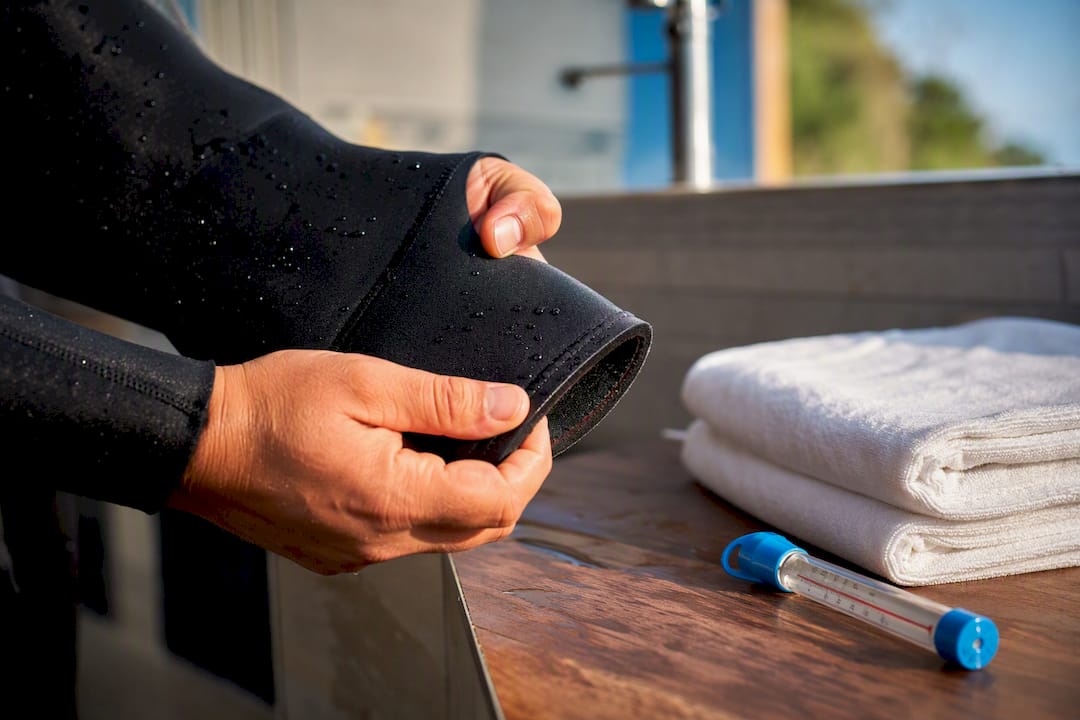
Wetsuit: a 3/2mm suit covers most of summer, while winter sessions call for 4/3mm or thicker with boots and a hood on the coldest days.
Sun protection: fog scatters UV rather than blocking it, so reef-safe mineral sunscreen applied at least 20 minutes before paddling out protects both your skin and the reef.
Rashguard: worth wearing even on overcast days, since sunburn on the water is easy to underestimate when it’s cloudy.
Visibility safety: surf with a buddy when fog is present, and note a fixed landmark for your exit point before paddling out.
Pro Tip: Pack sunscreen and a warm layer in the same bag. Oeste mornings can start foggy and cold, then turn sunny and bright within an hour, and you won’t want to be caught without either.
A packing checklist built for Portugal travel is a useful reference if you’re arranging gear before the trip rather than buying it locally.
Reading Forecasts Like a Local
Three data points matter more than the rest: wind direction and strength, swell direction and period, and sea surface temperature if it’s listed. Wind tells you whether a beach will be clean or blown out; swell period tells you whether waves will have shape or just size.
Cross-check a forecast site against a live local surf cam and forecast platform rather than trusting one source alone.
Treat a calm, low-cloud dawn as a warning sign that nortada is likely to build by mid-morning, and an already-windy sunrise as a sign the whole day will probably stay windy.
Read our breakdown of what makes surf conditions good in Portugal if you want the fuller picture on swell period and direction before your next trip.
What Ripar Surf School Sees on the Water Each Morning
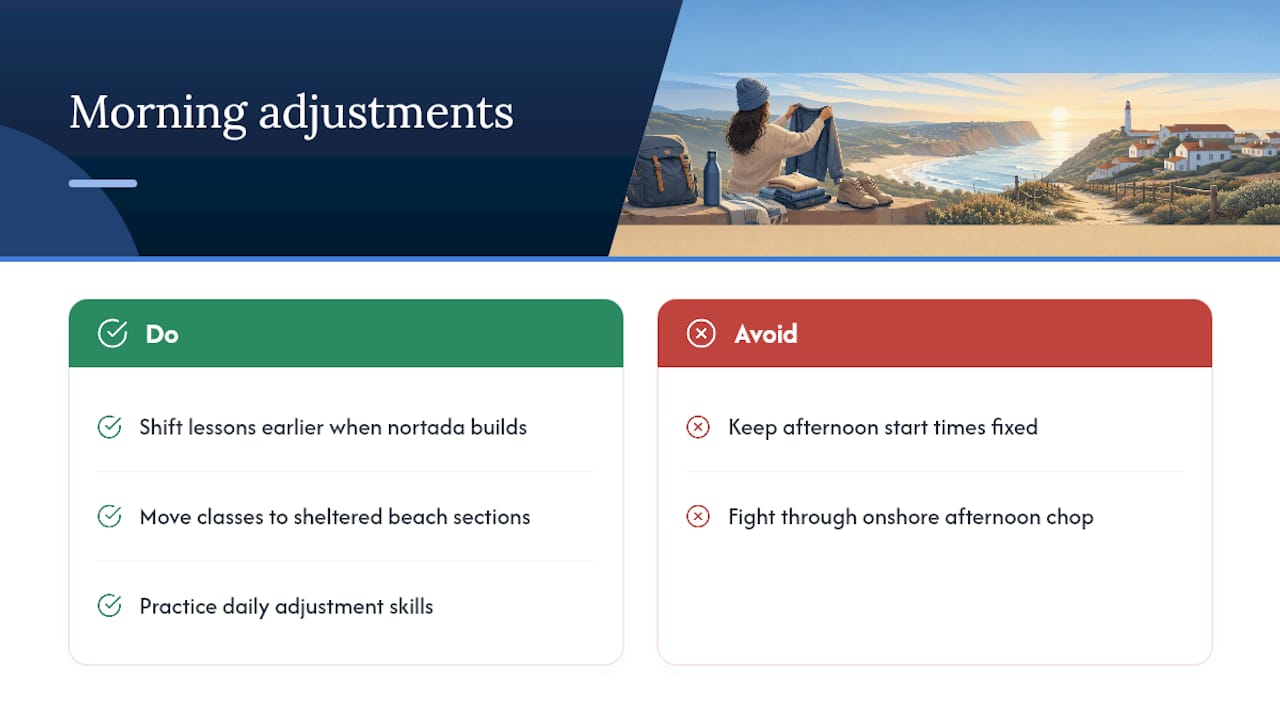
Local surf instructors routinely shift lesson start times earlier when a nortada buildup looks likely, and they’ll move a class to a more sheltered stretch of beach rather than fight afternoon chop. That kind of daily adjustment, common among local surf camps in the Oeste, is exactly the skill worth learning if you’re planning your own sessions.
A Morning I Won’t Forget, and One I’d Rather Forget
Fernando remembers one dawn patrol at Areia Branca that stayed glassy for nearly three hours while a group that showed up at noon fought sideways chop the entire session. The lesson never changes: check the local report the night before, and get in the water early.
— Fernando
Learn to Read These Conditions With Ripar Surf School
Surf schools in the area turn everything above into muscle memory instead of guesswork, because you’re learning it on the actual beach where the nortada builds, not from a forecast app back home. Our instructors adjust lesson times and locations daily based on exactly the patterns covered in this guide, so beginners get the clean morning window and experienced surfers get pointed toward the break that’s actually working that day.

If you’re starting from scratch, the Beginner Surf Lesson runs from €40 and puts you in the water with an instructor who already knows which side of Areia Branca is sheltered that morning. Want more structured progress, the 5 Days Surf Course builds skill across a full week, timed around the daily wind cycle rather than a fixed schedule. For a longer stay that pairs lessons with accommodation near the beach, the surf camp packages start at €304 for the Regular package. Check dates and book directly through our price list to lock in a spot before the season fills up.
Quick Resources Before You Paddle Out
Bookmark a regional forecast and cam platform and check it the night before every session.
Sources
FAQ
What is the best beach for surfing in Portugal?
There’s no single best beach since it depends on skill level and swell direction, but Peniche and Baleal are widely regarded as the most consistent, year-round options in the Oeste. Beginners often do better at sheltered spots like Praia Areia Branca, while advanced surfers chase the more exposed, powerful breaks around Peniche.
Can temperatures reach 50 degrees Celsius in Portugal?
No, mainland Portugal does not reach 50°C. Inland regions can see intense summer heat waves in the 40s Celsius, but the Oeste coast stays notably cooler thanks to sea breeze and upwelling.
What is the coldest city in Portugal?
Higher-elevation interior towns, particularly in the mountainous north around Serra da Estrela, register the coldest winter temperatures in the country. Coastal Oeste towns rarely get as cold in absolute terms, but they do run cooler and windier than inland cities during summer because of the same sea breeze that shapes surf conditions.
What are the best beaches with waves in Portugal?
The Oeste region alone lists 29 distinct surf spots, ranging from mellow beach breaks suited to lessons to punchier reef and point setups for experienced surfers. Praia Areia Branca, Baleal, and the beaches around Peniche cover most skill levels within a short drive of each other.
How much does a surf lesson cost at Ripar Surf School?
A single Beginner Surf Lesson starts from €40, while a Full-Day session runs €70 per day. Private lessons range from €100 to €190 depending on group size and duration, with full pricing listed on the price list page.
Recommended
Comments