

Learn to Surf Safely in Portugal: Low Impact Senior Lessons from €40

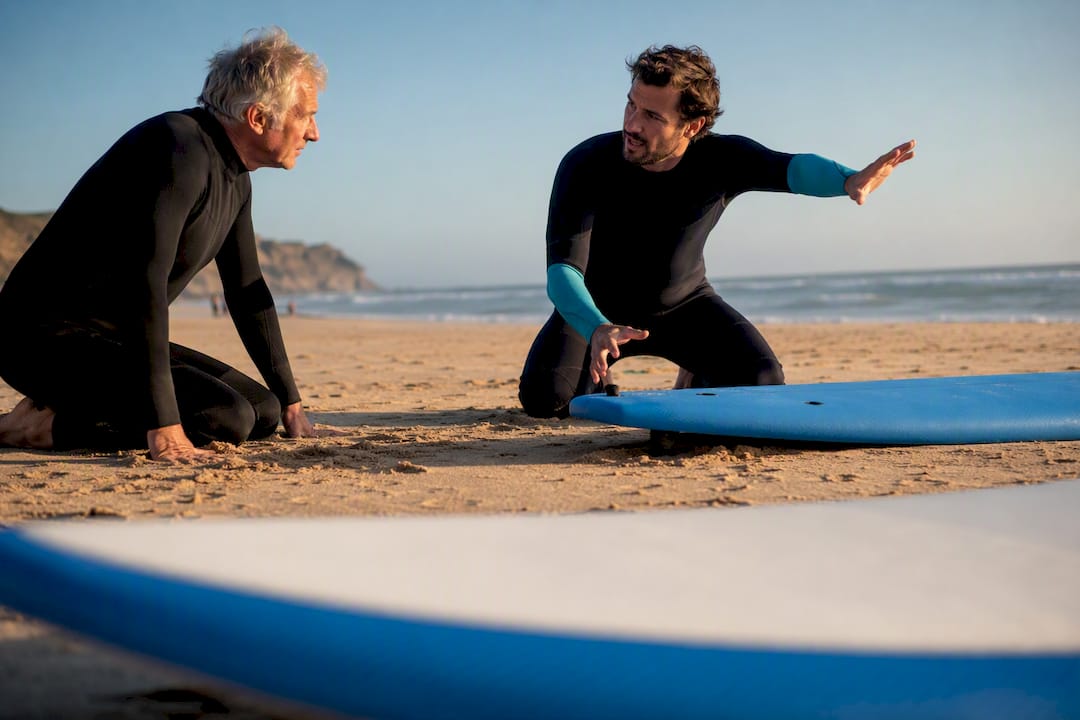
Yes, Portugal has surf lessons built for older beginners, and you do not need to be fit or young to start. A local surf school near Peniche and Ericeira runs beginner-friendly lessons with small groups and foam boards suited to older adults. Check availability and book a lesson directly through the school’s booking page.
TL;DR:
Most senior surf lessons in Portugal start with on-land safety briefings, joint warm-ups, and practicing paddling motions before entering the water.
Foam boards with high buoyancy and thick wetsuits help older adults stay stable and comfortable during lessons, reducing physical demand.
Schools should have small group sizes, clear safety procedures, and experienced instructors who understand mobility limitations for senior students.
Health screening is essential; individuals with cardiovascular issues, recent joint surgeries, or implants should seek physician approval before participating.
Booking a private or semi-private lesson offers personalized attention, especially important for managing specific health or mobility concerns.
Table of Contents
What Do Senior Surf Lessons in Portugal Actually Include?
A good senior surf lesson never starts in the water. It starts on the sand, and that first stretch matters more than most beginners expect.
Instructors typically walk you through a short warm-up focused on shoulders, hips, and ankles, since those joints do most of the work in a pop-up. Then comes the safety briefing: where the whitewash is, how the current moves along that stretch of beach, and what the buddy system looks like for the group. Only after that do you touch a board, and even then the first minutes happen on dry sand, practicing the motion before you ever paddle out.
Once you’re in the shallows, the progression usually follows this order:
Lying flat and catching small whitewash waves without standing.
Practicing a knee-stand, a lower, more stable position that skips the hardest part of a traditional pop-up.
Attempting an assisted stand with the instructor guiding your balance from the water.
Repeating the sequence with feedback, not moving to bigger waves until the basics feel steady.
Lesson formats vary by comfort level and budget:
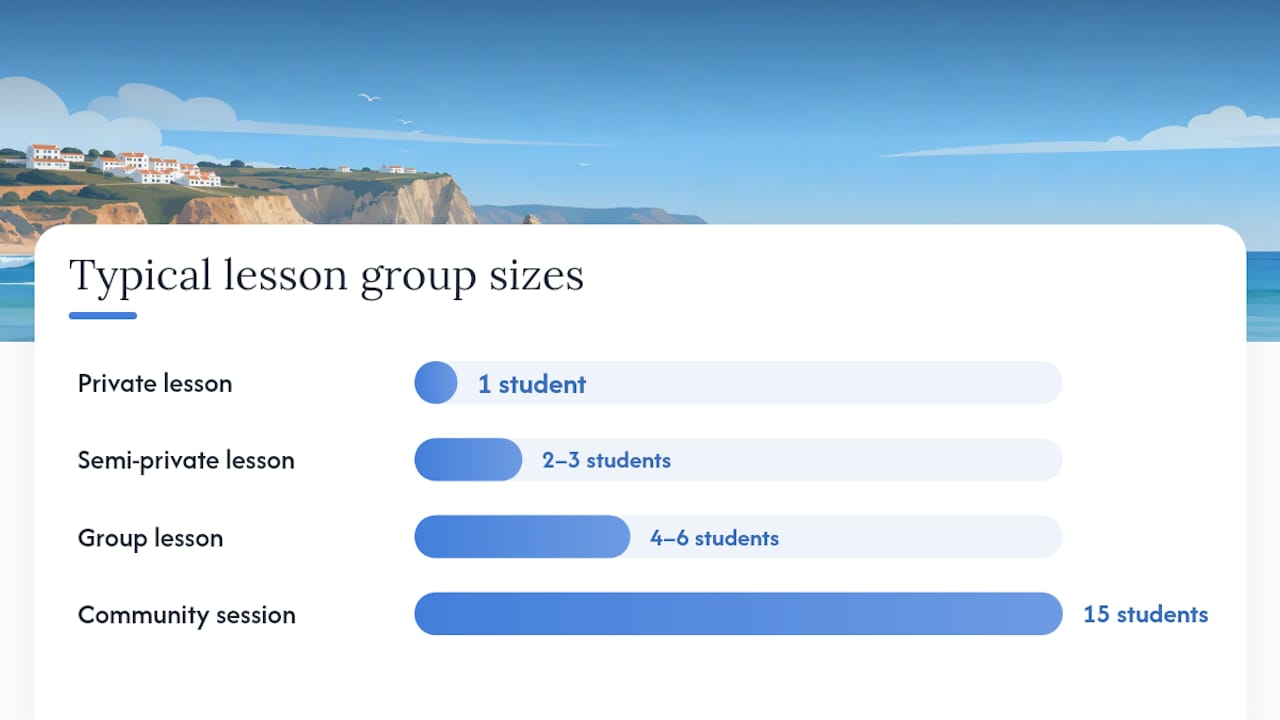
Group lessons — social, usually four to six students per instructor, good for those who like company.
Semi-private lessons — two or three students sharing an instructor’s attention.
Private lessons — one-on-one coaching, best for mobility limitations or a specific pace.
Most sessions run 60 to 120 minutes, and Portuguese community programs have already proven the model works. In Viana do Castelo, regular senior surf classes run twice a week year-round at Praia do Cabedelo at a modest monthly cost, and a community initiative at Praia da Vagueira brought together 15 older adults for a dedicated senior surf session built entirely around confidence and connection rather than performance.
Are Surf Lessons Safe for Older Adults?
Safety for older surfers comes down to three things: screening before the lesson, briefing before the water, and equipment that reduces the physical demand of surfing itself.
A responsible school will ask basic health questions before you book: any recent joint surgery, cardiovascular conditions, or balance issues that a doctor should weigh in on first. If you’re managing high blood pressure, a pacemaker, or a recent hip or knee replacement, get clearance from your physician before your first session. This isn’t a formality. Cold water immersion and sudden exertion put real stress on the cardiovascular system, and a five-minute conversation with your doctor beats a surprise in the surf.
On the beach, expect a briefing that covers:
How rip currents form and how to spot them.
The exit strategy if you get pulled wider than expected.
Hand signals and buddy checks with your instructor.
Equipment matters just as much. Foam boards with high buoyancy make catching waves and staying stable far easier than a fiberglass board, and a wetsuit thick enough for the season keeps muscles warmer and joints looser. A leash and a shore entry point without rocks or steep drop-offs round out the basics.
Pro Tip: Ask the school directly what their instructor-to-student ratio is for senior or adapted classes. A ratio of one instructor to two or three students, rather than six, means someone is watching you every second you’re in the water.
Portugal’s national sport authority, IPDJ, maintains oversight of organized sport programs in the country, which gives a useful baseline for what a legitimate, structured lesson program should look like.
How Do You Choose a Senior-Friendly Surf School?
Not every surf school is built for an older beginner, and the difference usually shows up in the details you’d never think to ask about over the phone.
Run through this checklist before you commit to a school:
Certified instructors with documented experience teaching older or mobility-limited students, not just general beginners.
Small group sizes, ideally capped at four to six for group lessons, with private options available.
Clear safety procedures you can hear explained in plain language, not vague reassurance.
Quality, well-maintained equipment, especially foam boards sized for your weight and skill level.
A beach suited to whitewash waves, meaning a gentle, sandy break rather than a reef or heavy shore break.
When you call to book, ask specifics: What time should you arrive, and is there parking nearby? Does the school require a health questionnaire? Is there insurance coverage for the lesson? What’s the cancellation policy if weather turns bad? Are there showers or restrooms on-site for changing afterward?
A few red flags should send you elsewhere. If a school can’t tell you their group size before you book, that’s a problem. If nobody asks about your health or mobility before your first session, that’s a bigger one. And if the instructor seems more focused on getting you standing quickly than on getting you comfortable first, keep looking. The instructor you work with should care more about your confidence than your speed of progress.
How Should You Prepare for Your First Lesson?
The week before your lesson, focus on mobility rather than strength. Gentle shoulder rotations, ankle circles, and hip openers, five to ten minutes a day, loosen up the joints you’ll rely on for paddling and balance. You don’t need to train like an athlete. You need your body ready to move in unfamiliar ways for an hour.
Pack light but pack smart:
A wetsuit, or plan to rent one from the school.
A towel and a dry change of clothes.
Water and any regular medication.
Reef-safe sunscreen.
Sandals or shoes you don’t mind getting sandy for the walk to the water.
On the day, arrive with time to spare. A rushed start before a lesson that already asks a lot of your body doesn’t help anyone. Expect a warm-up, then a walk-through of what your instructor calls the knee-stand progression, a lower, steadier position that many schools use before attempting a full standing pop-up.
Pro Tip: Tell your instructor exactly what you want out of the lesson, whether that’s standing up once or simply enjoying the water without pressure. A good instructor adjusts the entire session around that goal instead of a generic script.
Say what you need to say about your body. If a shoulder aches or a knee feels unstable, that single sentence changes how your instructor coaches you for the next hour.
A Local Instructor’s View on Teaching Seniors to Surf
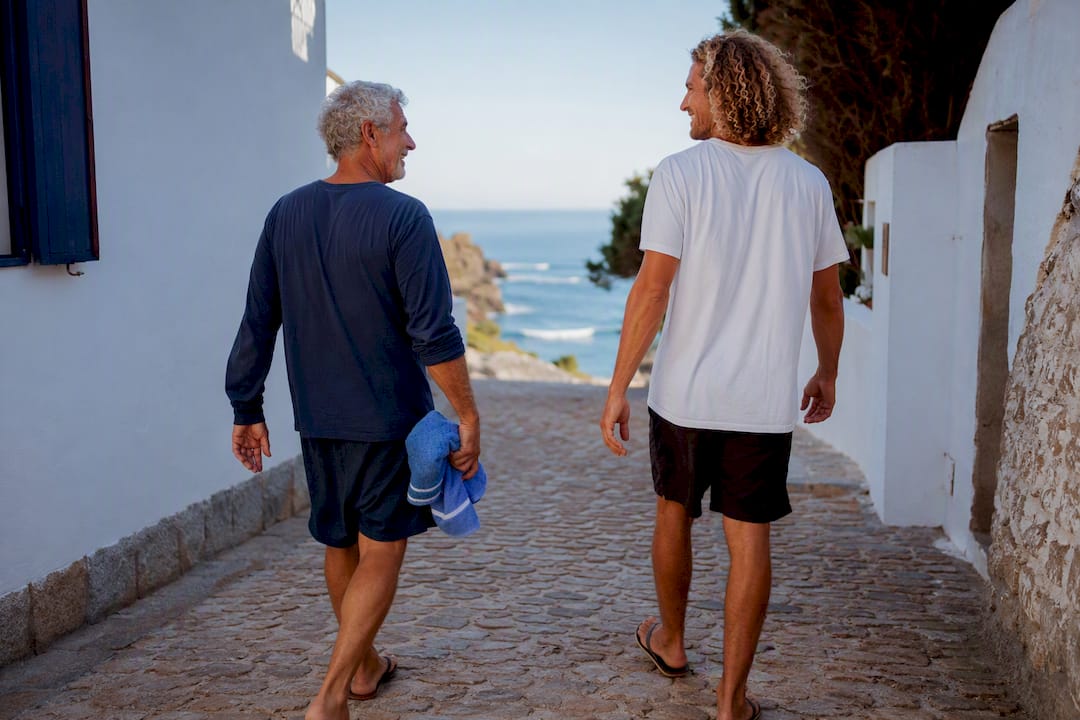
A surf school operating out of Praia Areia Branca since 2001 has seen many visitors walk down to that beach for their first lesson. What keeps older students coming back isn’t the size of the waves. It’s the size of the village.
A small-beach-community setting works differently than a crowded surf town. Nobody is rushing you off the sand for the next tour group, and the pace of a quiet cove suits a slower, more attentive style of teaching. That matters more for older learners than any piece of equipment does.
— Fernando
Which Ripar Surf School Lesson Fits You Best?
This surf school serves as an alternative to generic tourist surf schools for senior lessons near Peniche and Ericeira, offering certified instructors, a quiet beach village setting, and lesson formats built around attention rather than volume.

If you’re brand new to surfing, the Beginner Surf Lesson, starting from €40, gives you a first taste with full instructor guidance and no pressure to progress faster than your body wants to. Prefer one-on-one coaching, especially if you’re managing a joint issue or just like a slower pace? The Private Surf Lesson runs €100 to €190 and puts an instructor’s full attention on you alone. Planning to stay in the water regularly, either during a Portugal trip or a longer visit? The 5 Lessons Surf Pack builds progression across multiple sessions instead of a single afternoon.
After you book, expect a short health questionnaire and clear arrival instructions for Praia Areia Branca, and consider how to relax and stretch with yoga on a boat tailored for recovery and comfort. If a slower vacation pace appeals to you, pair your lessons with a stay at the Beach Bungalows nearby, or unwind after a session with a yoga class built for loosening tired shoulders and hips. Ready to see what fits your schedule? Check lesson availability and get started.
Sources
Portugal’s public sport authority, IPDJ, is a reliable reference point for organized sport programs nationwide, including community initiatives for older adults. Recent Portuguese coverage documents these programs in practice:
FAQ
Is There an Age Limit for Senior Surf Lessons?
No fixed age limit exists at most Portuguese surf schools, including Ripar Surf School. What matters more is general mobility and any medical conditions a doctor should review beforehand.
Do I Need Doctor’s Clearance Before Starting?
If you manage a cardiovascular condition, have had recent joint surgery, or use a pacemaker, get clearance from your physician first. Otherwise, a basic health questionnaire from the surf school is usually enough.
What Should I Wear to a Senior Surf Lesson?
A wetsuit, either your own or rented from the school, plus swimwear underneath and sandals for the walk to the water. Sunscreen and a towel round out the basics.
How Quickly Will I Stand Up on a Surfboard?
Many beginners catch their first whitewash wave lying down within the first session, while standing, even briefly, often comes after a knee-stand progression across two or three lessons.
How Much Do Senior Surf Lessons Cost at Ripar Surf School?
A Beginner Surf Lesson starts from €40, while Private Lessons range from €100 to €190 depending on group size and duration.
Recommended
Comments