

Post-Surf Recovery: What Every Surfer Needs to Know


TL;DR:
Post-surf recovery involves sequential steps after surfing to refuel, repair muscles, and prevent injury. Proper timing, including immediate nutrition, active recovery, and overnight sleep, maximizes muscle repair and reduces soreness. Prioritizing these fundamentals allows surfers to enhance performance, avoid fatigue, and extend their time in the water.
Post-surf recovery is the process of restoring your body’s energy, repairing muscles, and reducing fatigue after a surf session to improve performance and prevent injury. Surfing taxes your shoulders, core, and legs far harder than most people realize. A two-hour session in Atlantic swells burns through glycogen stores, dehydrates you through saltwater exposure and exertion, and creates micro-tears in muscle tissue that need active repair. Skip recovery and you compound fatigue session after session until soreness becomes injury. Get it right and you paddle out stronger the next morning.
What is post-surf recovery and why does timing matter?
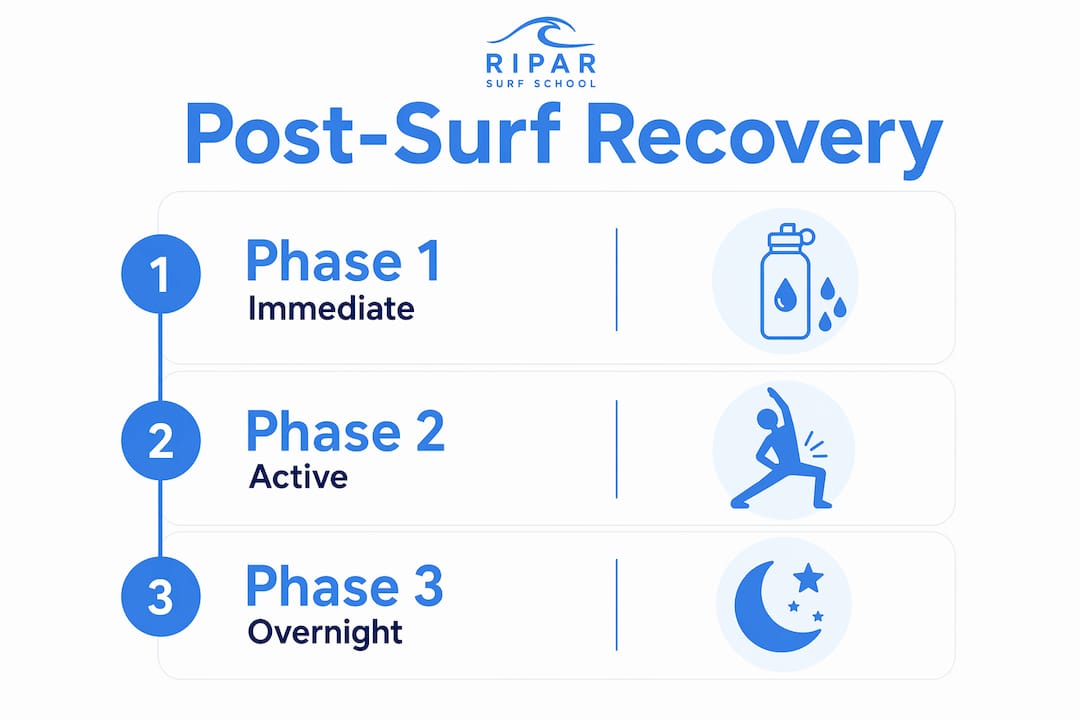
Post-surf recovery is not a single action. It is a sequence of steps that unfolds across three distinct phases: immediate, active, and overnight. Each phase targets a different biological process, and missing one weakens the whole chain.
Phase 1: Immediate (within 45–60 minutes)
The first hour after you exit the water is the most critical window. Your muscles are primed to absorb nutrients, and your core temperature is still elevated, which means circulation is high. Active movement immediately post-session reduces next-day stiffness and improves blood flow far better than collapsing on the sand. A 5–10 minute gentle cool-down walk along the beach is enough to prevent blood pooling in your legs.
Nutrition and hydration belong in this window too. Experts recommend consuming at least 30g of protein within 45–60 minutes post-surf to trigger muscle repair. Pair that protein with complex carbohydrates to replenish glycogen your muscles burned through during the session.
Pro Tip: Pack a recovery snack in your surf bag before you leave home. Greek yogurt with a banana, or a protein shake with oats, hits the 30g protein and carb target without needing a restaurant.
Phase 2: Active recovery (hours 2–6)
Once you have eaten and rehydrated, physical recovery techniques take over. Cold water immersion, foam rolling, and contrast therapy all belong in this window. These methods reduce inflammation, break up muscle adhesions, and accelerate the clearance of metabolic waste from working muscles.

Phase 3: Overnight
Sleep is where the deepest repair happens. Experts recommend 7–9 hours of sleep nightly for tissue repair and hormonal recovery after surf sessions. Growth hormone, which drives muscle regeneration, is released primarily during deep sleep. Elevating your legs slightly while you sleep also reduces residual inflammation in your lower body.
What should you eat and drink after surfing?
Nutrition is the most underused recovery tool in surfing. Most surfers grab whatever is available at the beach cafe without thinking about what their body actually needs in that window.
The priorities are clear:
Protein first. Aim for 30g or more within the first hour after your session. Chicken, eggs, Greek yogurt, canned tuna, or a quality protein shake all work. This triggers muscle protein synthesis, the process that repairs micro-tears from paddling and pop-ups.
Complex carbohydrates. Brown rice, sweet potato, oats, or whole grain bread restore glycogen. Without carbs, your body cannot fully rebuild muscle even with adequate protein.
Electrolytes, not just water. Coconut water is a preferred natural option over plain water for faster rehydration. Fluid and electrolyte depletion happens even in mild conditions. Plain water alone dilutes remaining electrolytes and can worsen cramping.
Anti-inflammatory foods. Turmeric and ginger both reduce systemic inflammation. Add turmeric to a post-surf smoothie or brew ginger tea. These are not miracle cures, but consistent use over a surf trip noticeably reduces cumulative soreness.
Hydration should start immediately upon arrival at the beach, not after your session ends. Drink before you paddle out and keep a bottle waiting for you on the shore. Dehydration accelerates muscle cramping and cognitive fatigue, both of which affect your wave reading and reaction time in the water.
Pro Tip: Add a pinch of sea salt and a squeeze of lemon to your water bottle before a session. It costs nothing and gives you a basic electrolyte solution that beats plain water for hydration.
How do stretching, foam rolling, and cold therapy speed up recovery?
Physical recovery techniques are where most surfers have the biggest gap between what they know and what they actually do. The good news is that even 15 minutes of targeted work makes a measurable difference.
Stretching: warm muscles, better results
Post-surf static stretching for 10 or more minutes targeting shoulders, lats, and hip flexors reduces stiffness and injury risk. Hold each stretch for 20–30 seconds while your muscles are still warm from the session. Cold muscles resist stretching and increase the risk of small tears. The shoulder cross-body stretch, doorway chest opener, and kneeling hip flexor lunge are the three highest-value moves for surfers. You can find a full surf-specific stretching routine that covers both warm-up and cool-down sequences.
Foam rolling: what stretching cannot reach
Foam rolling breaks up fascia restrictions in the back and shoulders that stretching alone cannot address. Paddling creates repetitive compression in the thoracic spine and IT bands. Rolling these areas for 60–90 seconds each releases adhesions and restores tissue mobility. Focus on the upper back, lats, and outer thighs. Slow, deliberate passes work better than fast rolling.
Cold therapy vs. contrast therapy
Method | Temperature | Duration | Primary Benefit |
Cold water immersion | 38–45°F | 2–3 minutes | Reduces inflammation, flushes lactic acid |
Contrast therapy | Alternate cold/warm | 10–15 minutes total | Boosts circulation, speeds recovery |
Topical magnesium | Applied to skin | 10–15 minutes | Relieves cramps, relaxes muscle tension |
Cold water immersion at 38–45°F for 2–3 minutes reduces muscle inflammation and accelerates lactic acid flushing. The ocean itself works if the water is cold enough. Contrast therapy, alternating between cold and warm water, enhances circulation beyond what cold alone achieves.
Topical magnesium applied for 10–15 minutes bypasses digestion and relieves surf cramps faster than oral supplements. Apply it directly to cramping or tight muscles, let it absorb, then rinse. It is particularly effective after intense sessions in strong surf.
Pro Tip: If you do not have access to an ice bath, a cold outdoor shower at the beach immediately after your session gives you most of the same inflammation-reducing benefit. Two minutes is enough.
Why does sleep and active rest determine your long-term surf performance?
Surfers who train hard and sleep poorly plateau faster than those who balance effort with rest. Sleep is not passive. It is the most productive recovery tool you have.
Key reasons sleep and active rest drive long-term performance:
Hormonal repair. Growth hormone peaks during deep sleep stages. Seven to nine hours of sleep gives your body enough time to complete multiple repair cycles. Cutting sleep to six hours or less reduces growth hormone output and slows muscle recovery.
Nervous system reset. Surfing demands constant balance adjustments and reactive decision-making. Your nervous system fatigues just like your muscles. Sleep resets neural pathways and sharpens your reflexes for the next session.
Active recovery on rest days beats total inactivity. Gentle walking, swimming, or yoga on rest days maintains blood flow and prevents the stiffness that builds from complete rest. Experienced surfers prioritize this approach over lying on the couch between sessions.
Leg elevation reduces inflammation. Elevating your legs above heart level for 15–20 minutes before sleep drains fluid from tired lower limbs and reduces overnight swelling.
Many surfers underestimate recovery as an integrated part of their surfing practice. The result is cumulative fatigue that builds across a surf trip until performance drops and injury risk spikes. Treating rest days as active recovery days, not wasted days, is the mindset shift that separates surfers who improve consistently from those who stagnate. Riparsurfschool’s surf yoga program is one practical way to structure active recovery with purpose.
Key Takeaways
Post-surf recovery is the structured process of refueling, repairing, and resting your body after surfing, and doing it consistently is what separates surfers who improve from those who burn out.
Point | Details |
Time your nutrition | Consume 30g of protein with complex carbs within 45–60 minutes of exiting the water. |
Hydrate with electrolytes | Use coconut water or an electrolyte drink, not plain water, to rehydrate after every session. |
Stretch and foam roll | Target shoulders, lats, and hip flexors for 10+ minutes while muscles are still warm. |
Use cold therapy | Two to three minutes of cold water immersion at 38–45°F reduces inflammation and clears lactic acid. |
Prioritize sleep and active rest | Get 7–9 hours of sleep and use rest days for gentle movement, not total inactivity. |
Recovery is not optional: a surf instructor’s perspective
The surfers I see struggle most are not the ones who lack talent. They are the ones who treat recovery as something they will get to eventually. After more than two decades of teaching at Praia Areia Branca, I can tell you that the pattern is consistent. A surfer arrives full of energy on day one, pushes hard for three days, and by day four they are stiff, tired, and frustrated that their surfing has gotten worse instead of better.
What most people miss is the timing piece. Recovery does not start when you feel sore. It starts the moment you walk out of the water. The surfers who grab a snack, do five minutes of movement, and stretch before they even rinse off are the ones who show up sharp the next morning. The ones who collapse on the sand and drive straight to dinner are the ones who text me the next day saying their shoulders are wrecked.
I also think the surf world oversells the dramatic recovery tools and undersells the basics. Ice baths are useful. Foam rolling is useful. But they do not compensate for poor sleep and no protein. Get the fundamentals right first. Eat within the hour. Sleep eight hours. Move gently on your rest days. The advanced tools are multipliers, not replacements.
One thing I tell every student at Riparsurfschool: listen to your body’s fatigue signals before they become injury signals. Tightness in the shoulder that you ignore on Tuesday becomes the rotator cuff problem that ends your trip on Friday. Recovery is not weakness. It is how you stay in the water longer.
— Fernando
Surf smarter with Riparsurfschool in Portugal

At Riparsurfschool, based at Praia Areia Branca near Peniche, recovery is built into the experience, not bolted on as an afterthought. Every surf lesson, whether you choose a group surf lesson or a private session, includes post-session guidance on stretching and cool-down routines from certified local instructors. The surf camp also offers dedicated yoga classes for surfers designed to target the exact muscle groups that surfing taxes most. If you are ready to surf better, recover smarter, and actually enjoy every session of your trip, book your lessons online and let the Riparsurfschool team take care of the rest.
FAQ
What is post-surf recovery in simple terms?
Post-surf recovery is the set of practices you follow after surfing to repair muscles, restore energy, and reduce fatigue. It includes nutrition, hydration, stretching, cold therapy, and sleep.
How soon should I eat after surfing?
Eat within 45–60 minutes of finishing your session. Aim for at least 30g of protein paired with complex carbohydrates to trigger muscle repair and restore glycogen.
Is cold water immersion really necessary after surfing?
Cold water immersion at 38–45°F for 2–3 minutes reduces inflammation and flushes lactic acid from muscles. It is highly effective, but contrast therapy or even a cold shower delivers similar benefits if a full ice bath is not available.
What is the best active recovery for surfers on rest days?
Gentle walking, easy swimming, and yoga are the best active recovery options. They maintain blood flow and flexibility without adding stress to muscles that are still repairing.
How does sleep affect surf performance?
Seven to nine hours of sleep per night is the foundation of tissue repair and nervous system recovery. Growth hormone, which drives muscle regeneration, is released primarily during deep sleep stages.
Recommended
Comments