

Whitewater Surfing Basics: Your Beginner's Guide

TL;DR:
Whitewater surfing involves riding the foam at a river or shorebreak to develop basic balance, timing, and wave reading skills. Using a high-volume board, protective safety gear, and understanding target-specific techniques are essential for safe and effective practice. Practicing on stationary river waves offers beginners more repetition, faster skill acquisition, and a different mental approach than ocean surfing.
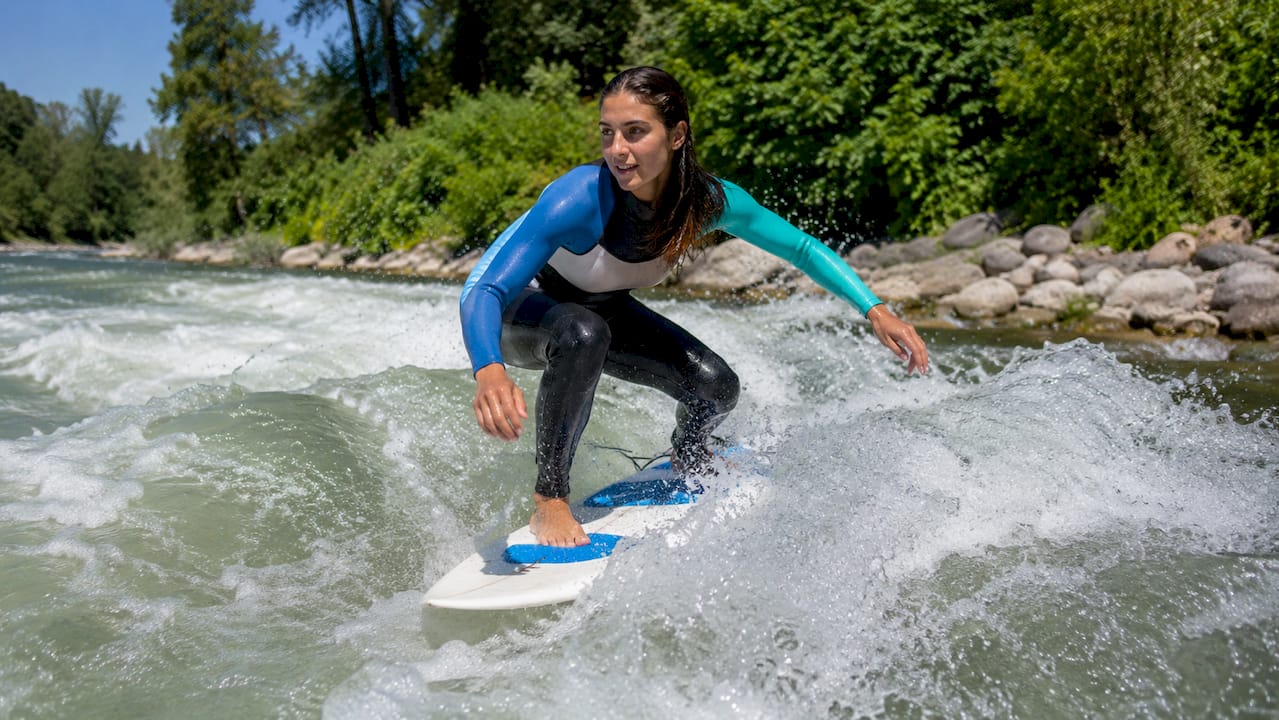
Whitewater surfing is defined as riding the foamy, broken section of a wave, whether at a river standing wave or near a shorebreak, using balance, timing, and proper gear to build real surfing foundations. This is where most surfers actually begin, even if they don’t realize it. Mastering whitewater surfing basics gives you the pop-up mechanics, weight distribution habits, and wave-reading instincts that carry directly into open-ocean surfing. This guide covers the gear you need, the techniques that work, the safety rules that matter, and how river surfing differs from ocean surfing in ways that will change how you practice.
What equipment do you need for whitewater surfing basics?
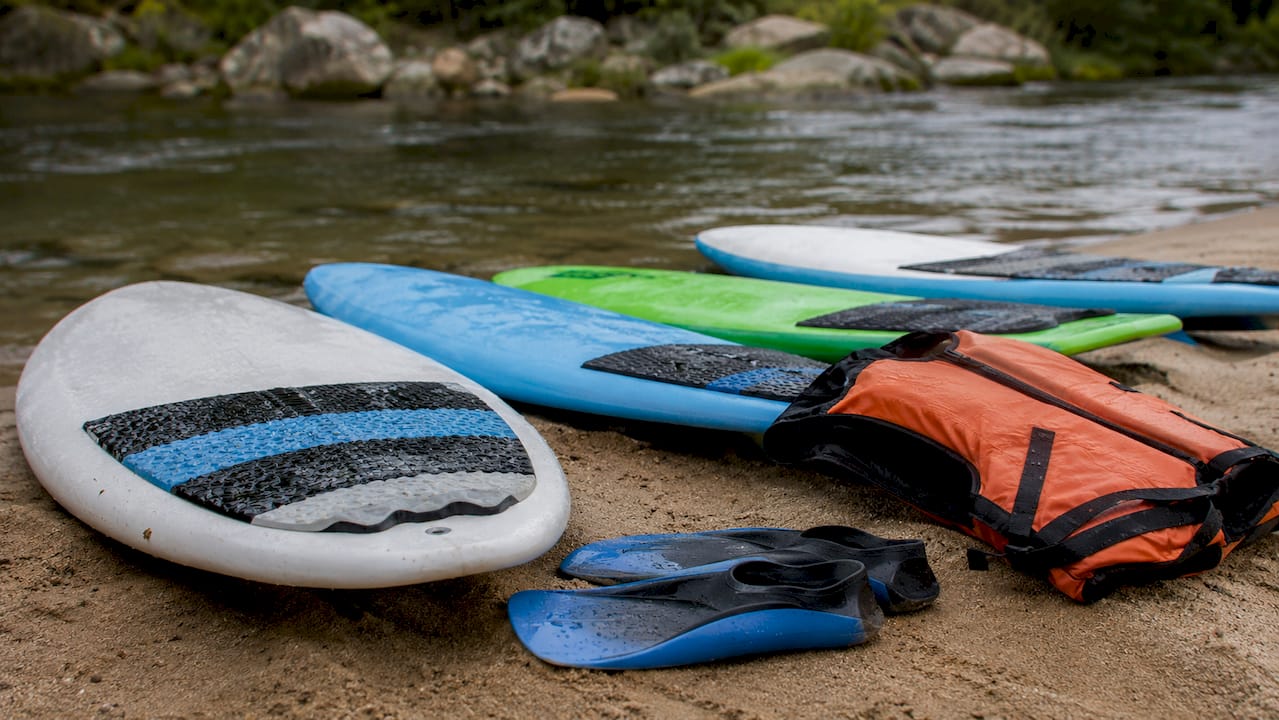
The right board makes or breaks your first sessions. Beginner river surfboards run 5’8"–6’6" in length with a volume of 23–28 liters, depending on your body weight. That volume range gives you the float and stability to stay on the wave while you’re still figuring out your stance. If you prefer a stand-up paddleboard approach, go with a 9’–10’ SUP with a single fin for easier directional control.
Board shape and fin setup
Wider templates are your friend in whitewater. A wider nose and tail give you more surface area to balance on when the water gets turbulent. For fins, thruster setups offer the best combination of drive and forgiveness for beginners. Single fins work well on SUPs but can feel loose on shorter river boards. In rocky river environments, choose flexible rubber fins over stiff fiberglass ones. Flexible fins bend on impact instead of snapping, which saves you money and keeps you in the water longer.
Safety gear you cannot skip
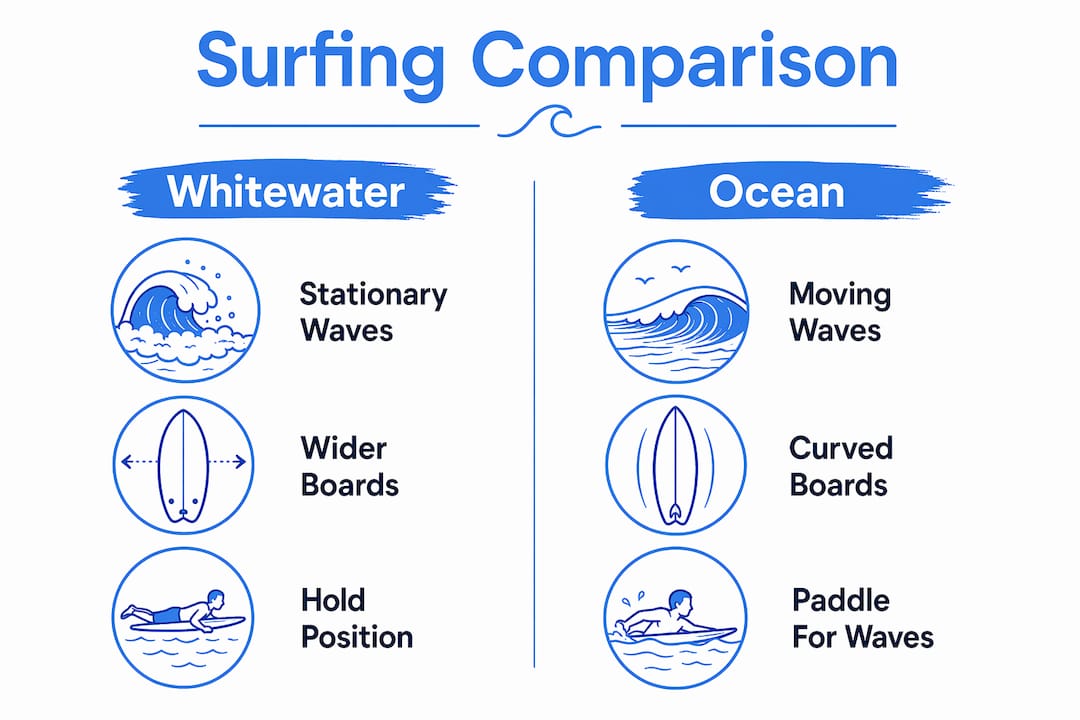
Whitewater surfing requires more protective gear than ocean surfing. Here is what you need before your first session:
Helmet: Protects against rocks, concrete wave structures, and board impacts. A whitewater kayaking helmet works well.
PFD (personal flotation device): A life jacket or impact vest keeps you afloat if you get held under. This is mandatory safety gear in most river surfing environments.
Impact vest: Worn over or under a PFD, it absorbs hits from the board and river floor.
Water shoes: Protect your feet from rocks and slippery surfaces when entering and exiting the water.
Quick-release leash: Standard ocean ankle leashes are life-threatening in rivers because they can snag on underwater obstacles. Use a quick-release leash attached to your PFD or belt instead.
Pro Tip: Brands like Astral and NRS make PFDs specifically designed for river surfing. They sit higher on the torso than traditional life jackets, giving your arms full range of motion for paddling and pop-ups.
How do you catch and ride a whitewater wave effectively?
Riding a whitewater wave follows a different sequence than ocean surfing, but the core body mechanics are the same. Here is a step-by-step approach that works for beginners:
Observe before you enter. Spend 10–15 minutes watching the wave from the bank. Note where the peak is, where surfers exit, and where the eddies are. River waves are shaped by underwater structures, and no two waves behave identically, so this observation time is not optional.
Enter from the eddy. An eddy is a calm pocket of water beside the main current. Paddle from the eddy into the wave’s face rather than dropping straight in from upstream.
Position yourself at the wave’s peak. The peak is the steepest, most powerful part of the standing wave. This is where you get the most push under your board.
Time your pop-up to the current. In whitewater, you are not paddling to generate speed. The current does that for you. Pop up when you feel the wave lift the tail of your board.
Land in a low, wide stance. Keep your knees bent and your feet wider than shoulder-width apart. Turbulent water punishes a stiff, upright stance immediately.
Shift your weight to steer. Turning on whitewater waves requires precise weight shifts. Press your toes to go frontside, your heels to go backside. Pivot the nose into the turn while keeping your hips low.
Exit intentionally. Lean back slightly to let the current push you off the back of the wave into the eddy. Never fall forward into the main downstream flow.
The most common beginner mistake is standing up too tall too fast. Whitewater is unstable by nature. Stay low, keep your arms out for balance, and accept that short rides of 2–5 seconds are normal at the start. Control comes before duration.
What safety practices should whitewater surfers follow?
Safety in whitewater surfing is not a checklist you complete once. It is a habit you build into every session.
Never surf alone. A buddy on the bank can throw a rescue rope or call for help if you get pinned or injured. This rule applies regardless of your skill level.
Know your exit before you enter. Identify the eddy you will swim to if you fall. Downstream hazards like rocks, bridge pylons, and hydraulic holes can trap swimmers.
Check water gauges before you go. River wave quality changes daily based on water levels and weather. Most river surfing communities post real-time gauge data and webcam feeds online. A wave that was perfect yesterday may be dangerous today.
Respect the rotation. Experienced surfers at established river waves follow a lineup rotation. Standard ride time is about 45 seconds before you yield to the next person. As a beginner, your rides will be shorter, but you still wait your turn.
Limit your session length when learning. Fatigue causes most beginner accidents. Short, focused sessions build skill faster than exhausting marathon attempts.
“The river does not care how confident you feel. It only responds to how prepared you are.”
Pro Tip: Many river surfing spots have dedicated community pages or apps where locals post daily conditions, gauge readings, and safety alerts. Finding and following these before your first visit is one of the smartest moves you can make.
Riparsurfschool recommends that beginners always take at least one structured lesson before attempting a river wave independently. Understanding surfing culture and etiquette is as important as physical technique, especially in shared lineups.
How does whitewater surfing differ from ocean surfing?
The difference between whitewater and ocean surfing is more than location. It changes the entire mental model of how you interact with a wave.
Feature | Whitewater / River surfing | Ocean surfing |
Wave movement | Stationary standing wave | Moving wave traveling toward shore |
Surfer’s goal | Maintain position against current | Catch and ride a moving wave |
Paddling role | Minimal; current provides speed | Central; you generate your own speed |
Wave shape | Fixed and consistent | Variable with each set |
Exit strategy | Eddy-based, planned | Ride ends naturally or you kick out |
Skill focus | Balance, weight shift, turning | Paddling, timing, wave reading |
The biggest mental shift is moving from chasing waves to holding position. Ocean surfers spend most of their time paddling to intercept a moving target. River surfers lock into a fixed spot and work the wave from there. This changes everything about how you use your body.
That shift is actually a gift for beginners. Because the wave is always there, you get far more repetitions per session than you would in the ocean. You can practice your pop-up, your stance, and your turns without waiting 10 minutes between waves. Whitewater sessions compress skill development in a way that open-ocean sessions simply cannot match. Many experienced ocean surfers use river waves specifically to drill technique during flat spells.
The balance and turning dynamics also differ. Ocean waves have a curved face that helps guide your board. River waves are often flatter and foamier, which means your weight distribution has to be more deliberate. This trains a more active, responsive style of surfing that translates well back to the ocean.
Key takeaways
Mastering whitewater surfing basics requires the right gear, deliberate technique, and strict safety habits before you ever step onto a standing wave.
Point | Details |
Board volume matters | Use a 23–28 liter board at 5’8"–6’6" for stability as a beginner. |
Skip the ankle leash | Use a quick-release leash on your PFD to avoid entanglement in river currents. |
Observe before entering | Watch the wave for 10–15 minutes to understand flow, exits, and hazards. |
Respect ride rotation | Yield after roughly 45 seconds; beginners should focus on control, not duration. |
River surfing builds ocean skills | Stationary waves give you more repetitions per session to drill pop-ups and turns. |
What I’ve learned from watching beginners tackle their first river waves
The most common thing I see beginners get wrong is not technique. It is patience. They watch the wave for 30 seconds, decide it looks manageable, and jump in before they understand where the current goes after the wave. That is how people end up swimming further downstream than they planned.
The gear mistakes are a close second. I have seen surfers show up with standard ocean leashes and no PFD because they figured the wave looked small. River waves do not need to be big to be dangerous. A knee-high standing wave with a strong current can hold you down just as effectively as a large ocean wave if you are not prepared.
What I find genuinely exciting about whitewater surfing for beginners is the repetition factor. In the ocean, you might catch 10 waves in a two-hour session if conditions cooperate. On a good river wave, you can attempt 40 or 50 pop-ups in the same time. That compression of practice is why I always tell intermediate ocean surfers to spend a few sessions on a river wave when they want to break through a plateau. The feedback is immediate and relentless.
Start with a forgiving, high-volume board. Wear your helmet and PFD every single time. Watch the wave before you ride it. And find a local who knows the spot. The learning curve is steep at first, but the payoff in overall surfing ability is real.
— Fernando
Start your surfing journey with Riparsurfschool

Riparsurfschool has been teaching surfers of all levels at Praia Areia Branca, near Peniche and Ericeira, since 2001. Whether you are working on your first pop-up or building confidence in more challenging conditions, the certified instructors at Riparsurfschool design every lesson around your current skill level and goals. Small groups mean you get real feedback, not just a board and a wave. You can book your surf lesson online in minutes and choose from beginner group sessions or private lessons tailored to your pace. Portugal’s Atlantic coast gives you consistent, quality waves year-round. Come learn the right way from the start.
FAQ
What is whitewater surfing?
Whitewater surfing is riding the foamy, broken section of a wave, either at a river standing wave or near a shorebreak, using a surfboard or SUP. It is a foundational skill for beginner surfers learning balance, timing, and wave reading.
What board should a beginner use for river surfing?
Beginners should use a board with 23–28 liters of volume and a length of 5’8"–6’6", or a 9’–10’ SUP with a single fin. More volume provides the stability needed to stay on the wave while learning.
Are ankle leashes safe in river surfing?
Standard ankle leashes are dangerous in river environments because they can snag on rocks or underwater structures. Use a quick-release leash attached to your PFD or belt instead.
How long should a beginner’s ride be on a river wave?
Beginner rides typically last 2–5 seconds and focus on control rather than duration. Experienced surfers follow a rotation with rides of about 45 seconds before yielding to the next person in the lineup.
Do I need professional lessons to start whitewater surfing?
Professional lessons are strongly recommended for beginners. An instructor teaches self-rescue, eddy navigation, and proper technique, which reduces risk and speeds up skill development significantly.
Recommended
Comments