

Morning Surf Routine Guide: Prime Your Session

TL;DR:
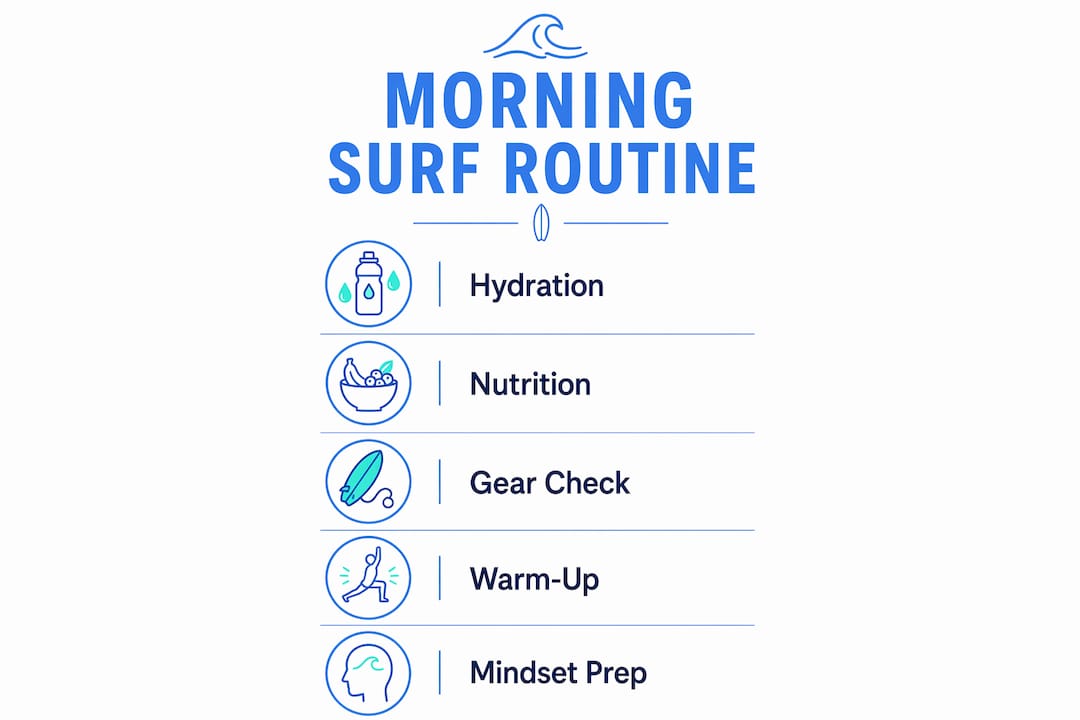
A consistent morning surf routine prepares your body and mind for better performance and injury prevention. It includes gear checks, light nutrition, hydration, breath focus, and targeted warm-up exercises targeting shoulders, hips, and ankles. Practicing a brief, repeatable sequence enhances surfing skills and reduces common mistakes, regardless of time constraints or conditions.
A morning surf routine is a focused sequence of physical, mental, and logistical steps that prepares your body and mind for peak performance in the water. The best surfers in the world do not show up at the beach and paddle straight out. They follow a repeatable pre-session process that covers mobility, breath control, nutrition timing, and a conditions check. This morning surf routine guide gives you that exact framework, whether you have 10 minutes or 20, so you catch more waves, surf cleaner, and stay injury-free session after session.
What does a morning surf routine guide actually require?
The foundation of any effective morning routine for surfers starts before you ever touch your board. You need three things in place: the right gear, the right fuel, and the right mindset.

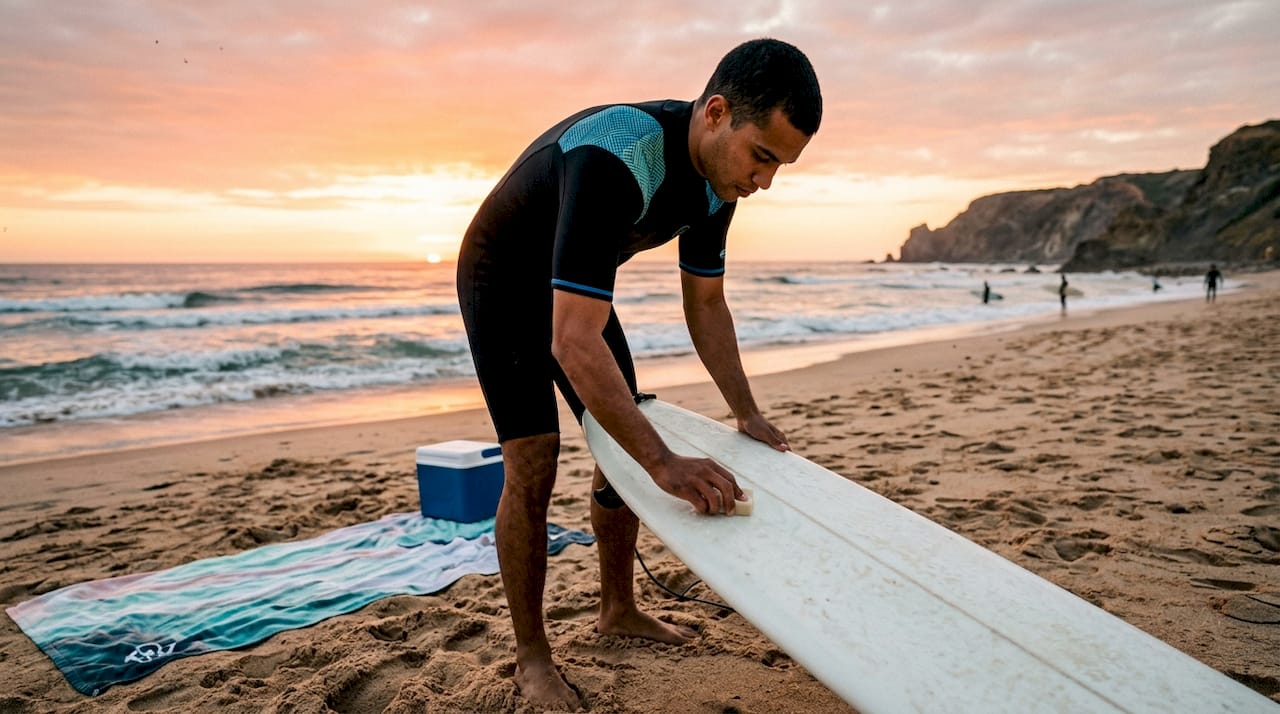
Gear checks come first. Experienced surfers treat gear inspection as the true start of their routine, running through fins, leash integrity, and dings immediately upon arrival at the parking lot. Catching a cracked fin or a frayed leash before you paddle out saves your session and possibly your safety.
Here is a quick surfing morning checklist to run through every time:
Board: Check for pressure dings, cracks, or delamination
Leash: Inspect the cord, cuff, and swivel for wear or fraying
Fins: Confirm all fins are locked and undamaged
Wax: Apply fresh wax or comb existing wax for grip
Wetsuit or rash guard: Check seams and zippers
Nutrition timing matters more than most surfers realize. Professional surfers eat light, nutrient-dense foods 45–60 minutes before paddling out to sustain energy without digestive heaviness. A banana with almond butter, oats with fruit, or a small smoothie all work well. Skip anything fried, heavy, or high in fiber right before a session.
Hydration sets the tone for your entire surf. Avoid early morning coffee on an empty stomach, especially in warm climates, since it accelerates dehydration and can trigger jitters in the lineup. Coconut water or an electrolyte drink before your first cup of coffee gives your body the minerals it needs for endurance and mental calm.
Pro Tip: Start your morning with 500ml of water with a pinch of sea salt before any food or coffee. This one habit alone improves your paddle endurance noticeably within a week.
Mindset preparation is the piece most surfers skip entirely. Micro-habits like breath focus before screen time build a sustainable mental state that carries over into every session. Two minutes of slow nasal breathing while you eat breakfast costs nothing and primes your nervous system for calm, deliberate surfing.
How to perform the best surf warm-up exercises
Surf-specific warm-ups target the three areas that take the most stress during a session: shoulders, hips, and ankles. A generic gym warm-up does not cut it. You need movements that mirror the demands of paddling, popping up, and riding.
Optimal warm-up routines run 10–13 minutes for a full-body mobility flow. That is enough time to prepare every major joint without fatiguing your muscles before you hit the water.
Here is a numbered sequence of key warm-up movements for your morning session:
Neck rolls (30 seconds): Slow, controlled circles in both directions to release tension from sleeping
Shoulder circles and cross-body arm swings (60 seconds): Mimics the paddle stroke and opens the rotator cuff
Hip circles and deep lunge with rotation (90 seconds per side): Unlocks hip flexors critical for the pop-up
Ankle rotations and calf raises (45 seconds): Prepares the base of your stance for balance and pressure changes
Thoracic spine rotations in a low squat (60 seconds): Improves the twist needed for backside and frontside turns
Pop-up rehearsal (20 seconds, slow motion): The pop-up rehearsal primes neural pathways for smooth execution under pressure, improving the speed and fluidity of your paddle-to-stand movement
Core activation: dead bugs or hollow body holds (45 seconds): Engages the stabilizers that keep you balanced on the board
Pro Tip: Do your pop-up rehearsal on the sand, not in your head. The physical repetition on a flat surface trains your nervous system far more effectively than visualization alone.
The table below compares warm-up approaches by time and focus so you can pick the right one for your morning:
Warm-Up Type | Duration | Focus Areas | Best For |
Express warm-up | 3–5 minutes | Shoulders, hips | Time-pressed mornings |
Standard warm-up | 10–13 minutes | Full body mobility + pop-up | Most surf sessions |
Extended warm-up | 15–20 minutes | Mobility, core, breath, rehearsal | Competition or big wave days |
For detailed surf warm-up exercises broken down by movement type, Riparsurfschool has a full breakdown that pairs well with the sequence above.
What does a streamlined 10–20 minute surf session morning look like?
A practical morning routine for surfers follows a clear sequence. Each step has a purpose, and the order matters. Rushing through them out of sequence reduces their effectiveness.
Here is the full step-by-step framework:
Wake up and hydrate (2 minutes): Water with electrolytes before anything else
Light breakfast (10–15 minutes, 45–60 minutes before paddling): Eat while reviewing the surf forecast on Surfline, Windguru, or Magic Seaweed
Gear check at the car (2 minutes): Run through your surfing morning checklist before walking to the beach
Conditions observation (1 minute): Stand at the water’s edge and watch the sets. A 60-second intentional ocean observation acts as a psychological reset, transforming hurriedness into focused confidence before you paddle out
Warm-up sequence (10–13 minutes): Follow the numbered movement sequence above
Breath and intention (2 minutes): Three slow exhales, then set one specific goal for the session, whether it is timing your pop-up better or committing to backhand turns
The table below maps out three routine options based on how much time you have:
Routine Type | Total Time | Key Steps Included |
Quick routine | 10 minutes | Hydration, gear check, conditions look, express warm-up |
Moderate routine | 20 minutes | All steps above plus standard warm-up and breath reset |
Extended routine | 30+ minutes | Full sequence plus yoga, journaling, or extended mobility |
Consistent practice compounds the benefits of any routine. A routine as short as 3 minutes with consistency outperforms a longer, irregular one every time. The goal is repeatability, not perfection.
What are the most common morning surf routine mistakes?
Most surfers do not fail because they lack talent. They fail because they repeat the same preparation errors every morning without realizing the cost.
The most damaging mistakes include:
Skipping the gear check: A worn leash or loose fin discovered mid-session is dangerous and avoidable
Eating too close to paddling out: Heavy food within 30 minutes of surfing causes cramping and sluggish movement
Drinking coffee on an empty stomach: Early morning coffee without food accelerates dehydration and spikes cortisol, which increases anxiety in the lineup
Rushing the warm-up: Skipping shoulder and hip mobility is the leading cause of rotator cuff strain and lower back pain in recreational surfers
Ignoring the conditions check: Paddling out without reading the break means you miss rip currents, peak locations, and wave timing
“A routine as short as 3 minutes, done consistently, outperforms a longer routine done occasionally.” — surfhungry.com
The fix for most of these mistakes is not discipline. It is design. Build your surfer habits into a sequence so automatic that skipping a step feels wrong. Lay out your gear the night before. Set your electrolyte drink on the counter before bed. These micro-decisions remove friction from your morning entirely.
How do you customize your routine for different conditions?
No two surf mornings are identical. Your routine needs to flex with the conditions, your goals, and your available time. Here is how to adapt it without losing the core benefits.
When time is short, prioritize in this order: hydration, gear check, conditions observation, and a 3-minute shoulder and hip warm-up. Drop the extended mobility work before you drop the gear check or conditions read.
When conditions are powerful, extend your warm-up and add extra breath work. Big surf demands more physical and mental preparation. Add two additional sets of thoracic rotations and spend an extra minute on your conditions observation to identify the safest entry point.
In tropical climates, hydration becomes your top priority. Electrolyte-rich fluids like coconut water replace minerals lost through sweat far more effectively than plain water. Delay coffee until after your session.
In temperate climates like Portugal, cold water demands extra attention to joint mobility. Spend more time on ankle and hip circles before entering cold Atlantic swells. Riparsurfschool instructors at Praia Areia Branca consistently recommend a longer warm-up for guests surfing the region’s powerful beach breaks for the first time.
For beginners, the mental intention step carries extra weight. Breath focus before screen time creates a sustainable mental state that reduces the anxiety of learning in open water. Two minutes of calm breathing before you touch your board changes how your first wave of the day feels.
For experienced surfers, add surf fitness exercises like single-leg squats or resistance band paddle drills to your extended routine on days when you want to push performance.
Key takeaways
A consistent, well-sequenced morning surf routine is the single most reliable way to improve your surfing performance and reduce injury risk across every session.
Point | Details |
Gear check is non-negotiable | Inspect fins, leash, and board before leaving the parking lot every session. |
Fuel timing changes everything | Eat light, nutrient-dense food 45–60 minutes before paddling to avoid cramps and energy crashes. |
Warm-up targets three zones | Prioritize shoulders, hips, and ankles with dynamic movements, not static stretches. |
Pop-up rehearsal primes your nervous system | A 20-second slow-motion pop-up on the sand improves your in-water execution measurably. |
Consistency beats duration | A 3-minute routine done every day outperforms a 20-minute routine done twice a week. |
What i’ve learned after years of morning sessions at areia branca
Most surfers overthink their preparation or skip it entirely. Neither works. What I have seen over years of surfing and coaching at Praia Areia Branca is that the surfers who improve fastest are not the most talented ones. They are the ones who show up with a repeatable morning process and stick to it.
The biggest shift I made personally was treating the conditions check as a non-negotiable pause rather than a quick glance. Standing at the water’s edge for 60 seconds and actually watching the ocean, reading the sets, spotting the rip, identifying the peak, changed how I entered every session. I stopped reacting and started surfing with intention.
I also stopped fighting the nutrition question. A banana and some water 45 minutes before paddling out is not glamorous, but it works every single time. The mornings I skipped breakfast and went straight to coffee were always the sessions where I felt flat by the second hour.
My honest advice: build the smallest version of this routine first. Gear check, one minute of hip circles, one minute of breathing, and a conditions look. That is four minutes. Do it every morning for two weeks. You will not want to surf without it after that.
The surfboard care checklist is worth bookmarking too. Gear failures are almost always preventable, and a clean, well-maintained board responds better in the water.
— Fernando
Learn your routine faster with Riparsurfschool
Building a morning surf routine on your own takes trial and error. Riparsurfschool at Praia Areia Branca, near Peniche and Ericeira, has been teaching surfers how to prepare and perform since 2001. The certified local instructors integrate warm-up protocols, conditions reading, and session planning directly into every lesson.

Whether you are just starting out or refining your technique, a structured lesson environment accelerates everything. Group surf lessons give you the added benefit of learning alongside other surfers, which builds motivation and accountability. For a fully personalized approach, book a private lesson and get a warm-up and prep routine tailored specifically to your body and goals. Portugal’s Atlantic swells are waiting.
FAQ
What is the ideal length for a morning surf routine?
An effective pre-surf routine runs 10–20 minutes, with 10–13 minutes optimal for a full-body mobility flow. Consistency matters more than duration.
What should i eat before a morning surf session?
Eat light, nutrient-dense foods like a banana, oats, or a small smoothie 45–60 minutes before paddling out. Avoid heavy meals and early coffee on an empty stomach.
Why is the pop-up rehearsal part of a warm-up?
The pop-up rehearsal primes neural pathways for the rapid paddle-to-stand movement, improving speed and fluidity when you hit real waves under pressure.
How do i adapt my routine when time is limited?
Prioritize hydration, a gear check, a 60-second conditions observation, and a 3-minute shoulder and hip warm-up. These four steps deliver the core benefits of a full routine in under 5 minutes.
Do micro-habits really make a difference for surfers?
Breath focus before screen time and other small daily habits build a sustainable mental state that supports consistent performance and long-term surf readiness.
Recommended
Comments