

How to Maintain Surf Equipment: 2026 Guide


TL;DR:
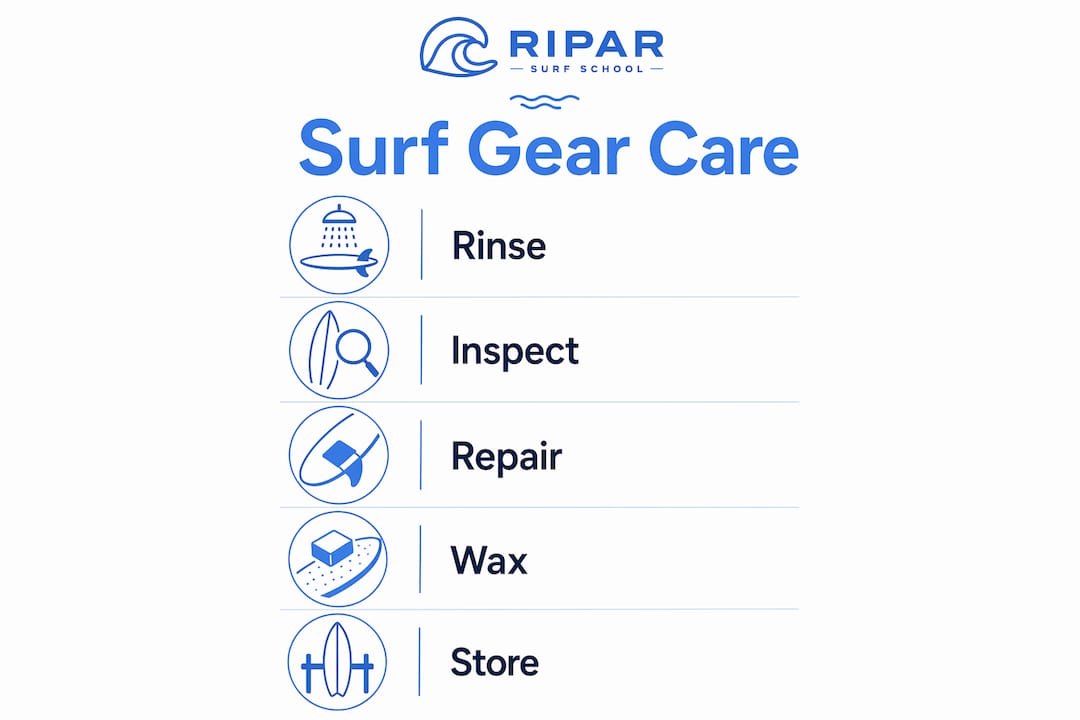
Proper surf equipment maintenance involves rinsing, inspecting, repairing, waxing, and storing gear to prolong its performance and lifespan. Consistent care, especially immediate freshwater rinses after each session, prevents salt and sand damage and reduces early board failure. Regular inspections and timely repairs of dings and seams, along with proper waxing and shade storage, significantly extend gear durability and performance.
Surf equipment maintenance is the practice of cleaning, inspecting, repairing, waxing, and storing your gear to preserve performance and extend its lifespan. Knowing how to maintain surf equipment properly is the difference between a board that lasts a decade and one that waterloggs after two seasons. Salt, UV rays, and sand are the three primary forces working against your gear every single session. Wetsuits like those from Neilpryde, standard fiberglass shortboards, and foam longboards all degrade faster without consistent care. The good news: a solid routine takes less than 10 minutes after each session.
How to maintain surf equipment: rinse and clean after every session
The single most effective maintenance habit is a fresh water rinse immediately after you leave the water. Salt crystal abrasion and waterlogged foam are the two most common causes of premature board failure, and both are preventable with a simple rinse. Use lukewarm fresh water on your surfboard, fins, fin boxes, and leash plugs. Cold water is fine for wetsuits. Never use hot water on neoprene.
What you need for a proper rinse
Gather these before your session ends:
A soft brush or microfiber cloth for scrubbing wax residue and sand from fin boxes
Mild, pH-neutral soap for periodic deeper cleans (not after every session)
A plastic wax comb for removing wax buildup without scratching the deck
A dedicated bucket or hose with a gentle spray setting
Avoid pressure washers entirely. High-pressure water forces moisture into micro-cracks and accelerates delamination.
Cleaning wetsuits, rash guards, and pfds
Wetsuits require special handling. Wetsuits should never be machine washed; hand rinse with cold fresh water only. Warm water opens neoprene pores and lets salt penetrate deeper into the material. After rinsing, hang your wetsuit inside out in the shade. Expect a drying time of around 24 hours before storing. Rash guards should be replaced every 1–2 seasons because UV-protective coatings degrade with repeated sun and saltwater exposure. PFDs need a freshwater rinse after every saltwater session and a seasonal float test to confirm buoyancy is intact.
Pro Tip: Set up a dedicated rinse station at home with a bucket, mild soap, and a hose. Keeping it ready removes the friction that makes surfers skip the rinse after a tired session.
How do you spot and repair surfboard damage early?
Catching damage early is the most cost-effective part of any surf equipment care guide. A small ding left untreated becomes a waterlogged section within a few sessions. Small dings and seam tears repaired immediately prevent the expensive larger repairs that sideline boards for weeks.
Step-by-step ding repair for fiberglass boards
Dry the board completely. Any moisture trapped under repair resin will cause bubbling and adhesion failure. Give the board at least 48 hours of shade drying after a session before attempting a repair.
Identify the damage type. Press gently around the ding. A soft, spongy feel signals waterlogged foam. A hard but cracked surface is a standard ding. Delamination shows as a bubbled or hollow-sounding section when tapped.
Sand the area lightly. Use 80-grit sandpaper to rough up the edges of the ding. This gives the resin something to grip.
Apply resin or a ding repair kit. Sun Cure resin kits are widely available and cure in direct sunlight within minutes. Apply in thin layers and avoid overfilling.
Sand smooth after curing. Finish with 220-grit sandpaper, then 400-grit for a clean surface. Wax over the repair once complete.
Seek professional repair for delamination. A shaper or board repair specialist should handle any delamination or large structural cracks. DIY fixes on these issues rarely hold under surf pressure.
Inspecting wetsuits for seam damage
Check wetsuit seams monthly, especially at high-stress points like the shoulders, knees, and zipper edges. A small seam separation repaired with neoprene cement costs almost nothing. The same tear ignored for a season can split the panel entirely. This surfboard care checklist from Riparsurfschool covers the full inspection routine used in their lesson program.
Pro Tip: Keep a travel-size ding repair kit in your board bag. Fixing a small crack at the beach parking lot takes two minutes. Fixing the waterlogged result three weeks later takes two hours.
What is the right way to wax a surfboard?
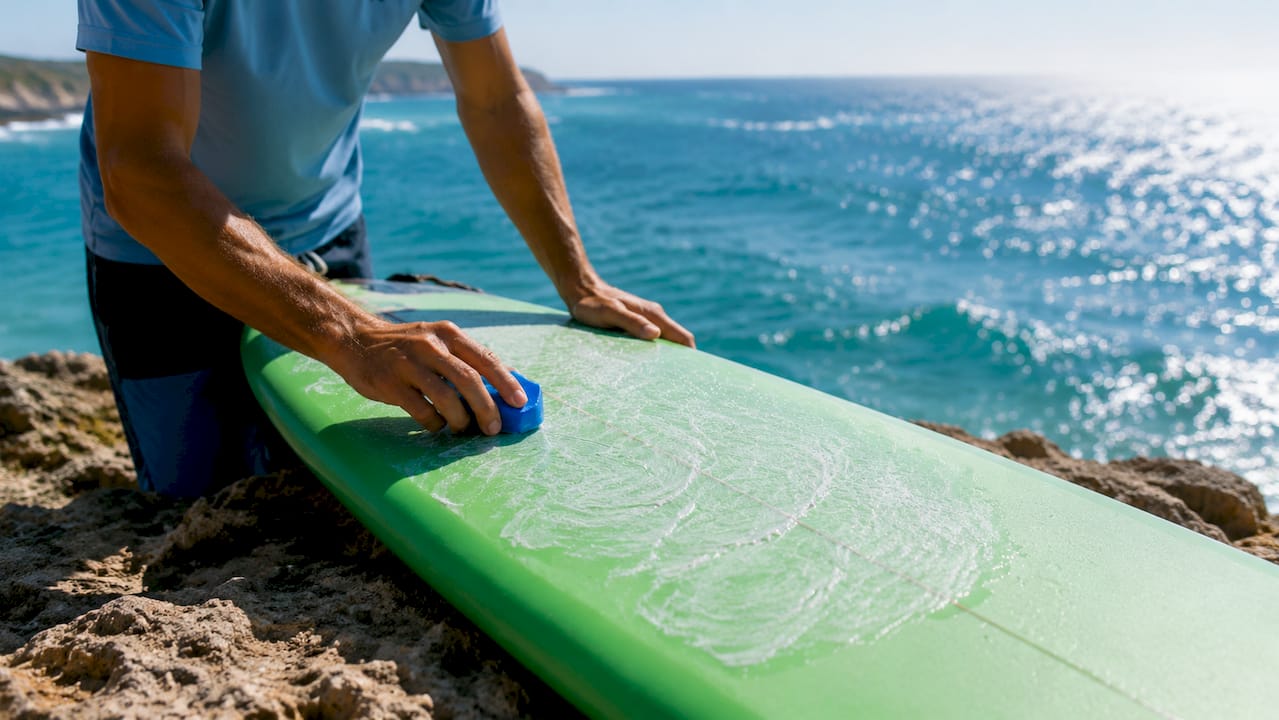
Wax is your primary grip surface, and old, dirty wax is worse than no wax at all. Strip and reapply wax every 3–5 sessions or at the start of each new season. Skipping this step builds up a gritty, sand-contaminated layer that reduces traction and adds unnecessary weight to the nose and tail.
How to remove old wax without damaging your board
Removing wax with a hairdryer risks delaminating fiberglass. The heat softens the resin layers beneath the wax, weakening the board’s structural integrity. The correct method:
Leave the board in the shade for 10–15 minutes. Wax firms up slightly, making it easier to scrape cleanly.
Use a plastic wax comb at a 45-degree angle. Work in short strokes from tail to nose.
Follow with a warm water rinse to remove residue. A small amount of coconut oil on a cloth removes the last sticky film without harming the resin.
Choosing the right wax for your conditions
Water temperature determines wax type. Cold water wax (below 60°F) is softer and stickier. Warm water wax (above 75°F) is harder and holds up in heat. Using cold water wax in warm Portuguese summer conditions at spots near Peniche or Ericeira results in a melted, slippery mess within an hour. Brands like Sticky Bumps and Sex Wax both label their products by temperature range. Match the wax to the season, not just the brand.
Apply base coat first in crosshatch strokes, then apply temperature-specific wax in circular motions until small bumps form across the deck. Those bumps are the grip.
How should you store and transport your surfboard?
Storage is where most preventing surfboard damage efforts either succeed or fail. UV rays cause more damage to resin and neoprene than salt does, leading to yellowing, brittleness, and weakened foam cores. Drying and storing gear in shade is not optional. It is the single most protective habit you can build.
Storage options: what works and what damages boards
Method | Best For | Risk Level |
Padded wall rack (foam arms) | Daily home storage | Low |
Soft board bag (5–10mm padding) | Daily transport and short trips | Low |
Hard travel bag | Airline travel | Low |
Leaning against a wall | Nothing. Avoid entirely. | High |
Direct sunlight storage | Nothing. Avoid entirely. | Very High |
Store boards flat on padded supports or on racks with padded arms. Remove fins and leashes before storage to prevent pressure warping and fin box stress. For wetsuits, hang them folded over a wide hanger or lay them flat. Never hang a wetsuit by the collar. That single point of stress stretches the neoprene permanently.
Transporting boards without causing rail cracks
Excessive strap tension causes rail cracks on roof-racked boards. Cam buckle straps are the correct choice. Ratchet straps generate too much force and are a common cause of compression damage. Tighten cam buckle straps just until the board stops sliding. Check tension again after 5–10 minutes of driving because straps settle as the board shifts.
Pro Tip: Place a folded towel between the board and the roof rack pads if your pads are worn. Worn pads lose their cushioning and transfer vibration directly into the rails.
Key takeaways
Consistent surf gear maintenance, covering rinsing, inspection, waxing, and shade storage, is the most reliable way to protect your investment and keep your equipment performing at its best.
Point | Details |
Rinse immediately after every session | Use fresh, cool water on boards and wetsuits within 30 minutes to prevent salt damage. |
Inspect and repair dings early | A small ding repaired same-day prevents waterlogging and costly structural repairs later. |
Strip and reapply wax every 3–5 sessions | Old wax loses grip and adds weight; match wax type to water temperature for best traction. |
Store in shade on padded supports | UV exposure degrades resin and neoprene faster than salt; never lean boards against walls. |
Use cam buckle straps for transport | Ratchet straps over-tension and crack rails; check strap tension after 5–10 minutes of driving. |
What years of surfing taught me about gear care
I have watched surfers spend serious money on boards and then leave them strapped to a roof rack in full afternoon sun for three hours. That one habit undoes everything else they do right. In my experience, the biggest maintenance mistakes are not about ignorance. They are about convenience. People skip the rinse because they are tired. They skip the ding repair because the board still floats. They skip the wax strip because it takes time.
The surfers whose gear lasts the longest are not doing anything complicated. They have a rinse station set up. They keep a ding kit in the car. They own a board bag and actually use it. These are small commitments that compound over years into boards that still perform at five years old instead of falling apart at two.
One thing I tell every surfer who comes through Riparsurfschool: treat your gear like you treat your wetsuit seams. Check it regularly, fix small problems before they grow, and never let convenience win over care. The surfer habits that build skill and the habits that protect gear overlap more than most people realize. Both come down to consistency.
Seasonal maintenance matters too. At the start of each new season, do a full inspection of every piece of gear. Check seams, test fin boxes, strip and rewax, and confirm your leash cord has no fraying. Seasonal full rinsing and seam checks preserve wetsuit elasticity and gear safety in ways that session-by-session care alone cannot catch.
— Fernando
Learn to surf and care for your gear at Riparsurfschool
Knowing how to care for your gear matters more when you are surfing regularly. At Riparsurfschool, based at Praia Areia Branca near Peniche and Ericeira, certified local instructors teach you not just how to surf but how to handle equipment correctly from day one.

Whether you prefer group surf lessons with a social atmosphere or focused one-on-one time in the water, Riparsurfschool offers both formats for all skill levels. The school has been running since 2001, and the team knows Portugal’s waves and gear demands better than anyone on the coast. Book your lesson online and arrive knowing your equipment is ready to perform.
FAQ
How often should i rinse my surfboard?
Rinse your surfboard with fresh water after every single session. Salt crystals left on the surface cause abrasion and accelerate foam waterlogging over time.
Can i use a hairdryer to remove surfboard wax?
No. Heat tools like hairdryers risk delaminating the fiberglass layers beneath the wax. Use a plastic wax comb at a 45-degree angle in the shade instead.
How do i store a wetsuit properly?
Hang your wetsuit folded over a wide hanger or lay it flat in a cool, dry place out of direct sunlight. Never hang it by the collar, and never machine wash it.
What type of strap should i use to transport a surfboard?
Use cam buckle straps, not ratchet straps. Ratchet straps generate too much tension and commonly cause rail cracks. Tighten just enough to stop the board from sliding.
When should i seek professional surfboard repair?
Take your board to a professional shaper or repair specialist when you find delamination, large structural cracks, or soft waterlogged sections. DIY resin fixes on these issues rarely hold under surf pressure.
Recommended
Comments