

How to Meet Local Surfers: A Traveler's Guide
- Fernando Antunes

- Jun 2
- 9 min read
TL;DR:
Connecting with local surfers enhances the experience through community apps, lessons, and meetups that build trust and familiarity. Consistent presence, proper etiquette, and respectful behavior in the lineup are essential for developing lasting surf friendships. Digital tools serve as valuable introductions but must be complemented by in-person engagement and patience to truly integrate into local surf culture.
Meeting local surfers is best achieved through a combination of community-based apps, structured surf lessons, social meetups, and respectful in-water etiquette. Whether you’re traveling to Portugal’s Peniche coast, California’s Hermosa Beach, or any surf destination in between, connecting with locals transforms a solo session into a genuine cultural experience. This guide covers the exact tools, behaviors, and strategies that open doors in tight-knit surf communities, including platforms like SURF and BreakFinder, and explains why showing up consistently matters far more than any single conversation on the beach.
How to meet local surfers using digital platforms and apps
The fastest way to find surfing buddies before you even pack your board bag is through purpose-built surf community apps. Two platforms stand out in 2026 for their specificity and community focus.
The World Surf League partnered with the SURF app as its official dating app, designed to connect fans and travelers with local surfing communities around major events. Unlike generic social apps, SURF filters by WSL community affiliation and shared lifestyle, which means you’re matching with people who actually surf rather than people who just like beach photos. Arriving at a WSL event with a few connections already made through the app is one of the most socially primed situations you can engineer as a traveling surfer.
BreakFinder takes a spot-based approach. You select a break, set your skill level and preferred surf style, and send buddy requests to locals who surf that same spot. The platform advises meeting new connections at public, populated spots first, which removes the awkwardness of a cold first session with a stranger. Effective connection on BreakFinder requires a complete profile with honest skill details and a thoughtful first message. Vague requests get ignored.
Beyond dedicated surf apps, Facebook Groups, Instagram surf community accounts, and Meetup.com all host active local surf groups in most coastal cities. Search by location and look for groups with recent activity, not just high member counts.
SURF app: Filter by WSL affiliation and surf lifestyle for targeted matches
BreakFinder: Spot-based discovery with skill-level filters and session matching
Facebook Groups: Search “[city name] surfers” for active local communities
Instagram: Follow local surf shop accounts and engage with their tagged community posts
Meetup.com: Search “surfing meetups near me” for scheduled group sessions
Pro Tip: Set your BreakFinder profile to reflect your honest skill level, not your aspirational one. Locals respect self-awareness, and a beginner who admits it gets far more patience than someone who overstates their ability and struggles in the lineup.
Why surf lessons and local shops are social gateways
Structured surf lessons are not just for beginners. They are one of the most reliable ways to meet surfers in your area because they provide a shared context that makes conversation natural. You’re all learning the same break, watching the same instructor, and laughing at the same wipeouts.
Surf instructors offer something no app can replicate: real-time etiquette coaching and local break knowledge delivered in the water. They know which spots are crowded by 8 a.m., which locals are welcoming to newcomers, and which unwritten rules will get you side-eyed if you break them. That insider context is worth more than any online guide.
Local surf shops function as neighborhood hubs for the surf community. Walk in, ask about conditions, and you’ll often find yourself in a 20-minute conversation with a regular who surfs every morning. Shops like those highlighted by Visit California serve as social infrastructure: shops as community hubs where gear advice and local introductions happen in the same breath. The key is to ask genuine questions rather than just browsing.
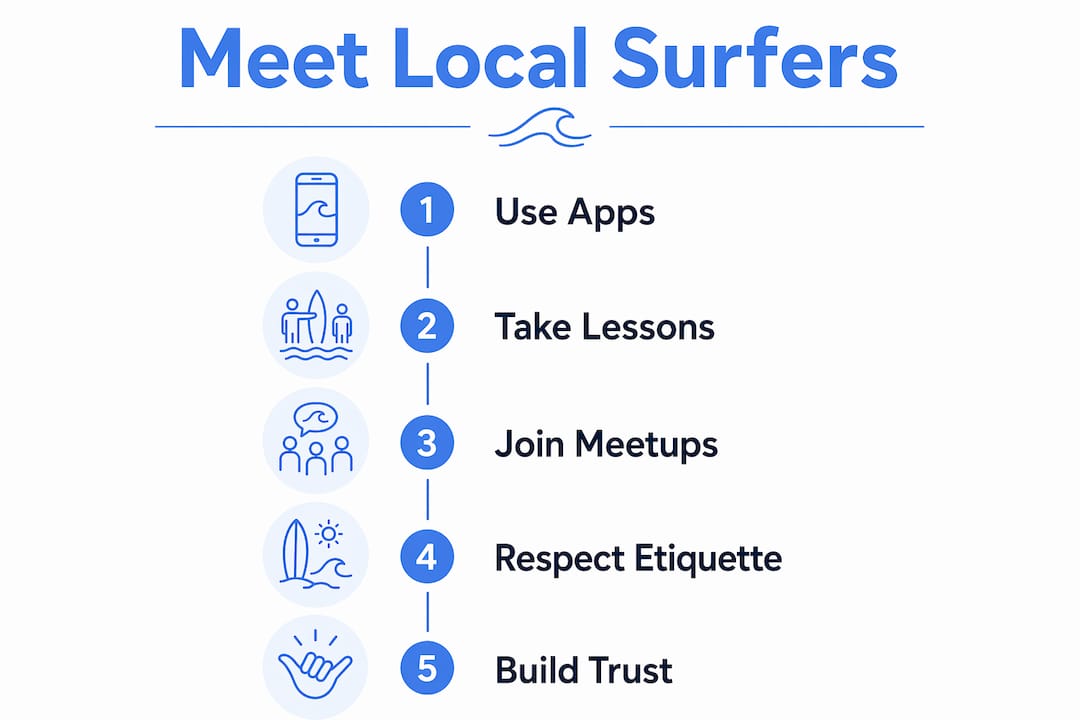
Here’s a practical sequence for using lessons and shops to build connections:
Book a group lesson first. Group lessons create built-in introductions and shared experiences that make follow-up conversations easy. You already have something in common with everyone in the water.
Ask your instructor for shop recommendations. Local instructors know which shops are community-oriented versus purely retail.
Visit the recommended shop and mention your instructor by name. That single reference signals you’re connected to the local scene, not just passing through.
Return to the same shop more than once. Regularity builds recognition, and recognition builds trust.
Pro Tip: When you walk into a local surf shop, ask about the best time to surf a specific break rather than asking for general advice. Specific questions signal genuine interest and get you real answers instead of tourist-level responses.
What are surf community meetups and clubs, and how do you find them
Surf community events are the most direct path to find local surfing buddies because everyone present shares the same goal: getting in the water with good people. These gatherings range from informal Instagram-organized dawn patrols to structured clubs with coaching and weekly schedules.
Hermosa Beach’s ocean club meets at 6:45 a.m. on Fridays and follows the session with a social coffee gathering. That post-surf coffee is where real friendships form. The surf is the excuse; the conversation afterward is the connection. This template repeats across surf communities worldwide, from Peniche to Byron Bay.
Instagram-based community surf meetups combine beginner lessons with regular social sessions, making them accessible regardless of skill level. Organizations like Intrsxtn schedule these gatherings publicly, so newcomers can show up without a personal invitation. Consistency is the only requirement.
How to find local surf clubs: Search Instagram for “[your destination] surf club” and look for accounts that post session recaps and tagged group photos
How to join as a newcomer: Show up early, introduce yourself to whoever is organizing, and ask if guests are welcome before paddling out
What to bring: Your own gear if possible, a willingness to help with logistics, and zero ego about wave priority
How to stay connected: Follow the club’s account, comment on posts, and confirm attendance for future sessions
Consistent attendance matters more than any single impressive session. Local surfers remember faces before they remember names, and a familiar face earns more goodwill than a stranger with perfect technique.
How surf etiquette builds the trust that leads to friendships
Surf localism shapes the social fabric of every break, and understanding it is the difference between being welcomed and being tolerated. Localism is not aggression for its own sake. It’s a community’s way of protecting a resource that gets crowded fast.
The core rules are simple but non-negotiable:
Observe before paddling out. Spend 10 minutes watching the lineup to understand the peak, the rotation, and who the regulars are.
Never drop in. Taking a wave someone else is already riding is the fastest way to make enemies at any break worldwide.
Don’t snake. Repeatedly paddling around someone to gain priority position signals disrespect and gets noticed immediately.
Acknowledge good waves. A nod or a “nice one” after a local rides a solid wave costs nothing and builds goodwill fast.
Surfers tend to open up socially only after observing others navigate the lineup properly. Demonstrating competence and respect in the water is your actual introduction. No app or lesson substitutes for that moment when a local sees you pull back on a wave that wasn’t yours and gives you a nod of approval.
“The lineup is a social space with rules older than any app. Learn them before you try to make friends in them.”
The “friendship window” typically opens after three to four repeated surf sessions at the same break. Patience and consistent timing are not optional. They are the mechanism by which trust is built in surf communities.
What safety and social strategies work for first meetings with local surfers
Meeting strangers through surf apps or community posts carries the same common-sense considerations as any online-to-offline connection. The surf community is generally welcoming, but smart first-meeting practices protect you and signal good intentions to the other person.
Choose public, populated spots for first sessions. BreakFinder specifically advises public spots for initial meetups. Busy beaches mean witnesses, lifeguards, and a natural social buffer that reduces pressure on both sides.
Tell someone your plans. Share the location, the person’s name or profile, and your expected return time with a friend or family member. This is basic safety practice, not paranoia.
Join formats with built-in introductions. Group lessons, club meetups, and organized surf events remove the awkwardness of cold approaches entirely. You’re not introducing yourself to a stranger; you’re meeting a fellow participant.
Ask for tips, not favors. Opening with “Do you have any advice on reading this break?” is far more effective than “Can you show me around?” The first respects their expertise; the second asks for their time.
Handle rejection without drama. Not every local wants a new surf buddy, and that’s fine. A gracious response to disinterest preserves the vibe at the break and leaves the door open for future sessions.
Pro Tip: The best opening line at any break is a question about conditions, not a compliment about someone’s surfing. “How’s the tide been affecting the left today?” signals that you’re paying attention and invites a practical, low-pressure conversation.
Key takeaways
Meeting local surfers requires combining digital tools, structured social environments, and consistent respectful behavior at the break.
Point | Details |
Use purpose-built apps | SURF and BreakFinder connect you with locals before you arrive, using skill filters and spot-based matching. |
Book group lessons first | Group surf lessons create shared experiences that make introductions natural and low-pressure. |
Attend community meetups consistently | The friendship window opens after three to four sessions, so showing up once is not enough. |
Master lineup etiquette first | Locals judge newcomers by in-water behavior before any conversation happens. |
Prioritize safety in first meetings | Choose public spots, share your plans, and join structured formats to reduce risk and awkwardness. |
What I’ve learned about earning a place in the local lineup
I’ve been surfing and teaching at Praia Areia Branca for over two decades, and the single most common mistake I see traveling surfers make is trying to shortcut the trust-building process. They arrive, they’re friendly, they have good gear, and they wonder why locals aren’t inviting them for post-surf beers after day one.
The truth is that surf communities are tight because they have to be. A crowded break with no social order becomes dangerous fast. When a local sees you respect the lineup, pull back on a close call, and show up three Fridays in a row, you’ve communicated more than any introduction could. That’s when the conversation starts naturally.
Digital tools like BreakFinder and the SURF app are genuinely useful, and I recommend them to guests at Riparsurfschool regularly. But they work best as a way to identify the right people and the right events, not as a substitute for the in-person work. The app gets you to the meetup. What you do in the water determines whether you get invited back.
One thing most guides skip: maintain the connection after you leave. Follow the local surf club on Instagram, comment on their posts, and message the people you surfed with. When you return, you’re not a stranger anymore. You’re someone they’ve been watching from a distance, and that changes everything. Portugal’s local surf culture rewards this kind of long-game thinking more than almost anywhere else I’ve surfed.
— Fernando
Start your surf community experience at Riparsurfschool
Riparsurfschool has been connecting traveling surfers with the local community at Praia Areia Branca since 2001. The school’s certified local instructors don’t just teach technique. They introduce you to the breaks, the rhythms, and the people that make Portugal’s surf coast worth returning to.
Group surf lessons at Riparsurfschool are specifically designed to put you in the water alongside other surfers, creating the shared experiences that turn strangers into surf buddies. For a more personalized introduction to local spots and culture, private lessons give you direct access to an instructor’s local knowledge. Stay at the Neptune Surf House to extend that community immersion beyond the water. Book your session online and arrive ready to connect.
FAQ
What is the fastest way to meet local surfers as a traveler?
Attending a structured surf event or group lesson is the fastest method because it provides built-in introductions and shared context. Apps like SURF and BreakFinder can accelerate pre-arrival connections when used with complete, honest profiles.
How do I join a surf group or club in a new location?
Search Instagram for “[destination] surf club” and look for accounts that post scheduled sessions publicly. Show up early, introduce yourself to the organizer, and confirm whether guests are welcome before paddling out.
How long does it take to be accepted by local surfers?
The friendship window typically opens after three to four repeated sessions at the same break, according to BreakFinder’s community research. Consistent timing and respectful lineup behavior accelerate the process more than any single conversation.
What surf etiquette mistakes push locals away?
Dropping in on a wave someone else is riding and snaking priority position are the two fastest ways to damage your reputation at any break. Observing the lineup for 10 minutes before paddling out prevents most first-session mistakes.
Are surf apps safe for meeting strangers at the beach?
Platforms like BreakFinder recommend meeting new surf connections at public, populated spots for the first session and informing someone of your plans beforehand. These practices reduce risk and signal respectful intentions to the other person.
Recommended
Comments