

How to Budget for Your Portugal Surf Camp Trip


TL;DR:
Planning and tracking your expenses ensures a stress-free surf trip in Portugal.
Accommodation, transport, and equipment costs vary widely based on choices and season.
Budgeting includes fixed costs, variable daily expenses, and a buffer for unexpected fees.
Planning a surf camp in Portugal sounds like a dream until you land, check your bank account, and realize the hidden costs nobody warned you about. Equipment rental fees, transport to the breaks, meals outside your package, and that unexpected wetsuit repair can quietly wreck a budget that looked solid on paper. Knowing exactly what you’ll spend before you go is what separates a relaxed, wave-focused trip from a stressful one. This guide walks you through every cost category, gives you real numbers to work with, and shows you how to track your spending so nothing sneaks up on you.
Table of Contents
Key Takeaways
Point | Details |
Clarify your goals | Know why you’re attending surf camp so you can spend where it matters most. |
Break down all costs | Account for lessons, gear, meals, travel, and lodging to avoid surprises. |
Budget for flexibility | Allow wiggle room for unexpected expenses while still enjoying your trip. |
Compare accommodation types | Surf houses, hostels, and private rooms each offer different savings and experiences. |
Track your spending | Stay on budget by reviewing your expenses daily—your future self will thank you. |
Assessing your surf camp needs and priorities
Before you touch a single spreadsheet, you need to get honest about what kind of surf camp experience you actually want. This is the step most first-timers skip, and it almost always costs them money later.
Start by identifying your main goal. Are you a complete beginner who needs structured daily lessons? Are you an intermediate surfer looking to break a bad habit and level up your technique? Or is the social side of things, meeting other surfers, sharing meals, and swapping stories by the beach, just as important to you as the waves? Each of these goals points toward a different type of camp, and each comes with a different price tag.
Your next decision is the format. You have three main options:
All-inclusive surf camp package: Lessons, accommodation, meals, and equipment all bundled together. Easier to budget because most costs are fixed up front.
Surf lessons only: You book your own accommodation and handle your own meals. More flexible, but variable costs can add up fast.
DIY surf stay: You rent a place, bring or hire your own board, and surf at your own pace. Cheapest on paper, but requires more planning and local knowledge.
Location is another factor that directly hits your wallet. Spots near Peniche and Ericeira, two of Europe’s most celebrated surf destinations, tend to have a range of pricing options. A quieter beach village like Praia Areia Branca gives you consistent waves and a more relaxed vibe without the inflated prices you’d find in a tourist hotspot. If you want nightlife, you’ll pay for proximity to it.
The key to smart budgeting here is separating your non-negotiables from your flexible preferences. When booking a surf camp in Portugal, write two lists before you do anything else.
Pro Tip: Write down three things your trip absolutely must include and three things you’d enjoy but could live without. This stops you from overpaying for features you don’t actually care about.
Estimating core surf camp expenses
Once you know what you want, you need a clear picture of what everything costs. Portugal is genuinely one of the most affordable surf destinations in Europe, but “affordable” still requires a number.
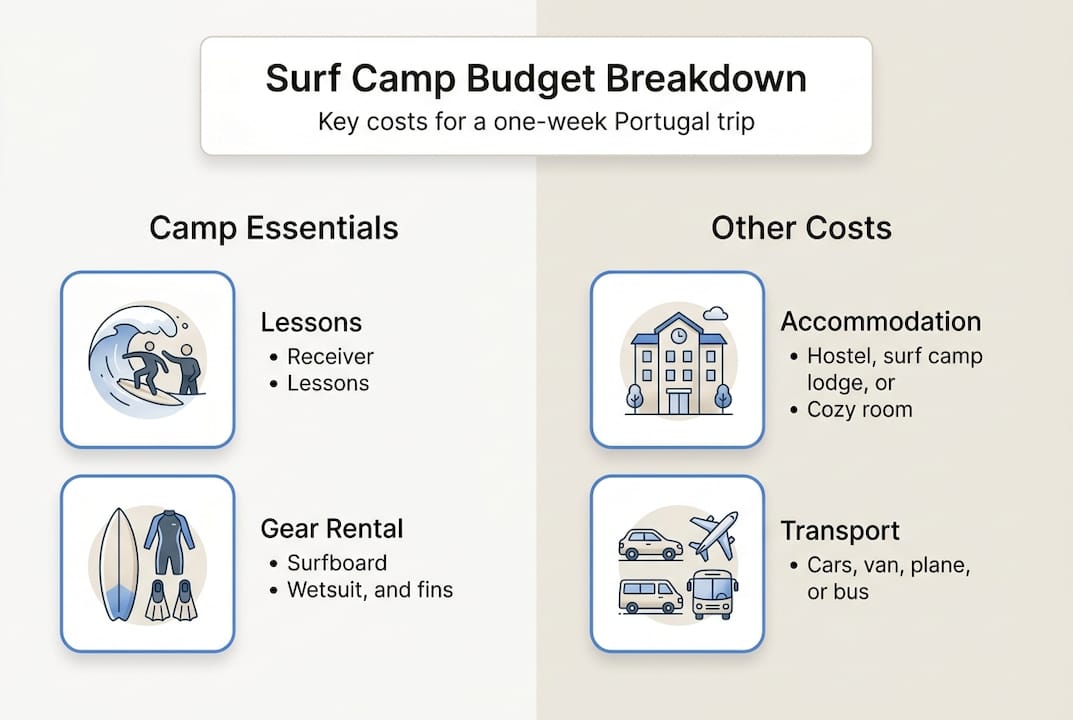
Here’s a realistic sample budget for a 7-day surf camp:
Expense category | Budget option | Mid-range | Comfort level |
Surf lessons (5 days) | €150 | €225 | €350 |
Equipment rental | Included | €50 | €80 |
Accommodation (7 nights) | €175 | €350 | €630 |
Meals (7 days) | €70 | €140 | €210 |
Local transport | €20 | €50 | €100 |
Total | €415 | €815 | €1,370 |
These numbers assume you’re flying into Lisbon and already have a flight sorted. The range is wide because your choices in each category dramatically shift the total.
Hidden fees are where budgets quietly bleed. Watch out for:
Gear insurance: Some camps charge extra if you want coverage for board damage.
Transport to specific breaks: Not every surf spot is a five-minute walk. Shuttles to premium breaks can cost €10 to €20 per trip.
Optional activities: Yoga sessions, surf photography, and SUP (stand-up paddleboard) rentals are often sold separately.
Laundry: Neoprene wetsuits need washing. Some camps charge for laundry facilities.
Surf town prices shift noticeably between peak season (June to September) and shoulder season (April to May, October). Booking in shoulder season can cut your accommodation costs by 20 to 30 percent without sacrificing wave quality.
Choosing the right surf accommodation in Portugal is one of the biggest levers you have on your total budget. And when it comes to lessons, bundled camp packages almost always beat booking each piece separately. Spend time planning your surf holiday with total cost in mind, not just the headline package price.
Cost-saving moves worth considering:
Book a group package with friends for discounted rates
Choose a camp that includes breakfast to cut daily meal spending
Look for packages that bundle lessons and accommodation together
Planning for travel and transportation
With your core costs on the table, it’s time to tackle one of the trickiest budget categories: getting to Portugal and moving around once you’re there.
Getting to Portugal is straightforward. Lisbon Airport (LIS) is well connected to most major European cities and many transatlantic routes. Porto Airport (OPO) is a useful alternative if you’re heading to the northern surf coast. Budget carriers like Ryanair and easyJet regularly offer competitive fares, especially if you book two to three months out. Avoid peak summer booking windows where flight prices can double overnight.
From Lisbon, reaching surf zones near Peniche takes about 90 minutes by car and slightly longer by bus. The good news is that Portugal surf holiday planning doesn’t have to involve renting a car at all.
Here’s a simple step-by-step process to plan your transport:
Book your flight first. Lock in your arrival and departure dates before any other commitment.
Research bus routes from the airport. Rede Expressos and local bus services connect Lisbon to most surf towns for €5 to €15 each way.
Contact your surf camp about pickup options. Many offer airport transfers or station pickups, sometimes free, sometimes for a small fee.
Decide whether you need a rental car. If your camp organizes transport to the waves, you probably don’t.
Plan day-trip transport separately. Factor in the cost of getting to any secondary surf spots you want to visit.
Money-saving hacks for transport:
Book flights at least 6 to 8 weeks in advance to avoid peak pricing
Travel with hand luggage only to skip checked-bag fees
Use Rede Expressos intercity buses instead of taxis from the airport
Share a rental car with other surf campers if you want more flexibility
Ask your camp about weekly group surf shuttle schedules
Pro Tip: Always ask your surf camp whether they provide shuttles to the breaks before you book. If they do, you may not need a rental car at all, and that’s a potential €200 to €400 saving over a week.
Choosing accommodation for savings and comfort
Where you sleep shapes both your budget and your whole trip experience. This isn’t just about price per night. It’s about what you get for that price and how it affects your time in and out of the water.
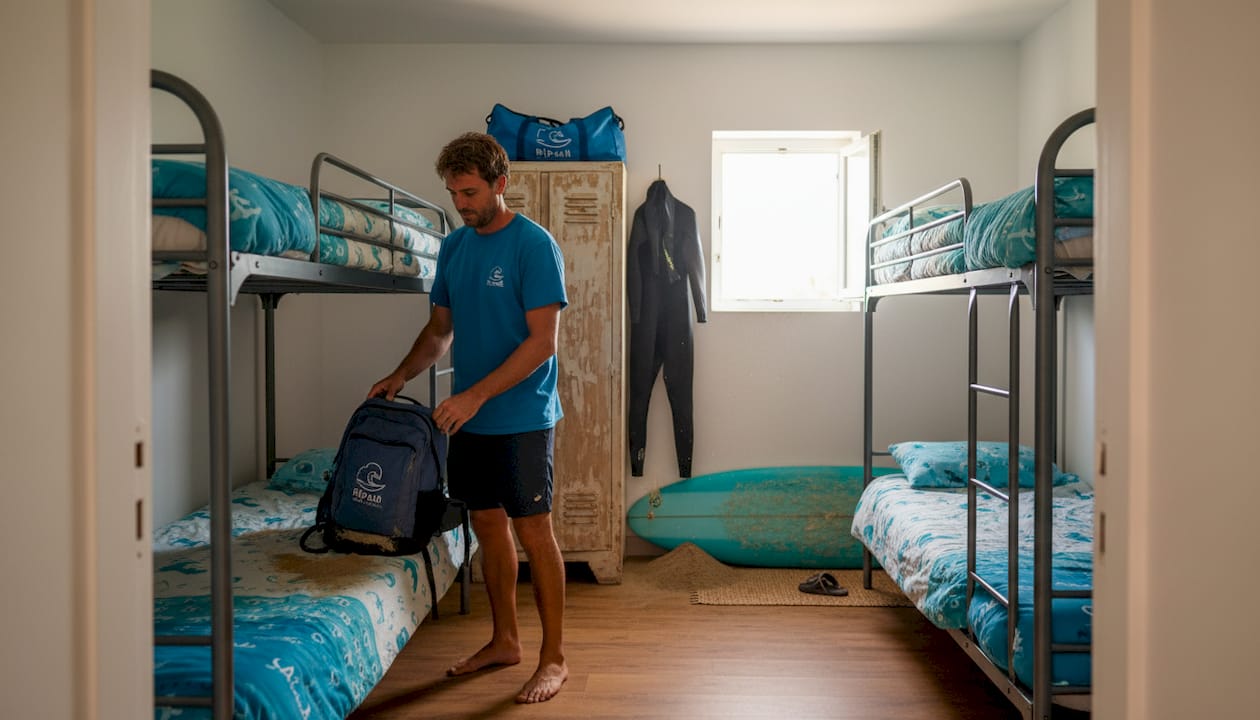
Here’s a comparison of the most common accommodation types:
Accommodation type | Avg. nightly cost | Pros | Cons |
Shared dorm (hostel) | €15 to €30 | Very affordable, social | Less privacy, noisier |
Surf camp dorm | €25 to €45 | Community vibe, surf focus | Shared bathrooms, limited storage |
Surf house private room | €45 to €80 | Balance of privacy and community | Can book up fast in peak season |
Private rental apartment | €70 to €120 | Full privacy, kitchen access | Less social, more logistics |
Hotel | €80 to €150+ | Comfort and amenities | Often no surf culture, isolated |
The social and community aspect of surf camp houses is genuinely hard to put a price on. When you stay with other surfers, you get more than a bed. You get session partners, local tips, and a built-in support system for those days when the waves are tricky and confidence is low. Exploring the community in surf camps makes it clear that this shared experience is often what people remember most.
Before you book any accommodation, check the following:
Is breakfast or any meal included in the nightly rate?
Is there kitchen access so you can self-cater some meals?
How far is it from the beach or the surf break?
Is wetsuit and board rinsing or storage available on-site?
Are there common areas for socializing and downtime?
Pro Tip: Staying at a dedicated RIPAR Surf House often means your surf gear is included or available at a discount, which removes one of the most unpredictable line items from your budget.
Private hotels might look appealing on a booking platform, but a surf-focused house often gives you more practical value per euro, especially when gear access, local knowledge, and a built-in surf community are factored in.
Building your surf camp budget and tracking your spending
You’ve identified your needs, estimated your costs, and picked your accommodation. Now it’s time to pull everything together into a single, usable budget and keep it honest throughout your trip.
The biggest mistake people make is treating their pre-trip estimate as the finished budget. It’s not. It’s a starting point. Your real budget is a living document that updates as you spend.
Follow these steps to build and manage your surf camp budget:
List every fixed cost. These are costs you’ve already committed to: flight, surf camp package, accommodation, and any pre-booked transfers.
Estimate variable costs. Use the ranges from earlier sections to set realistic daily limits for meals, local transport, and activities.
Add an emergency buffer. Set aside at least 10 to 15 percent of your total budget for unexpected expenses. A board ding repair, a pharmacy visit, or a last-minute better wave spot are all real possibilities.
Choose a tracking method. A simple notes app, a spreadsheet, or a budget app like Trail Wallet or Trabee Pocket works well for travel spending.
Review your spending each evening. Five minutes before bed to log what you spent keeps you aware without ruining the fun.
Adjust daily limits mid-trip if needed. If you overspend on day two, reduce your discretionary spending on day three. Small corrections prevent big problems.
When it comes to maximizing your surf camp stay, having a clear budget framework actually gives you more freedom. You stop second-guessing every coffee and start making deliberate choices about where your euros go.
Fixed costs to track:
Flights and airport transfers
Surf camp or lesson package
Accommodation total
Variable costs to watch daily:
Meals and drinks outside the package
Local transport and surf shuttles
Gear rentals, wax, sunscreen, and accessories
Optional activities and experiences
Pro Tip: Track your spending daily using your phone. Even a quick note of what you spent each day takes two minutes and saves you from the shock of checking your bank balance on the last day.
An emergency fund of €100 to €150 for a one-week trip is a reasonable buffer. Board repairs can run €20 to €50 depending on the damage. A minor injury might mean a pharmacy visit. These things happen. Having that buffer means they stay inconveniences, not trip-ruining disasters.
What most surf campers get wrong about budgeting
Here’s something we’ve seen repeatedly over more than two decades of running surf camps: the surfers who obsess over finding the absolute cheapest option often end up having a worse trip, not a better one.
Rock-bottom pricing usually means cutting something meaningful. Maybe it’s the quality of instruction. Maybe it’s the location, which is farther from good waves and requires expensive daily transport. Sometimes it’s the accommodation, which is so uncomfortable that you’re not sleeping well and your surfing suffers for it.
A small, deliberate splurge can change everything. One private lesson with an experienced instructor might cost you €50 extra, but it can fix a fundamental technique issue that would take weeks of self-directed practice to sort out. One social dinner with your fellow campers builds connections that make the whole week more energizing and memorable. These aren’t luxuries. They’re investments in the experience you came for.
Budgeting for a surf camp isn’t purely about saving money. It’s about making intentional choices so you get maximum value from every euro you spend. If you go in with a clear plan, you can afford the things that matter and skip the things that don’t.
Honestly, the affordable surf camps in Portugal that offer real value aren’t the ones with the lowest price. They’re the ones where the cost matches the experience you actually receive. Trust your plan, stay flexible, and leave a little room in your budget for the good surprises that always show up when you’re in the water.
Ready to make your Portugal surf dream a reality?
You’ve done the hard thinking. You know your priorities, you understand the costs, and you have a framework for tracking your spending throughout your trip. The next step is putting that plan into action with a surf camp that actually delivers on its promises.

At Ripar Surf School and Surfcamp, we’ve been helping surfers of all levels get the most from their time on Portugal’s Atlantic coast since 2001. Whether you want to book a surf camp that covers everything in one clear package, browse our surf house options for the perfect base, or simply book online and lock in your spot before peak season fills up, we’re here to help you plan a trip that fits your budget and exceeds your expectations.
Frequently asked questions
What is the average daily cost of a surf camp in Portugal?
Most surf camps in Portugal range from €50 to €100 per day, depending on accommodation type and included services like meals, equipment, and lessons.
How far in advance should I book to get the best price?
Booking at least two to three months ahead can secure early-bird rates, better accommodation choices, and more flexibility with lesson scheduling.
Are surfboards and wetsuits typically included in the surf camp price?
Many surf camps include board and wetsuit rental in their packages, but this varies by provider, so always confirm the exact inclusions before committing to a booking.
What should I budget for meals during a surf camp?
Many camps include breakfast and sometimes dinner in their packages. A daily budget of €10 to €20 for extra meals, snacks, and drinks at local cafes covers most situations comfortably.
Is it cheaper to book directly with the surf camp or through third-party platforms?
Booking directly with the surf camp almost always yields better rates, exclusive deals, and more flexible cancellation or rescheduling options than booking through a third-party platform.
Recommended
Comments