

How location shapes your surf holiday in Portugal

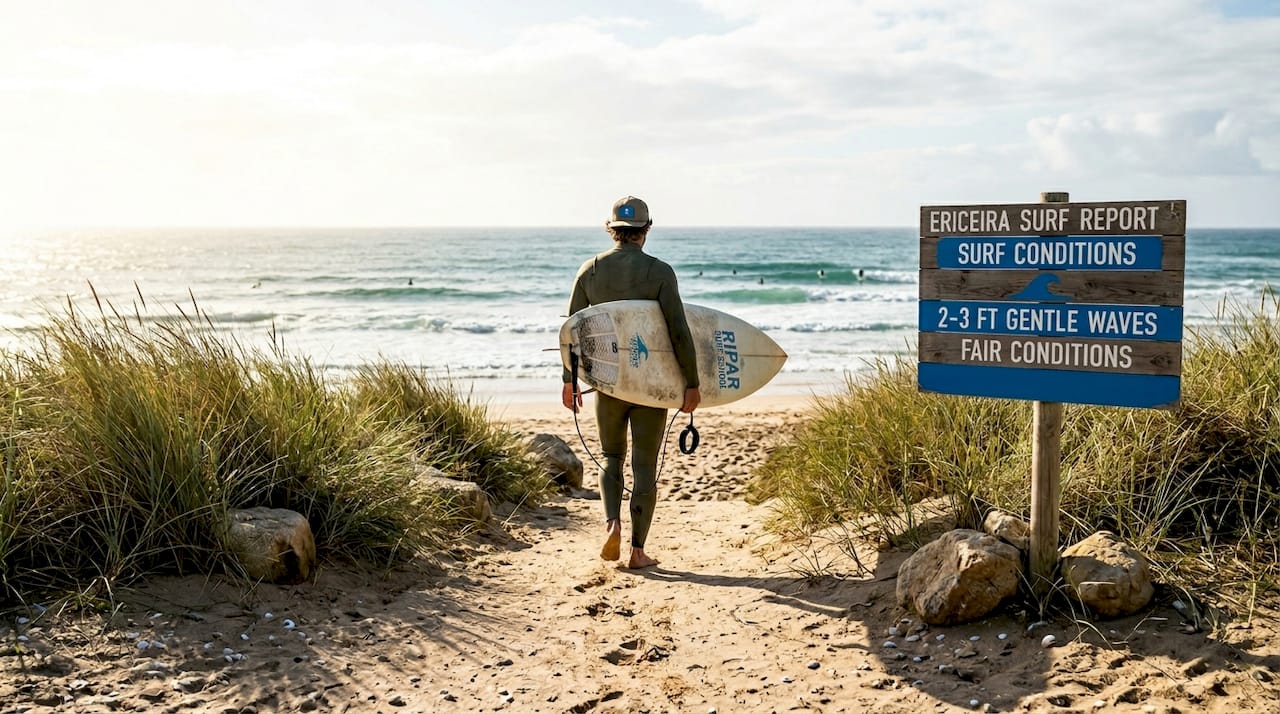
TL;DR:
The location of your surf trip in Portugal determines the waves, community, and cultural experience you encounter. Smaller villages and local surf camps offer authentic environments conducive to faster learning and meaningful connections. Choosing less crowded, community-driven spots ensures a more enriching, personalized surf holiday aligned with your skills and values.
Most people assume that booking a surf holiday in Portugal is straightforward: pick a famous beach, pack your board shorts, and show up. That assumption can cost you weeks of average waves, crowded lineups, and a feeling that something is missing. The truth is, Portugal stretches over 1,800 kilometers of coastline, and every stretch tells a completely different story. Where you plant yourself for the week determines the waves you ride, the instructors you learn from, the community you connect with, and the memories you carry home. This guide breaks down exactly what that means for you.
Table of Contents
Key Takeaways
Point | Details |
Location defines experience | Where you surf in Portugal shapes your memories, surf progression, and cultural connection. |
Community matters | Smaller communities give you access to authentic surf culture and personalized learning. |
Not all surf spots are equal | Crowded hotspots risk losing their uniqueness while villages retain local flavor. |
Choose lodging wisely | Where you stay affects your daily rhythm, learning, and immersion in surf culture. |
Why location is the key ingredient in surf holidays
With the stage set, let’s dive deeper into why location isn’t just about geography. It defines the very spirit of your holiday.
Portugal is not one surf destination. It is dozens of them layered on top of each other, each with its own personality. The north brings cold, powerful swells and a raw fishing-town culture. Central Portugal offers consistent, manageable beach breaks perfect for learning. The Algarve draws crowds with sunshine and dramatic cliffs. Choosing between these isn’t a minor detail. It is the single most important decision you will make.
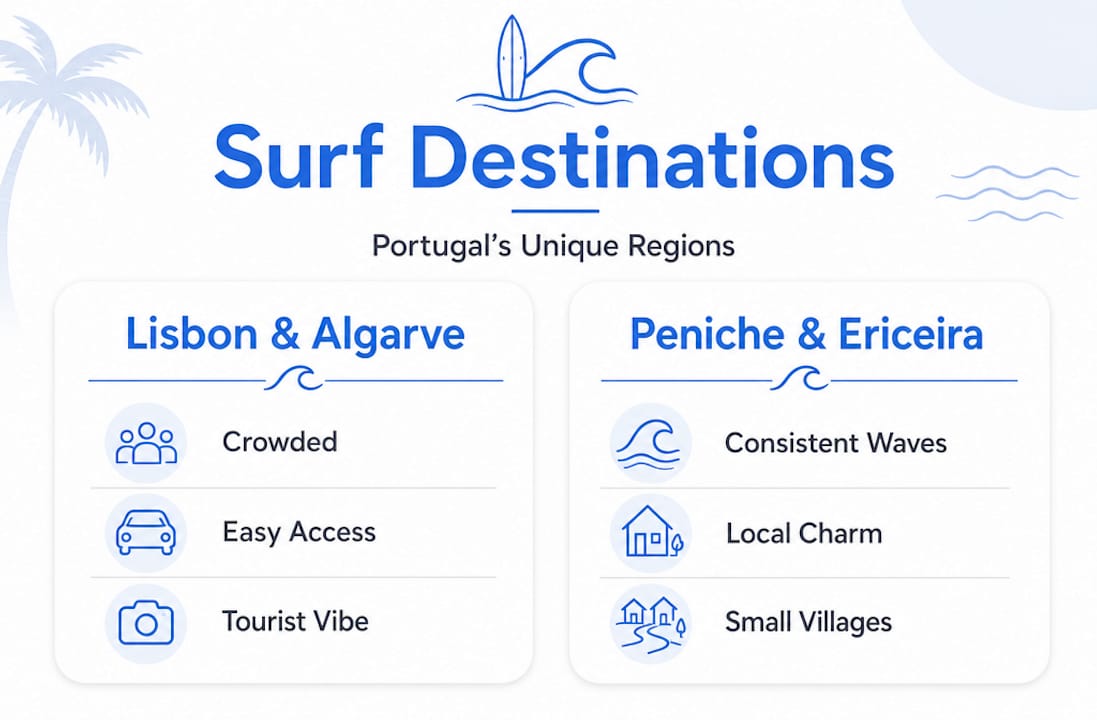
What makes this especially true for beginner and intermediate surfers is that your environment shapes how fast you learn. Crowded lineups are intimidating and physically dangerous for newer surfers. The social atmosphere around your surf spot directly affects your confidence, your willingness to ask questions, and even your motivation to paddle back out after a wipeout.
Here is what location genuinely controls on a surf holiday:
Wave consistency: Some regions receive reliable Atlantic swells year-round; others are seasonal
Water temperature: The Algarve runs warmer than Peniche by several degrees in shoulder seasons
Crowd levels: Famous spots attract both experienced surfers and mass tourism, compressing the lineup
Instructor quality: Local instructors who grew up surfing a specific break know it intimately
Community feel: Small villages offer interactions with locals, fishermen, and longtime surf families
Daily pace: Beachfront villages move slower and more intentionally than urban-adjacent beaches
“The relationship between surf tourism and local culture is delicate. When commercial interests dominate, the authentic community feel that first attracted visitors begins to erode.” surf tourism
This erosion is a real pattern. Studying local surf culture in Portugal reveals how the most famous spots have sometimes traded their original character for volume. And for surfers who care about more than just ticking waves off a list, understanding the surf lifestyle and community built around quieter stretches is genuinely eye-opening.
The wave itself is only part of the equation. Who surrounds you in the water, who teaches you on land, and what you find when you walk off the beach — these shape your entire experience.
Comparing Portugal’s top surf destinations: What sets them apart?
Understanding why location matters leads naturally to the choices you’ll face in Portugal. Here’s how the leading regions compare.
Portugal’s four main surf zones each offer something distinct. Knowing the differences before you book saves you from arriving at a spot that simply isn’t right for your level or your goals.
Region | Beginner-friendly | Wave consistency | Cultural immersion | Crowd level |
Lisbon coast (Cascais/Costa da Caparica) | Moderate | High | Moderate | High |
Peniche | Moderate | Very high | High | Moderate to high |
Ericeira | Low to moderate | High | Very high | Moderate |
Algarve (Sagres/Luz) | High | Moderate | Moderate | Seasonal high |
Areia Branca (between Peniche/Ericeira) | Very high | High | Very high | Low to moderate |
The Lisbon coast is convenient and popular, but that popularity comes at a price. Crowds at Cascais and Costa da Caparica during summer make learning harder and lineups more competitive. Ericeira holds a coveted World Surfing Reserve designation, which brings prestige and experienced surfers from around the world. Spectacular for watching, sometimes overwhelming for beginners.
Peniche is home to Supertubos, one of Europe’s most powerful beach breaks. That alone makes it a legendary spot. But surf tourism research consistently shows that popular destinations attract more commercial pressure, which can shift the balance away from authentic, personalized experiences.
The Algarve delivers warmth and beauty, but its surf is more inconsistent and the region skews toward mass-market holiday packages rather than surf culture.
What genuinely stands out in this comparison is the stretch between Peniche and Ericeira. Smaller villages like Praia Areia Branca offer the best of both worlds: access to world-class waves nearby and a community that hasn’t been fully consumed by tourism. You can experience authentic village surf culture and still be 30 minutes from Supertubos when the swell picks up.
The community atmosphere at surf camps in these smaller zones is noticeably different. Instructors know your name by day two. Fellow campers share meals instead of passing each other in hallways. That human texture matters more to your holiday than any famous wave name.
Pro Tip: When comparing destinations, look beyond the wave rating. Ask surf schools how many students share a single instructor in the water. Four to six per instructor is ideal for beginners. More than that and personalized feedback disappears.
How local culture and community shape your surf stay
The tabled contrasts above set up a key variable: the influence of local culture and community. Let’s explore why these human factors matter so much.
A surf holiday is not just about time in the water. It is about everything that surrounds those two-hour sessions. The coffee you drink before paddling out, the conversation you have with a local fisherman at the harbor, the evening meal where you trade stories about the day’s waves — these experiences create the full picture.
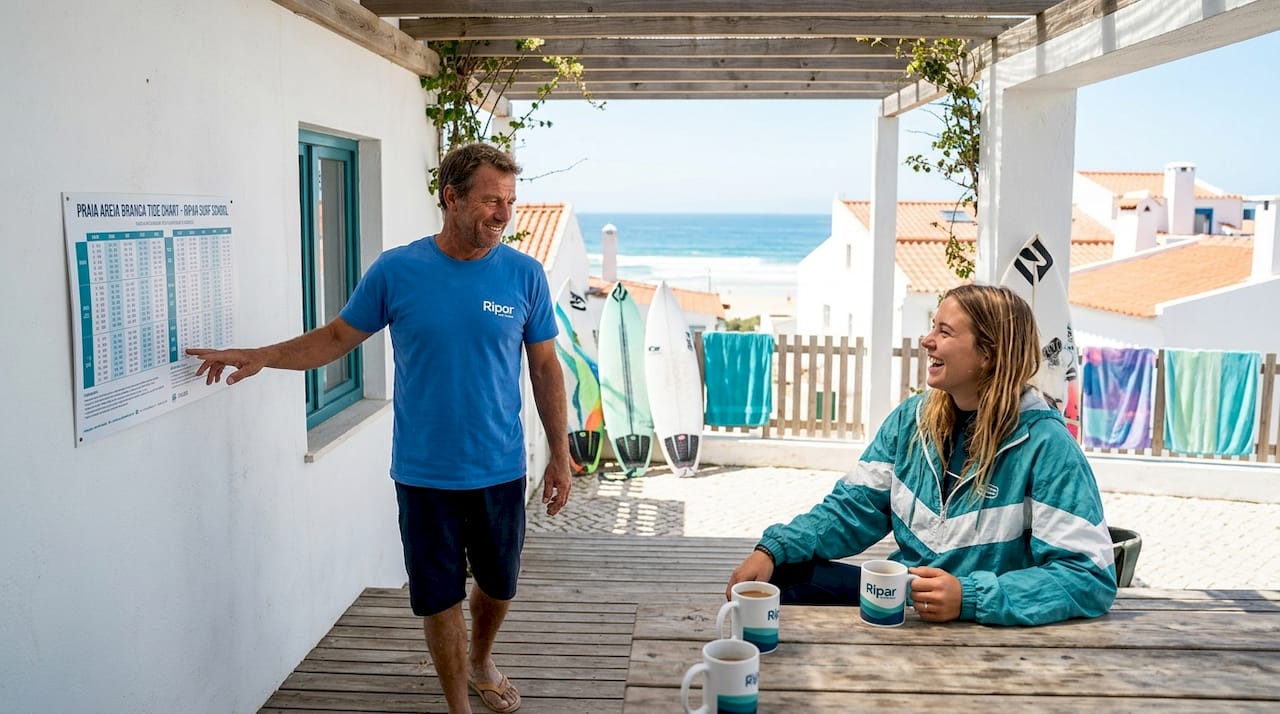
Local instructors who grew up surfing a specific break carry knowledge no textbook can replicate. They know which sandbars shift after a big storm, which tide window produces the cleanest walls, and how to read a particular lineup’s unwritten rules. That practical, place-specific knowledge accelerates your learning in ways that traveling instructors simply cannot.
Here are four concrete ways ethical surf tourism strengthens the communities you visit:
Direct economic support: Choosing locally owned surf schools and accommodations keeps money circulating within the community rather than flowing to outside corporations
Skill preservation: Local instructors pass on generational surfing knowledge and regional techniques that would otherwise be lost to standardization
Environmental stewardship: Communities invested in their coastline practice and teach responsible ocean habits more consistently than high-volume operators
Cultural exchange: Staying in a surf village creates genuine human connections, not just transactional tourism moments
“When surf communities maintain control over how tourism develops, both visitors and locals benefit. When that control is lost, what made the place special disappears quickly.” surf tourism research
The flip side is worth taking seriously. Too much tourism, too fast, hollows out exactly what drew travelers there in the first place. Cafes become Instagram props. Surf schools prioritize throughput over teaching. The local surfers who defined the spot’s character quietly stop coming.
Engaging with a community experience at a smaller surf camp helps you avoid contributing to that cycle. And if you want to understand what the deeper rewards of that approach look like, reading about surf retreat benefits reveals just how transformative a week in the right environment can be.
The social fabric of a small surf village is not background scenery. It is an active ingredient in your development as a surfer and as a traveler.
Surf accommodation and amenities: Choosing where you stay
Once you value the role of community, the next practical step is picking where you’ll stay. Here’s how these choices shape your experience.
Where you sleep and eat between surf sessions has a direct impact on how much you improve, how rested you feel, and how connected you become to the place. It isn’t a secondary consideration.
Accommodation type | Community vibe | Proximity to waves | Learning support | Flexibility |
Surf camp (full package) | Very high | Usually beachfront | Structured, daily | Low to moderate |
Surf house (shared) | High | Near beach | Informal, peer-based | Moderate |
City/town hotel | Low | Variable, often distant | None | High |
Private vacation rental | Very low | Variable | None | Very high |
Surf camps and surf houses consistently outperform hotels and private rentals for learning surfers. The reason is simple: immersion. When your accommodation is physically close to the waves and surrounded by other surfers, the learning doesn’t stop when you leave the water. You analyze your session over dinner. You watch experienced surfers from the deck. You wake up already in the right mindset.
City-center hotels offer comfort and flexibility but disconnect you from the surf rhythm entirely. You lose an hour commuting each morning. You miss the sunrise sessions. You eat at tourist restaurants instead of the café where your instructor grew up ordering breakfast. These gaps add up over a week.
On-beach accommodation gives you a specific advantage that only surfers truly appreciate: you can check the waves in your pajamas. Tide windows are often 90 minutes to 2 hours wide. Being five minutes from the water versus forty-five minutes makes the difference between catching perfect conditions and arriving to find the tide has turned.
The practical detail that most booking sites skip is amenity quality. Showers, board storage, wax, leashes, wetsuit drying areas — these small logistics determine whether your daily routine runs smoothly or drains energy before you even paddle out. A surf camp designed around surfers handles all of this. A hotel simply doesn’t.
Exploring your surf accommodation options before committing helps you match the right setup to your personal surf goals, whether that means structured daily lessons or flexible independent sessions with occasional coaching.
Pro Tip: Ask any accommodation you’re considering how far it is to the break at high tide versus low tide. Some “beachfront” properties that look perfect on a map require a long walk across exposed rock flats when the tide drops. Local knowledge answers this instantly.
Our take: The best surf holidays balance waves, culture, and respect
We’ve been running surf lessons and camps in Portugal since 2001, and the pattern we see repeats without fail. Surfers who chase the most famous breaks often come home disappointed. Surfers who settle into a smaller village, build relationships with local instructors, and let the place teach them something beyond technique — those are the ones who return every year.
Mainstream travel advice will push you toward Nazaré’s giant waves or the competitive buzz of Ericeira’s world reserve status. Those places are genuinely special. But they have also become destinations optimized for spectacle, not for the beginner surfer’s growth or for the quiet satisfaction of belonging somewhere for a week.
The most common thing we hear from guests after their stay is: “I didn’t expect to feel so at home.” That feeling doesn’t come from a famous wave. It comes from a local instructor who took the time to explain exactly why the wave broke the way it did. It comes from a deck chair facing the ocean at sunset with people who are also just learning, just trying, just being present.
Portugal’s real surf magic lives in places where the fish market still operates in the morning, where the bar owner knows the swell forecast, and where your progress actually matters to the people teaching you. Nature-connected surf holidays built around this philosophy consistently produce better surfers and happier travelers.
Seek waves that enrich your life, not just your surf resume. That approach is what we built Ripar Surf School and Surfcamp around, and it’s the approach that will serve you best.
Ready to choose your perfect Portuguese surf spot?
Everything you’ve read points to one conclusion: where you surf in Portugal matters as much as how you surf. Ripar Surf School & Surfcamp sits at the center of Portugal’s best surf territory, in the village of Praia Areia Branca between Peniche and Ericeira, and has been delivering authentic, community-driven surf experiences since 2001.

Whether you’re joining a group camp, booking private lessons, or settling into our surf house for a week, you’ll be learning from certified local instructors who know every sandsbar and tide shift on this stretch of coast. Our setup includes board storage, deck showers, and direct beach access, so your mornings start in the water, not in traffic. You can book surf lessons as a standalone experience, stay with us at our surf house in Portugal, or go all-in and book a surf camp for the full immersive holiday. The right location is already here. Your next session is waiting.
Frequently asked questions
How does the location affect surf lesson quality in Portugal?
Locations with smaller, local communities typically provide more personalized instruction and less crowded lineups, and surf tourism research confirms that these conditions directly support faster skill development for beginners.
Is it better to stay in a surf camp or find private accommodation?
Surf camps offer daily structure, immediate access to the beach, and a built-in community that private rentals simply can’t replicate, though private lodging suits travelers who prioritize independence over immersion.
Which Portuguese region is best for beginners?
Central Portugal, particularly the stretch between Peniche and Ericeira, delivers consistent beach breaks, experienced local instructors, and a supportive surf community that makes it ideal for beginner to intermediate surfers.
How do I avoid overly touristy surf spots?
Choose smaller coastal villages, prioritize locally owned and operated surf schools, and look for camps where group sizes stay small. Community-focused operations consistently preserve the authentic atmosphere that mass-market spots tend to lose.
Recommended
Comments