

Surf for Beginner Women: Your First Steps in the Water
- Fernando Antunes

- 11 minutes ago
- 13 min read
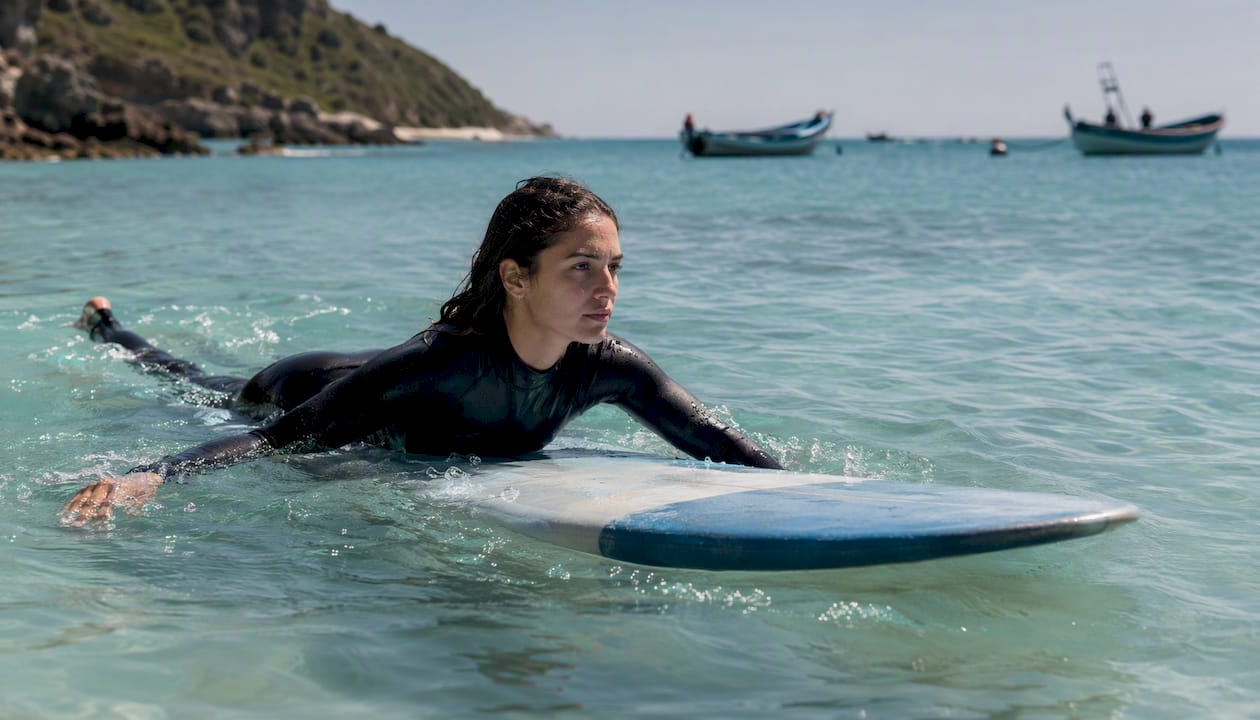
Book a beginner lesson or a short women-focused surf camp with certified instructors and soft-top boards. That is the fastest, safest route into surf for women beginners, and it beats teaching yourself off YouTube clips by a wide margin. Look for a school that puts you in small groups, uses foam boards designed for stability, and keeps a lifeguard or safety spotter in the water during lessons. Ripar Surf School, based on Praia Areia Branca since 2001, is a solid example of what to look for: local certified instructors, beginner-specific equipment, and a small-village setting that skips the crowded lineups where new surfers usually feel most intimidated.
Key Takeaways
Women beginners progress fastest and stay safest when they combine certified instruction, beginner-specific equipment, and a supportive, low-pressure learning environment.
Point | Details |
Book a real lesson first | Skip the DIY approach and start with a certified instructor on a soft-top board. |
Pick your format by goal | Choose group lessons for budget and social vibe, private lessons for speed, camps for immersion. |
Prioritize lifeguarded beaches | Sandy, gently sloping beaches with lifeguards cut your risk significantly, per RNLI guidance. |
Set realistic expectations | Standing in white water often takes a few lessons; green waves typically take weeks to months. |
Consider Ripar Surf School | Small-group beginner lessons and camps in Praia Areia Branca, running since 2001 with certified local instructors. |
Table of Contents
Why Choose Surf Lessons Designed for Women Beginners?
Women-focused surf classes exist for a real reason, not as a marketing gimmick. Mixed classes often move at a pace set by whoever paddles hardest and talks loudest, and that is not always the person who needs the most attention. A class built around women beginners tends to slow down, repeat fundamentals without judgment, and create room for questions that might feel silly to ask in a bigger, louder group.
The psychological piece matters more than most first-timers expect. Fear of looking clumsy in front of strangers, worry about wetsuit fit, or simple self-consciousness about being a beginner at all can quietly sabotage a first session before the first wave even breaks. Women-focused programs and retreats are built around removing that friction, and Surfing Women documents how tailored beginner programs and community support directly improve how much people enjoy the sport and how consistently they stick with it.
A smaller, calmer group means more individual correction on your pop-up and paddling.
Instructors trained to work with beginner women often adjust their coaching language, focusing on feel and rhythm rather than aggressive technical breakdowns.
Peer support in the water and on the beach turns nervous laughter into shared motivation instead of embarrassment.
Progression is paced around comfort and confidence, not around keeping up with the fastest learner in the group.
Pro Tip: Before booking, ask directly whether the instructor has experience teaching women-only or women-majority classes. A good school will describe how their coaching style adapts, not just confirm that women are welcome.
Private Lessons, Group Lessons, or a Surf Camp: Which Fits You?
Your choice here comes down to three things: how fast you want to progress, how much social experience you want, and what you’re willing to spend. None of the three formats is objectively better. They solve different problems.
Private lessons put you one-on-one with an instructor. You get every second of feedback and progress faster on technique, but you lose the shared laughs and camaraderie of a group, and the price per session runs higher. A private surf lesson makes sense if you’re short on time, nervous about being watched by strangers, or working around a physical limitation that needs closer attention.
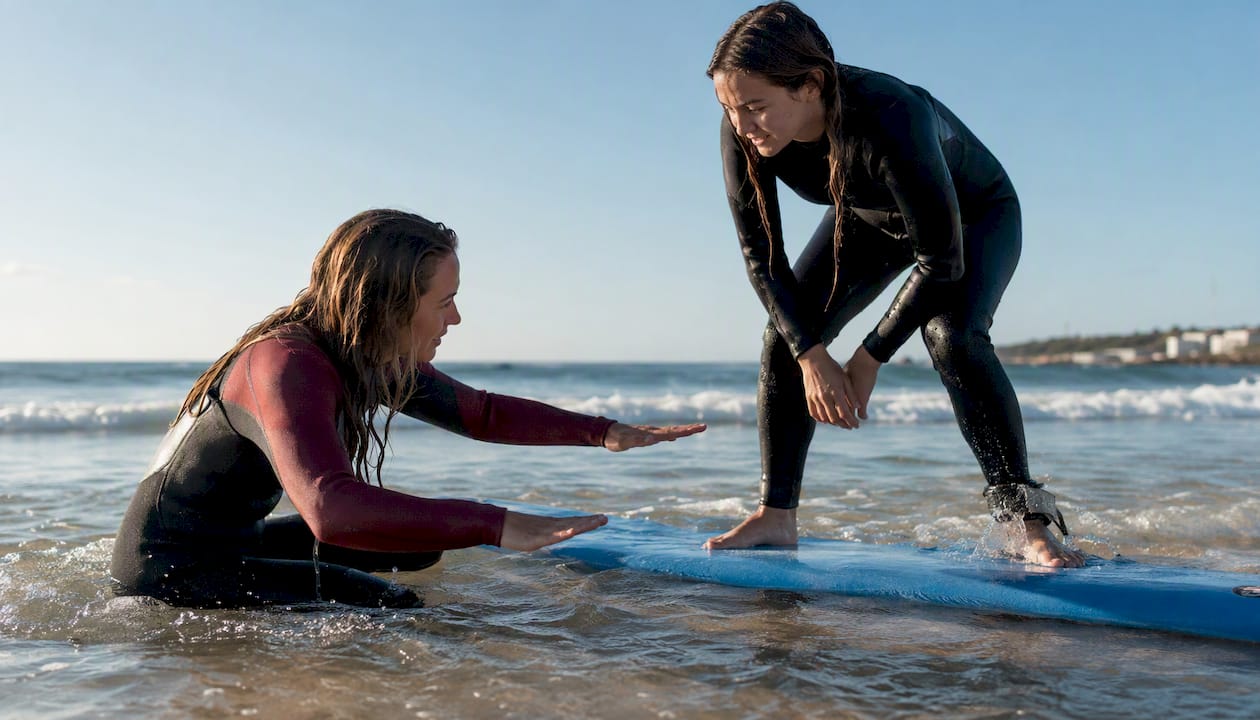
Group lessons put four to eight beginners with one or two instructors. You’ll wait longer between turns catching waves, but you’ll also watch other people make the same mistakes you’re making, which somehow makes your own wipeouts less mortifying. A group surf lesson is the more affordable entry point and the more social one.
Surf camps bundle multiple days of lessons with accommodation, meals, and often extras like yoga or guided excursions. Camp booking pages, including Maceda’s package listings, typically show a similar structure: daily lessons, provided equipment, and a shared house or lodge. That immersion compounds your learning because you’re practicing pop-ups on the beach between sessions and talking surf over dinner, not just showing up once a week.
Here’s a simple way to decide:
If you have one week of vacation and want to actually stand up on a wave by the end of it, book a surf camp.
If you’re testing whether surfing is even for you, start with a single group lesson.
If you feel anxious about performing in front of others or want to correct a specific bad habit fast, book a private lesson.
Format | Learning Pace | Social Setting | Cost Range | Typical Ratio |
Fastest, fully personalized | One-on-one | Highest per session | 1:1 | |
Moderate, shared feedback | Small group, social | Lowest per session | 1 instructor per 4-6 students | |
Steady, immersive over days | Communal, retreat-style | Mid to high overall, includes stay | Varies, often 1 instructor per small group |
What Actually Happens in Your First Surf Lesson?
A typical first lesson follows a predictable rhythm: a land briefing, a warm-up, land-based pop-up practice, then supervised paddling and standing attempts in the white water close to shore. Nobody is throwing you into overhead waves on day one, and any instructor who suggests otherwise is a red flag.
Here’s the walkthrough, step by step:
Briefing on the sand. Your instructor explains water safety, hand signals, and how the board and leash work.
Warm-up stretches. A few minutes of shoulder and hip mobility work, since paddling uses muscles most people rarely engage.
Land-based pop-up drills. You’ll lie on the board on sand and practice the exact motion of pushing up to a standing position, repeated until it feels automatic.
Wading in with your board. You walk the board out to shin or knee-deep water, staying in the white water zone where waves have already broken.
Guided catches. The instructor times your paddling and gives you a push into small, spent waves so you can focus purely on the pop-up.
Repeat and adjust. Expect five to fifteen attempts, with coaching between each one on foot placement, timing, and balance.
Cool-down debrief. A short chat on the beach about what worked, what to fix, and what your next session should target.
Pro Tip: Keep your breathing slow and steady between wave attempts. Tension in your shoulders and jaw translates directly into a stiff, wobbly pop-up. Instructors watch for relaxed posture more than raw effort.
What Beach and Wave Conditions Work Best for Beginners?
A wide, sandy beach with small, spilling waves and a gentle slope into the water is the ideal beginner setup. Sand bottoms are forgiving if you fall, gentle breaks give you more time to react, and a lifeguard tower nearby means help is close if something goes wrong.
Look for these features when scouting a spot or a school’s home beach:
Sandy seabed rather than rocks or reef.
Small swell, generally under waist height for true first-timers.
A gently sloping shoreline instead of a steep drop-off.
Sheltered bays or points that block bigger open-ocean swell.
Consistent lifeguard presence during operating hours.
Watch for rip currents. They are the leading hazard for beginner surfers and swimmers alike, and they often look deceptively calm from shore. RNLI recorded 10 surfing fatalities in UK waters between 2019 and 2024 and points to a consistent pattern: most serious incidents happen outside lifeguarded areas or flagged zones. Surfing between the flags on a patrolled beach removes most of that risk before you even paddle out.
Essential Gear: What to Bring, Rent, or Buy
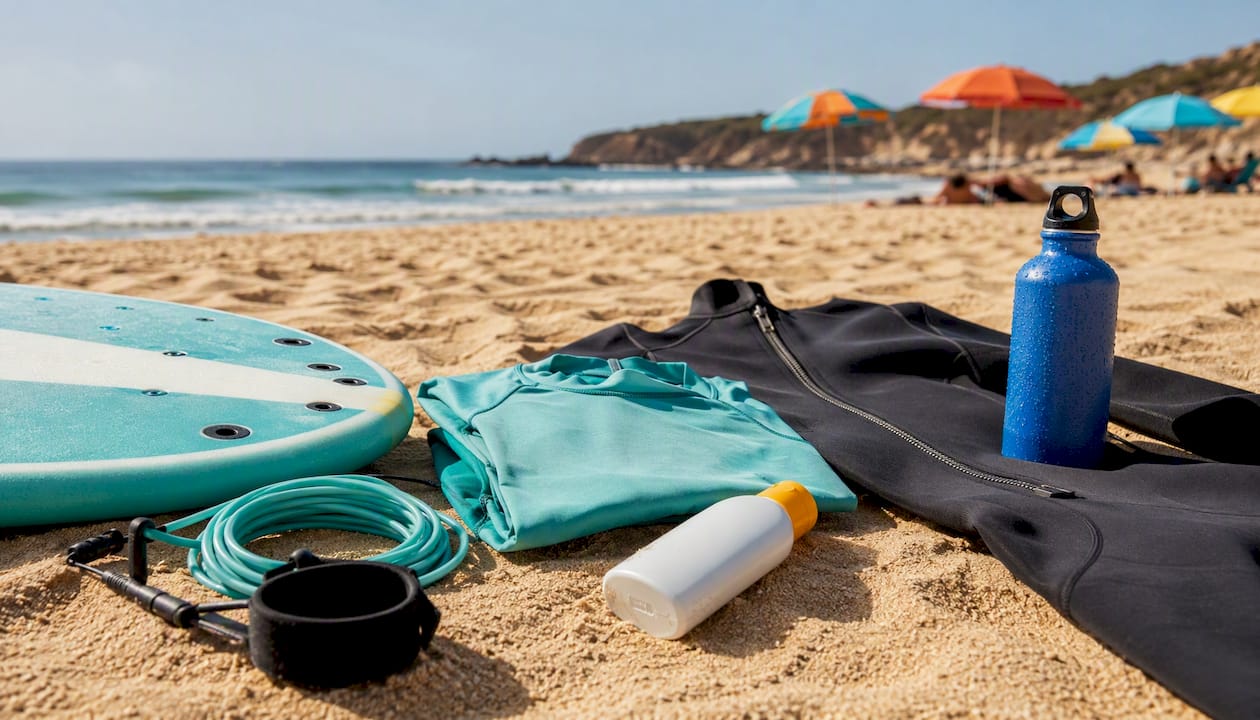
Your basic kit for a first lesson: a soft foam board, a leash, a rash guard, a wetsuit matched to water temperature, reef-safe sunscreen, water, a snack, and a small first-aid kit for scrapes or jellyfish stings. Most beginner schools supply the board, leash, and wetsuit as part of the lesson price, so your personal packing list is shorter than it sounds.
Renting versus buying comes down to how often you’ll surf. If this is a one-time trip or you’re still deciding whether surfing is your thing, rent everything. Boards and wetsuits are bulky, and beginner boards especially are something you’ll outgrow within a season or two as your skills improve. Buy only once you’re surfing regularly enough that rental fees start adding up faster than a used board would cost.
Wetsuit thickness depends entirely on water temperature: thinner (2mm to 3mm) for warm water, thicker (4mm to 5mm with boots and a hood) for cold conditions. SportsMed’s injury prevention guidance recommends proper wetsuit fit and sun protection as basic, non-negotiable prevention steps, alongside a leash at least as long as your board to reduce impact injuries when you wipe out.
Board Type | Best For | Why Beginners Prefer It |
Softboard (foam top) | First-time surfers, kids, group lessons | Extra volume and buoyancy make paddling and balance far easier, and the soft deck reduces injury risk on falls |
Funboard | Surfers past their first few sessions | Blends stability with a bit more maneuverability as skills grow |
Longboard | Learning wave-catching timing | Extra length catches waves earlier and more easily, forgiving late paddling |
Pro Tip: Choose a board with more volume than you think you need. A bigger, more stable board that gets you standing consistently will teach you faster than a smaller, “cooler” board that has you falling every attempt.
Safety Rules and Etiquette Every Beginner Should Know
Stick close to lifeguards, surf between the flags, bring a buddy, and tell someone on land where you’re headed and when you expect to be back. That single habit, more than any piece of gear, is what keeps small mistakes from turning into emergencies.
RNLI’s safety checklist for surfers is short and worth memorizing: check the weather and tide before you go, know your own swimming and fitness limits, wear a leash, dress for the water temperature, and understand how to spot and escape a rip current. Their data shows 10 surfing-related fatalities in UK waters over a five-year period, a number that underlines how much safer lifeguarded, flagged beaches are compared to unsupervised spots.
Etiquette in the lineup matters just as much for staying safe as for staying welcome:
The surfer closest to the peak of the breaking wave has right of way. Everyone else waits.
Never “snake” by paddling around someone to steal their position for a wave.
Call out “left” or “right” to tell others which direction you’re riding.
Never drop in on someone already riding a wave. It’s rude, and it’s genuinely dangerous.
Hold onto your board or protect your head when you fall in a crowded lineup.
Pro Tip: Book your early lessons at a beach with an active lifeguard service, even if it costs a little more. It’s the single easiest way to reduce risk while you’re still learning to read the water yourself.
How Long Does It Take to Get Good at Surfing?
Most beginners stand up in white water within their first one to three lessons if they practice the pop-up regularly. Riding actual green, unbroken waves independently, however, usually takes anywhere from several weeks to a few months of consistent sessions. Anyone who tells you they’ll have you surfing green waves solo after one lesson is overselling it.
Here’s a realistic map of typical progress:
Lesson 1: Standing briefly in white water with instructor support and pushes.
Lessons 3 to 5: Standing consistently, starting to angle the board slightly instead of just riding straight in.
Around 10 lessons: Paddling into small white water waves without a push, better pop-up timing.
1 to 3 months of regular practice: Catching small green waves independently, starting to turn.
Fitness level, swimming ability, and how often you practice all shift that timeline, sometimes significantly. Someone surfing three times a week will outpace someone squeezing in one session a month, regardless of natural talent. Fear of the water tends to slow progress more than any physical limitation does, which is exactly why a supportive, low-pressure teaching environment speeds things up so much.
How Do You Pick the Right Surf School or Camp?
Prioritize instructor certifications, a low student-to-instructor ratio, visible safety protocols, quality beginner equipment, and a clear, written cancellation and weather policy. Those five factors separate a school that will actually get you standing on a wave from one that’s just renting boards and hoping for the best.
Ask these questions before you book:
What certifications do your instructors hold, and how many years have they been teaching?
What’s your student-to-instructor ratio for beginner classes?
Do you operate near lifeguard-patrolled beaches?
What boards and wetsuit sizes do you provide, and are they beginner-specific softboards?
What happens if the weather turns or the swell gets too big to teach safely?
Red flags to walk away from:
No mention of insurance or a written safety policy anywhere on their site or booking page.
Vague answers about instructor qualifications, like “our team is experienced” with no specifics.
Worn-out, hard-top boards better suited to intermediate surfers than nervous beginners.
Pricing varies by region and format, so check a school’s pricing and plans page directly rather than relying on rough estimates from other travel blogs. Group lessons are typically the most budget-friendly entry point, camps cost more but include lodging, and private lessons sit at the top of the price range in exchange for full instructor attention.
Instructor-Backed Drills That Actually Speed Up Learning
Relaxation beats repetition drilled through tension, every time. Instructors who work with adult women beginners consistently notice that students progress faster when coaching emphasizes breath and feel rather than over-analyzing every technical detail of the pop-up.
A few drills worth practicing before you even reach the water:
Pop-up practice on sand, done slowly at first, then faster until the motion feels automatic.
Balance work using a wobble board, a skateboard, or simply standing on one leg with eyes closed for 30 seconds.
Paddle technique practiced on your stomach on the sand, focusing on long, deep strokes rather than fast, shallow ones.
A short breathing drill before paddling out: four seconds in, hold for four, four seconds out, repeated five times to settle nerves.
Practical guides written by women who’ve been through this exact learning curve consistently point to the same starting advice: choose a larger, softer board, take real lessons instead of winging it, and lean on other women in the sport for encouragement, a pattern documented across women’s beginner surf guides. Riparsurfschool has built its beginner lessons around this same logic since 2001, structuring classes so certified local instructors focus first on comfort and repetition before layering in technical corrections, with small groups and beginner-specific boards used from day one. A closer look at women’s surf programs in Portugal shows how that structure plays out in practice.
What Physical Conditioning Actually Helps You Surf Better?
Paddling, not standing, is what wrecks most beginners’ second day. Your shoulders, upper back, and core do the bulk of the work getting you into position for a wave, and if those muscles aren’t ready, fatigue sets in fast and your pop-up suffers because you’re too tired to explode into it.
Simple prep that pays off:
Shoulder and upper back strength, built through resistance band rows or basic push-ups, directly improves paddling endurance.
Core stability work, like planks or dead bugs, supports the balance you need standing on an unstable board.
Hip and ankle mobility, since a deep, stable pop-up stance depends on flexibility most people don’t train for daily life.
General cardiovascular fitness helps you paddle back out repeatedly without gassing out halfway through a session.
You don’t need to train like an athlete before your first lesson. A few weeks of basic strength and mobility work, even 15 minutes a few times a week, noticeably reduces the soreness and fatigue that make day two of a surf camp feel brutal.
What Health Considerations Matter Most for Women Surfing?
Sun exposure and hydration deserve more attention than most beginners give them, especially on multi-day camps where you’re in and out of the water for hours at a stretch. Reef-safe, water-resistant sunscreen reapplied roughly every two hours is the standard SportsMed recommends, and it matters even on overcast days since UV exposure on open water is stronger than it feels.
A few specific points worth planning around:
Rash guards with UPF protection cut down on the reapplication burden and prevent board-rub irritation on your stomach and chest.
Hydration needs a boost beyond your normal daily intake, since salt water, sun, and physical exertion combine to dehydrate you faster than a typical workout.
Wetsuit fit matters for comfort and chafing, particularly around the neck and underarms, so try one on rather than guessing a size from a chart.
Menstrual cycle planning is worth a quick mention too: tampons or a menstrual cup work fine for surfing, and most women find a few days of adjusted intensity, not a full stop, is all that’s needed.
None of this is complicated, but it’s the kind of detail that gets skipped in generic surf guides written without women beginners specifically in mind.
Give Yourself the Same Patience You’d Give a Friend Learning
Fear of the ocean the first time you paddle out is completely normal, and it doesn’t mean you’re not cut out for this. Every surfer who looks effortless in the water once fell off a foam board in ankle-deep white water and swallowed a mouthful of seawater doing it. The women who stick with surfing aren’t the ones who never feel nervous. They’re the ones who keep showing up anyway, one small win at a time.
Focus on enjoying the process and staying safe rather than chasing fast results, and the progress tends to take care of itself.
Ready to Book Your First Lesson?
Riparsurfschool gives you what a lot of general surf schools can’t: a small, community-focused setup in Praia Areia Branca where beginner classes stay small and instructors have been teaching in these same waters since 2001. That’s a real advantage over booking a lesson through a big tourist operator where you’re one of thirty people sharing two instructors and a rack of worn boards.
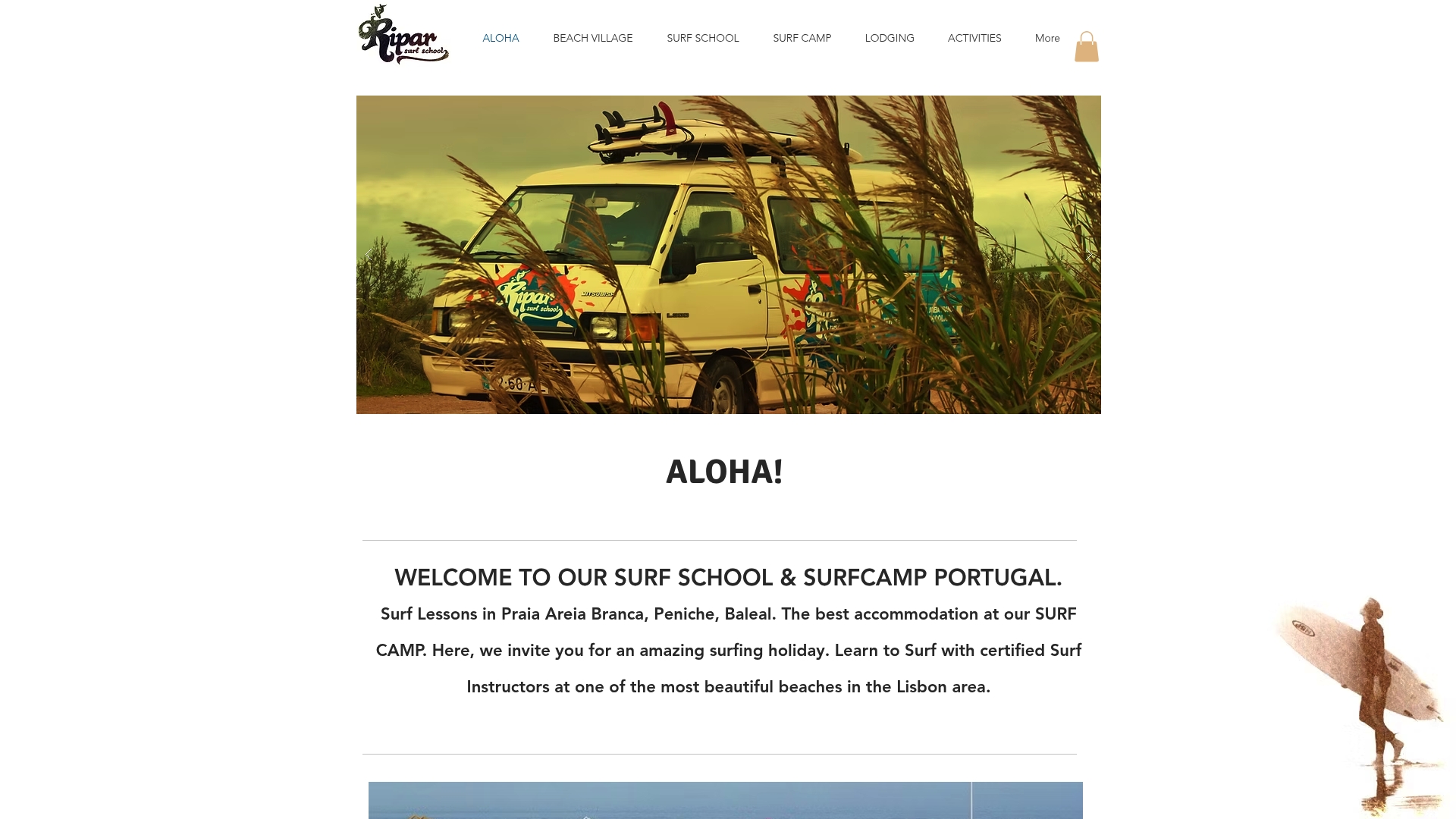
Getting started is simple. Choose a beginner surf lesson if you want a single session to test the waters, literally, or look into the surf camp booking page if you’d rather immerse yourself over several days with lodging included. Women who prefer one-on-one pacing can go straight to a private lesson instead. After booking, you’ll get details on your meeting point, what equipment is provided, and pickup logistics if you’re staying nearby. Weather and swell conditions in Portugal shift quickly, so lessons come with a flexible rescheduling policy rather than a rigid, no-exceptions booking.
Head to the online booking page to check available dates and lock in your first session.
Sources
Always check local lifeguard schedules and current weather and swell conditions before heading into the water, regardless of how experienced your instructor is.
Recommended
Comments