

What Is Small-Group Surfing and Why It Works

TL;DR:
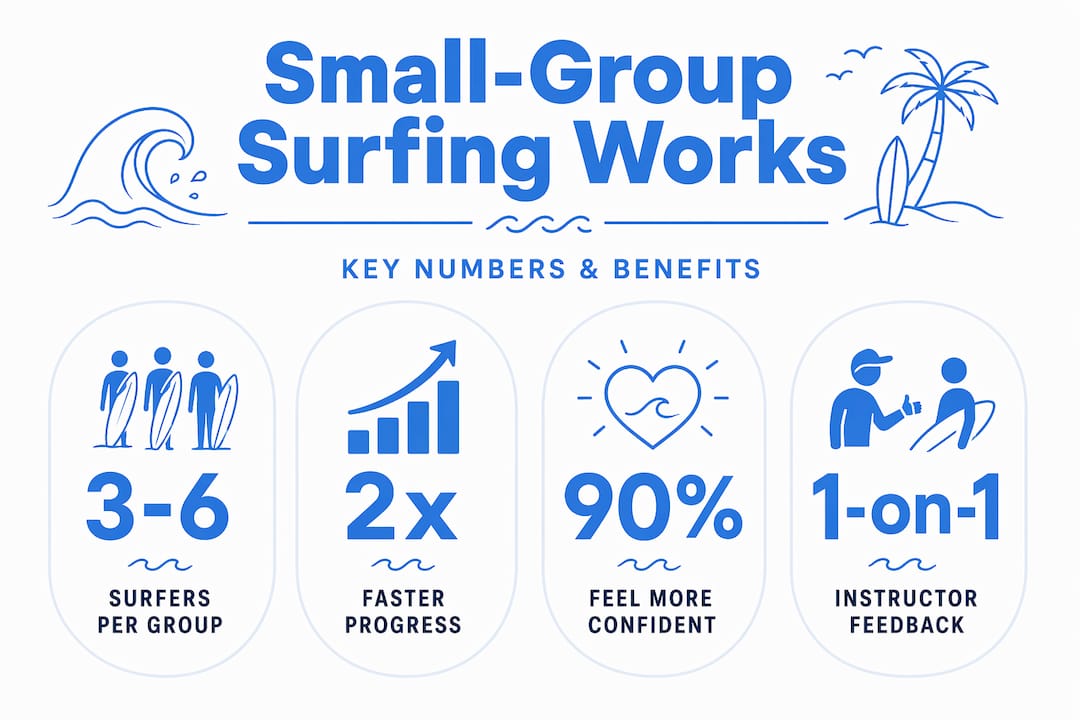
Small-group surfing lessons, typically with 3 to 6 participants, provide personalized coaching, safer environments, and a supportive community atmosphere. This format accelerates skill development, enhances safety, and fosters lasting social bonds through shared experiences and holistic programs. Choosing qualified instructors and optimal group sizes ensures a higher quality learning experience beyond traditional large classes.
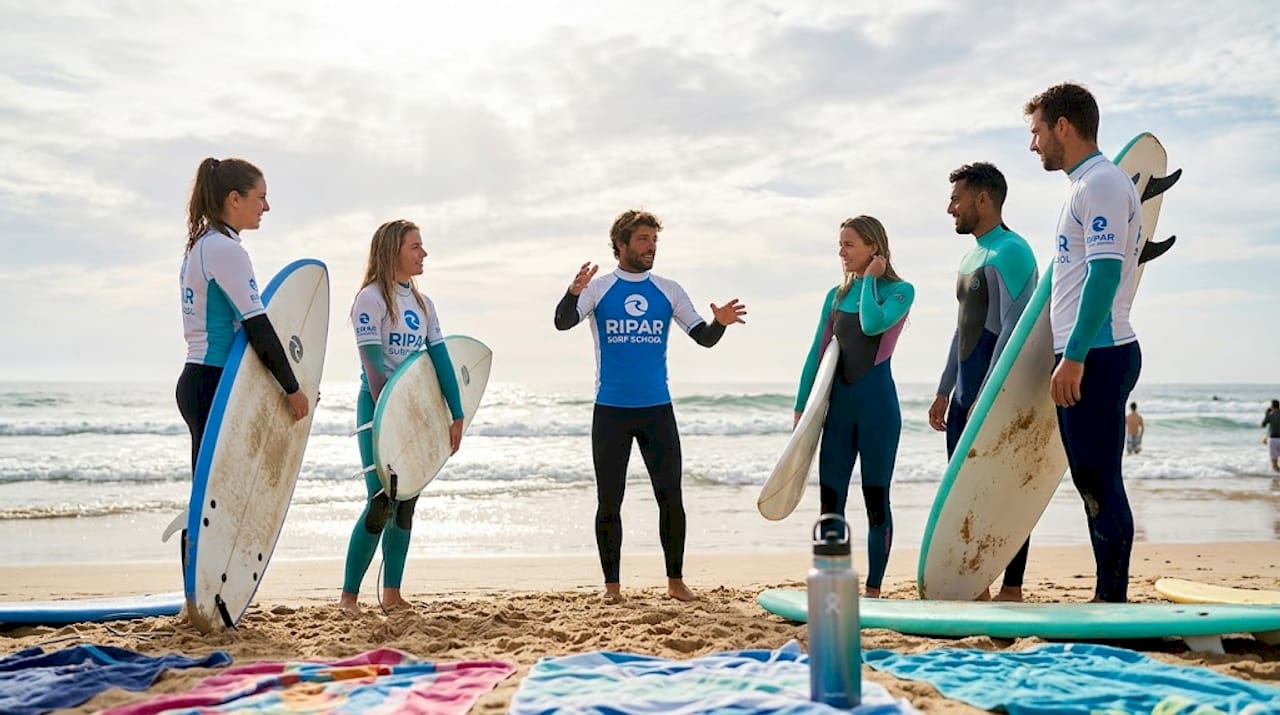
Most people picture surfing as a solitary pursuit: one person, one board, one wave. That image misses something real. Small-group surfing is a structured approach where a limited number of surfers, typically 3 to 6, learn and practice together under the guidance of a certified instructor. It sits in a sweet spot between the anonymity of large surf classes and the expense of private lessons. For beginners figuring out how to stay on a board and intermediate surfers trying to read waves more intelligently, this format delivers something rare: personalized attention inside a genuinely supportive social environment.
Table of Contents
Key Takeaways
Point | Details |
Small groups mean real attention | Sessions typically hold 3 to 6 surfers, giving instructors time to correct your technique personally. |
Safety improves with fewer people | Fewer surfers in the water means less collision risk and faster instructor response when needed. |
Community accelerates progress | Watching and encouraging peers builds motivation that solo practice simply cannot replicate. |
Holistic programs go deeper | The best small-group lessons pair water time with reflection, group discussion, and environmental ethics. |
Choosing wisely matters | Instructor certification, group size limits, and lesson format all determine the quality of your experience. |
What small-group surfing lessons actually look like
Small-group surf lessons are not just scaled-down versions of a big beach class. The structure changes when you reduce the headcount. Group sizes of 3 to 6 students give instructors a realistic chance to watch every surfer on every wave and deliver feedback that actually sticks.
A typical session runs between 1.5 and 2.5 hours. Here is what you can expect:
On-land warm-up and briefing: Instructors cover ocean conditions, board handling, paddling mechanics, and pop-up technique before anyone touches the water.
Water practice with live coaching: You surf while the instructor watches, calls out corrections, and physically assists when necessary.
Peer observation rounds: Students take turns paddling out while others watch from shore or the shallows, then give feedback. You learn as much from watching as from doing.
Debrief and cool-down: The session ends on the beach with a discussion about what worked, what to repeat, and what to focus on next time.
Instructor roles in small groups are more varied than in large classes. They manage individual technique, keep an eye on group dynamics, and read the ocean conditions for the whole group simultaneously. In larger classes, instructors spend most of their time just keeping everyone safe and accounted for. In a small group, they actually coach.
Pro Tip: Before you book, ask the school directly: “What is your maximum group size?” Any honest answer should be six or fewer. If you hear “it depends on the day,” that is a red flag.
The format also varies by school philosophy. Some small-group surf classes stay purely technical: paddling posture, foot placement, weight distribution. Others take a more holistic approach that incorporates discussion and reflection alongside the water work, which we will cover in detail below.
Why surf in small groups: the real benefits
The benefits of small-group surfing go well beyond convenience. There are three distinct areas where the format outperforms both private lessons and large group classes for most learners.
Skill development
Faster feedback loops. When your instructor watches 4 surfers instead of 20, you get corrected after every wave, not every 10 minutes.
Learning by observation. Watching a peer attempt the same drill you just struggled with is one of the fastest ways to internalize technique. You spot the mistake externally before you feel it internally.
Competitive motivation. Friendly competition in a small group pushes you to try harder without creating the anxiety that comes from performing in front of a crowd.
Targeted progression. Instructors can adjust session goals in real time based on how the group is actually performing, not a predetermined script.
Safety
Small groups improve safety in ways that matter practically. Fewer surfers in a shared break zone reduces the chance of board collisions, which are the most common cause of surf injuries for beginners. The instructor can physically reach any participant within seconds instead of scanning across a crowded lineup. Peer support also plays a role. In a group where people know each other, someone always notices if a surfer goes down and does not come back up quickly.
Community and confidence
This is the benefit most people underestimate. Beginners feel significantly more comfortable learning alongside a handful of people at the same level than they do surrounded by strangers of mixed ability. The shared struggle creates genuine bonds fast. Over 500 students at recent interschool surf events reported that the community aspect was as valuable as the competition itself. You do not need a championship to feel that. It happens in a Tuesday morning lesson at a small beach when three people cheer for each other on the same wave.
Surfing as more than sport: holistic small-group programs
The more thoughtful surf schools are doing something that larger operations rarely attempt. They are pairing surf instruction with structured conversations about courage, identity, and purpose.
“Small-group sessions transcend technical training by passing down surfing as a lifestyle, blending skill with community, courage, and ethics.”
Workshops that combine surf lessons with philosophical discussion, like the “Philosurfers” model developed by Craeft Surf Studio, show that surf education does not have to stop at the waterline. These programs ask participants to journal after water sessions, reflect on fears they confronted, and discuss the ethics of sharing ocean space. The results are not just better surfers. They are people with a stronger sense of why they are out there.
This matters for adventure travelers especially. You are not just booking a lesson. You are entering a surf culture with its own values around environmental stewardship, local community respect, and personal accountability in the water. A holistic small-group program helps you understand that culture rather than just skim the surface of it.
The practical benefits of this approach include:
Lasting friendships. Small-group surf participants consistently report long-term social bonds formed through shared challenges and mutual encouragement.
Environmental awareness. Groups that discuss ocean ethics together are far more likely to practice responsible surfing and understand local conservation concerns.
Mental resilience. Journaling and peer reflection after difficult sessions builds a kind of mental muscle that carries into other parts of life, not just surfing.
Instructor relationships. In a small group, instructors remember your name, your tendencies, and your goals. That relationship deepens over multiple sessions.
Incorporating journaling and peer feedback within surf sessions deepens learner engagement in ways that purely technical instruction simply cannot match.
How to find and get the most from small-group surfing
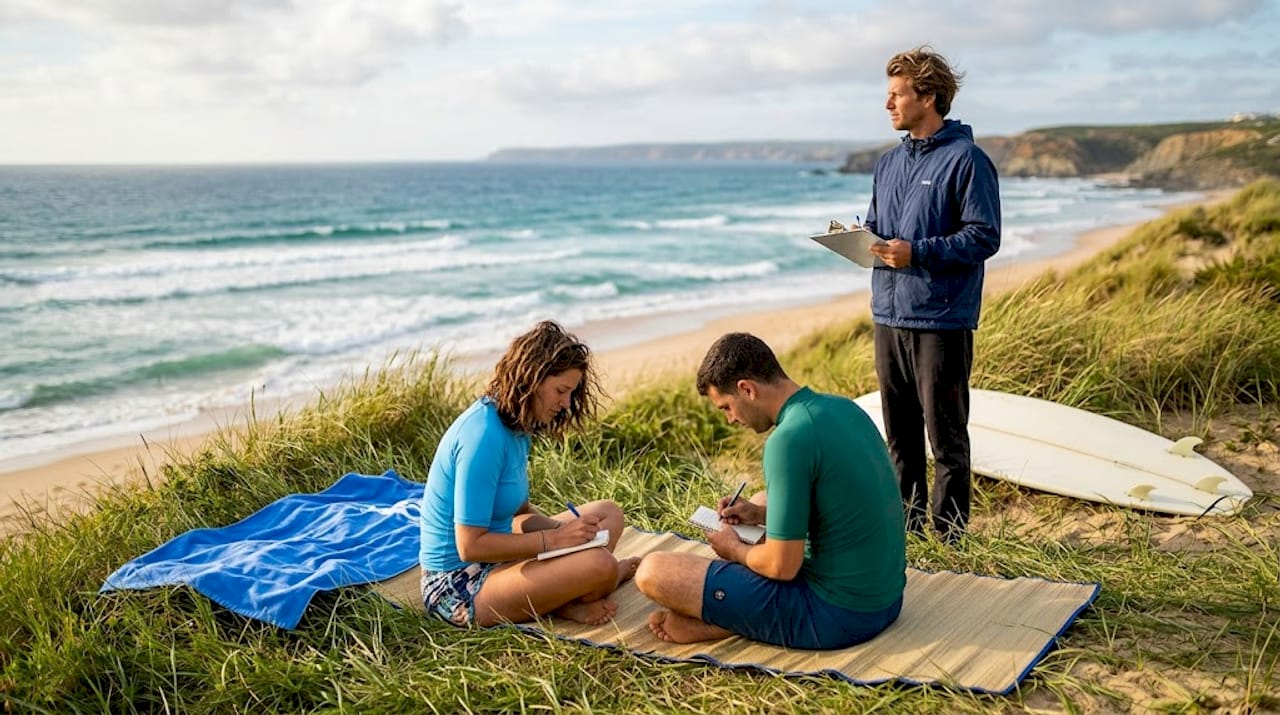
Knowing what small-group surfing is matters less than knowing how to find a good version of it and how to show up prepared.
Choosing the right program
When evaluating small-group surf classes, prioritize these factors:
Maximum group size: Six is the upper limit for genuine small-group dynamics. Eight is a large group with a different name.
Instructor certification: Look for ISA (International Surfing Association) or nationally recognized surf coaching credentials. Qualified instructors know how to adapt their teaching style, read ocean conditions, and manage group safety simultaneously.
Lesson format: Does the school offer purely technical sessions, holistic programs, or a mix? Match the format to what you actually want from the experience.
Location quality: The best surf school in the world cannot override a consistently poor break. Research the local wave conditions for your skill level before booking.
What to expect in your first session
Phase | What happens | Why it matters |
Land briefing | Warm-up, technique overview, ocean safety rules | Sets expectations and reduces water anxiety |
Shallow water practice | Pop-up drills, paddling mechanics | Builds muscle memory in a low-risk environment |
Wave riding | Taking real waves with instructor coaching | Core skill development with immediate feedback |
Group debrief | Peer observations, instructor notes | Consolidates learning and builds group bonds |
Pro Tip: Do not try to be the best surfer in the group. The people who progress fastest in small-group settings are the ones who ask the most questions, not the ones who perform the best on day one.
The quality over quantity mindset that makes small-group diving so rewarding applies directly to surfing. Fewer distractions, a calmer environment, and genuine attention from an instructor produce results that larger classes rarely achieve. Choosing to surf in small groups is, in that sense, a deliberate choice to prioritize the quality of your experience over the volume of people around you.
My honest take after 20+ years in the water
I have watched thousands of people learn to surf, and the ones who plateau fastest are almost always those who learned in large groups where instructors could not give them specific, timely feedback. The ones who genuinely fall in love with it, regardless of talent, tend to come from small, tight-knit learning environments.
What I have found is that the social dynamic in a small group does something a coach cannot manufacture alone. When someone in your group catches their first real wave and the rest of you lose your minds cheering from the lineup, that energy rewires how you feel about the whole experience. It becomes something you did together, not something that happened to you individually.
I also think the holistic trend in surf education is real and worth embracing, not just a marketing angle. When you sit on the beach after a session and actually talk about why you were scared to paddle into that set wave, you process things that most sports just let you bury. Surfing has always had a philosophical undercurrent. Small groups are finally giving it a formal space.
The surf culture in community-oriented camps and programs reinforces something I have believed for a long time: surfing is not a sport you do alone, even when you are the only one on the wave.
— Fernando
Experience small-group surfing at Riparsurfschool

Riparsurfschool has been running small-group surf lessons at Praia Areia Branca, near Peniche and Ericeira, since 2001. Sessions stay small by design, led by local certified instructors who know these waves the way most people know their own street. The setup is relaxed, the location is world-class, and the instruction is personal in a way that large surf schools in tourist centers simply cannot replicate. If you want to combine lessons with a full surf holiday, the camp programs pair daily sessions with accommodations and a genuine beach-village atmosphere. You can reserve your spot online and choose from lesson formats that fit your current level and goals.
FAQ
What is small-group surfing?
Small-group surfing refers to surf lessons or sessions with a limited number of participants, typically 3 to 6, led by a certified instructor. The format balances personal coaching with the social motivation of learning alongside peers.
How many people are in a small-group surf class?
Most reputable schools cap small-group surf classes at 6 participants. Groups larger than that shift the instructor’s focus away from individual technique and toward general crowd management.
Are small-group surf lessons better for beginners?
Yes. Beginners benefit significantly from the reduced pressure, quicker feedback, and peer support that small-group settings provide. The relaxed atmosphere builds confidence faster than large classes.
What should I look for when choosing small-group surf lessons?
Prioritize instructor certification, a strict group size limit of 6 or fewer, a clear lesson format, and a location with waves appropriate for your skill level. Evaluating surf schools on these criteria separates quality programs from those just using “small group” as a label.
Can small-group surfing help with more than just technique?
Absolutely. Programs that incorporate journaling, group discussion, and environmental ethics produce surfers who are more connected to ocean culture and more resilient in and out of the water. The social bonds formed in small groups frequently extend well beyond the beach.
Recommended
Comments