

What Is Off-Peak Surfing? Benefits, Tips, and Timing
- Fernando Antunes

- Jul 10
- 8 min read

TL;DR:
Off-peak surfing offers surfers more waves, lower costs, and a better environment for learning. It enhances skill development and transforms the experience from competition to enjoyment. The best times are early morning dawn patrols and shoulder seasons in destinations like Portugal, Costa Rica, and Nicaragua.
Off-peak surfing is defined as surfing during times or seasons when crowds are minimal, typically outside peak holiday months or during early morning and late afternoon windows. Surfers who go off-peak catch up to 10 waves per session compared to just 3 during busy lineups. That difference is not a minor convenience. It changes how fast you progress, how much you enjoy the water, and how much your trip costs. Whether you are a beginner figuring out your pop-up or an intermediate surfer chasing cleaner rides, understanding off-peak conditions is one of the most practical decisions you can make. Riparsurfschool has coached surfers through both peak chaos and quiet shoulder seasons since 2001, and the contrast is stark.
What are the main benefits of surfing during off-peak times?
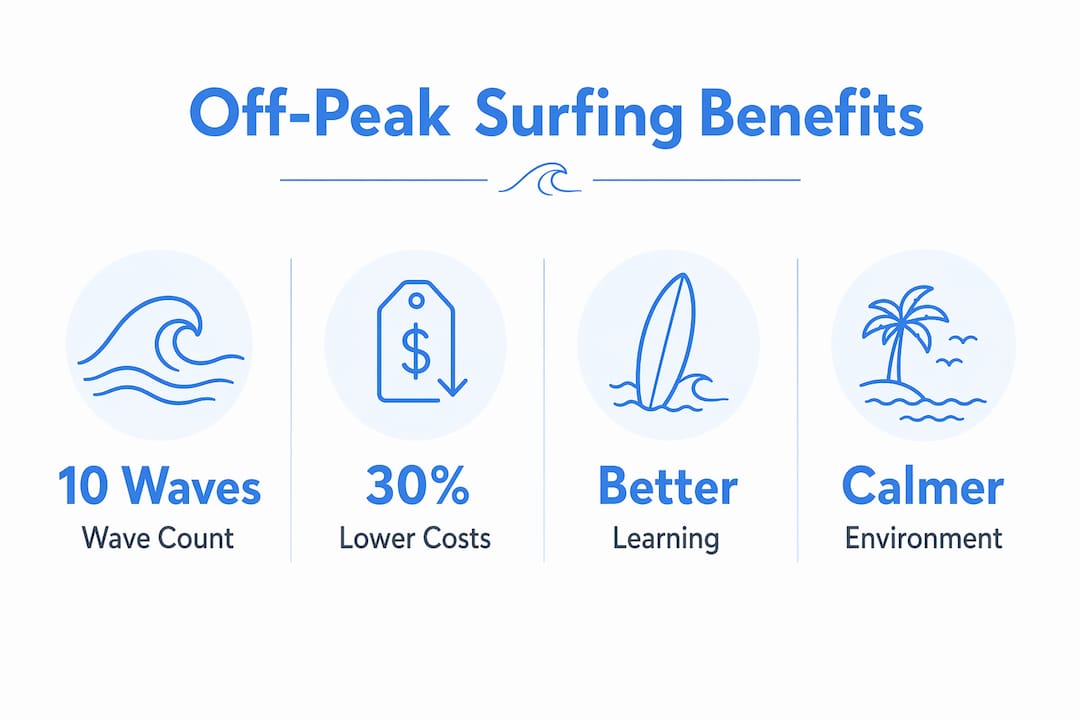
Off-peak surfing delivers three concrete advantages: more waves, lower costs, and a better learning environment. Each one compounds the others.
More waves per session
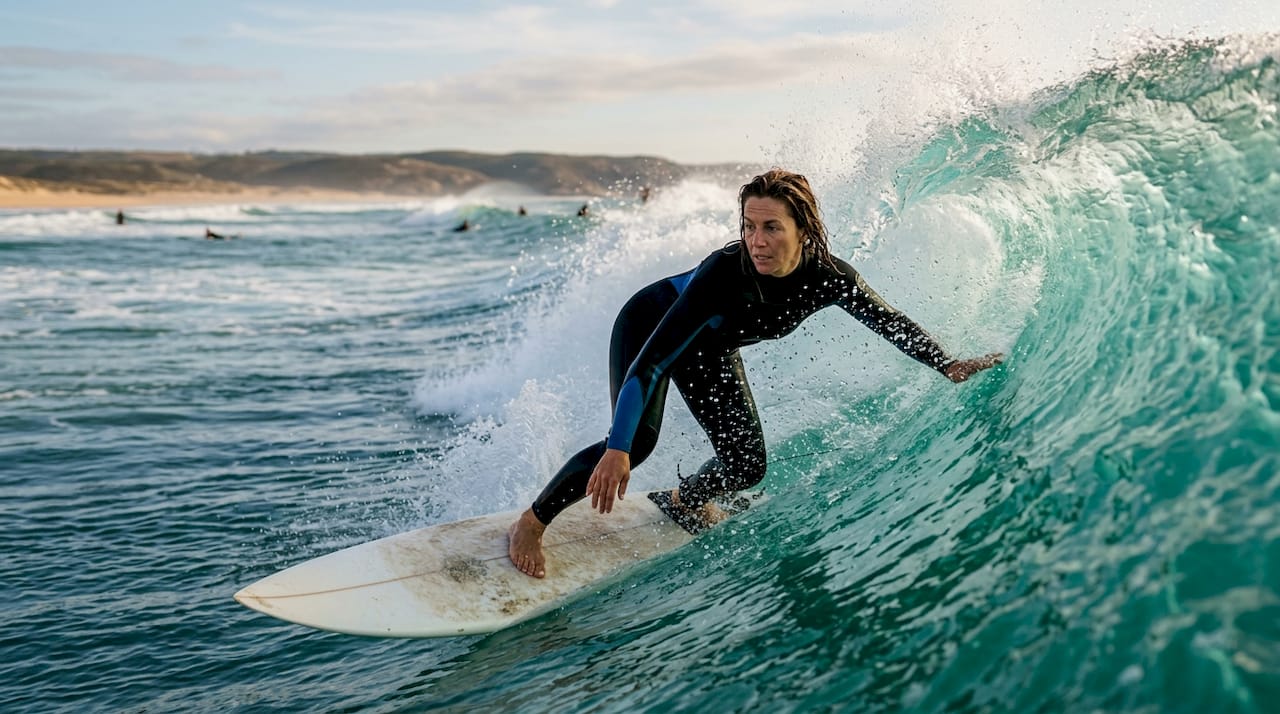
The wave count difference between peak and off-peak sessions is not subtle. Surfers catch up to 10 waves per session off-peak versus 3 during crowded peak times. More waves mean more practice repetitions, faster muscle memory, and a session that actually feels satisfying. Sitting in a packed lineup waiting for a set that someone else catches is frustrating and unproductive.
Lower travel and accommodation costs
Off-peak travel brings cheaper flights and accommodations with better availability at surf retreats and camps. Shoulder season pricing at surf destinations in Costa Rica and Nicaragua can drop significantly compared to peak months. That savings can fund extra sessions, better gear, or a longer stay. Riparsurfschool offers year-round programs precisely because the quieter months deliver real value for surfers at every level.
A calmer environment for learning
Beginners and intermediate surfers gain the most from off-peak conditions. Quieter lineups let beginners focus on paddling and popping up without anxiety or safety concerns. When there is no crowd pressure, you commit to waves more freely. You make cleaner decisions. You surf better.
The mental benefits are real too. Surfers report deeper enjoyment and better decision-making when they are not competing for every wave. Off-peak surfing shifts the experience from stress to flow.
Pro Tip: Try a weekday session during shoulder season and keep a simple wave count. Compare it to your last peak-season session. The number will convince you faster than any argument.
When and where is off-peak surfing optimal?
Timing is everything in surfing. The best off-peak windows exist both within a single day and across entire seasons.
Dawn patrol and glass-off windows
Dawn patrol runs from roughly 5:30 to 8:00 AM with clean offshore wind conditions that produce glassy, well-shaped waves. This is the most consistent daily off-peak window available to any surfer, anywhere. The late afternoon glass-off offers a second opportunity, but it is shorter and less reliable, lasting only 30–90 minutes before onshore winds return. Dawn patrol wins for consistency and crowd avoidance.
Arriving just 30 minutes before peak crowd times during a weekday dawn patrol maximizes both wave count and solitude. That small timing shift separates a session with 3 other surfers from one with 30.
Shoulder seasons and geography
Shoulder seasons in Central America offer smaller, manageable waves with fewer crowds and lower prices. Costa Rica and Nicaragua benefit from year-round surf with varying swell patterns that make their shoulder months genuinely productive for surfers. Winter off-season surfing in locations like Southern California, Florida, and Hawaii creates calmer conditions and ideal learning environments for new surfers. Portugal’s Atlantic coast, where Riparsurfschool operates near Peniche and Ericeira, delivers consistent swells well into autumn and spring, making those months prime off-peak windows.
Peak vs. off-peak conditions at a typical break
Factor | Peak season | Off-peak season |
Average wave count per session | 3 waves | Up to 10 waves |
Lineup crowd density | High | Low to moderate |
Accommodation availability | Limited | Flexible |
Travel cost | Higher | Lower |
Learning environment | Stressful | Relaxed |
Tide state and wind direction predict crowd density more reliably than swell size alone. Surfing just outside ideal tide windows can reduce crowds by up to 50% while still providing quality waves. That is a tactical edge most surfers never use.
Pro Tip: Check a local tide chart and wind forecast the night before. Target the window just before or after the “ideal” tide. You get solid waves with a fraction of the crowd.
How does off-peak surfing impact skill progression?
Off-peak conditions change how fast surfers improve. The mechanism is simple: fewer people means more waves, and more waves means more practice.
Better fundamentals for beginners
Beginners build their core skills, paddling, timing, and the pop-up, through repetition. A crowded lineup interrupts that repetition constantly. Off-peak surfing is crucial for progression because it creates a safer, less anxious environment where beginners can focus entirely on technique. The beginner surf workflow becomes far more effective when there is space to make mistakes and try again without pressure.
The mindset shift from performance to lifestyle
Off-peak surfing often gets dismissed as less exciting, but that misses the point entirely. When you are not competing for waves, you stop performing and start surfing. The connection to the ocean deepens. You notice the water differently. Surfers who make this shift consistently report that their overall enjoyment and decision-making in the water improves. The true value of off-peak surfing lies in transforming surfing from a performance sport to a lifestyle.
That shift matters practically. Less pressure produces clearer thinking. Clearer thinking produces better wave selection. Better wave selection produces better rides. The progression loop accelerates when anxiety leaves the equation.
Riparsurfschool instructors consistently observe that surfers who train during quieter months build more durable skills than those who only surf peak-season crowds. The off-season surfing advantage is not just about comfort. It is about building a foundation that holds up under any condition.
Practical tips for making the most of off-peak sessions
Getting the most from off-peak surfing requires some planning. These five steps will put you in the right place at the right time.
Plan your trip during shoulder months. Target the months just before or after peak season at your chosen destination. You get reliable waves, fewer crowds, and lower prices without sacrificing surf quality.
Commit to dawn patrol. Set your alarm for 5:00 AM and be in the water by 5:30 AM. The offshore winds, clean faces, and empty lineups during this window are worth every minute of lost sleep.
Check tide and wind forecasts the night before. Use a reliable surf forecast tool to identify the tide window with the best wave shape. Then target the 30 minutes just outside that window to avoid the crowd spike.
Pack gear for variable conditions. Shoulder seasons and early mornings bring cooler water and shifting winds. A quality wetsuit suited to the local water temperature keeps you in the water longer and surfing better. Choosing the right surfboard for your level also matters more when conditions vary.
Embrace the slower pace. Off-peak sessions do not always deliver perfect waves. Some days are small and inconsistent. Treat those sessions as skill-building opportunities rather than disappointments. Patience in the water translates directly to better wave reading over time.
Shoulder season surfing consistently beats peak season for surfers who prioritize progression over Instagram conditions. The data and the experience both support it.
Key Takeaways
Off-peak surfing delivers more waves, lower costs, and faster skill progression than peak-season surfing, making it the most practical choice for surfers at any level.
Point | Details |
Wave count advantage | Surfers catch up to 10 waves off-peak versus 3 during crowded peak sessions. |
Best daily window | Dawn patrol from 5:30–8:00 AM offers the most consistent off-peak conditions each day. |
Cost savings | Shoulder season travel brings lower flight and accommodation prices with better availability. |
Skill progression | Quieter lineups let beginners focus on fundamentals without anxiety or crowd pressure. |
Mindset shift | Off-peak surfing moves the experience from performance pressure to lifestyle enjoyment. |
Why I think most surfers are missing the best sessions of their lives
I have surfed peak season and off-peak season back to back at the same breaks. The difference is not subtle. Peak season feels like a competition you did not sign up for. Off-peak feels like surfing is yours again.
The biggest misconception I hear is that off-peak means bad waves. That is wrong. It means fewer people fighting over the same waves. At Praia Areia Branca, where Riparsurfschool operates, the autumn swells are some of the most consistent of the year. The crowds are gone, the water is still warm enough, and the lineups are open. Surfers who show up in october and november often have their best sessions of the year.
What I have noticed most is the mental shift. When you are not surrounded by 40 other surfers, you stop watching what everyone else is doing and start reading the ocean. That is when real surfing begins. You stop reacting and start anticipating. Your wave selection improves. Your timing sharpens. You catch waves you would have hesitated on in a crowd.
My honest advice: book one off-peak trip before you judge it. Go during a shoulder month, get in the water at dawn, and count your waves. You will not go back to fighting peak-season lineups by choice.
— Fernando
Riparsurfschool and off-peak surfing in Portugal
Riparsurfschool runs surf lessons and surf camps year-round at Praia Areia Branca, one of Portugal’s most consistent and uncrowded surf beaches near Peniche and Ericeira.

The quieter months are when Riparsurfschool’s certified local instructors can give you the most focused coaching. Smaller groups, more personalized feedback, and open lineups create the ideal conditions for real progression. Whether you are a complete beginner or an intermediate surfer looking to sharpen your technique, the off-peak calendar works in your favor. Book your surf lessons online and choose the dates that fit your schedule. If you want the full experience, the surf camp booking page covers multi-day packages with accommodation, instruction, and everything you need for a productive surf holiday in Portugal.
FAQ
What is off-peak surfing exactly?
Off-peak surfing is surfing during times or seasons with fewer crowds, typically shoulder months or early morning windows like dawn patrol. Surfers catch significantly more waves and experience less competition during these periods.
What is the best time of day to surf off-peak?
Dawn patrol, from roughly 5:30 to 8:00 AM, is the most consistent daily off-peak window. Clean offshore winds and minimal crowds make it the top choice for surfers seeking quality waves without competition.
Is off-peak surfing better for beginners?
Off-peak conditions are ideal for beginners because quieter lineups reduce anxiety and allow full focus on fundamentals like paddling and the pop-up. Less crowd pressure directly accelerates skill development.
Which locations offer the best off-peak surfing?
Costa Rica, Nicaragua, and Portugal’s Atlantic coast near Peniche and Ericeira all offer reliable off-peak surf during shoulder seasons. These destinations deliver consistent waves with significantly fewer crowds outside peak months.
Does surfing off-peak save money?
Off-peak surf trips cost less across flights, accommodations, and surf camp bookings. Shoulder season pricing at popular surf destinations drops noticeably compared to peak months, giving surfers more value for the same experience.
Recommended
Comments