

The Surf Family Trip Guide for Stress-Free Waves

TL;DR:
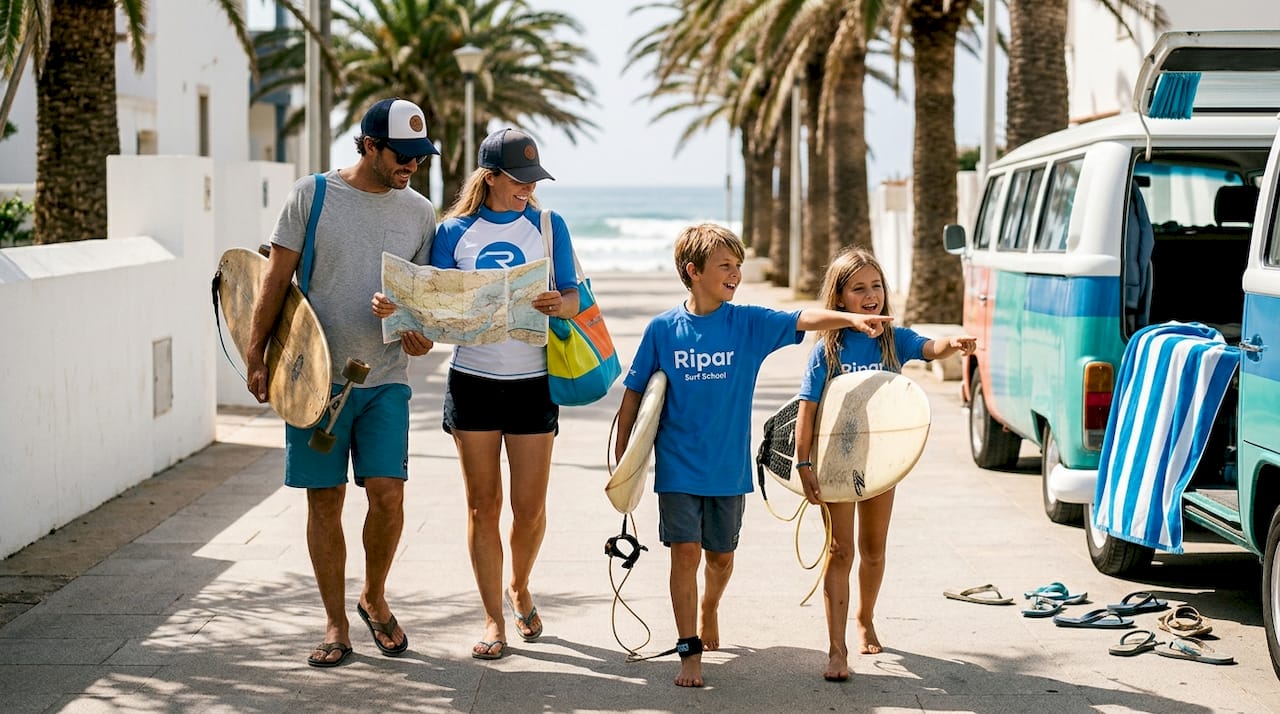
Families often assume surf trips are only for young adults or childless couples, but this is a misconception.
A well-designed surf family trip with the right destination, activities, and accommodations ensures fun and safety for all skill levels.
Most families assume surf trips are for college students or childless couples with flexible schedules. That assumption is flat-out wrong. A well-planned surf family trip guide changes everything, because the surf world has quietly built an entire infrastructure around families. From gentle beginner breaks in Portugal to reef-protected lagoons in Indonesia, there are now more family-friendly options than ever. The real challenge is knowing how to plan around different skill levels, keep kids engaged, and avoid the logistical chaos that ruins otherwise great vacations. This guide covers all of it.
Table of Contents
Key takeaways
Point | Details |
Match destination to skill level | Choose wave regions based on your family’s surfing ability to keep everyone safe and having fun. |
Pack smart, not heavy | A focused surf trip planning checklist with versatile gear beats overpacking every time. |
Mix surf with other activities | Balanced itineraries with beach games, snorkeling, and cultural excursions keep non-surfers happy. |
Book transfers and camps early | Reliable logistics and family-focused surf camps reduce travel stress significantly. |
Involve kids in planning | Letting children help choose activities increases excitement and reduces in-trip conflict. |
Your surf family trip guide starts with the right destination
Choosing the wrong destination is the single biggest mistake families make. A spot that works perfectly for a solo surfer chasing big reef breaks is a nightmare for a seven-year-old taking their first lesson. Your destination decision should start with one question: what are the wave conditions, and do they match your family’s skill range?
For beginners and young children, you want sandy-bottom breaks, gentle whitewater, and a mellow crowd. The Mentawai Playgrounds region is a well-known example, offering gentle waves suited to beginner and intermediate surfers, complete with kids’ clubs, shallow swimming areas, and family-tailored surf lessons. Waikiki Beach in Hawaii is another classic. Long, slow rolling waves and a forgiving break make it one of the best surf spots for families anywhere in the world. Costa Rica’s Tamarindo and Nosara have built entire surf tourism industries around families, with certified instructors, calm morning surf, and plenty of non-surf activities within easy reach.
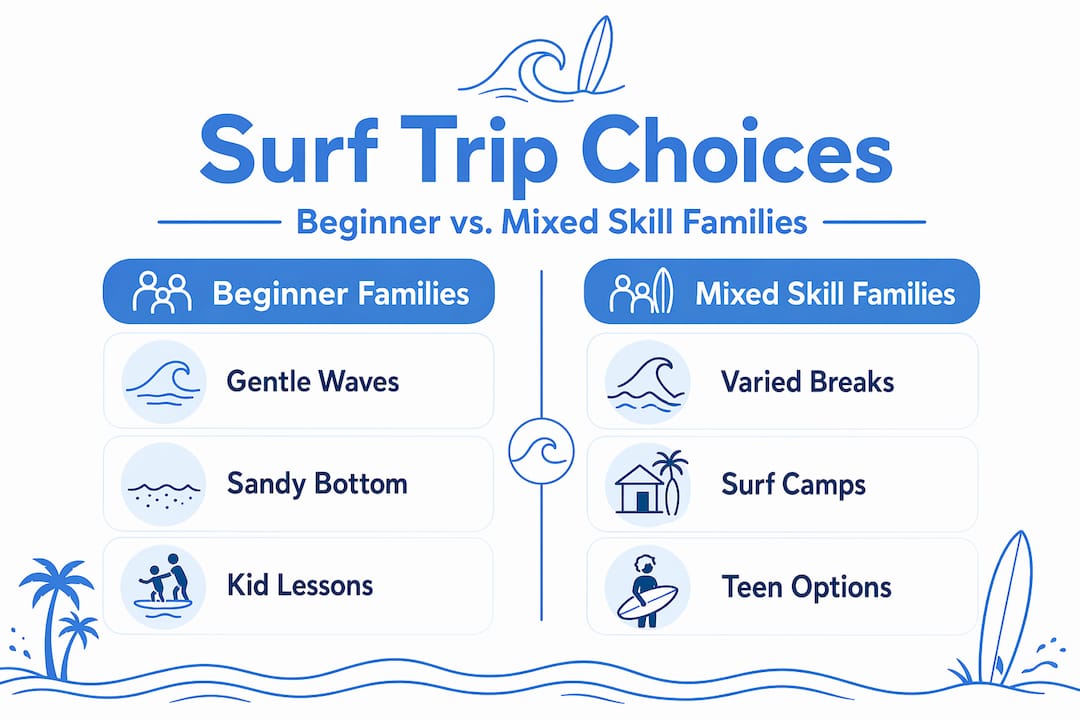
Portugal deserves a serious look. The coast around Peniche and Ericeira offers beach breaks that handle mixed skill levels well. You can have a confident intermediate surfer in the lineup while a younger sibling takes a beginner lesson on the same beach. That flexibility is rare and genuinely valuable for family surfing vacations.
Here is a quick comparison to help narrow down your decision:
Destination | Best for | Wave type | Family amenities |
Waikiki, Hawaii | Beginners, all ages | Long, slow rolling | Rentals, lessons, restaurants nearby |
Tamarindo, Costa Rica | Beginners to intermediate | Mellow beach break | Surf camps, family resorts, wildlife tours |
Mentawai, Indonesia | Intermediate, families | Gentle reef breaks | Family-focused resorts, kids’ programs, transfers included |
Peniche, Portugal | All levels | Beach and reef breaks | Surf schools, surf camps, local village feel |
Noosa, Australia | Beginners, families | Soft, long point break | Calm water, national park, great food scene |
When it comes to accommodation, surf camps with communal spaces and dedicated family surf coaching consistently outperform standard hotels for family trips. The built-in community, shared meals, and on-site programs make the whole experience more cohesive.
What to pack for a family surf vacation
Packing for a surf trip with kids requires strategy. Families frequently overpack surf gear or forget the personal safety items that actually matter in the water. The goal is a lean, focused kit that covers surf performance and family health without requiring an extra checked bag.
Your surf-specific checklist should include:
Rash guards for every family member (long sleeve for kids to protect from sun and reef)
Wetsuits appropriate for water temperature at your destination
Surf leashes if you own boards, or confirm the surf camp provides them
Reef-safe sunscreen in generous quantities, since standard sunscreen is banned in many surf destinations to protect marine ecosystems
Reef booties if you are surfing anywhere with rocky or coral bottom
Ear plugs for every surfer in the family, often overlooked but ear infections from cold water are one of the most common trip-ruiners
Beyond the surf gear, pack a solid first aid kit with antiseptic, blister treatment, antihistamines, and any prescription medications. Add insect repellent if you are heading to tropical destinations. For kids, bring familiar entertainment for long travel days: downloaded shows, books, or small games that do not take up much space.
Pro Tip: Pack quick-dry, UV-protective clothing that doubles as beach cover-up and casual wear. One good rash guard or long-sleeve swim shirt does the job of three separate items and cuts your bag weight significantly.
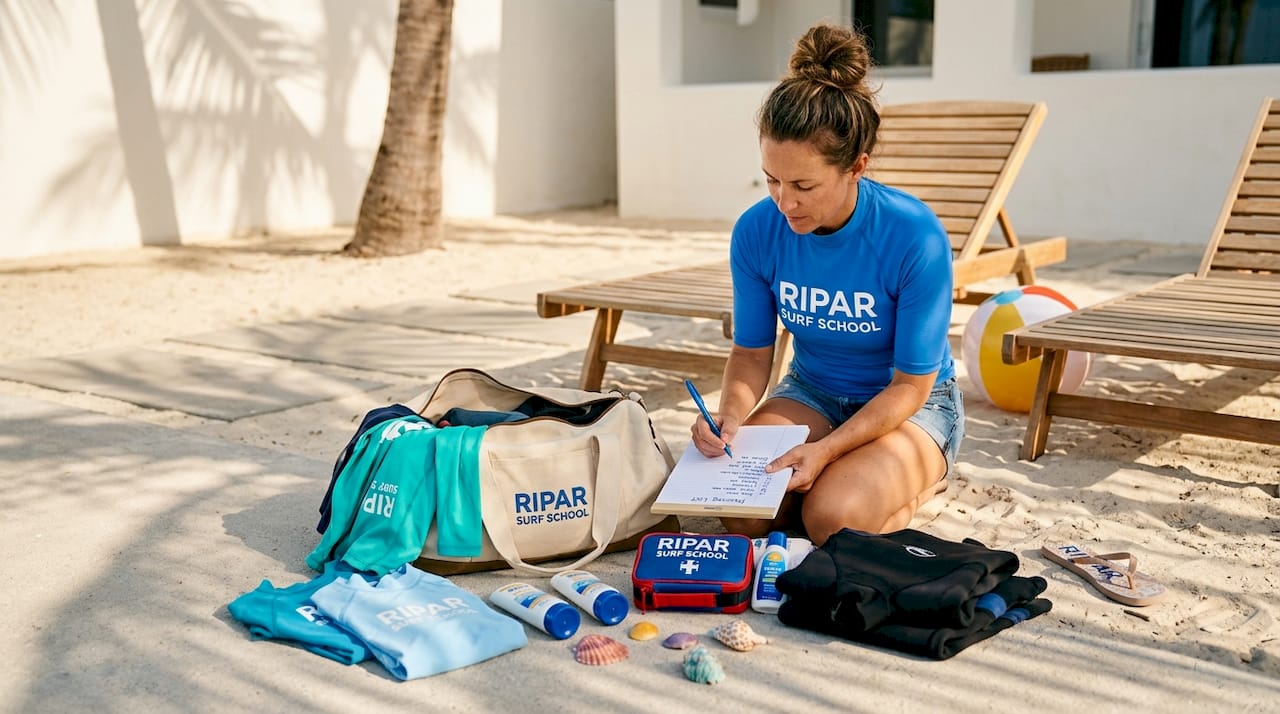
The packing essentials principle is simple: bring what you need and nothing you can rent or buy at your destination. Most surf camps and beach towns have board rentals, spare wax, and basic gear available locally.
Activities for the whole family beyond the waves
Not every family member wants to surf every day. Even the keenest surfer kids need a break. Building a mixed activity schedule is what separates a genuinely great family surfing vacation from one that ends in exhaustion or complaints by day three.
Here is how to structure your activity mix:
Morning surf sessions when conditions are typically at their best, usually before 10 a.m. Keep lessons to 90 minutes for young kids to avoid burnout.
Midday break for lunch, rest, and free time at the beach or pool. This is non-negotiable for younger children and honestly better for adults too.
Afternoon exploration with beach games, snorkeling, or a cultural excursion. Many surf destinations sit near national parks, fishing villages, or historical sites worth a short visit.
One or two dedicated non-surf days per week for trips longer than five days. These are ideal for boat trips, wildlife tours, or simply exploring local markets and restaurants.
Many surf destinations now offer structured kids’ programs through local surf schools. These flexible daily programs mix water safety, basic surf technique, and beach games so children stay engaged without needing adult supervision every minute. For non-surfing parents or partners, this is genuinely freeing.
For teens specifically, involving them in planning the itinerary increases buy-in. Let them pick one afternoon activity per day, whether that is snorkeling, skateboarding, or a local food tour. That small amount of ownership changes the group dynamic noticeably.
Planning your surf trip itinerary and logistics
This is where most family surf trip planning guide advice falls short. Getting the destination right matters. So does the packing. But travel logistics with children is its own challenge, and poor planning here can unravel an otherwise great trip.
Start with transfers. All-inclusive transfer packages from resorts, particularly for remote destinations, are worth every penny when you are managing luggage, boards, and tired children. Long taxi rides or unorganized boat connections become genuinely stressful with young kids in tow. Book transfers before anything else.
Seasonal timing affects both surf quality and family comfort. Here is a general planning reference:
Destination | Best surf season | Family comfort notes |
Portugal (Peniche) | September to April | Mild temps, manageable crowds, wetsuit needed in winter |
Costa Rica | December to April (dry) | Lower humidity, calmer conditions, peak family travel season |
Mentawai, Indonesia | April to October | Consistent swell, dry season, best for family resort experience |
Hawaii (Waikiki) | Year-round | Summer waves gentler and better for beginners |
Budget planning is another area families underestimate. Portugal surf camp budgeting looks different from a Mentawai resort package. Build in a contingency fund of about 15 percent on top of your estimated costs to cover gear rentals, unexpected meals out, or activity add-ons.
Key logistics tips for your surf trip preparation workflow:
Book surf camps and lessons at least 6 to 8 weeks in advance during peak season
Confirm your accommodation has secure, dry board storage if you are bringing your own equipment
Check visa and entry requirements early, especially for Indonesia and Costa Rica
Pre-download offline maps, translation apps, and your destination’s local surf forecast service
Communicate daily schedules clearly with kids the night before to reduce morning friction
If you are working on a surf trip itinerary planning guide for the family, Portugal’s surf holiday guide is a strong starting point for understanding what a well-structured week looks like in practical terms.
My honest take on surf trips with families
I have watched hundreds of families arrive at surf camps with a rigid plan and leave wishing they had been more flexible. The families who have the best experiences are almost never the best-prepared ones on paper. They are the ones who treat unexpected flat days as beach exploration days, who laugh when a seven-year-old refuses to get back in the water, and who adjust the plan without drama.
The biggest thing families overlook is the skill-level gap within the group. When one parent surfs at an intermediate level and the kids are true beginners, you need two separate lesson tracks running simultaneously. Most good surf camps handle this without you even asking. But if you book independent lessons, you need to plan for it explicitly.
Weather is unpredictable. Every surf family trip I have seen go sideways involves someone who built an itinerary around perfect surf conditions every single day. Plan for two or three days of poor surf per week-long trip, and fill those slots in advance with backup activities you actually want to do.
The one thing I keep coming back to is surf camps with family-specific programs. They are not just convenient. They change the social experience of the trip in ways that independent hotel stays simply cannot replicate. Your kids surf alongside other kids. You connect with other surf parents. The family adventure aspect of a surf camp is something the research confirms but only lived experience really explains.
The memories families take home from surf trips are almost never about perfect waves. They are about the first time a child stands up on a board. That is worth planning carefully for.
— Fernando
Plan your family surf trip with Riparsurfschool
Riparsurfschool has been running surf lessons and surf camps at Praia Areia Branca, near Peniche and Ericeira, since 2001. The school offers group and private lessons designed for all skill levels, including complete beginners and children taking their first steps on a board. Certified local instructors, surf equipment on-site, and a beach village atmosphere make it one of the most family-friendly surf experiences in Portugal.
Whether you are planning a week-long camp or a few lessons as part of a broader Portugal trip, the easiest way to get started is to book surf lessons directly online. You can also explore the full surf camp booking options if you want accommodation and instruction bundled together. Riparsurfschool keeps group sizes small, so your family gets real coaching time in the water, not just a crowd management session on the beach.
FAQ
What are the best surf spots for families?
Waikiki in Hawaii, Tamarindo in Costa Rica, and Peniche in Portugal rank among the best family-friendly surf destinations because they offer gentle beginner waves, certified instructors, and strong family amenities. Portugal’s beaches are particularly good for mixed-skill families where some members are beginners and others are more experienced.
How do I build a surf trip planning checklist for kids?
Start with surf gear: rash guards, wetsuits, reef-safe sunscreen, and ear plugs. Add a first aid kit, insect repellent, and familiar entertainment for travel days. The core principle is packing versatile items that serve multiple uses rather than hauling single-purpose gear.
When should I book surf lessons for a family trip?
Book surf lessons and surf camps at least 6 to 8 weeks before your trip during peak travel seasons. Family-specific programs and private lessons fill up quickly at quality surf schools, especially in summer and during school holiday periods.
Are surf camps better than hotels for family surf vacations?
Surf camps generally offer a better experience for families because they include on-site instruction, communal activities, and social connections with other surf families. The structured environment also removes planning friction since meals, lessons, and gear are typically handled in one place.
How do you keep non-surfing family members entertained?
Mix surf sessions with snorkeling, beach games, cultural day trips, and local food experiences. Most quality surf destinations have enough surrounding activities to keep non-surfers fully engaged. Scheduling dedicated non-surf days every few days prevents burnout and gives the whole family space to enjoy the destination beyond the water.
Recommended
Comments