

Dining Options for Surfers: A Portugal Surf Camp Guide

TL;DR:
Choosing surf camps with quick, recovery-focused meals enhances energy and social bonding after sessions. Riparsurfschool in Portugal structures lesson schedules around on-site dining, promoting faster recovery and community. Proper meal timing and quality support better performance, satisfaction, and overall surf holiday experiences.
Dining options determine how quickly you recover, refuel, and enjoy your time between sessions — so filter surf camps and lessons by food access before you book. A two-hour session in overhead surf burns about 600–800 calories, and without fast, recovery-focused food nearby, that deficit hits hard. Riparsurfschool, operating out of Praia Areia Branca since 2001, builds its schedule around this reality.
Three things to prioritize when booking:
Speed and availability: Food must be ready within 30 minutes of finishing a session.
Recovery-focused menu: Carbs and protein together, not just snacks.
On-site or guaranteed nearby options: No hunting for a restaurant in wet boardshorts.
Use these three as your first booking filter. If an operator can’t answer all three clearly, keep looking.
Table of Contents
Why dining matters for surfers: energy, timing, and the guest experience
Surfing is more physically demanding than it looks. Paddling, duck-diving, and popping up repeatedly taxes your shoulders, core, and legs simultaneously. Post-session, your muscles need glycogen replenishment fast, and dehydration from saltwater exposure compounds the fatigue.
Pre-surf nutrition matters just as much: eating a heavy meal within an hour of paddling out raises your cramping risk and slows your reaction time in the water. The practical rule is small, digestible fuel before a session and a full recovery plate after.
Beyond physiology, dining shapes the social rhythm of a surf camp. The meal after a morning session is where guests decompress, swap wave stories, and bond with instructors. On-site dining captures that “après-surf” moment by keeping everyone together rather than scattering guests across town to find food. That dwell time builds the community feel that separates a memorable surf holiday from a forgettable one.
Key physiology points to keep in mind:
Saltwater exposure dulls your palate, so bold, savory flavors hit harder and feel more satisfying post-session.
Rehydration is as urgent as eating — water and electrolytes before the meal, not after.
Skipping post-surf food entirely leads to energy crashes that ruin the afternoon.
What surf-friendly dining actually looks like
Surf-friendly dining is functional by design: barefoot-OK seating, fast service, and bold flavors are deliberate choices, not aesthetic ones. Here’s what to look for:
Menu features:
Hearty recovery plates: rice and fresh fish, protein bowls, thick stews
Grab-and-go snacks available before sessions (banana, small protein shake, energy bar)
Hydration options: coconut water, electrolyte drinks, fresh juice alongside the usual sodas
Bold, high-flavor dishes — garlic, spice, sweet finishes — that cut through saltwater-dulled taste buds
Service and layout:
Extended hours and takeaway options aligned with early-morning and late-afternoon sessions
Open-air or outdoor seating so wet gear isn’t a problem
No dress code, or at minimum a “no shoes, no problem” policy
QR ordering or streamlined service that reduces wait time when a dozen hungry surfers arrive at once
Dietary accommodations:
Vegan and gluten-free options clearly labeled, not improvised on request
Staff who can confirm ingredients for allergy concerns without a long back-and-forth
Pro Tip: When you arrive at a surf-camp eatery post-session, order your protein and carbs together in one plate rather than starting with a snack. A banana held you over before the session; now your muscles need the full recovery hit.
On-site dining vs. local cafés: which works better for you?
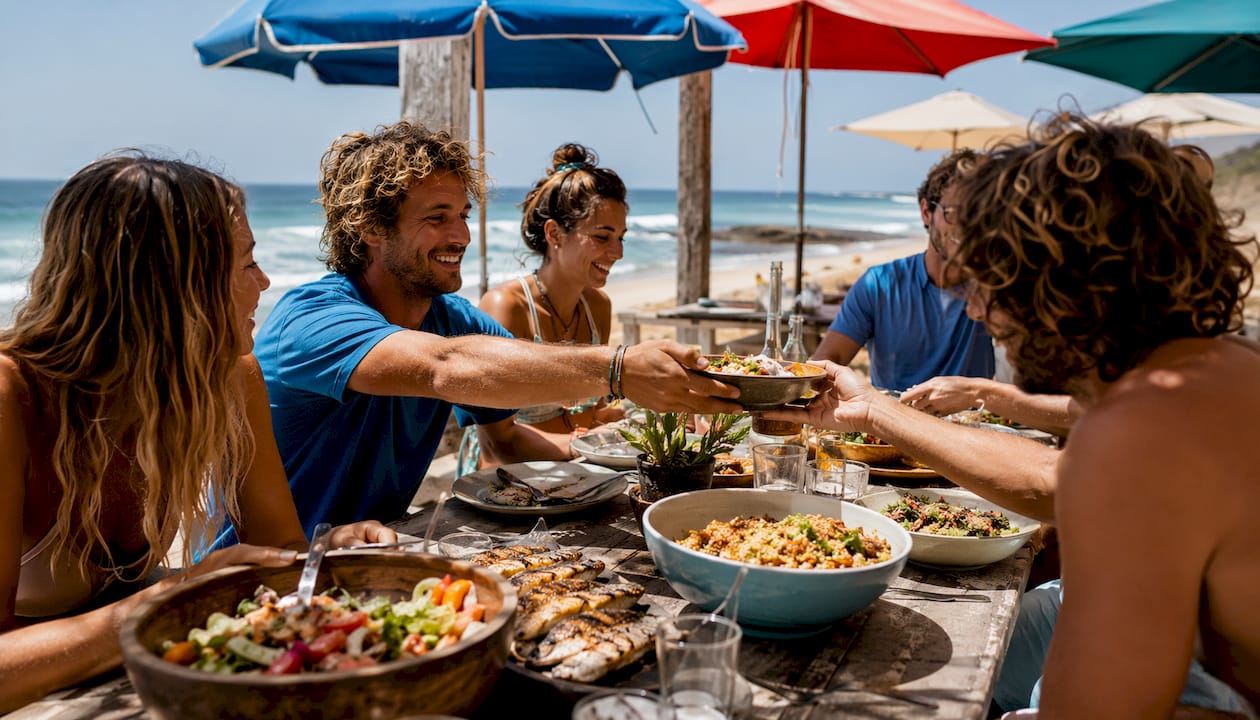
Factor | On-site dining | Local cafés and bars |
Convenience | High — food is steps away | Moderate — requires walking or driving |
Speed | Fast, timed to sessions | Variable, depends on the spot |
Menu variety | Focused, recovery-oriented | Broader, more authentic local options |
Cost | Often bundled in camp price | Pay per meal, can add up |
Local flavor | Limited | High — fresh regional ingredients |
Community feel | Strong — guests eat together | Lower — dispersed across town |
On-site dining wins for beginners, short-schedule groups, and families who don’t want to spend decision energy on where to eat after every session. Combining lodging and dining reduces friction and improves the overall perceived value of a stay — a consistent finding in hospitality research.
Local cafés and bars earn their place when you want to experience Portuguese food culture directly: fresh grilled fish, petiscos (small plates), and regional soups made with seasonal produce. Staying near local surf spots often means these places are a short walk away, which makes the tradeoff manageable even on a tight schedule.
Before booking, confirm with the operator:
What are the kitchen hours relative to lesson times?
Is there a sample menu or meal plan to review?
Are partner café discounts or meal credits included?
Can dietary restrictions be accommodated without advance notice?
A dining checklist to use when booking surf lessons or a camp
Ask these questions before you commit to any surf camp or lesson package:
What are the meal hours? They should overlap with your post-session window, not end before lessons finish.
Is food included or pay-per-meal? Understand the cost structure upfront.
What does a typical recovery plate look like? A vague answer (“we have food nearby”) is a red flag.
Can you see a sample menu? Any reputable operator has one ready.
How fast is service after a session? Aim for under 30 minutes from beach to plate.
Are dietary needs accommodated? Vegan, gluten-free, and allergy needs should be standard, not special requests.
What’s the cost per meal if not included? Budget a moderate amount per meal at Portuguese surf-town cafés for a solid recovery plate.
A strong on-site dining offering means: meals timed to sessions, a menu with real protein and carbs, and staff who know the schedule. A weak one means: a vending machine, a café that closes at noon, or a “there are restaurants in town” shrug.
Simple nutrition rules and sample meals for Portugal surf camps
The core rule: eat light before, eat well after.
Pre-surf snacks (30–60 minutes before paddling out):
Banana with a small protein shake
Toast with peanut butter
A handful of nuts and a piece of fruit
Heavy meals before a session increase cramping risk and slow paddling response. Keep it small and digestible.
Post-surf recovery plates:
Meal | Key nutrients | Portugal equivalent |
Rice and grilled fish | Carbs + lean protein | Arroz de peixe (fish rice) |
Protein bowl | Carbs + protein + healthy fats | Rice, beans, egg, avocado |
Hearty soup and bread | Carbs + sodium replenishment | Caldo verde or açorda |
Fish tacos or wraps | Carbs + protein + bold flavor | Fresh sardine or cod wrap |
Beverages: Coconut water and water first, then a sports drink if the session was long. A cold beer is a reasonable treat after a full recovery meal, not a substitute for rehydration.
Portuguese local cuisine fits surf recovery well. Fresh seafood, rice-based dishes, and vegetable soups are calorie-dense without being heavy. For vegan guests, rice and bean combinations are widely available; for gluten-free needs, most fish and rice dishes qualify naturally. Always confirm with staff, since sauces and breading vary.
How Riparsurfschool structures dining for guests
Riparsurfschool has been running surf lessons and surf camp packages at Praia Areia Branca since 2001, with a team of local, certified instructors who know how meal timing affects lesson quality. The facility includes a deck area with showers and direct access to local cafés and bars, so guests move from the water to food without logistical friction.
Fernando, a Riparsurfschool contributor, coordinates lesson schedules with meal windows so that morning sessions end with enough time for a proper recovery plate before any afternoon water time. Riparsurfschool’s surf camp packages include accommodation options with partner meal arrangements, and the surf houses offer communal spaces where guests eat together.
Riparsurfschool’s approach keeps meal timing tied to the lesson schedule rather than treating food as an afterthought. Guests at Praia Areia Branca have local cafés within walking distance and on-site facilities that support the full recovery routine — shower, eat, rest, repeat.
What guests can expect when booking:
Clear answers to the checklist questions above, before arrival
Beginner-friendly meal windows that don’t require guests to figure out local dining on their own
A community dining environment where instructors and guests eat together, which is where a lot of the real learning happens
Surf lodges organized around communal meals consistently produce stronger guest satisfaction than those that leave food entirely to chance. Riparsurfschool’s setup reflects that.
Key Takeaways
Dining options shape a surfer’s recovery, energy, and overall camp experience more directly than most booking guides acknowledge.
Point | Details |
Recovery nutrition is urgent | A two-hour surf session burns 600–800 calories; eat carbs and protein within 30 minutes of finishing. |
Pre-surf eating requires restraint | Small, digestible snacks before sessions reduce cramping and protect paddling performance. |
On-site dining reduces friction | Bundled meals keep guests on property, support community bonding, and remove decision fatigue. |
Ask five specific questions | Hours, menu, speed, dietary options, and cost structure should all be confirmed before booking. |
Riparsurfschool covers the basics | Established in 2001, Riparsurfschool pairs lesson schedules with local café access and communal surf-house dining at Praia Areia Branca. |
What operators get wrong about surf-camp dining
Most surf-camp guides treat food as a footnote. The real picture is different: meal timing is an operational decision that affects lesson quality, guest energy, and how long people stay happy on property. When a camp’s kitchen closes before the afternoon session ends, or when the only nearby option is a 20-minute drive, beginners pay the price in fatigue and frustration.
The underrated move for any surf camp is designing meal windows around the water schedule, not around standard restaurant hours. Guests who eat well recover faster, show up to the next session with better energy, and leave better reviews. That’s not a hospitality insight — it’s basic sports physiology applied to a business model. Riparsurfschool’s location at Praia Areia Branca, with local cafés steps from the beach, is a structural advantage that most inland or remote camps simply can’t replicate.
Riparsurfschool makes meal planning easy for surf-camp guests
Booking a surf holiday in Portugal shouldn’t mean figuring out your recovery nutrition on the fly. Riparsurfschool, operating since 2001 at Praia Areia Branca near Peniche, structures its surf camp packages so that lesson schedules, accommodation, and local dining access work together. Guests staying at the Riparsurfschool surf house get communal spaces, shower facilities, and immediate access to local cafés — no guesswork about where to eat after a session.
If you have specific dietary needs or want to see meal options before booking, contact Riparsurfschool directly. Check pricing and package plans to find the right fit, then book your surf camp online to lock in your dates.
Useful sources
A Surfer’s Guide to the Best Food on Oahu’s North Shore — calorie-burn data, pre/post-surf nutrition rules, flavor physiology, and surf-friendly dining features
Glasgow culinary stars takeover Scotland’s first inland surf resort — operator insight on on-site dining as a guest-satisfaction and dwell-time lever
The Beach Co, Bracklesham — real-world example of extended hours, takeaway shacks, and après-surf dining aligned with surf sessions
Land of Rizka — surf-hostel example of QR ordering, long hours, and surf-and-dine community model
How to Combine Lodging and Dining for a Better Trip — hospitality research on friction reduction and guest satisfaction through integrated dining
Riparsurfschool — brand proof points, instructor credentials, facility details, and booking pages
Recommended
Comments