

Master surf instructor qualities for effective teaching

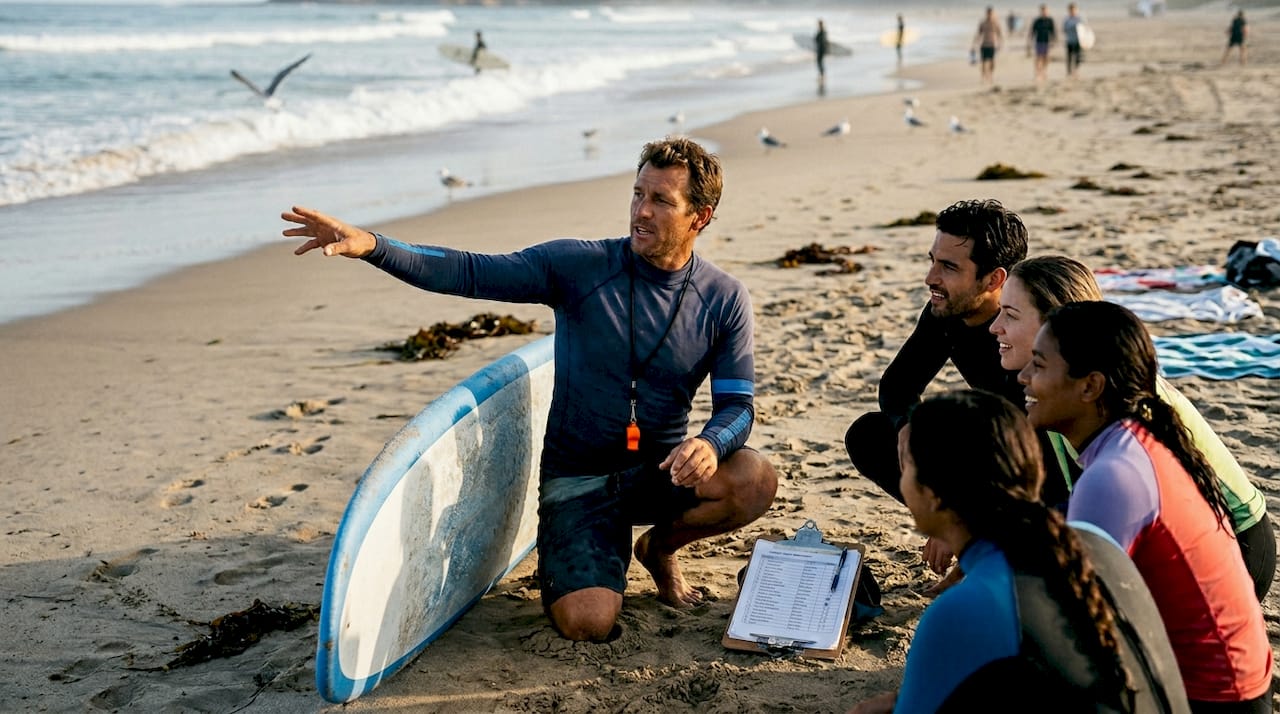
Becoming an exceptional surf instructor requires more than just surfing skills. You need a unique blend of ocean knowledge, physical endurance, and interpersonal abilities to keep learners safe, engaged, and progressing. The best instructors combine technical expertise with motivational skills that transform nervous beginners into confident wave riders. This article breaks down the essential qualities every surf instructor must develop, from risk assessment and rescue readiness to communication and coaching competencies that build learner loyalty.
Table of Contents
Key Takeaways
Point | Details |
Ocean knowledge and safety | Builds risk assessment, rip current identification, venue analysis, water safety protocols, and first aid expertise to prevent accidents and support learner safety. |
Physical fitness endurance | Enduring stamina for long sessions, strong trunk stability, efficient paddling, and capable rescues ensure safety and enable effective instruction. |
Soft skills and communication | Patience, clear communication, and responsiveness shape learner confidence, engagement, and progress. |
Coaching benchmarks predict loyalty | Elite benchmarks and coaching competencies correlate with higher learner loyalty by building trust and consistent results. |
Master essential ocean knowledge and water safety
Ocean knowledge and safety include risk assessment, rip current identification, venue analysis, water safety protocols, first aid, and lifeguard certification. Without this foundation, even the most charismatic instructor puts learners at risk. Understanding how currents shift throughout the day, recognizing when conditions exceed student abilities, and knowing exactly where sandbars form gives you the situational awareness to prevent accidents before they happen.
Venue analysis transforms your teaching effectiveness. You scan the break, identify the safest entry and exit points, note where rip currents pull strongest, and choose zones matching each student’s skill level. This pre-session assessment takes five minutes but prevents hours of struggle and potential rescues. When conditions change mid-session, your ocean literacy lets you adapt instantly, moving the group to calmer water or calling the lesson early.
First aid knowledge and lifeguard certification separate professional instructors from weekend enthusiasts. Cuts from fins, jellyfish stings, exhaustion, and panic attacks happen regularly in surf instruction. Your certification ensures you respond correctly under pressure, maintaining composure while treating injuries and calming distressed learners. Following water safety protocols minimizes accidents and increases student trust, creating the psychological safety necessary for effective learning.
Key ocean knowledge skills:
Identifying rip currents by foam patterns, water color changes, and debris movement
Reading swell direction, period, and size to predict wave behavior
Assessing wind effects on wave quality and learner safety
Recognizing signs of hypothermia, exhaustion, and panic in students
Executing rescue protocols for various emergency scenarios
Pro Tip: Create a venue checklist you run through before every session. Note tide stage, current direction, hazard locations, and escape routes. This ritual builds pattern recognition that becomes instinctive, letting you spot danger signals instantly during group surf lessons.
Build physical fitness and surfing-specific endurance
Physical fitness includes stamina for long sessions, trunk stability, and strength for paddling and rescues. Teaching three back to back sessions while demonstrating techniques, pushing students into waves, and remaining alert for safety issues demands cardiovascular endurance most people underestimate. Your fitness level directly impacts teaching quality. Fatigue clouds judgment, slows reaction time, and makes you less attentive to student struggles.
Trunk stability and thoracic mobility improve paddling power and injury prevention. Elite instructors generate more force per stroke because their core transfers energy efficiently from arms to board. This biomechanical advantage lets you paddle out repeatedly without exhausting yourself, conserving energy for the teaching and safety monitoring that matter most. Poor trunk control contributes to lower back pain that ends many promising instructor careers prematurely.
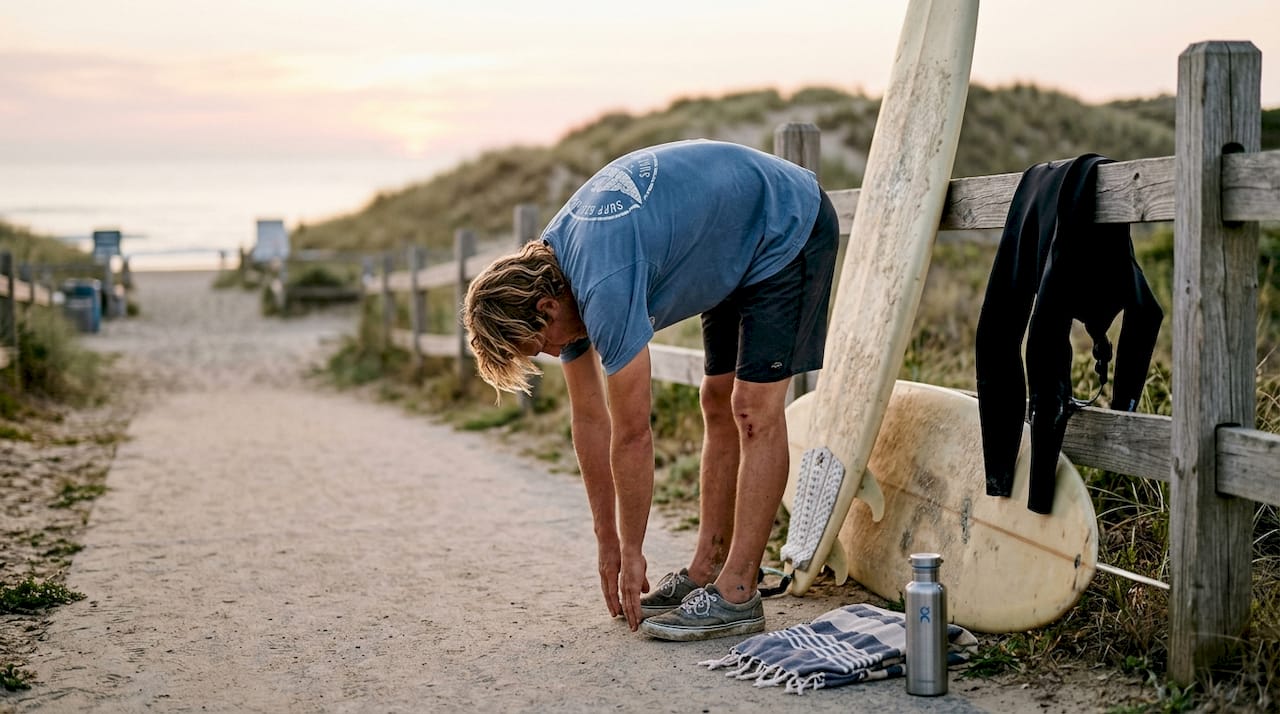
Better fitness proves essential during rescues. When a panicked student needs help 50 meters offshore in choppy conditions, your conditioning determines whether you reach them quickly or struggle yourself. The ability to sprint paddle, secure the distressed swimmer, and tow them to safety while managing your own exertion requires a fitness base most recreational surfers never develop.
Physical preparation priorities:
Cardiovascular training for sustained paddling across multiple sessions
Core strengthening exercises targeting rotational stability
Shoulder mobility work preventing overuse injuries
Interval training simulating rescue sprint efforts
Yoga for flexibility and body awareness
| Fitness Metric | Elite Instructor | Typical Instructor | Performance Impact | |----------------|------------------|--------------------|--------------------|| | Continuous Paddling | 45+ minutes | 20-30 minutes | Session duration capacity | | Sprint Paddle Speed | 2.8+ m/s | 1.9-2.3 m/s | Rescue response time | | Trunk Rotation ROM | 85+ degrees | 65-75 degrees | Paddling efficiency | | Session Recovery | Under 2 hours | 4-6 hours | Daily teaching volume |
Pro Tip: Schedule one dedicated fitness session weekly focused purely on surf-specific conditioning. Combine paddle intervals with core stability exercises and finish with mobility work. This targeted approach builds the exact physical qualities your teaching demands without generic gym routines that miss surfing’s unique movement patterns. Review booking terms to understand typical session lengths and plan your conditioning accordingly.
Develop soft skills to inspire and connect with learners
Soft skills include patience, enthusiasm, communication, motivation, and interpersonal competence. These qualities determine whether students leave your lesson frustrated or inspired. Technical knowledge means nothing if you cannot translate it into language beginners understand or maintain composure when someone struggles with the same concept for the twentieth time.
Patience helps instructors manage varied learner paces and frustrations. Every student progresses differently. Some pop up on their first wave while others need dozens of attempts to find their balance. Your ability to celebrate small wins, reframe failures as learning opportunities, and maintain genuine encouragement through repeated mistakes creates the supportive environment where real learning happens. Impatience telegraphs instantly through body language and tone, shutting down the psychological safety students need to take risks.
Clear communication builds understanding and trust. Breaking down complex movements into simple cues, using analogies that connect to students’ existing knowledge, and checking comprehension before moving forward prevents the confusion that stalls progress. Great instructors read body language, noticing when verbal explanations fail and switching to physical demonstrations or hands-on adjustments. This adaptive communication style meets each learner where they are.
Enthusiasm proves contagious and motivates learners to keep improving. Your genuine excitement about surfing and teaching energizes students, helping them push through discomfort and fatigue. When you radiate passion for the ocean and celebrate their progress authentically, students internalize that positive energy and develop intrinsic motivation that carries them beyond your lessons.
Essential soft skill practices:
Active listening to understand individual student concerns and goals
Positive reinforcement emphasizing effort and improvement over perfection
Adaptive teaching adjusting explanations and demonstrations to learning styles
Emotional regulation maintaining calm during student panic or frustration
Cultural sensitivity respecting diverse backgrounds and comfort levels
Interpersonal competence enhances the learning environment and loyalty. Students remember how you made them feel long after forgetting specific techniques you taught. Creating genuine human connections, showing interest in their lives beyond surfing, and fostering community among your student groups builds the relationships that generate referrals and repeat bookings. This relational foundation distinguishes memorable instructors from forgettable ones at any surf school in Portugal. Ready to experience this teaching approach firsthand? Book online to see these principles in action.
Compare surf instructor qualities and choose your development focus
Understanding how different qualities contribute to teaching effectiveness helps you prioritize your professional development strategically. Each quality category impacts student outcomes differently, and development difficulty varies based on your starting point and available resources.
Quality | Safety Impact | Engagement Impact | Development Time | Maintenance Required |
Ocean Knowledge | Critical | Moderate | 6-12 months | Ongoing location study |
Physical Fitness | High | Low | 3-6 months | 3-5 sessions weekly |
Soft Skills | Low | Critical | 12-24 months | Daily practice |
Technical Surfing | Moderate | High | Years | Continuous |
Prioritizing skill development depends on your current strengths, teaching context, and career goals. If you already surf at an advanced level but lack teaching experience, investing heavily in soft skills and communication training delivers the highest return. Conversely, newer surfers with natural interpersonal abilities should focus on building ocean knowledge and physical conditioning before taking on students.
Safety-critical qualities demand immediate attention regardless of other strengths. No amount of charisma compensates for inability to recognize dangerous conditions or execute rescues effectively. Start with lifeguard certification and first aid training, then build ocean literacy through mentorship with experienced instructors who can point out subtle environmental cues you might miss.
“Elite surfers exhibit greater thoracic yaw and trunk control impacting performance; 70% of beginner injuries stem from poor skills. Developing trunk stability not only improves your teaching endurance but directly reduces injury risk for both you and your students.”
Development pathway recommendations:
Beginners: Focus on ocean knowledge and fitness before teaching independently
Intermediate instructors: Deepen soft skills and coaching methodologies
Advanced instructors: Refine specialty skills like video analysis or competition coaching
All levels: Maintain physical conditioning and update safety certifications annually
Your development focus should also consider the student populations you serve. Teaching children requires different soft skill emphasis than adult beginners or intermediate surfers. Kids need more patience, creativity in explanations, and energy management, while adults often benefit from detailed technical breakdowns and explicit connections to their prior athletic experiences. Learn more about instructor qualities and teaching approaches from your surf instructor perspective.
Explore professional surf lessons and training at Ripar Surf School
Applying these surf instructor qualities in real teaching situations accelerates your development far beyond theoretical study alone. Ripar Surf School combines expert instruction with Portugal’s world-class waves, creating the ideal environment for both aspiring instructors and learners to develop their skills. Our certified instructors embody the qualities covered in this article, demonstrating how ocean knowledge, physical readiness, and interpersonal excellence create transformative learning experiences.

Whether you are working toward instructor certification or simply want to experience what great surf teaching looks like, our group surf lessons provide hands-on learning in a supportive community atmosphere. Located in the authentic beach village of Praia Areia Branca, we offer the intimate, quality-focused instruction that builds real skills and confidence. Our approach to surf education in Portugal emphasizes safety, progression, and genuine connection to the ocean. Ready to take your next step? Book online and experience the difference that truly qualified instruction makes.
Frequently asked questions
What certifications are required to become a surf instructor?
Lifeguard certification and first aid training are standard requirements for surf instructors. Most reputable surf schools and insurance providers mandate current certifications in both areas before allowing you to teach independently. Additional qualifications like CPR, oxygen administration, and surf-specific instructor courses from organizations like ISA or ASI strengthen your credentials and employability. These certifications ensure you can respond effectively to the medical and aquatic emergencies that occasionally occur during surf instruction.
How important are soft skills compared to physical fitness?
Soft skills predict 75% of learner loyalty, while physical fitness supports safety and endurance during teaching. Both prove critical but serve different functions in your instructor toolkit. Physical conditioning enables you to teach safely across multiple sessions and execute rescues when needed, forming the baseline capability requirement. Soft skills determine whether students enjoy learning from you, progress effectively, and return for additional lessons. The most successful instructors excel in both domains, using fitness to sustain their teaching capacity and interpersonal abilities to maximize student outcomes.
What are common challenges surf instructors face during rescues?
Longer discovery times and distractions contribute to 20% of non-satisfactory lifeguard simulations. Instructors managing multiple students simultaneously can miss early signs of distress, delaying rescue initiation. Environmental distractions like changing wave sets, other water users, and equipment issues divide attention from continuous student monitoring. Effective instructors develop systematic scanning patterns, position themselves strategically for maximum visibility, and maintain heightened awareness even during routine instruction moments. Regular rescue simulation training helps build the automatic response patterns that overcome these challenges under real emergency pressure.
Can someone with average surfing ability become a great instructor?
Absolutely. Teaching excellence depends more on communication skills, safety knowledge, and coaching ability than personal surfing performance. Many outstanding instructors surf at intermediate levels but excel at breaking down fundamentals, diagnosing student errors, and creating supportive learning environments. Your surfing should be solid enough to demonstrate basic techniques and handle the conditions where you teach, but you do not need to be a high-performance surfer. Focus on developing the ocean knowledge, physical conditioning, and soft skills that directly impact student learning rather than pursuing advanced maneuvers irrelevant to beginner instruction.
How long does it take to develop the qualities of an effective surf instructor?
Developing core instructor qualities typically requires 12 to 24 months of focused effort combining formal training, mentored teaching experience, and deliberate skill practice. Ocean knowledge and physical fitness can reach baseline competency within 6 months of intensive work, while soft skills and coaching intuition develop more gradually through repeated student interactions. Most instructors continue refining their abilities throughout their careers, deepening expertise in specialty areas and adapting to evolving teaching methodologies. Starting with proper certifications and mentorship accelerates this timeline significantly compared to self-taught approaches that often embed ineffective habits requiring later correction.
Recommended
Comments