

Ripar's Booking Checklist for Dietary Needs at Portugal Surf Camps

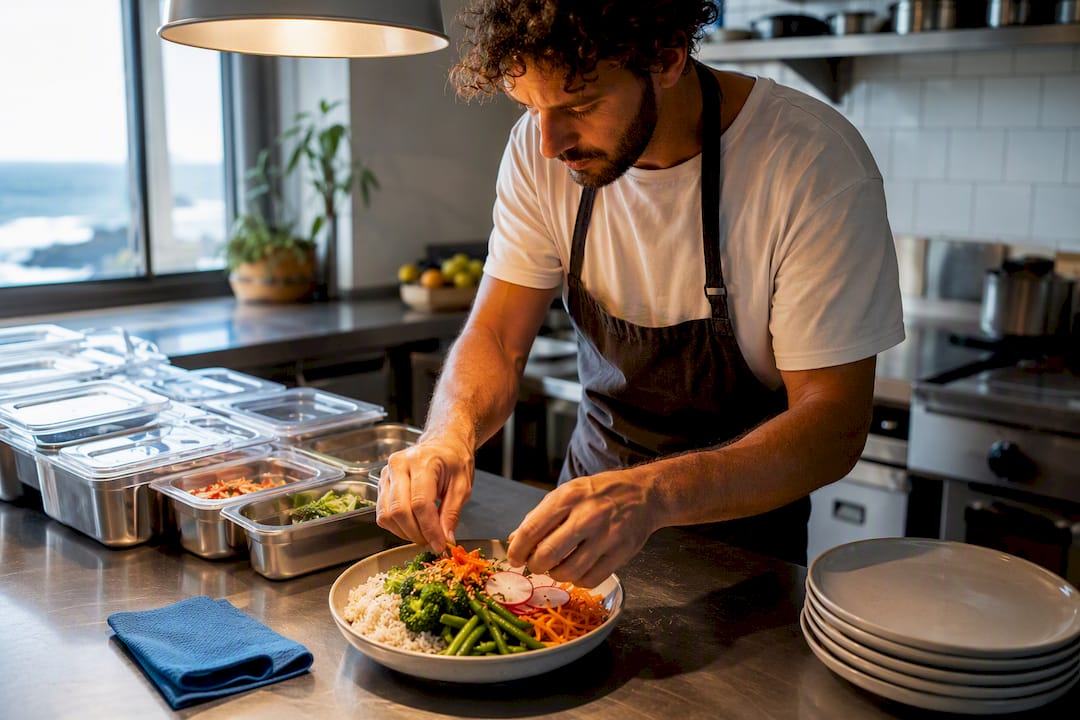
Yes, most surf camps in Portugal can accommodate common dietary restrictions when you tell them before you book. Vegetarian, vegan, gluten-free, and dairy-free needs are usually straightforward. Severe allergies need written confirmation from the camp and require you to travel with your own emergency medication. When in doubt, call and get the answer in writing before you pay a deposit.
TL;DR:
Surf camps in Portugal generally handle vegetarian and vegan diets easily, but require at least a few days’ notice for gluten-free, dairy-free, or allergen-free meals.
Camps that take allergens seriously often plan menus in advance, use separate prep areas, and follow food safety practices like HACCP, with clear labeling and direct communication.
When booking, providing detailed allergen information, reaction severity, emergency contacts, and confirming capacity for your restrictions in writing is essential for safety.
Camps with small kitchens and fewer guests can more reliably accommodate dietary needs, especially if restrictions are flagged early and confirmed in advance.
For severe allergies, always travel with up-to-date medication, confirm staff awareness, and get written emergency procedures, as complete allergen-free environments are unrealistic.
Table of Contents
Which Dietary Needs Do Surf Camps Typically Handle?
Vegetarian and vegan requests are the easiest for a Portuguese surf camp kitchen to handle. Most operators already build meals around fresh vegetables, rice, beans, and local fish, so swapping out meat rarely disrupts the kitchen’s rhythm. Some camps state outright that they can cater for food allergies, vegetarians, and vegans as long as they know in advance, and that “in advance” part matters more than most guests assume.
Gluten-free and lactose-free diets sit one step up in complexity. A camp can usually manage them, but cross-contamination becomes a real issue the moment bread, pasta, or dairy-based sauces are prepped on the same surfaces as everything else. Give the kitchen a few days’ notice rather than mentioning it at check-in, and the risk drops considerably.
Nut and shellfish allergies are where things get serious. Portugal’s coastal cuisine leans heavily on shellfish, and many camps use nuts in granola, sauces, or desserts without a second thought. A camp needs explicit confirmation that it can source and prepare a nut-free or shellfish-free version of each meal, not just a vague “we’ll figure it out.”
Guests managing multiple restrictions at once, or a medically prescribed diet like a low-FODMAP or renal diet, often need to bring some staples themselves. No camp kitchen in a small beach village stocks every specialty product, and it’s fair to expect gaps.
Here’s a rough breakdown of what to expect by diet type:
Vegetarian and vegan: Commonly available, often with no extra notice needed, though variety may be limited on quieter weeks.
Gluten-free and dairy-free: Widely possible but require advance notice to prevent cross-contact during prep.
Nut and shellfish allergies: Need explicit, written confirmation because of contamination risk in shared kitchens and from suppliers.
Multiple or medically prescribed diets: May require you to supply certain staples the camp doesn’t normally carry.
Meals are typically part of the surf camp package, and knowing what dining looks like at a Portugal surf camp before you arrive makes the whole conversation with the kitchen easier.
How Camps Manage Restrictions Behind the Scenes
A camp that takes dietary restrictions seriously plans the menu around them, not the other way around. That means ordering allergen-free ingredients ahead of time, prepping those dishes separately, and labeling them clearly so nobody on staff serves the wrong plate to the wrong guest.
Service format matters more than people realize. A buffet spread looks generous, but it’s a cross-contamination minefield: the same serving spoon touches the pasta salad and then the potato salad, and a shellfish tray sits three inches from a nut-free one. Individually plated meals, prepared to order, are safer for anyone with a serious allergy because the kitchen controls every step instead of hoping guests self-police the buffet line.
Ask directly whether the camp follows HACCP or a similar food-safety framework. This isn’t a throwaway question. HACCP requires documented procedures for identifying and controlling contamination risks at each stage of food handling, and a camp that can answer confidently, rather than looking confused by the acronym, is telling you something real about how it runs its kitchen.
It also helps to ask whether allergen-free dishes are made on a dedicated surface or with separate utensils. Camps with tight, made-to-order kitchens can usually say yes without hesitation. Larger operations juggling dozens of guests at once sometimes can’t guarantee it, and that’s worth knowing before you commit.
Pro Tip: Ask the camp to describe, in their own words, what happens between “we got your allergy note” and “your plate arrives at the table.” A vague answer is a red flag; a specific one, naming who preps it and where, is a good sign.
Menus planned around known restrictions days or weeks ahead
Separate prep areas or timing for allergen-free dishes
Clear labeling so serving staff never guess
A direct answer about HACCP or equivalent food-safety practices
What to Tell the Camp When You Book
The information you hand over at booking determines how well the kitchen can plan. Vague notes like “gluten sensitivity, please help” leave too much room for error. Specific details give the cook something to work with.
Name the exact allergen or condition. “Celiac disease” is different from “gluten sensitivity,” and a shellfish allergy is different from a general seafood dislike. Say which one applies.
Describe reaction severity. Let the camp know if a mistake means mild discomfort or a trip to the hospital. This changes how carefully they need to handle prep.
List medications carried. Mention if you travel with an adrenaline auto-injector, antihistamines, or anything else relevant, and who is responsible for it during the day.
Provide an emergency contact. A phone number the camp can reach quickly if something goes wrong, ideally someone who knows your medical history.
Ask about service format and cost. Find out if meals are buffet or plated, whether a special diet triggers an extra charge, and who on staff actually owns dietary requests.
Ask about prior experience. A camp that has handled your specific allergy before will usually say so, and that experience is worth more than a generic reassurance.
Follow up in writing. Send an email confirming everything discussed, and ask the camp to reply with written confirmation. If the risk is serious, follow up with a phone call rather than relying on email alone.
A short booking message might read: “I’m booking for [dates] and have a diagnosed shellfish allergy with a history of severe reactions. I carry an adrenaline auto-injector. Could you confirm whether your kitchen can guarantee shellfish-free meals, and let me know if there’s an additional cost?” Sending this through the camp’s booking form or directly by email creates a written record you can point back to if anything is unclear later. Reviewing general surf camp logistics before you send it helps you know what else to flag, like room setup or arrival timing.
Severe Allergies and Emergency Preparedness at Camp
Life-threatening allergies change the calculus. No camp, however careful, can promise a completely allergen-free environment, and any operator who claims otherwise is overselling what a small kitchen near the beach can realistically guarantee. What a good camp can do is give you specific, written steps for how it manages the risk.
Always travel with your prescribed emergency medication, and check the expiration date before you pack. An adrenaline auto-injector that expired last spring is worse than useless in a real emergency, and it’s an easy detail to overlook while packing wetsuits and sunscreen.
Confirm exactly who holds or monitors the medication during the day, especially if a child is the one with the allergy. Ask whether staff have been briefed on recognizing a reaction and administering an auto-injector if you’re not immediately reachable, since surf lessons often happen in the water with limited access to a beach bag.
Portugal’s emergency number is 112, the same as the rest of the European Union, and it’s worth confirming with the camp how far the nearest hospital is and how long it typically takes to get there from the beach or accommodation. Camps in smaller coastal villages sometimes sit a real drive from the closest emergency room, which is exactly the kind of detail you want settled before day one, not during an emergency.
Bring medication with a valid expiration date, plus a spare if possible
Confirm who monitors or holds medication during surf sessions
Ask for the drive time to the nearest hospital, not just its name
Get escalation steps in writing, not a verbal reassurance
Never accept “completely allergen-free” as a guarantee, only specific operational steps
Practical Tips for a Smooth Dining Experience
A little preparation on your end goes a long way toward making meals feel normal instead of stressful. Pack a few safe snacks and familiar staples, especially for children or anyone managing multiple restrictions, so there’s always a fallback if a particular meal doesn’t quite work.
Label medications clearly and leave a short written brief with kitchen staff or the group leader at check-in. A single index card listing the allergen, severity, and emergency contact takes two minutes to write and saves a lot of back-and-forth later.
Once you arrive, reconfirm your dietary details directly with the cook rather than assuming the booking notes made it all the way to the kitchen. Ask about mealtime routines: when meals are served, whether you’ll get a heads-up about ingredients in each dish, and who to flag if something looks off.
If you’re traveling with a group or a family, designate one person as the single point of contact for all dietary communication with the camp. Splitting that responsibility across multiple people tends to create confusion, especially in a busy camp kitchen serving a dozen or more guests. Families managing a child’s allergy alongside general trip logistics often find it easier when one adult owns that conversation from booking through checkout.
Pro Tip: Take a photo of your written dietary brief and send it to the camp by email the night before arrival. Paper notes get misplaced in a busy kitchen; a text message or email doesn’t.
Pack familiar safe snacks as a backup, not a replacement for camp meals
Leave a written brief with staff at check-in, not just a verbal mention
Reconfirm details with the cook once you’re on-site
Assign one contact person for group or family dietary communication
How Local Cuisine Shapes What’s on the Menu
Portugal’s coastal food culture leans heavily on fish, shellfish, olive oil, bread, and dairy, which shapes what a surf camp kitchen naturally has on hand. That’s good news for pescatarians and bad news, at first glance, for anyone with a shellfish or dairy allergy, since those ingredients show up in sauces and sides more often than in other cuisines.
The flip side is that Portugal’s produce is genuinely strong. Tomatoes, beans, rice, and seasonal vegetables are cheap and plentiful, which makes vegetarian and vegan adaptation easier than you’d expect in a country famous for its seafood. Camps near small villages often source from local markets and supermarkets rather than large distributors, and that local sourcing gives kitchens more flexibility to swap ingredients on short notice than a rigid, centrally supplied hotel kitchen would have.

Gluten-free guests should know that bread and pastries are a genuine cultural staple here, appearing at breakfast far more than in some other countries. It’s manageable, but it means gluten-free substitutes need to be planned rather than assumed. A camp used to hosting international guests will usually have already worked out reliable substitutes for pão and pastéis; a camp that’s never fielded the request before might need more lead time.
Handling Halal, Kosher, and Other Religious Dietary Needs
Religious dietary restrictions are less commonly advertised than allergy accommodations on surf camp websites, but most kitchens can work with them if you ask clearly and early. Halal and kosher requests generally come down to two things: avoiding certain ingredients (pork, non-halal meat, shellfish for some kosher-observant guests) and, for stricter observance, meat prepared under specific slaughter and handling rules.
A small camp kitchen can usually manage the ingredient-avoidance side without much trouble, since it overlaps with vegetarian and allergy prep in practice: separate ingredients, clear labeling, and careful sourcing. Strict certification, meaning meat slaughtered and processed under formal halal or kosher supervision, is a taller order for a small coastal operation, and most surf camps in Portugal won’t have certified suppliers on hand.
The honest move here is to ask the camp directly what level of accommodation is realistic. Some guests find that a largely vegetarian or fish-based menu, arranged in advance, satisfies their religious dietary needs even without formal certification. Others need certified meat and should plan to bring shelf-stable options or confirm nearby specialty grocers before arrival, since a small beach village is unlikely to stock what a larger city would.
How to Choose a Camp Known for Handling Dietary Needs Well
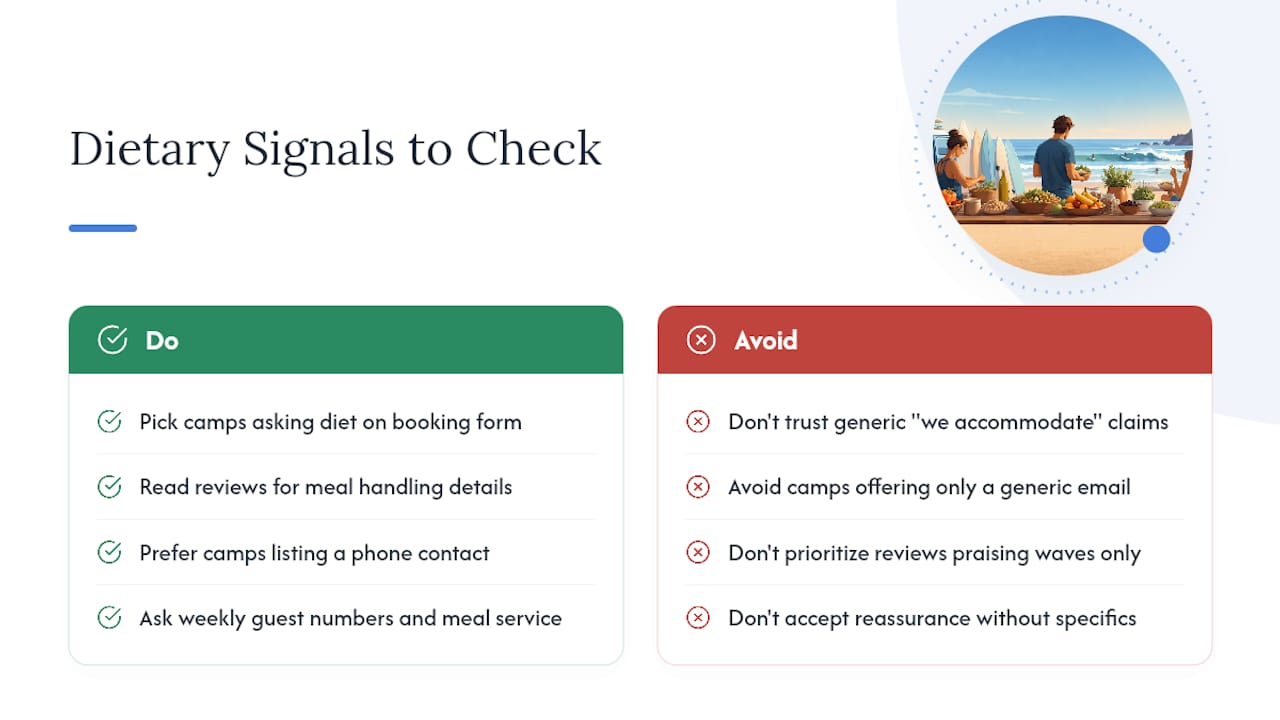
Look for camps that ask about dietary restrictions on their booking form rather than waiting for you to bring it up. That single detail tells you the camp has thought about this before you ever arrive, and it’s a far better signal than a general claim of “we accommodate everyone” buried in marketing copy.
Read reviews with an eye specifically for meal mentions, not just surf lesson quality. A guest who wrote in detail about how the kitchen handled their celiac diagnosis or nut allergy is more useful to you than ten reviews praising the waves. Camps that request dietary information directly through their reservation forms and list a phone number for follow-up questions tend to be more organized about this than camps that only offer a generic contact email.
Small camps, by nature, often outperform large ones here. A kitchen cooking for 15 to 20 guests a week has far more room to make a plate to order than one running a buffet line for 80. Ask how many guests the camp typically hosts per week and how meals are served; the answer tells you a lot about how personal the food experience is likely to be.
Finally, don’t be shy about asking for references or specifics rather than accepting reassurance at face value. A camp confident in its process will happily explain exactly how it handles your particular restriction.
Dietary Restrictions and the Social Side of Camp Life
Surf camps run on shared meals as much as shared waves. Breakfast and dinner are where the group actually gets to know each other, swaps stories about the day’s sessions, and starts feeling like a unit rather than a collection of strangers who happened to book the same week. A dietary restriction that isolates you from that table changes the experience in a way that has nothing to do with the food itself.
The fix isn’t complicated, but it does take a little intention. Camps that serve allergen-free or vegan dishes as part of the same communal spread, rather than a separate tray off to the side, do a much better job of keeping everyone at the same table. Ask how the camp handles this specifically: does the special-diet guest get a noticeably different-looking plate, or does the kitchen make an effort to serve something that fits in visually and socially with what everyone else is eating?
Kids and teens are especially sensitive to feeling singled out at mealtime, so if you’re booking for a young surfer with a restriction, it’s worth asking the camp how they typically handle that at the table, not just in the kitchen. A little advance thought here goes a long way toward making the dining room feel normal instead of like a separate experience.
Managing New or Changing Dietary Needs While Traveling
Diagnoses and sensitivities don’t always wait for a convenient time. Some travelers develop a new intolerance mid-trip, discover a stronger reaction than expected to something they’d previously tolerated, or simply need to adjust an existing diet on the fly because of stress, travel food, or changes in medication.
If something changes after you’ve already booked, contact the camp as soon as you notice it, ideally before you arrive, but even a heads-up during the stay is better than saying nothing. Kitchens can usually adjust a meal plan mid-week if they know early in the day, especially in a small operation where the cook is planning that day’s ingredients rather than working from a fixed menu weeks in advance.
Keep a simple written note of what’s changed and why, especially if a reaction becomes more severe than it used to be. This matters if you need to see a doctor locally or explain the situation to camp staff who weren’t part of your original booking conversation. If you’re uncertain whether a new symptom is a genuine allergy or something more minor, err on the side of caution with the kitchen and treat it as a real restriction until you know more. A camp would rather over-accommodate for a day than serve something that triggers a reaction.
Fernando’s Perspective: How Ripar Handles Dietary Needs
Meals come out of a small kitchen serving a small group, not a buffet line built for volume. That scale is the real advantage: when a cook is preparing a dozen plates instead of eighty, adjusting one for a nut allergy or a gluten-free request is a normal part of the shift, not a special favor.
Guests who flag restrictions early get menus planned around them from day one, which is a lot easier in a village-scale operation than in a hotel-style buffet trying to please everyone at once. The honest answer with any camp is that clear communication before arrival does more for your safety than any certification on a wall.
— Fernando
Booking With Ripar and Flagging Your Dietary Needs
Bookings run through a straightforward flow: choose your dates and package, note any dietary restrictions in the message field or a follow-up email, and expect a reply confirming the details before your deposit is finalized. That confirmation step is where you get the specifics in writing, not just a general “we’ll take care of it.”

What sets a small operation like this apart isn’t a bigger menu, it’s a shorter distance between your allergy note and the person cooking your food. There’s no corporate kitchen policy standing between your request and the plate that shows up in front of you, and no buffet line where a mistake is one careless scoop away. If you’ve got a restriction, mild or severe, that gap matters more than any list of ingredients on a website.
Start by heading to the surf camp booking page, list your dietary needs in the notes, and expect a pre-arrival follow-up to confirm exactly how the kitchen will handle them. If you’d rather browse accommodation details first, the surf house page shows the setup you’ll be eating and staying in during your visit. Either way, get your dietary details to us before you finalize, not after.
Sources
For deeper detail on how surf camps handle allergies and menu planning, see Xanadu’s allergy-aware guidance for operational examples, Pumpkin for a Portuguese booking-form example, and Pura Vida Adventures’ cuisine page for a sample surf-retreat menu structure.
Recommended
Comments