

Choose a Surf School in Portugal: Insist on 1 Instructor per 6–8 Students
- Fernando Antunes

- 10 minutes ago
- 7 min read
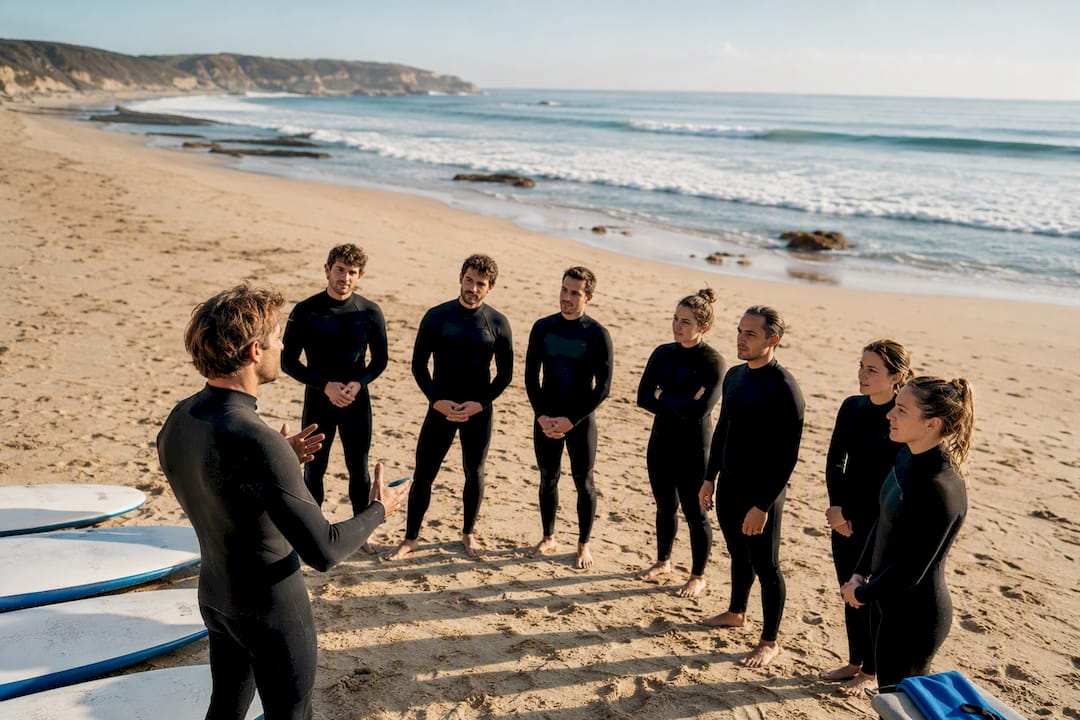
Pick a school registered with the Portuguese Surfing Federation (FPS), with certified instructors, published student ratios, and a written weather or reschedule policy, and you have already avoided most of the ways a first lesson goes wrong. A school like Ripar Surf School follows that same pattern. Everything below shows you how to verify it in minutes, not guesswork.
TL;DR:
Verify that instructors hold current certification and first-aid training, and confirm their credentials with the federation’s official listings.
Choose semi-private or private lessons if maximizing progress in a short time, especially when traveling with limited days or nervous water experience.
Ensure the quoted price includes necessary gear, insurance, and clear weather or cancellation policies, with a backup plan for unsafe surf days.
Confirm the beach has a sandy bottom, gentle, consistent waves, and lifeguard presence, and check for a designated backup beach in case conditions change.
Request specific information on instructor-to-student ratios, group size, and rotation practices before booking to maximize safety and learning efficacy.
Table of Contents
Como escolher escola de surf: checking federation registration and licensing
Federation registration is the fastest way to separate a professionally run school from someone renting boards out of a van. In Portugal, instructors are trained and certified through the FPS, which sets standards for water safety, teaching progression, and first-aid readiness. A registered school can show you a certificate, and its instructors should be able to name their qualification level without hesitating.
You do not need to take anyone’s word for it. Confirm the basics yourself before you book anything.
Ask for the instructor’s certification name and issuing body, then search the federation’s own listings to cross-check it.
Look for a physical or digital certificate displayed at the school’s booking desk or website.
Ask directly whether instructors hold first-aid or lifeguard training on top of surf coaching credentials.
Check that the school references RNAAT (the national water activity operator registry) if it operates commercial tours or camps alongside lessons.
The exact label on the certificate matters less than proof it exists. ISA and national-federation credentials are both valid, as long as the school can point to verifiable training behind them.
Which lesson format actually fits your goals?
Group lessons, semi-private sessions, and private coaching solve different problems, and picking the wrong one is a common way beginners waste money.
Choose a group lesson if you’re on a budget, want a social first taste of surfing, or you’re traveling with friends who are also new. Groups work well when the instructor keeps numbers low and rotates students through waves.
Choose semi-private (two to three students, one instructor) if you want more coaching attention without the price of a one-on-one session. Confirm the school actually caps the group at that size. Some operators market “semi-private” while running four or five people through it.
Choose private lessons if you’re nervous in the water, recovering from an injury, or trying to progress fast in a short trip. A private surf lesson gives you constant feedback and lets the instructor adjust pace to your comfort level in real time.
If you only have one or two days, private or semi-private gets you further. If you have a full week and want the social side, group lessons through a structured surf camp format make more sense.
What should be included in the price you’re quoted?
A fair beginner package should cover the soft-top board, wetsuit, and leash without extra line items appearing later. Reputable schools also often include basic insurance and publish a clear cancellation or weather policy in writing, not just a verbal promise.
Standard inclusions: board, wetsuit, leash, and a land briefing before you touch water.
Valuable extras: rashguard rental, free rescheduling if the swell turns dangerous, and photos or video of your session.
Red flags: a price that excludes wetsuit rental without saying so upfront, no mention of insurance, or a refund policy that only exists “if you ask.”
Pro Tip: Ask the school what happens if the surf is unsafe on your booked day. A school with a real backup plan will name a second beach or a free reschedule window without you having to push for an answer.
How do you judge the teaching beach and the backup plan?
A good beginner beach has a sandy bottom, not rocks or reef, and a wave that breaks gently and consistently rather than in one unpredictable peak. Lifeguard presence during the school’s operating hours matters just as much as the sand itself.
Before booking, check these details:
Confirm sandbank vs. reef using satellite or beach webcam tools, since photos on a school’s own site can be flattering rather than accurate.
Ask whether the school has a named backup beach for days when their usual spot turns dangerous, and what triggers the switch.
Read recent reviews for specifics: which beach the lesson actually happened on, not just star ratings.
Ask if lifeguards cover the beach directly, or if the school provides its own water safety support.
BeachFinder’s comparison guide notes that cross-referencing map tools with recent review detail is one of the more reliable ways to confirm a beach matches what’s advertised, rather than relying on marketing photos alone.
What ratio and rotation actually get you standing up?
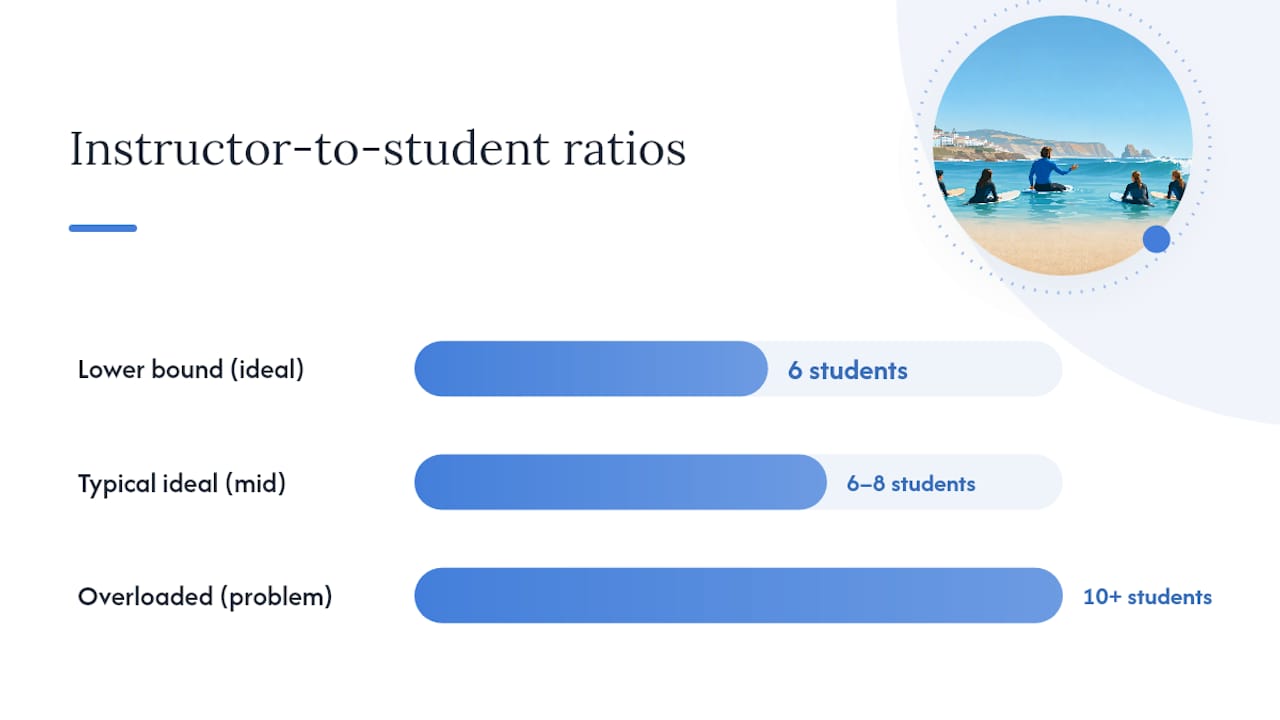
A reasonable beginner standard is one instructor for every six to eight students, ideally with a second person assisting in the water. Once a group grows past ten students per instructor, coaching attention and safety oversight both drop, no matter how experienced the instructor is.
Ratio on paper doesn’t tell you everything. An assistant who can physically push you into waves during rotation, paired with a short and structured land briefing, can roughly double how many usable waves you catch compared to a lesson where rotation is managed poorly. That’s the difference between standing up on your first day and spending most of it watching from the lineup.
Ask before booking:
What’s the instructor-to-student ratio for this specific time slot, not just the school’s general policy?
Is there a dedicated assistant in the water, separate from the lead instructor?
Roughly how many waves per student should I expect in a two-hour session?
Questions to ask before booking, and the answers that should worry you
A five-minute phone call or email exchange before paying tells you more than any glossy photo gallery.
Ask for the instructor’s certification and whether first-aid training is current.
Ask the exact group size for your booked slot, not the school’s average.
Ask precisely what’s included: board, wetsuit, leash, insurance, and whether anything costs extra.
Ask what the meeting point is and what happens if you’re running late.
Ask what the cancellation and weather policy looks like in writing.
Treat vague or dodged answers as your cue to book elsewhere. A school with no insurance, evasive pricing, groups larger than recommended, or a single beach with no backup plan is a pattern worth avoiding. When you check reviews, favor ones that mention instructor names, group sizes, or rotation specifics. A wall of five-star ratings with no detail can hide shortcuts the school doesn’t want you to notice.
What to bring and how to prepare for your first lesson
Pack light, but pack right: swimsuit under your clothes, a towel, sun protection, water, and a form of ID plus a way to pay. Most schools provide the wetsuit and board, so you don’t need your own gear for a first session.
Swimsuit, towel, reef-safe sunscreen, water bottle, ID, and cash or card.
Arrive 15 to 20 minutes early for kit fitting and the land briefing.
Skip the heavy breakfast, but eat something light beforehand.
For kids or family bookings, confirm minimum age and whether a parent needs to stay on the beach.
Pro Tip: Set a realistic goal for day one. Standing up once or twice on a soft-top board is a solid result for a first lesson, not a disappointing one.
Your booking checklist and what to expect on lesson day
Before paying, get certification details, group ratio, included kit, refund terms, and the backup beach in writing, not just spoken assurances. On the day, arrive early, expect a short land briefing, and watch how the instructor manages rotation once you’re in the water. That rotation is where most of your progress happens.
The short version: book a certified school, keep the group small, confirm what’s included, and make sure a bad-weather plan actually exists.
Why Ripar prioritizes safety and small groups
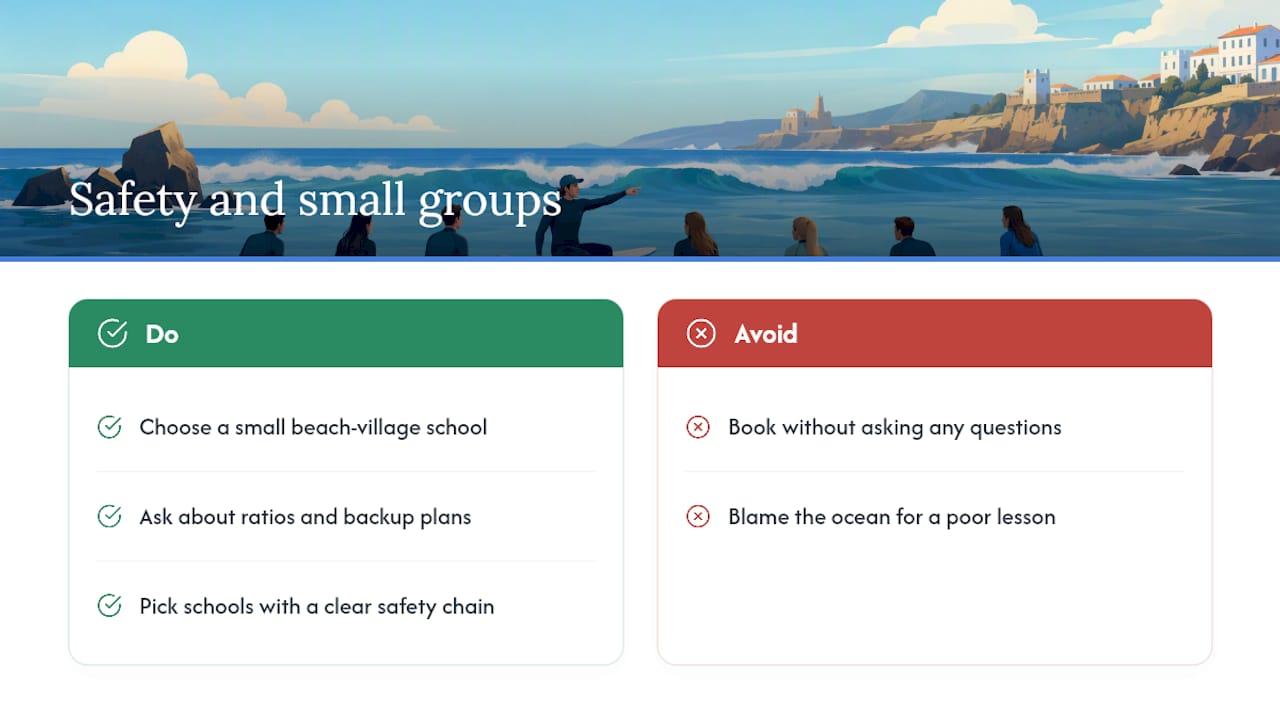
A good surf school operates from a small beach village rather than a crowded tourist strip, emphasizing the benefits of fewer people in the water for better instructor attention. That location choice isn’t incidental. Fewer people in the water means instructors can actually watch each student, not just the group as a whole.
The most common beginner mistake isn’t a lack of athleticism. It’s booking a lesson without asking a single question about ratios or backup plans, then blaming the ocean when the session falls flat. A school built around small groups and a clear safety chain removes most of that risk before you ever paddle out.
— Fernando
How to book a lesson with Ripar Surf School
Look for a school that offers certified instructors, small group ratios, board and wetsuit included, and a village-beach setting with backup options when the swell turns unsafe.
If you want the social pace and a lower price, a group surf lesson keeps things simple. If you’d rather move faster with one-on-one coaching, ask about the private surf lesson format instead. Either way, ask the same questions this guide walked through: ratio for your slot, what’s included, and the weather backup plan.
Check dates and book your surf lesson online directly, and you’ll have your answers in writing before you show up on the sand.
Sources
Recommended
Comments