

Surf Camp Para Casais: Portugal's Best Couples Surf Retreat
- Fernando Antunes

- 3 hours ago
- 13 min read
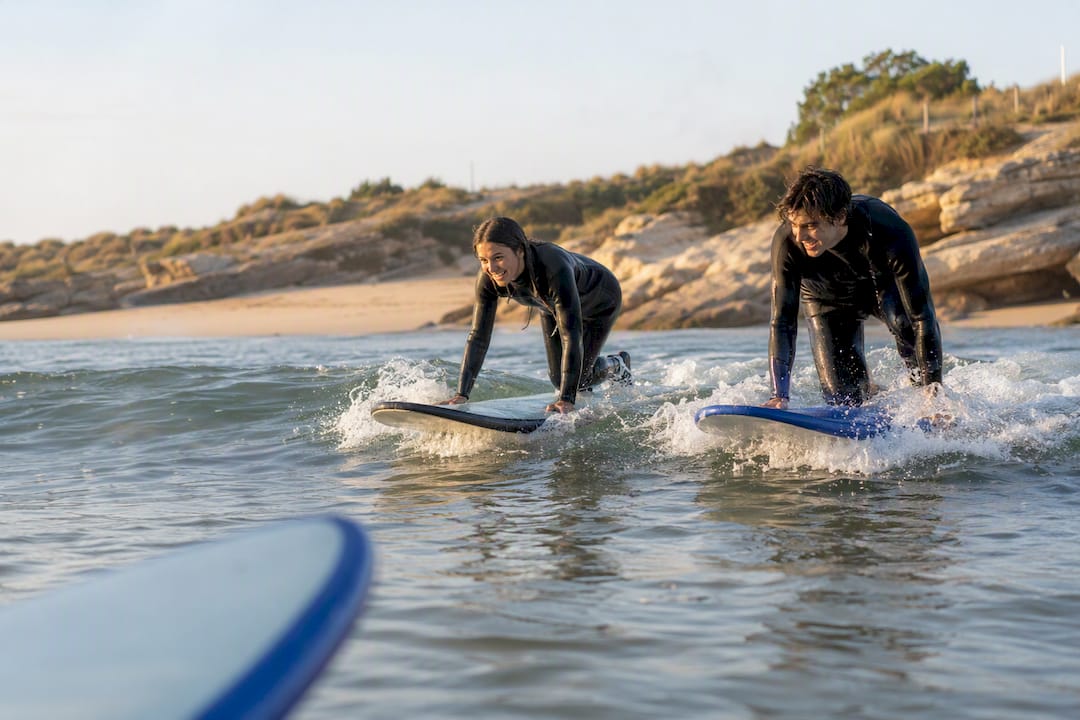
If you want a couples surf camp in Portugal that gets the mix right, cozy private rooms, lessons matched to two different skill levels, and a village pace instead of a resort crush, book with Ripar Surf School & Surfcamp Portugal in Praia Areia Branca. Ripar has run surf education and holiday packages from this stretch of the Silver Coast since 2001, with certified local instructors and a base a short drive from Peniche and Ericeira. The camp has already worked out how to handle a beginner paired with an intermediate partner, which is the detail most surf camps get wrong.
Ready to move? Here’s the fast path:
Check current dates and availability before you lock in flights.
Decide between a private lesson (one instructor, just the two of you) or small-group coaching, depending on how much space you want.
Flag any skill gap between partners when you inquire, so the school can pair you correctly from day one.
Head to the booking page to request dates or reserve directly.
Key Takeaways
Booking a couples surf camp in Portugal comes down to matching lesson format to skill level and choosing a base small enough to feel personal.
Point | Details |
Match lesson format to skill gap | Choose private or semi-private lessons if partners surf at different levels. |
Confirm accommodation privacy | Ask whether your room is private or part of a shared surf house before booking. |
Time your trip by season | Late spring and early autumn offer calmer waves and warmer water for beginners. |
Check safety and insurance details | Confirm instructor certification, class ratios, and water-sports travel insurance in advance. |
Book with Ripar for a couples-first setup | Ripar Surf School & Surfcamp Portugal, based in Praia Areia Branca since 2001, offers private lessons, private room options, and certified local instructors suited to mixed-level couples. |
Where to Verify Details Before You Travel
Turismo de Portugal: official travel and coastal tourism information.
Surfing Portugal: beach-by-beach seasonality and wave guides.
Table of Contents
What’s Included in a Surf Camp Para Casais Package
A couples surf camp package in Portugal usually bundles five things: a place to sleep, daily coaching, gear, food, and transport. What varies is the privacy level and how much of it is tailored to two people learning together rather than a mixed group of solo travelers.
Most packages built for couples include:
A private room or a spot in a surf house with shared common areas but a closed bedroom door, depending on budget.
Daily surf lessons, either private, small-group, or a semi-private format built for two.
Surfboard and wetsuit rental sized to both partners.
Breakfast daily, with some packages adding dinners a few nights a week.
Local or airport transfers, when the package specifies it.
Beyond the core stay, most camps offer add-ons worth asking about directly: a private lesson upgrade for one or both days, a couple’s-friendly surf yoga session for recovery, or a guided half-day excursion to a nearby town. Semi-private lessons, two students working with one instructor, are a format built specifically for pairs, since they let a coach split attention between two people at a low ratio without either partner feeling ignored.
Pro Tip: If one of you surfs and the other has never stood on a board, don’t book identical lessons. Ask for a private lesson for the newer surfer and a small-group or guided session for the more experienced partner on the same days. You’ll finish each morning at roughly the same energy level instead of one of you exhausted and the other bored.
Which Couples and Surf Levels Fit a Couples Surf Camp?
A couples surf camp works for almost any pairing, as long as the lesson format matches the gap between skill levels. The camps that struggle are the ones that put a total beginner and an experienced surfer into the exact same group class and hope for the best.
Four couple profiles show up most often:
First-timers together: neither partner has surfed before, and the goal is a shared learning curve, not competition.
Mixed-skill couples: one partner surfs regularly, the other is new or rusty; this pair benefits most from semi-private or split lesson formats.
Intermediate couples: both surf already and want local, guided sessions at the right breaks rather than beginner instruction.
Relaxation-first couples: surfing is one part of the trip, not the whole point, and downtime matters as much as wave count.
Quick guidance by camp type: Beginner-friendly covers small-group and private lessons with progression built in over several days. Mixed-skill friendly means semi-private (2:1) or split private/group bookings on the same schedule. Advanced guiding available means an instructor scouts the right local break for the day rather than teaching from scratch.
What Does a 5-Day Couples Surf Camp Itinerary Look Like?
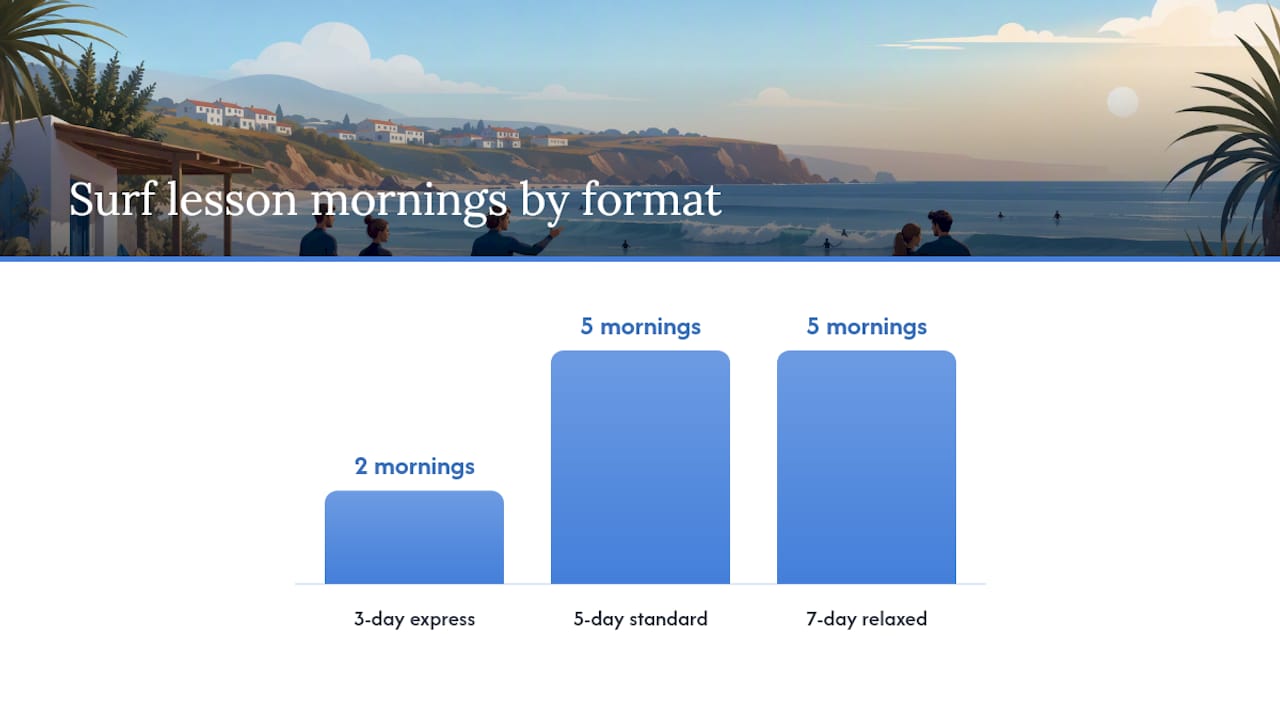
The right length depends on how much vacation you have and how much rest you want built in. Portugal’s couples surf camps typically run three formats: a short 3-day express trip, a 5-day standard week, and a slower 7-day stay with more recovery days between surf sessions.
All three follow the same basic rhythm: surf in the morning when the wind is calmest, rest or explore in the afternoon, and keep evenings unstructured. Private, locally guided retreats often let hosts choose the day’s break based on tide and swell rather than surfing the same spot daily, which keeps the week from feeling repetitive.
Itinerary | Morning | Afternoon | Evening |
3-day express | Surf lesson, both days | Free time or short local walk | Casual dinner in the village |
5-day standard | Surf lesson 5 mornings | Yoga or recovery session, local excursion one day | Private dinner one night, relaxed the rest |
7-day relaxed | Surf lesson 5 mornings, rest day mid-week | Video coaching review, guided day trip, spa or massage | Two or three planned dinners, rest of nights open |
Pro Tip: Build one flexible day into any itinerary, no fixed plan, just a surf window in the morning and an open afternoon. You can use it for an extra lesson if the swell is good, or skip surfing entirely for a day trip if you’d rather explore the coast together.
How Much Does a Couples Surf Camp Cost in Portugal?
Four things move the price on a couples surf camp: accommodation type, lesson format, season, and how much is bundled into the package versus paid separately.
A private room costs more than a bed in a shared surf house. Private lessons cost more per session than small-group coaching, but they’re worth it for a mismatched-level couple who’d otherwise waste a group class on the wrong pace. Peak summer weeks (July and August) run higher than shoulder-season months, when demand and wave crowds both drop.
Budget ranges typically break down into three tiers. Entry-level packages with shared surf-house rooms and small-group lessons sit at the lower end. Mid-range packages add a private room and a mix of private and group coaching. Top-tier packages include full private lessons, private accommodation, and extras like transfers or a couple’s massage. Exact pricing varies by season and length of stay, so confirm current rates directly with the camp before booking.
Before you commit, run through this checklist:
Ask explicitly how level-matching works if you and your partner surf differently.
Confirm whether airport or local transfers are included or billed separately.
Ask about board and wetsuit condition and sizing, especially in cooler months.
Get the cancellation and weather-postponement policy in writing before paying a deposit.
Check accepted payment methods and whether the deposit is refundable or credited toward a rebooking.
Most Portuguese surf camps ask for a deposit to hold your dates, with the balance due closer to arrival. Always confirm the refund window before you pay anything.
Where Should Couples Surf in Portugal, and When?
Three coastal hubs cover most couples surf camps in Portugal, and each has a different personality.
Peniche and Praia Areia Branca, Ripar’s home base, sit in a working fishing region with quiet beaches, consistent waves for beginners through intermediates, and a village pace instead of a resort strip. Ericeira, a short drive north, is Portugal’s only World Surfing Reserve and draws more experienced surfers to its reef and point breaks. Costa da Caparica, just across the river from Lisbon, trades a bit of that small-village feel for easy access if your trip starts or ends in the capital.
Seasonality matters more than most first-time visitors expect. Late spring and early autumn (May, June, September, and part of October) tend to bring smaller, more forgiving waves, warmer water than winter, and lighter crowds, which suits couples learning together. Winter brings bigger, more powerful swells that reward experienced surfers but can be intimidating for a beginner partner. Regional surf guides break down wave size and water temperature by month if you want to plan around a specific comfort level.
Lisbon’s airport sits roughly an hour to 90 minutes from Peniche and Praia Areia Branca depending on traffic, which keeps transfer times reasonable for a long weekend or a full week.
Is It Safe for Couples to Surf Together as Beginners?
Surfing carries real risk, currents, other surfers, and simple fatigue among them, but a well-run couples camp manages most of that risk through instructor ratio and site choice rather than luck.
Ask any camp directly about instructor certification before booking. A certified instructor should be able to explain their qualification, their maximum group size per class, and what happens if conditions turn rough mid-lesson. Reputable Portuguese surf schools keep small-group ratios low specifically so an instructor can watch every student in the water, not just the strongest swimmer.
For couples specifically, a simple buddy system works well even with an instructor present: agree before paddling out that you’ll check on each other between waves, and that either partner can call the lesson early without an argument about it. Rip currents are the biggest hidden risk on open Atlantic beaches, and a local instructor will point out that day’s rip pattern before anyone paddles out.
Travel insurance that explicitly covers water sports is worth confirming before you leave home, since some standard policies exclude surfing as an “extreme sport” activity.
Pro Tip: Ask two direct questions before booking: what’s your maximum student-to-instructor ratio for group lessons, and what’s the rescue protocol if a student gets pulled by a current? A camp that answers both without hesitation has done this before.
What Makes Ripar Surf School Trustworthy for Couples?
Ripar Surf School & Surfcamp Portugal has operated from Praia Areia Branca since 2001, which puts more than two decades of local water knowledge behind every lesson booked. That matters more than it sounds: the instructors know which days suit a nervous beginner and which mornings to send an intermediate surfer down the coast instead.
The proof points worth knowing:
Certified local instructors who teach and surf this specific coastline daily, not rotating staff.
Accommodation options that include private rooms for couples who want a closed door, alongside the shared surf house setup for a more social stay.
On-site facilities including a deck area with showers and easy walking access to local cafés and bars, so evenings don’t require a car.
A small-group and private-lesson policy built around actual skill matching, not a one-size class schedule.
Guest feedback on platforms like TripAdvisor for surf camps in the Peniche and Baleal area consistently points to the same theme travelers care about: instructor attention and a welcoming, unpretentious atmosphere over flashy amenities.
A camp that keeps its groups small and its instructors local isn’t just a nicer experience, it’s the difference between a couple who leaves confident and one who leaves frustrated with each other.
That privacy and attention combination is exactly what a couples booking should prioritize over a bigger, cheaper group class.
Safety Measures for Couples Surfing Together
Beyond instructor ratio, a handful of specific safety habits separate a well-run couples lesson from a risky one. Local instructors brief every group on the day’s conditions before anyone touches a board, current strength, wind direction, and where the sandbanks or rocks sit that day.
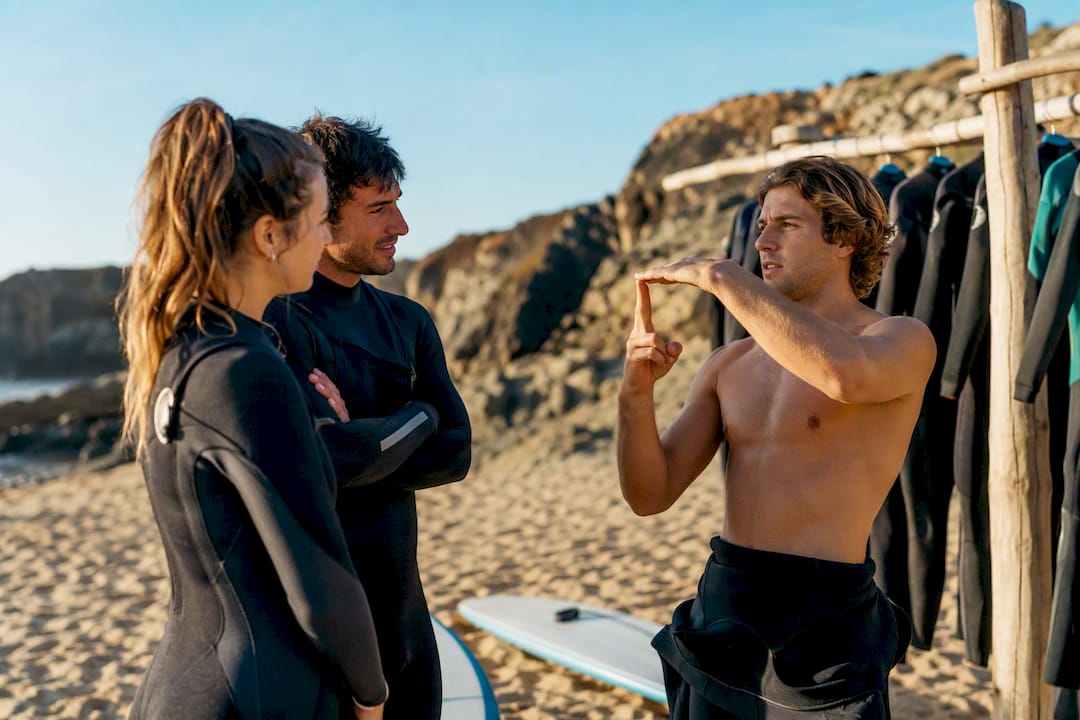
For couples, the most useful safety habit is agreeing on hand signals before paddling out, since it’s hard to shout over waves. A raised fist can mean “I need to come in,” and a wave of the arm can flag “check on me.” Instructors reinforce this anyway, but a couple who’s already agreed on it moves faster if something goes wrong.
Leashes matter more than beginners realize. A board without a leash becomes a projectile in whitewater, and reputable schools won’t let a student paddle out without one attached correctly. Reef shoes are worth packing if you’re surfing near rockier breaks north of Peniche, since a stubbed toe on volcanic rock is the most common minor injury reported at Portuguese surf schools.
Sun exposure is an underrated risk on a multi-day surf trip. Two or three hours in the water daily under an Atlantic sun adds up fast, and a rash guard does more real protection than a reapplied layer of sunscreen that washes off in the first wave. Finally, confirm your camp has a working relationship with local emergency services, most established schools on this coast do, given how long they’ve operated in the same small communities.
Getting To and From Your Portugal Surf Camp
Most couples fly into Lisbon’s airport, which sits close enough to Peniche, Praia Areia Branca, and Ericeira to make a surf camp trip workable even on a long weekend. From there, you have three realistic options: a private transfer arranged through the camp, a rental car, or public transport.
A private or camp-arranged transfer is the easiest choice if you’ve never driven in Portugal and don’t want to navigate rural roads after a long flight. Many packages include this in the price or offer it as a low-cost add-on, worth confirming when you book.
Renting a car gives you the most flexibility, particularly if you want to explore beyond the camp on rest days, visit Óbidos or Nazaré, or drive up the coast to Ericeira for a change of scenery. Portuguese highways are well maintained, and the drive from Lisbon to the Peniche area typically runs about an hour depending on traffic.
Public transport exists but requires more planning. Regional buses connect Lisbon to Peniche, though schedules thin out on weekends and the journey takes longer than driving. For a short trip where every day counts, most couples find the time saved by a transfer or rental car outweighs the lower cost of the bus.
Whichever option you choose, confirm transfer details before you land, arrival timing matters more at a small coastal town than it does in a city with taxis on every corner.
Romantic Touches That Make a Surf Camp Feel Like a Getaway
The best couples surf camps understand that surfing is only half the trip, the other half is what happens after you towel off. A handful of add-ons turn a standard surf package into something that actually feels like a getaway rather than a shared surf lesson with a hotel attached.
A couple’s massage after two or three days of paddling is one of the most requested add-ons, and for good reason: sore shoulders and stiff necks are the most common physical complaint from new surfers by day two. A private dinner, arranged apart from the group meal schedule, gives couples one evening that feels distinctly separate from the surf-camp routine. Surf yoga sessions built for two people rather than a full class group also work well, pairing gentle movement with the same relaxed, unhurried pace that makes small coastal towns appealing in the first place.
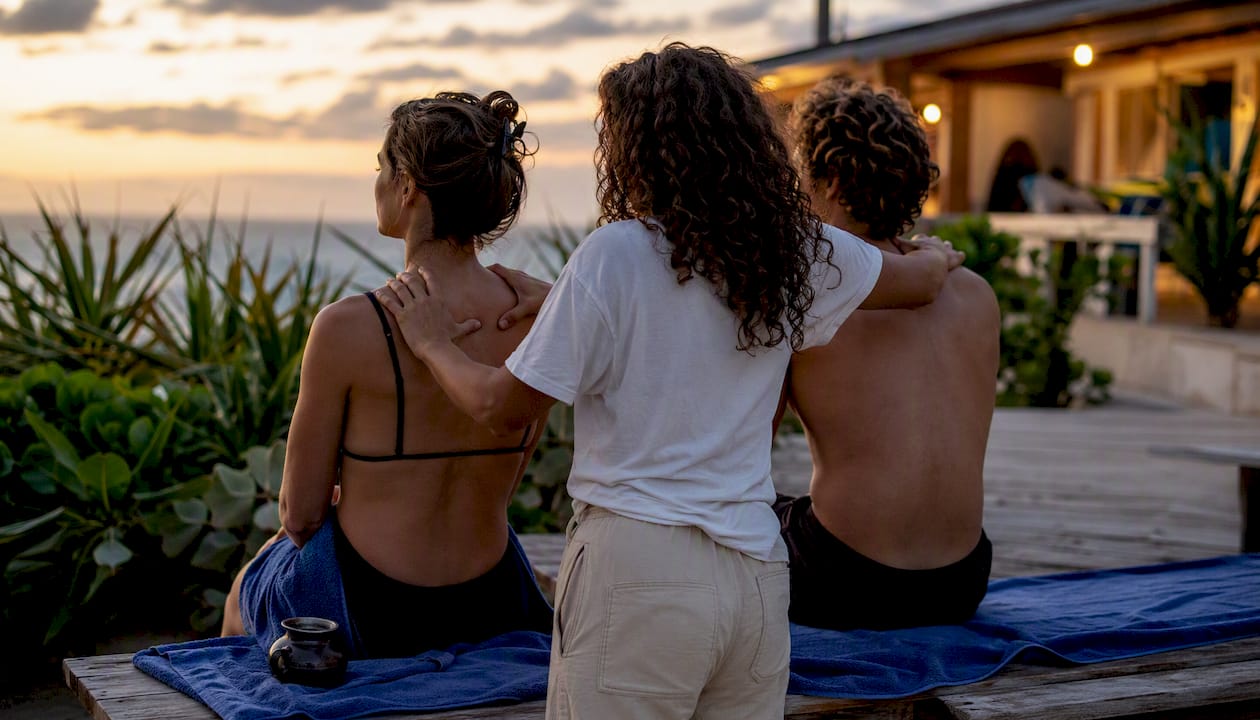
None of these require an elaborate resort setup. A small surf camp with a good relationship with a local massage therapist, a nearby restaurant willing to set a quiet table, and a yoga instructor who can run a private or semi-private session covers the same ground a bigger, more expensive resort claims to offer, minus the crowd.
Couple-focused retreats elsewhere often pair surf sessions with recovery practices like these specifically to keep the pace restorative rather than exhausting, and Portugal’s smaller camps are well positioned to do the same without the resort markup.
What to Do Off the Water Near Peniche and Ericeira
Surfing fills your mornings, but the region around Praia Areia Branca, Peniche, and Ericeira has enough beyond the waves to fill a full rest day without ever getting in a car for more than 20 minutes.
Peniche’s old town and fortress are worth a slow afternoon walk, especially paired with fresh seafood at one of the harbor-side restaurants. The Berlengas Islands, a short boat ride from Peniche, make for a half-day trip if you want to swap a surf morning for snorkeling and a different kind of ocean view entirely. Óbidos, a walled medieval town about 30 minutes inland, is a popular half-day trip for couples who want cobblestone streets and a change of pace from beach sand.
Ericeira itself is worth a visit even if you’re not chasing its advanced breaks, the town center has a solid mix of cafés and small shops, and watching surfers at Ribeira d’Ilhas from the cliffside gives you a sense of why this stretch of coast earned its World Surfing Reserve status. Closer to home, most small surf towns on this coast run at least one good local market or evening food spot within walking distance of the camp, which keeps evenings simple without needing a car or a reservation booked weeks ahead.
How to Book Your Couples Surf Package With Ripar
Booking a couples package with Ripar comes down to three decisions: your dates, your lesson format, and how much privacy you want in your accommodation. Once you know roughly when you’re traveling, flag any skill difference between you and your partner up front, so the school can plan private or semi-private coaching from day one instead of adjusting mid-week.
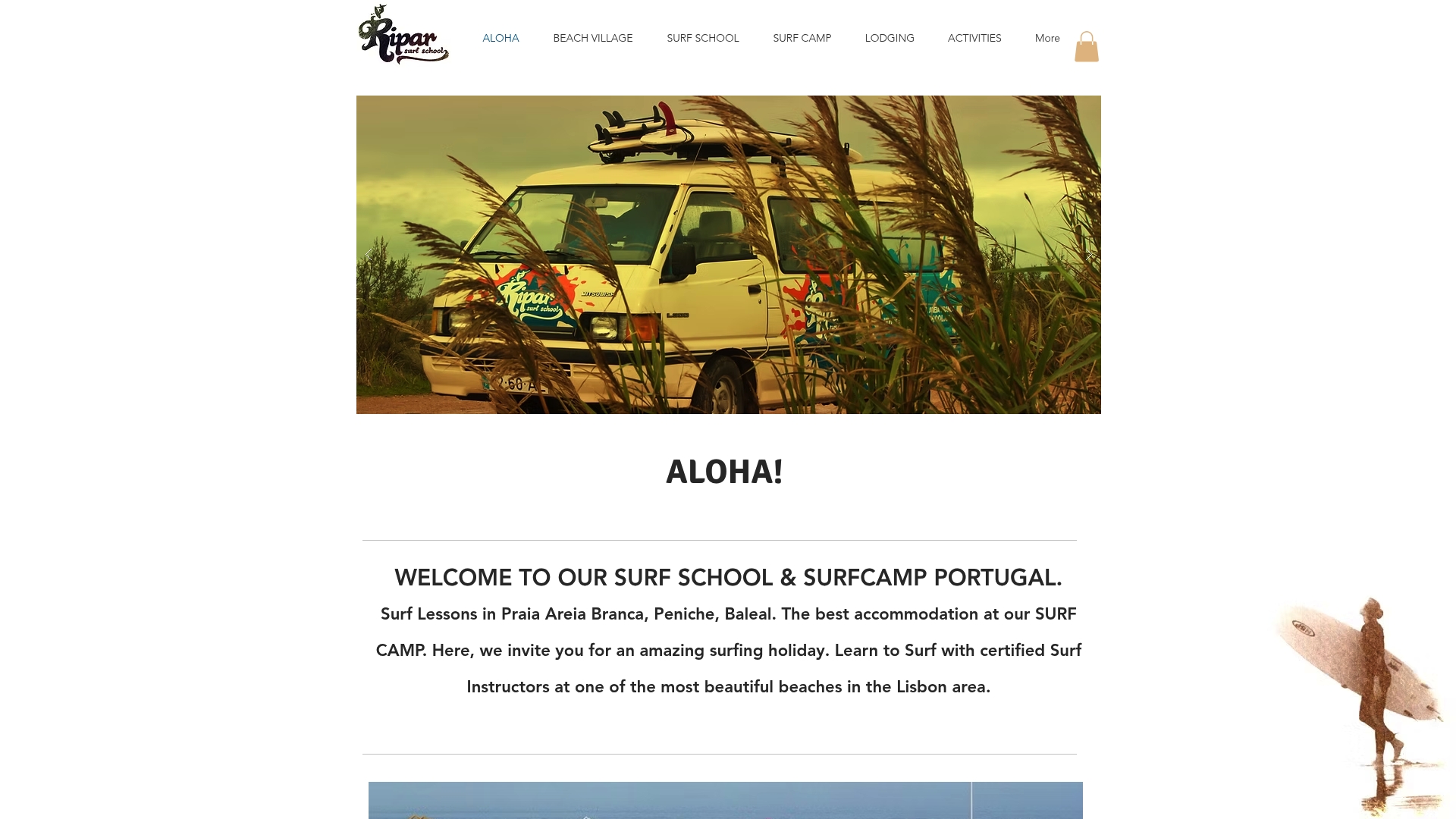
If privacy matters more than group energy, look at the private surf lesson option, which puts one instructor on just the two of you for the whole session. If you’d rather split your budget between a private room and small-group coaching, browse the group lesson page for pricing and schedule details. Either way, most bookings run smoother when you request dates early, since the smaller-group model that makes Ripar work well for couples also means limited spots per week.
Ready to lock in a date? Head to the online booking page to check current availability, or start with the surf camp overview if you’re still deciding between package tiers. A short message about your dates and skill levels is usually all it takes to get a same-week reply back.
A Local Note on Why Small Camps Suit Couples
I’ve watched enough couples come through a small surf village to notice a pattern: the ones who leave happiest aren’t chasing the biggest waves, they’re the ones who slow down and let the village pace take over. Ripar builds its days around one solid surf window rather than back-to-back sessions, which leaves real afternoon time for a walk, a nap, or just sitting at a café together. That unhurried rhythm, more than any wave count, is what a good couples surf camp actually sells.
Frequently Asked Questions
Do we need any surf experience to book a couples surf camp in Portugal? No. Most camps, including Ripar, run beginner-friendly small-group and private lessons designed for couples who have never stood on a board.
What if one partner surfs and the other doesn’t? Ask for a semi-private or split-lesson format. One partner can get focused private coaching while the other joins a small group or guided session at their own pace.
How many days should a first couples surf trip be? Three days works for a quick trip, but five days gives your bodies time to adjust and lets you skip a session if you’re sore without feeling like you wasted the trip.
Is Peniche or Ericeira better for a beginner couple? Peniche and Praia Areia Branca generally offer gentler, more consistent conditions for beginners. Ericeira suits couples who already surf and want more advanced breaks nearby.
What should we pack for a Portugal surf camp? Swimwear, a lightweight wetsuit for cooler months, reef shoes, reef-safe sunscreen, a rash guard, and travel insurance that explicitly covers water sports.
How far in advance should we book a couples package? Book as early as you can once travel dates are set, since private lessons and private rooms are limited and fill faster than shared group slots.
Sources
Recommended
Comments