

What a Surf Lesson Includes: A Beginner's Guide
- Fernando Antunes

- 1 hour ago
- 7 min read
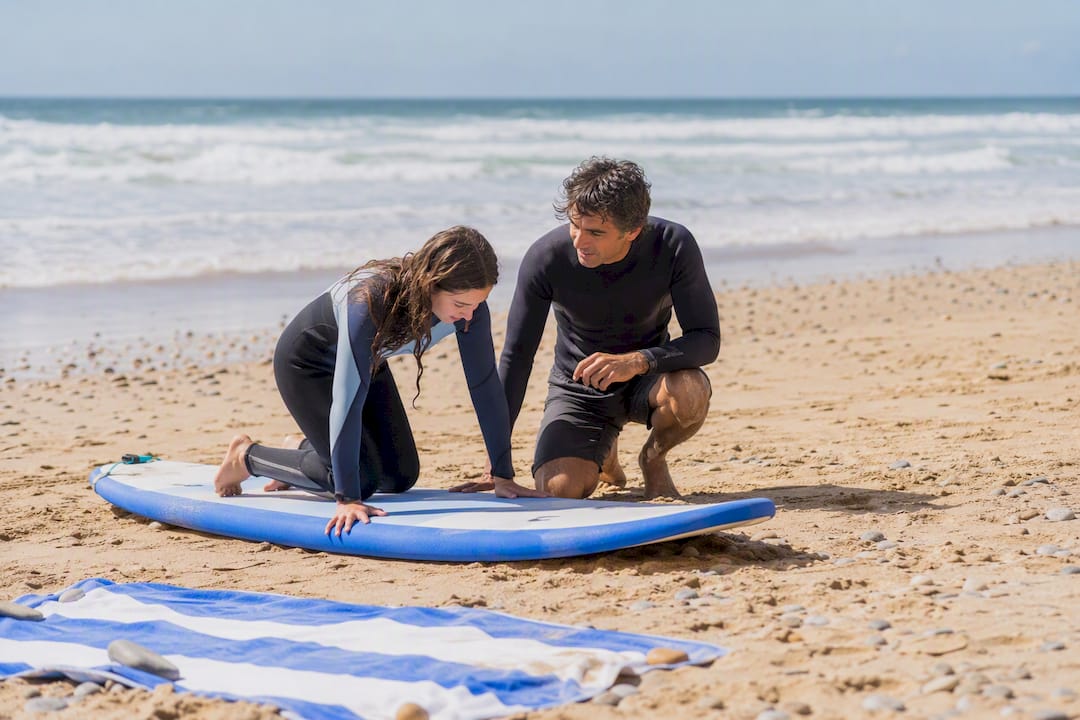
A typical surf lesson includes a beach safety briefing, a board and leash (plus a wetsuit if the water calls for it), land drills to practice the pop-up, supervised in-water coaching in the whitewash, and a wrap-up debrief. Most beginner sessions run 1 to 2 hours and cover more ground than people expect before they ever paddle out.
Here’s the quick rundown of what’s typically bundled into a beginner lesson:
Safety briefing covering rip currents, ocean etiquette, and how to fall safely
Surfboard and leash sized for beginners, wetsuit if water temperature requires one
Land-based warm-up and pop-up practice before entering the water
Supervised in-water coaching with an instructor watching your positioning
Small group or private instructor ratio (often capped around 6 students per instructor)
Basic accident and liability coverage, depending on the school
Clear booking and cancellation terms tied to weather and swell
Ripar Surf School, based near Praia Areia Branca, builds its beginner lessons around this same structure, with local certified instructors running the safety and coaching side of things.
Key Takeaways
A standard beginner surf lesson combines equipment, a safety briefing, structured land-to-water coaching, and clear booking logistics, and the format you pick should match your budget, timeline, and comfort in the ocean.
Point | Details |
Core inclusions | Expect a safety briefing, board, leash, wetsuit if needed, land drills, and supervised in-water coaching. |
Instructor ratio matters | Groups capped around 2 to 4, with 6 as a typical maximum, keep coaching quality high. |
Match format to your goal | Choose group lessons for budget and social trips, private for fast progress, camps for full immersion. |
Pack light, ask questions | Bring sunscreen and swimwear; confirm certification, ratio, and weather policy before booking. |
Ripar Surf School as the local option | Offers certified instructors, included equipment, and small groups through direct online booking near Praia Areia Branca. |
Table of Contents
What Does a Surf Lesson Actually Cover?
Each piece of that checklist does real work, and skipping any of them is usually how new surfers end up frustrated or, worse, hurt.
Equipment: what you wear and ride
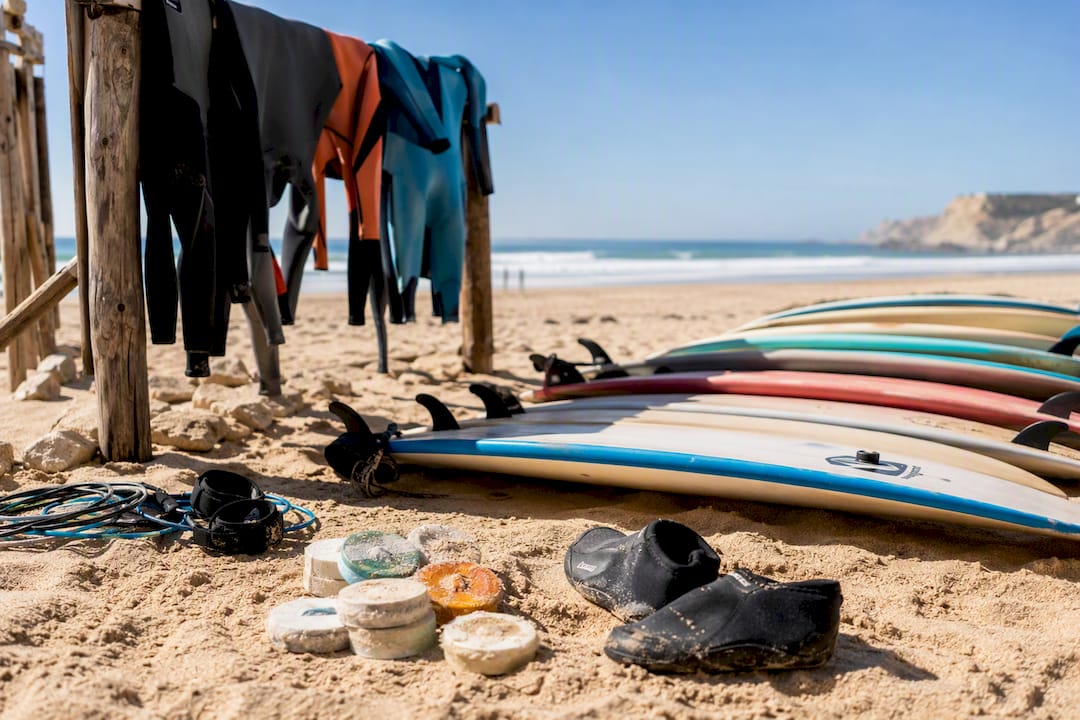
Beginner lessons almost always use soft-top longboards. They float better, forgive mistakes, and hurt a lot less when they hit you (and they will hit you). The leash keeps your board from becoming a runaway hazard for other people in the water. Wetsuit policy depends on water temperature and season: some schools hand you a rash guard for warmer months and a full wetsuit when the water runs cold. A Portuguese introductory surf class listing from Experience Sport spells this out clearly. It includes a certified instructor, board, wetsuit, and personal accident and civil liability insurance as standard, while things like transfers and meals are billed separately.
Safety briefing: the part people rush through
A real briefing covers rip currents, right-of-way rules in the lineup, and how to fall so you don’t land on your board or someone else’s. This isn’t a formality. Ocean conditions change fast, and an instructor who spends five extra minutes on current awareness before you enter the water is doing you a favor you won’t appreciate until you need it.
Lesson structure: how the hour unfolds
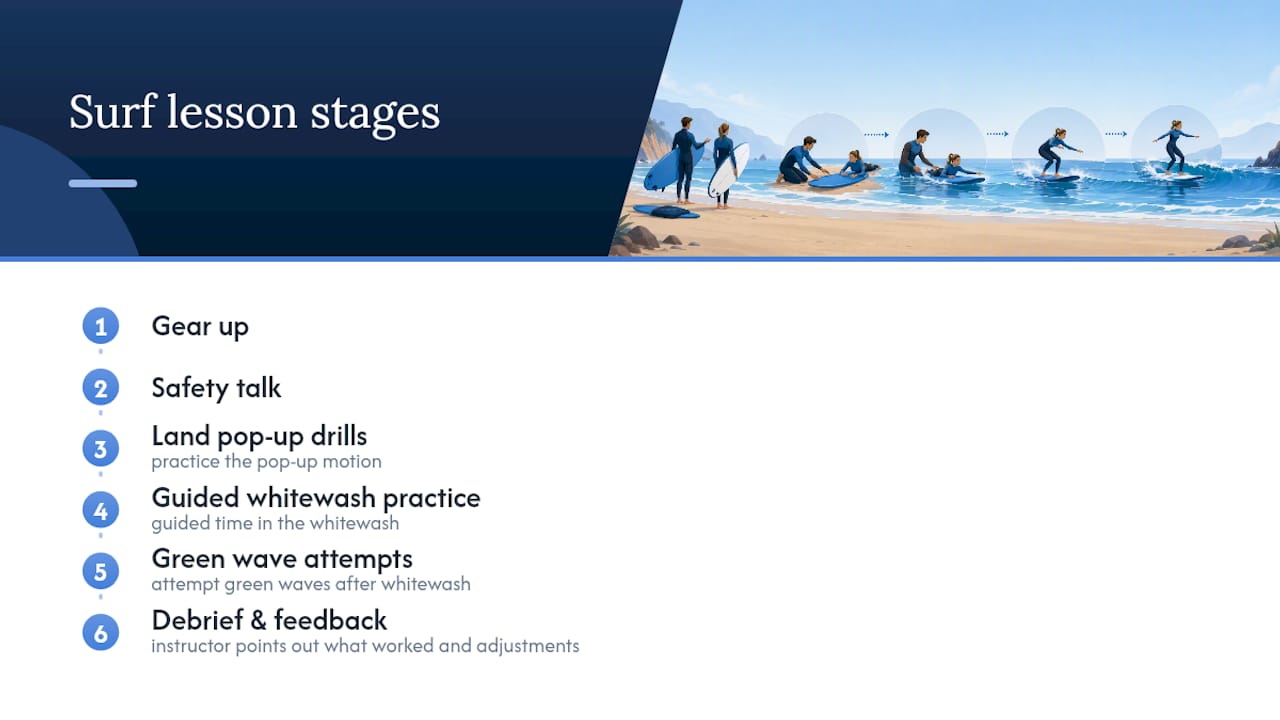
Most sessions follow the same skeleton: gear up, safety talk, land drills practicing the pop-up motion, then guided time in the whitewash before any attempt at green waves. Surf and Stays documents this stage-by-stage approach in beginner lessons, and notes that most complete beginners manage to stand up and ride a wave during that very first session. The lesson usually closes with a short debrief where the instructor points out what worked and what to adjust next time.
Instructor role and group ratio
Instructors don’t just watch from the beach. They position themselves in the water, catch your board at the right moment, and call out timing cues. Group size matters here: a 2 hour lesson package from Orewa Surf Lessons caps groups at 2 to 4 students, with 6 as the outer limit per instructor. Beyond that ratio, coaching quality drops fast because nobody’s getting individual feedback in the water.
Insurance and logistics
Reputable schools carry basic accident and liability coverage, bundled quietly into the lesson price rather than sold as an add-on. Cancellation and rescheduling policies tend to hinge on wind, swell size, and tide, since these determine whether a beach is even safe for beginners that day.
Pro Tip: Pay attention to how much you drift sideways during your session. Instructors reposition you constantly, but noticing that drift yourself builds real current awareness, which is the skill that separates surfers who can handle the ocean alone from those who always need a guide nearby.
Group, Private, or Surf Camp: Which Lesson Format Fits You?
Not every beginner needs the same setup, and picking the wrong format is the most common planning mistake tourists make.
Group lessons put you with several other beginners under one instructor, usually the 2 to 4 student ratio mentioned above. They cost less per person, work well for families or groups of friends traveling together, and add a social element that makes the whole thing feel less intimidating. If your main goal is trying surfing once or twice without a big commitment, a group surf lesson covers it.
Private lessons give you the instructor’s full attention. Progress moves faster because every wave gets individual feedback, which matters if you’re nervous in water, have specific physical needs, or just want to get up on your feet as quickly as possible. Pricing runs higher than group rates, but for someone who wants results in a single session, a private surf lesson often pays for itself in confidence gained.
Surf camps bundle multiple days of instruction with accommodation and often extras like yoga sessions. They suit travelers who want surfing to be the whole trip rather than one afternoon of it, and they work best for people ready to commit several days to real progression rather than a single taste.
Quick way to decide:
Tight budget or traveling with a group? Go group.
Want fast, personalized progress? Go private.
Have a week and want surfing as your vacation theme? Go camp.
What Should You Bring, and What Should You Book Ahead?
Getting this part right saves you from either overpacking or showing up without something you actually need.
Pack light on gear. Bring swimwear, a towel, reef-safe sunscreen, a water bottle, a hat, and a warm layer for after you’re out of the water. The school supplies the board, leash, and wetsuit, so don’t buy any of that yourself.
Confirm lesson length and format before booking. Ask how long the session runs, whether it’s group or private, and what the student-to-instructor ratio actually is.
Ask about instructor certification. A legitimate school should have no trouble naming its qualifications and safety protocols.
Check what’s included in price. Photo or video packages, transfers, and insurance vary between operators, so get this in writing before you pay.
Understand the weather policy. Good schools reschedule or refund when swell, wind, or tide make conditions unsafe for beginners, rather than pushing you into the water regardless.
Expect location shifts. Instructors often move the lesson to a different beach or timeslot based on tide and swell, so stay reachable the day before.
Pricing typically follows a shape rather than a fixed number: group rates sit lowest per person, private sessions carry a premium for one-on-one time, and surf camps price by the day or week with accommodation folded in. For more on getting ready before you even land, Ripar’s guide to your first surf lesson walks through arrival logistics in more detail, and a general seaside activity planner’s checklist is a useful reference for transport and facility questions that apply to any beach-based class, not just surfing.
What Does Ripar Surf School Include in a Beginner Lesson?
Ripar Surf School, operating near Praia Areia Branca since 2001, builds its beginner offering around the same core inclusions covered above:
Certified, local instructors who lead the safety briefing and in-water coaching
Board and wetsuit provided when conditions call for one
Small group sizes kept tight enough for real individual attention
On-site deck area, showers, and easy access to nearby cafes for after your session
Optional yoga add-ons for those staying longer or booking a camp package
Readers ready to reserve a spot can check the beginner surf lesson page for exact scheduling and availability.
What beginners actually value most
What sticks with new surfers isn’t the wave count. It’s whether they leave the water understanding currents, timing, and their own limits, not just how many times they stood up. Instructor-led safety and steady encouragement, more than any single technique, tend to produce the fastest real progress in that first week.
Ready to Book Your Beginner Surf Lesson?
Ripar Surf School gives you a full package where the guesswork gets handled before you even arrive: certified local instructors, board and wetsuit included, and small groups that actually get coached rather than just supervised.

Whether you want the social pace of a group class, the speed of one-on-one instruction, or a full week built around a surf camp, you can compare formats and lock in dates through Ripar’s online booking page. Photo options are available on request, and cancellation or rescheduling due to weather is built into the booking process, so a bad swell forecast doesn’t mean a wasted trip. Head to the booking hub to check current availability and pick the lesson format that fits your trip.
Frequently Asked Questions
Does a surf lesson include the wetsuit and board, or do I need my own gear? Most schools, including Ripar, provide the board, leash, and wetsuit as part of the lesson price. You generally only need to bring swimwear and a towel.
How long does a typical beginner surf lesson last? Most beginner sessions run between 1 and 2 hours, split between a land-based warm-up and safety briefing, then in-water coaching.
Is insurance included in the price of a surf lesson? Many schools bundle basic accident and liability coverage into the lesson fee, though it’s worth confirming this directly when booking rather than assuming.
What happens if the weather or waves are bad on my lesson day? Reputable operators reschedule or adjust the lesson location and timing based on tide, swell, and wind, and will communicate changes ahead of your session.
Should a total beginner choose a group or private lesson? Group lessons work well for a first try, especially with friends or family, while private lessons suit anyone wanting faster, more personalized progress.
Sources
How to organise Sardinian beach yoga: a planner’s checklist
Recommended
Comments