

How to Maximize Your Surf Camp Stay in Portugal

TL;DR:
Engaging fully in camp activities and community fosters lasting friendships and memorable experiences.
Proper preparation, clear goals, and active participation in lessons accelerate surfing progress.
Immersing in local culture through villages, markets, and social outings enriches the surf camp experience.
Portugal’s surf camps are packed with people who leave wishing they’d done more. More conversations at dinner, more morning yoga on the beach, more spur-of-the-moment trips to a local market. The surfers who get the most out of their stay aren’t necessarily the most talented in the water. They’re the ones who show up prepared, stay curious, and throw themselves into every corner of camp life. This guide gives you a clear, practical framework to sharpen your skills, build real friendships, and connect with authentic Portuguese culture during your surf camp stay.
Table of Contents
Key Takeaways
Point | Details |
Participate in community | Joining group meals and camp activities leads to memorable friendships and fun. |
Embrace local culture | Venture into authentic villages and markets for a richer surf camp experience. |
Maximize lessons | Get the most from coaching by being proactive and practicing between sessions. |
Plan and pack smart | Arriving well-prepared helps you enjoy every moment of your stay. |
Prepare for success: what to pack and what to expect
The first day of a surf camp can feel overwhelming. New faces, unfamiliar waves, and a packed schedule all hit at once. The surfers who settle in fastest arrive knowing what to bring and what the rhythm of camp life looks like.
Packing right removes friction. Here’s what matters most:
Wetsuit (3/2mm is ideal for Portugal’s Atlantic waters)
Reef-safe sunscreen and a hat for long beach days
Comfortable clothes for evenings out at local cafes and bars
A reusable water bottle to stay hydrated during sessions
A small notebook for jotting down instructor feedback after lessons
Open, flexible mindset — the most important item on this list
Setting goals before you arrive also matters more than most people realize. Think about what you actually want from the week. Is it finally popping up consistently? Making new friends from different countries? Eating at a restaurant where nobody speaks English? Write those goals down. Campers who arrive with a clear picture of what success looks like are far more likely to find it.
Understanding camp structure helps too. Most Portuguese surf camps run on a rhythm of morning sessions, communal lunch, afternoon surfing or free time, and group dinners. Some offer optional excursions to local villages, clifftop walks, or cultural sites. When you’re planning your Portugal surf holiday, look closely at a camp’s daily program before booking. A detailed schedule is usually a sign of a well-organized operation.
Pro Tip: Use the booking surf camps guide to compare camps before you commit. Look specifically for ones that build communal living into the experience because shared meals and group activities genuinely enhance social bonds and overall enjoyment.
Packing category | Essential items |
Surf gear | Wetsuit, leash, board shorts or bikini |
Skin and sun care | Reef-safe SPF 50+, lip balm, after-sun lotion |
Evening and culture | Light layers, sandals, small daypack |
Learning tools | Notebook, waterproof phone case |
Dive in: immerse yourself in camp life and surf community
Preparation only takes you so far. Once you arrive, engagement is everything.
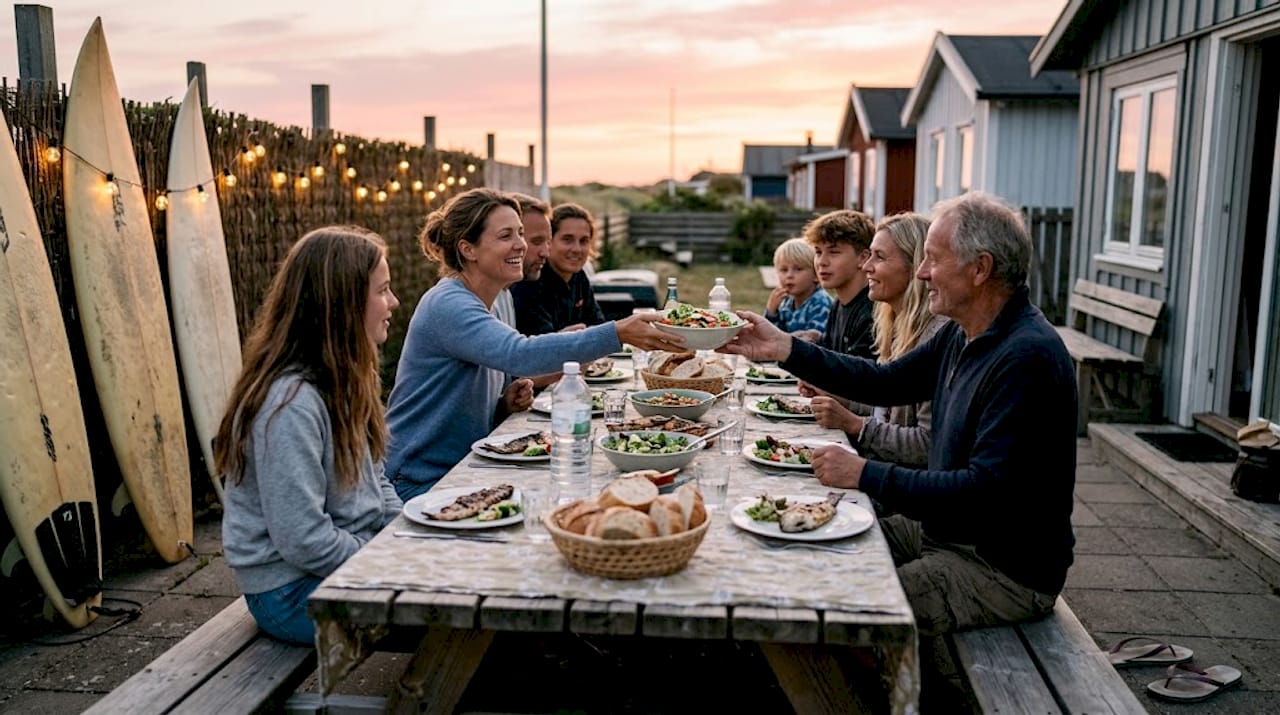
The surfers who hold back, eat alone, and retreat to their phones between sessions miss the real magic of the camp experience. Those who show up to every BBQ, say yes to the group cliff walk, and stay up a little too late swapping travel stories are the ones who leave with friendships that actually last.
The research backs this up. Shared meals, BBQs, and cultural excursions are what form lasting connections, not just shared surfing. There’s something about breaking bread together, or navigating a Portuguese village market as a group, that builds trust fast.
Here’s the difference between going solo versus diving into the group:
Experience factor | Solo participation | Group immersion |
Skill motivation | Self-driven, can plateau | Peer energy pushes you further |
Social connection | Limited, surface level | Deep, lasting friendships |
Local knowledge | Narrow, personal research | Collective tips and discoveries |
Fun level | Good | Noticeably higher |
The communal atmosphere benefits go beyond fun. Surfers in group settings tend to practice more, take more creative risks in the water, and ask better questions during lessons. Encouragement from a group is a genuine performance booster.
“The best surf camps don’t just teach you to surf. They give you a community that makes you want to surf better every single day.”
There’s also real value in choosing camps that offer structured group surf activities beyond the water. Yoga mornings, sunset viewpoint trips, and group cooking nights all create low-pressure social situations where friendships spark naturally. The real surf retreat benefits aren’t just physical. They’re social and emotional too.
Join every optional group activity for at least the first two days
Sit next to someone new at each meal
Volunteer to plan one evening outing for the group
Put your phone away during communal times
Level up your surfing: make the most of lessons and local waves
With camp life feeling familiar, the next priority is growing fast in the water.
One of the biggest mistakes beginner and intermediate surfers make is treating lessons passively. You paddle out, follow instructions, catch a few waves, and paddle back in. That’s learning, but it’s slow learning. The surfers who progress fastest treat every session like a workshop.
Here’s a step-by-step approach that actually works:
Tell your instructor your exact goal before each session. Not “I want to improve” but “I want to stop falling on my heel edge during my pop-up.”
Ask for video analysis. Many instructors will film your ride on a phone. Watching yourself surf is uncomfortable and extremely useful.
Take notes after every session. One or two key points max. Review them before paddling out the next morning.
Debrief with other campers in the evening. What did your instructor say that clicked? What didn’t work? Talking it through reinforces learning.
Practice the specific movement outside of sessions. Pop-up drills on the beach, balance board work, or even visualizing the motion while lying in bed all accelerate muscle memory.
Group lessons and shared coaching actually speed up learning because you benefit from watching your fellow campers receive feedback too. Seeing someone else solve a problem you have is often faster than hearing an explanation.
For fastest surf progression, choose the session type that matches your current level honestly. Beginners placed in intermediate groups often struggle and lose confidence. The reverse also applies. Know where you are, not where you wish you were.
Networking with local surfers is another underrated move. Ask your instructor where locals surf on rest days. Even a short conversation with a Portuguese surfer about their home break gives you context and insight that no lesson can replicate. The way surf accommodation connects you to the local surf community is part of what separates a camp stay from a hotel holiday.
Pro Tip: Spend 15 minutes each evening recapping the day’s key coaching points with a camp buddy. Teaching someone else what you learned is one of the most effective memory tools there is.
Go beyond the waves: connect with Portugal’s culture and nature
Some of the most memorable moments from a Portuguese surf camp happen nowhere near the ocean.
Portugal’s coastal villages carry centuries of fishing culture, ceramic traditions, and a slow, sun-drenched approach to daily life that feels like a genuine contrast to the rush of modern travel. If you spend your downtime scrolling through content you could consume anywhere, you’re leaving the best part of the trip untouched.
Authentic villages and markets provide much richer immersion and group bonding than typical tourist spots. A Saturday market in a small town near Peniche or Ericeira will show you more about Portuguese life than a dozen restaurant meals in Lisbon.
Here’s how to engage with local culture respectfully and meaningfully:
Learn five words of Portuguese before you arrive. Locals notice and appreciate the effort.
Buy something from a market vendor and ask them what it’s used for, even through gestures.
Accept invitations from locals. If a fisherman offers to show you his boat, go.
Skip at least one beach sunset and instead walk into the village during the golden hour.
Eat where the locals eat, not where the menu is translated into four languages.
Camps that incorporate cultural programming give you structure for this kind of exploration. The best ones weave it into the weekly schedule naturally. Understanding the broader surf lifestyle and culture in Portugal adds richness to your surfing experience that pure wave time simply cannot.
Activity type | Camp-organized | Independent exploration |
Village market visit | Guided, with context | Self-directed, more spontaneous |
Beachside BBQ | Social, group bonding | Personal, quieter experience |
Yoga session | Structured, led by instructor | Flexible timing, solo or paired |
Clifftop walk | Safe, local knowledge included | Freedom to explore at own pace |
What most surfers miss — and what actually makes surf camp unforgettable
Here’s the uncomfortable truth: most surf camp guests optimize for the wrong thing.
They fixate on wave count, swell forecasts, and whether they nailed their cutback. Meanwhile, the guest who spent Tuesday evening helping an elderly villager carry groceries and ended up sharing espresso at her kitchen table walked away with a story they’ll tell for twenty years.
In our experience at Ripar, the people who leave most transformed aren’t always the ones who surfed the most. They’re the ones who leaned hardest into community and culture. They sat in the uncomfortable spot at dinner next to someone they couldn’t easily talk to. They skipped a surf session to walk around the village during a local festival. They asked their instructor about his life, not just his technique.
The cultural engagement that sets memorable camps apart from generic tourist stays is not a bonus feature. It’s the main event. Surfing is the entry point. Portugal, the people, and the shared experience are what actually change you.
We’ve watched guests arrive as strangers on Sunday and leave as close friends by Saturday, all because they chose to show up fully rather than just physically. That’s the real return on a surf camp investment.
Start your adventure: find your ideal surf camp in Portugal
Everything covered in this guide, the preparation, the community immersion, the surf strategy, and the cultural curiosity, comes alive most fully when you’re at a camp that’s actually built around those values.
At Ripar Surf School, based at the authentic beach village of Praia Areia Branca near Peniche and Ericeira, we’ve been running surf camps since 2001 with exactly that philosophy. Small groups, experienced local instructors, communal meals, and real access to Portuguese coastal life. Whether you’re brand new to surfing or working on intermediate skills, you can Book a surf camp that fits your level and goals. If you prefer a more personal approach to learning, our private surf lessons give you dedicated coaching in some of Portugal’s best waves.
Frequently asked questions
What should I pack for a surf camp in Portugal?
Bring a wetsuit, reef-safe sunscreen, comfortable clothes for evening outings, and a notebook for lesson feedback. Communal living camps reward guests who also arrive with an open attitude for group activities.
How important is joining group meals or activities?
Very important. Shared meals, BBQs, and excursions are what turn a good camp stay into lasting friendships and genuine memories rather than just a surf week.
Can I experience Portuguese culture at a surf camp?
Absolutely. The best camps build cultural excursions into their program, and authentic villages and markets near spots like Peniche offer a depth of local immersion that tourist areas simply don’t match.
How can I improve my surfing fastest during my stay?
Tell your instructor your specific goal each session, ask for video review, and recap coaching points with fellow campers each evening. Group lessons and shared coaching also accelerate progress in ways solo practice rarely does.
Recommended
Comments