

How to book the perfect surf camp in Portugal

TL;DR:
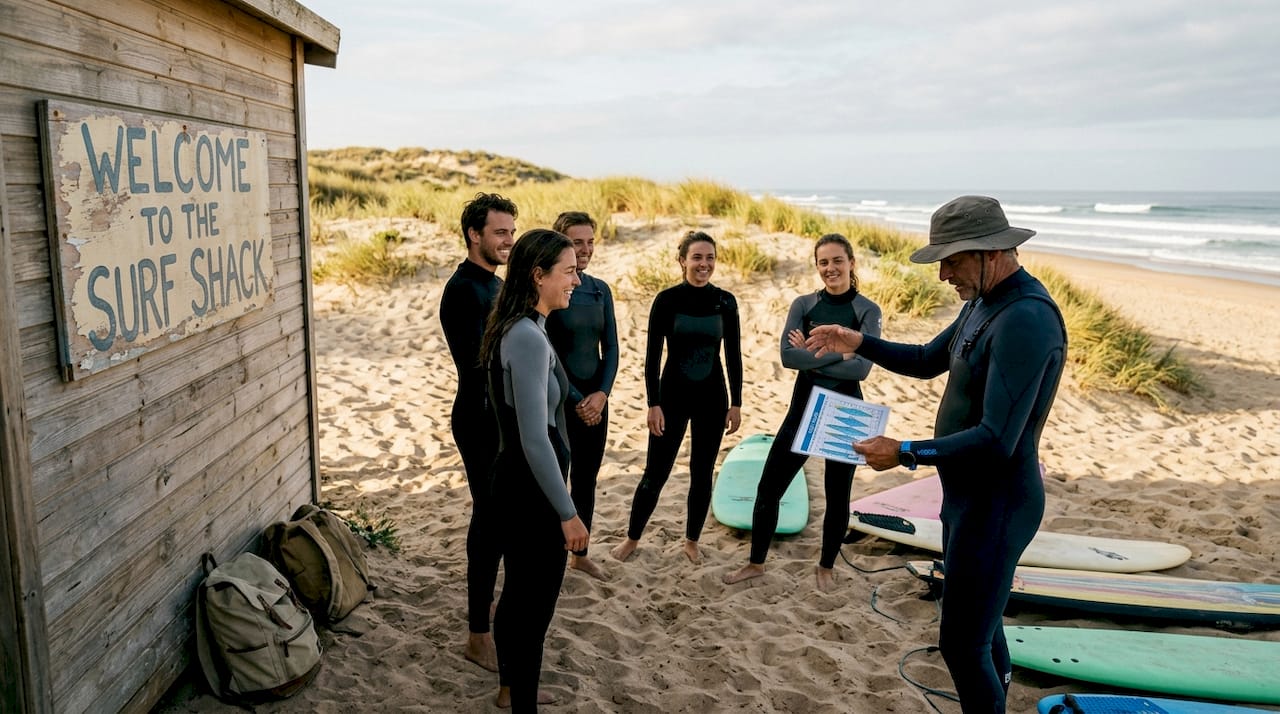
Accurately assess your surfing ability to choose the right camp level for optimal progress.
Timing and location should match your skill level and seasonal wave conditions for a better experience.
Select a camp with small group sizes, clear progression plans, and a supportive community environment.
Picking the right surf camp in Portugal sounds exciting until you’re staring at dozens of options, unsure whether your skill level matches the program, whether September is better than June, or whether the camp you’re eyeing actually delivers on its promises. The choices are real, and so is the risk of booking something that doesn’t fit. This guide walks you through every stage of the process, from honestly assessing your surfing ability to clicking “confirm” on your booking. Follow these steps and you’ll arrive at your Portuguese surf camp confident, prepared, and ready to make the most of every wave.
Table of Contents
Key Takeaways
Point | Details |
Assess your ability | Know your current surf skill and goals before choosing a camp. |
Pick the right season | Match your ability to the ideal surf season for wave size and water temperature. |
Compare camp features | Look for group size, instruction style, inclusions, and accommodation to find the best fit. |
Book early | Reserve your spot in advance, especially for summer and autumn, to secure top options. |
Value camp culture | Community and vibe matter as much as facilities for a memorable experience. |
Understanding your skill level and surf camp expectations
Before you compare prices or browse accommodation photos, you need to get honest about where you actually stand in the water. Most surfers overestimate their ability, and that’s not a judgment. It’s just human nature. Booking an intermediate camp when you’re still working on your pop-up leads to frustration, not progress.
Here’s a simple breakdown of what each level typically covers at a Portuguese surf camp:
Beginner: You’re new to surfing or have fewer than 10 sessions under your belt. You’ll work on paddling technique, pop-ups, and riding whitewater before graduating to green (unbroken) waves.
Intermediate: You can consistently catch green waves and ride along the face. Your focus shifts to turns, wave selection, and reading bigger or more powerful surf.
Advanced: You’re comfortable in overhead surf and working on specific maneuvers. Most camps don’t cater heavily to this level.
Beginners are assessed on arrival, grouped by skill, and progress from whitewater to green waves in 5 to 7 days, while intermediates focus on turns, wave selection, and handling bigger conditions. This means even if you misjudge your level slightly, a good camp will course-correct quickly.
Before booking, ask yourself these questions:
What’s my primary goal: learning from scratch, fixing bad habits, or pushing into bigger waves?
Do I want a structured daily program or more flexibility?
Am I comfortable in a group setting, or do I prefer one-on-one attention?
How important is the social side of camp life compared to pure surf time?
If you’re genuinely unsure about your level, check out some beginner surf lesson tips before committing to a full week. A single session can clarify everything. It also gives you a taste of the teaching style before you invest in a longer program.
Pro Tip: If you’re on the fence between beginner and intermediate, always book beginner. You’ll build better technique from the ground up, and instructors can fast-track you if you progress quickly.
“The best surf camp experience starts with accurate self-assessment. Surfers who know their limits learn faster and enjoy the process more.” This is the quiet wisdom that separates a transformative week from a frustrating one. The community atmosphere at surf camps also plays a big role in keeping motivation high when the waves get tricky.
Choosing the best time and location for your surf camp
Portugal’s Atlantic coastline is one of the most consistent surf destinations in Europe, but the conditions change dramatically by season. Matching your skill level to the right time of year is just as important as picking the right camp.
Here’s a quick seasonal breakdown:
Season | Wave size | Water temp | Best for |
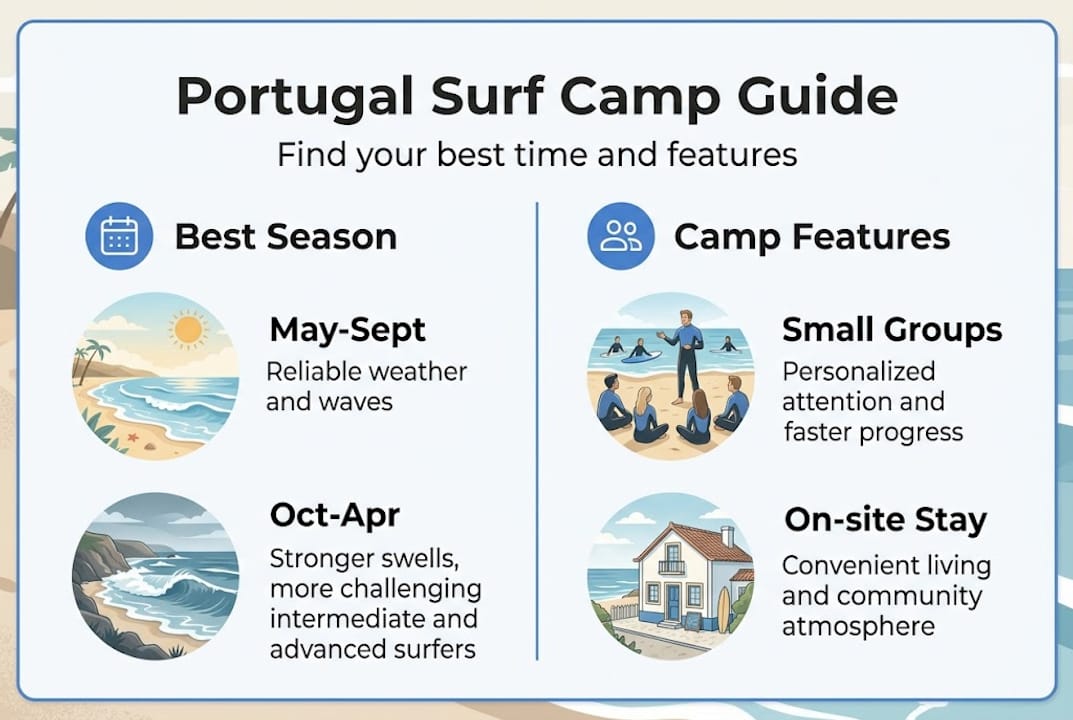
May to September | 1 to 1.5m | 18 to 22°C | Beginners, families |
October to November | 1.5 to 2.5m | 16 to 18°C | Intermediates |
December to February | 2 to 4m+ | 14 to 16°C | Advanced surfers |
March to April | 1 to 2m | 15 to 17°C | Intermediates |
Beginners benefit most from May through September, when waves are 1 to 1.5 meters and water is warm, while intermediates should consider autumn or winter for bigger, more powerful swells.
For location, Portugal’s main surf regions each have a distinct character:
Peniche and Praia Areia Branca: World-class beach breaks, consistent year-round swell, and a relaxed village atmosphere away from mass tourism. Ideal for all levels.
Ericeira: Europe’s only World Surfing Reserve, with a range of reef and beach breaks. Better suited to intermediates and above.
Algarve: Warmer, calmer waters in summer. Great for absolute beginners but can get crowded.
Nazaré: Famous for giant waves. Not for beginners, but worth visiting just to watch.
For a deeper look at timing your trip, the best time of year for surf camps varies depending on your goals, and it’s worth reading up before you commit to dates. You can also explore surf camp locations to compare the vibe of different regions.
Pro Tip: Book at least 3 to 4 months in advance for summer and early autumn. The best camps fill up fast, and last-minute options are often the ones nobody else wanted.
If you’re planning to stay on-site, look into surf house accommodation options early. Bundled surf-plus-accommodation packages are usually better value and create a more immersive experience than staying separately.
What to look for in a Portuguese surf camp
Not all surf camps are created equal. The price tag doesn’t always reflect quality, and a glossy website can hide a lot of mediocrity. Here’s what actually matters when comparing your options.
Key features to evaluate:
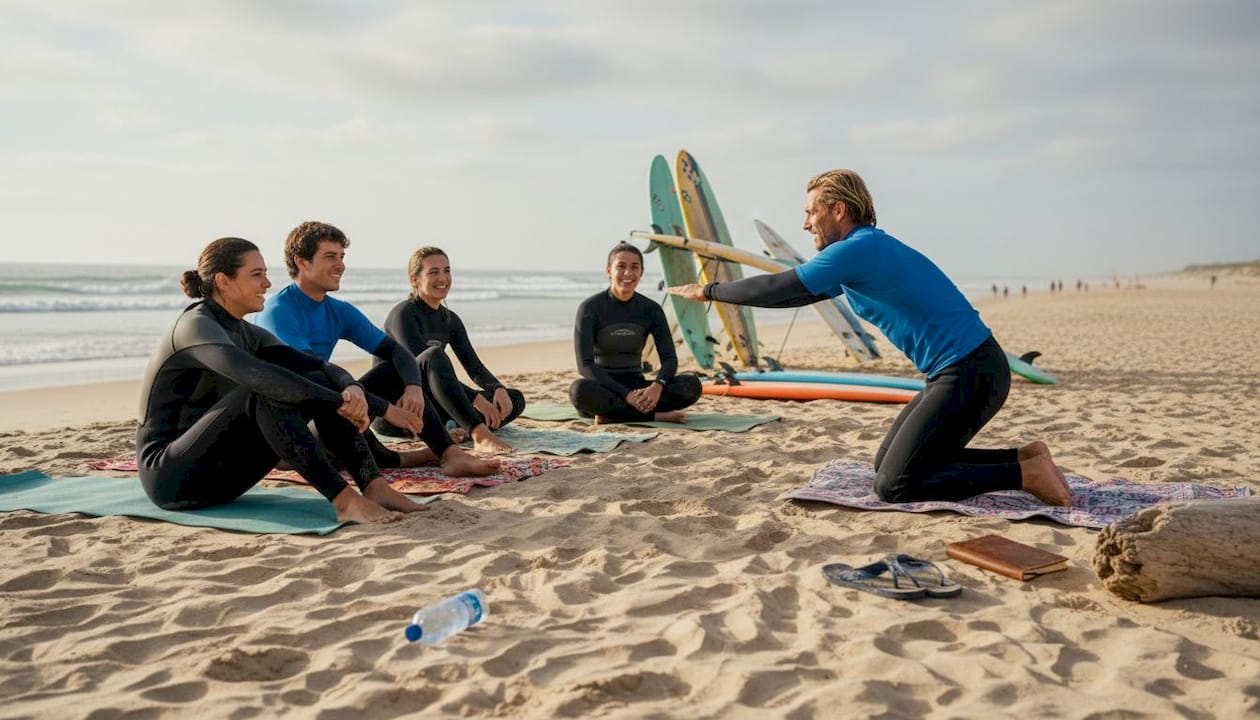
Group size: Smaller groups (6 to 8 people per instructor) mean more personalized feedback and faster progress.
Progression structure: Does the camp have a clear plan for your development, or is it just “surf every day and hope for the best”?
Video analysis: Some camps film your sessions and review footage with you. This is one of the fastest ways to fix technique problems.
Beach theory sessions: Pre-surf briefings on ocean safety, wave reading, and positioning are a sign of a serious, safety-conscious camp.
Extra activities: Yoga, fitness sessions, and social evenings add real value to a week-long stay.
Here’s a comparison of what a basic camp versus a quality camp typically offers:
Feature | Basic camp | Quality camp |
Group size | 10 to 15 per instructor | 6 to 8 per instructor |
Progression plan | Generic | Personalized |
Video analysis | Rarely included | Often included |
Beach theory | Minimal | Structured daily |
Social activities | None | Yoga, evenings, excursions |
Small group lessons, video analysis, and structured progression from whitewater to green waves are the markers of a camp worth booking. If a camp can’t tell you clearly how they’ll track your progress, that’s a red flag.
For accommodation, consider whether you want to stay on-site or nearby. Options like Neptune Surf House, Surf House Praia Areia Branca, and Native Surf House Peniche each offer a different atmosphere and proximity to the surf.
Pro Tip: Read reviews specifically for mentions of the social atmosphere, not just wave quality. A camp where people feel welcomed and supported produces better surfers, not just happier guests.
Step-by-step surf camp booking process
You’ve done your research. You know your level, your ideal timing, and the features you want. Now it’s time to actually book. Here’s the process that works.
Build a shortlist. Narrow your options to 3 to 5 camps that match your level, dates, and budget. Check their websites, social media, and independent reviews.
Check availability. Contact each camp directly to confirm spots for your dates. Don’t assume online calendars are always up to date.
Ask the right questions. Inquire about group sizes, instructor qualifications, what’s included in the package, and cancellation policies.
Compare packages. Look at what’s bundled. Meals, accommodation, equipment rental, and airport transfers can add up fast when booked separately.
Confirm your booking. Most camps require a deposit (typically 20 to 30 percent) to hold your spot. Pay securely and get written confirmation.
Sort your documents. Arrange travel insurance that covers water sports, and check whether the camp requires any health forms or waivers in advance.
Plan your arrival. Confirm transfer options, check-in times, and what to bring. Most camps provide surfboards and wetsuits, but personal items like reef-safe sunscreen are on you.
Book early for summer and autumn to get the best choice of camps and accommodations. Waiting until a month before your trip in peak season is a gamble you don’t want to take.
You can book surf lessons online directly, which is the fastest way to lock in your spot. For group options, the group surf lesson booking page covers what’s included and how sessions are structured. If you want a broader overview before committing, the surf lesson planning guide walks through what to expect from your first session to your last.
Pro Tip: When booking a bundled package, ask if you can swap a surf session for a rest day without losing value. Quality camps are flexible and understand that recovery is part of progression.
What most surf camp guides miss: The importance of camp culture
Every surf camp guide covers timing, location, and what to pack. Very few talk about the thing that actually determines whether you leave Portugal a better surfer: the culture of the camp itself.
We’ve seen it repeatedly. Two surfers with identical skill levels book different camps. One returns stoked, having made real progress and genuine friendships. The other comes back frustrated, feeling like just another booking number. The waves were similar. The difference was the people and the environment around them.
A camp with a welcoming, inclusive culture pushes you to try harder, ask more questions, and stay in the water longer. You can spot these camps before you arrive. Look for testimonials that mention the staff by name, describe the group dynamic warmly, and talk about feeling supported rather than just instructed.
The surf camp community tips we share come from over two decades of watching what actually works. Culture isn’t a bonus feature. It’s the foundation. Choose a camp where you’d feel comfortable asking a basic question on day five, not just day one.
Book your Portuguese surf camp with confidence
You now have everything you need to choose and book a surf camp that genuinely fits your goals. The next step is simple: act on it.

At Ripar Surf School and Surfcamp Portugal, we’ve been helping surfers of all levels find their feet in the Atlantic since 2001. Whether you want to book your surf camp for a full week or explore flexible options through our online booking system, we make the process straightforward. Need a place to stay? Our surf house accommodation puts you steps from the beach in a relaxed, community-driven setting. Small groups, certified local instructors, and a village atmosphere that keeps you coming back.
Frequently asked questions
What should I pack for a surf camp in Portugal?
Bring a 3/2 wetsuit for summer, reef-safe sunscreen, water shoes, and comfortable beach gear. Most camps provide surfboards and wetsuits, so check what’s included before overpacking.
When is the best time to book a surf camp in Portugal?
For beginners, May through September offers warm water and 1 to 1.5 meter waves, while intermediates get more out of autumn and winter swells. Book as early as possible for peak season.
Should I book surf lessons before arrival or at the camp?
Always book in advance. Summer and autumn spots fill quickly, and camps prioritize pre-bookings, so waiting until you arrive often means limited availability or larger group sizes.
How do surf camps in Portugal assess my level?
Camps assess your skills on arrival and place you in small groups by ability for tailored instruction. This ensures you’re always learning at the right pace, not holding others back or being left behind.
Recommended
Comments