

Portugal Winter Surf: Teacher Tested Month Plan and Lessons from €40

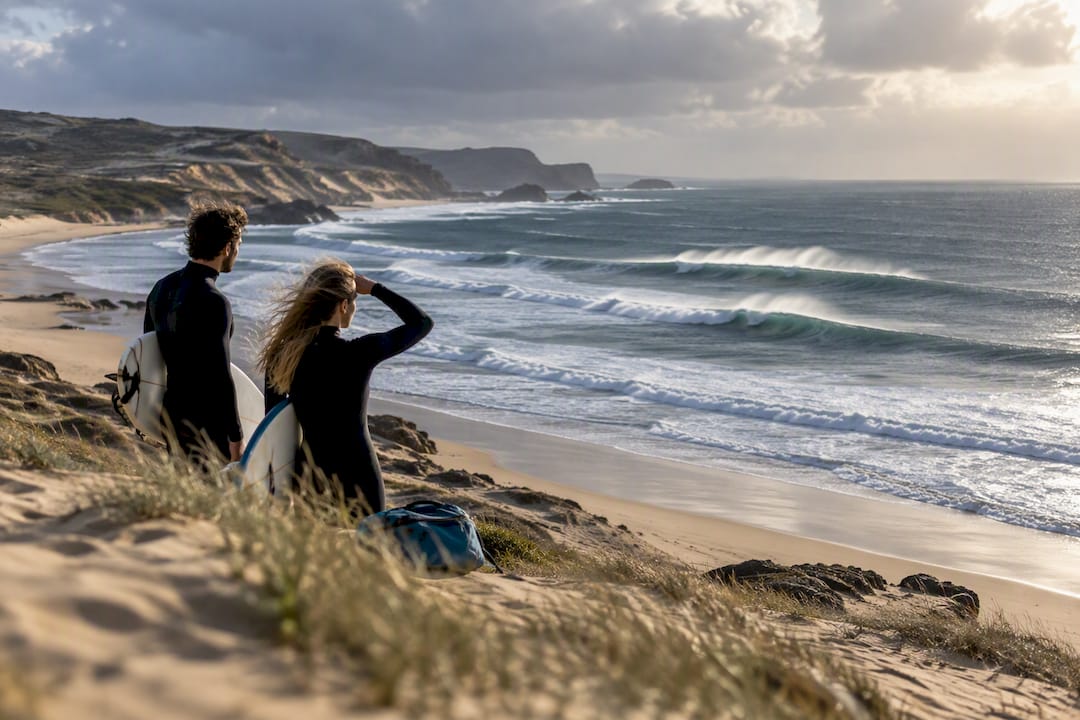
Yes, winter is often the best time to surf Portugal: bigger, more consistent Atlantic swell and fewer crowds than any other season. But you need a thicker wetsuit, and you must check swell, wind, and tide before you paddle out. Start with Peniche or Ericeira if you’re intermediate or better; beginners should book a lesson and lean on local knowledge from a school like Ripar Surf School to pick a sheltered day.
TL;DR:
Winter offers the best surf conditions with bigger, more consistent swells that outperform summer waves on many Portugal breaks.
Cold water and weather demand thicker wetsuits, boots, and hoods, with a preference for 4/3mm to 5/4mm gear depending on the month and location.
Choosing the right spot is crucial, with Peniche, Ericeira, and the Algarve providing safer, more sheltered options for less experienced surfers and larger, more powerful waves for experts.
Proper planning, including checking swell, wind, tide, and safety protocols, is essential, as winter waves can be unpredictable and currents stronger.
Booking guided lessons and accommodation packages early is highly recommended due to increased demand and variable conditions during the winter season.
Table of Contents
Surf No Inverno Portugal: Why the Cold Season Pays Off
Winter turns the Portuguese coast into a different animal. The same beaches that feel gentle in July start pulling in Atlantic groundswells that are bigger, longer-period, and far more consistent, which is exactly what a surfer needs to actually improve rather than just bob around waiting for a set. This is the real reason experienced travelers plan a winter surf trip in Portugal rather than a summer one.
The trade is straightforward. You get better waves and empty lineups, but you pay for it in water temperature and unpredictability.
Bigger, cleaner swell. Winter storms in the North Atlantic generate longer-period waves that hold their shape and push more power into breaks like Supertubos and Ribeira d’Ilhas.
Fewer people, more waves. Off-season crowds thin out dramatically, which means more waves per session and cheaper lodging.
Colder water and moodier weather. Sea temperatures drop into the mid-to-high teens Celsius, and winter conditions demand more preparation than a summer trip ever would.
Storm windows. Big swells arrive in pulses tied to the Atlantic low-pressure systems, so flexibility in your travel dates pays off.
None of this makes winter a worse choice. It just makes it a season that rewards preparation over impulse.
Best Winter Surf Spots by Region
Choosing where to surf matters more in winter than in any other season, because a spot that’s perfect on a small summer day can turn genuinely dangerous once the swell doubles in size. Here’s how the main regions stack up.
Silver Coast and Peniche. This stretch is the most versatile base for a winter trip. Supertubos handles serious size and rewards advanced surfers with a hollow, punchy beach break, while nearby spots like Lagide offer a gentler, less committing option on the same swell. Peniche’s mix of breaks means you rarely have a day with zero options.
Ericeira. A World Surfing Reserve built almost entirely on reef breaks, Ericeira fires reliably through autumn and winter. Ribeira d’Ilhas and Coxos are best left to intermediate and experienced surfers, though a handful of more sheltered bays inside the reserve give newer surfers a way in on smaller days.
Nazaré. This is a specialist’s spot, full stop. Praia do Norte produces some of the biggest rideable waves on the planet, and it belongs to tow teams and professional big-wave surfers, not visiting intermediates looking for a fun session.
Algarve (Sagres, Arrifana, Praia do Amado). When the west coast is maxed out, the Algarve becomes the smart move. Its two-coast geography lets surfers switch from raw west-facing swell to calmer, south-facing bays within a short drive, and it holds the warmest water of any Portuguese region through winter.
North coast and Alentejo. Colder, wilder, and far less crowded, these stretches suit confident surfers who already know how to read an unfamiliar break and check access before committing.
What to Wear: Winter Wetsuits, Boots, and Boards
Winter surf in Portugal is a different kit list than summer, and getting it wrong means a short, miserable session. The core upgrade is thickness: 4/3mm to 5/4mm depending on the month and region, not the 3/2mm that gets you through August.
October: A 3/2mm or light 4/3mm still works in most spots, especially in the south.
November through February: 4/3mm is the minimum almost everywhere; go 5/4mm with a hood on exposed north-facing days.
Boots and gloves: Add 3mm to 5mm boots once water drops below roughly 15°C, and gloves on the coldest, windiest sessions.
Hood: Worth packing for any exposed north or central coast trip in December or January.
Board volume: A touch more volume helps you paddle through heavier winter waves, and a step-up board earns its keep on the biggest days.
Pro Tip: Warm your wetsuit with a kettle of hot water poured down the neck before you paddle out, and keep a thick changing poncho in the car. Both tricks shave minutes off the shivering and get you back in a warm layer faster once you’re out of the water.
Reading Forecasts and Staying Safe in Winter Swell
Winter waves punish bad planning more than any other season, so the prep matters as much as the paddling. Work through this before every session.
Check swell height, period, and direction together. A big swell with a short period breaks messy and closes out; a smaller swell with a long period can be the better call. Wind direction often decides the day, since strong onshore wind can wreck an otherwise excellent swell while offshore wind cleans up something smaller.
Cross-reference the tide with the specific spot. Reef breaks like those around Ericeira behave completely differently at low tide than at high, and beach breaks like Supertubos shift their sandbanks after every big swell.
Scout the entry and exit points before you paddle out. Winter swells create stronger currents and fewer safe channels than summer surf.
Never surf alone in winter conditions, and tell someone your plan. Respect the surfers who already know the break, and always have a bail-out plan for a bigger-than-expected set.
Build base fitness before a winter trip. Strong cardio, shoulders, and core matter more when you’re duck-diving heavier water, and basic breath-control practice pays off the first time you get caught inside.
Good surf conditions in Portugal come down to reading these signals together rather than fixating on wave height alone.
Month-by-Month: October Through February
October consistently gets singled out as the best all-around month for a Portugal surf trip, and the numbers back it up.
October’s combination of consistent swell, warmer water, and thin crowds makes it the sweet spot for a mixed-ability group. December and January bring the biggest, coldest swells of the year. They are better suited to exposed west-coast breaks and experienced surfers, while the Algarve stays the warmest and most forgiving region across the whole stretch.
What Ripar Surf School Has Learned About Winter Sessions
A surf school has been offering lessons near Peniche and Ericeira since 2001, and winter is where local knowledge earns its keep. A certified instructor who surfs a break daily knows which sandbank is working, which tide window is safe, and which day to send a beginner to a sheltered spot instead of the main peak.
Booking a lesson in winter shortens the learning curve and keeps you out of conditions you’re not ready for, which matters more here than in any gentler summer swell.
Where to Stay for a Winter Surf Trip
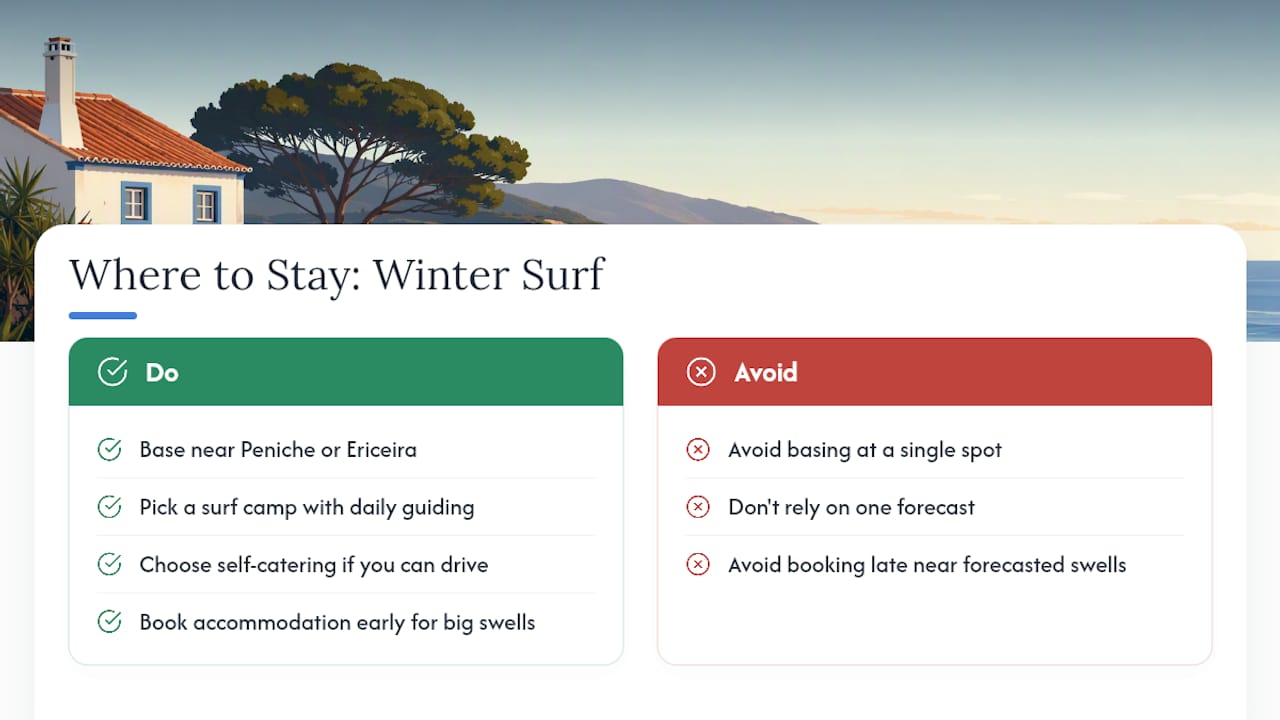
Picking a base matters as much as picking a spot, because winter swells often mean driving between breaks depending on the day’s wind and size. Staying centrally around Peniche or Ericeira gives you the shortest drive to the most options when conditions shift overnight.
Surf camp packages solve a real winter problem: guesswork around where to sleep and how to get to the right break each morning. A camp that bundles accommodation with daily surf guiding removes the need to track five different forecasts yourself, since local instructors are already doing that.
For travelers who want more independence, self-catering options near the coast work well too, especially if you’re comfortable driving between spots. Either way, book early. Winter demand has grown as more surfers realize the season offers better waves at lower prices, and the best-located rooms near Peniche and Ericeira fill up around the biggest forecasted swells.
Whatever you choose, keep your base within a short drive of at least two or three different breaks. Winter’s defining feature is variability, and a single spot rarely holds ideal conditions for an entire week. Flexibility in lodging location translates directly into more good surf days.
Winter Surf Culture: Quieter Lineups, Deeper Community
Winter strips away the tourist crowds and leaves something closer to the sport’s actual culture. Local surfers who disappear during the packed summer months come back out, and lineups at spots like Ribeira d’Ilhas or Supertubos fill with people who’ve surfed the break for years and know exactly how it works on a given tide.
That local presence changes lineup etiquette. Priority and respect for regulars matter more when the crowd is smaller and everyone recognizes each other, so a visiting surfer who takes a minute to watch before paddling out earns goodwill fast. Surf towns like Ericeira and Peniche also settle into a quieter, more community-driven rhythm in winter, with cafes and surf shops staying open for the regulars who live there year-round rather than the summer rush.
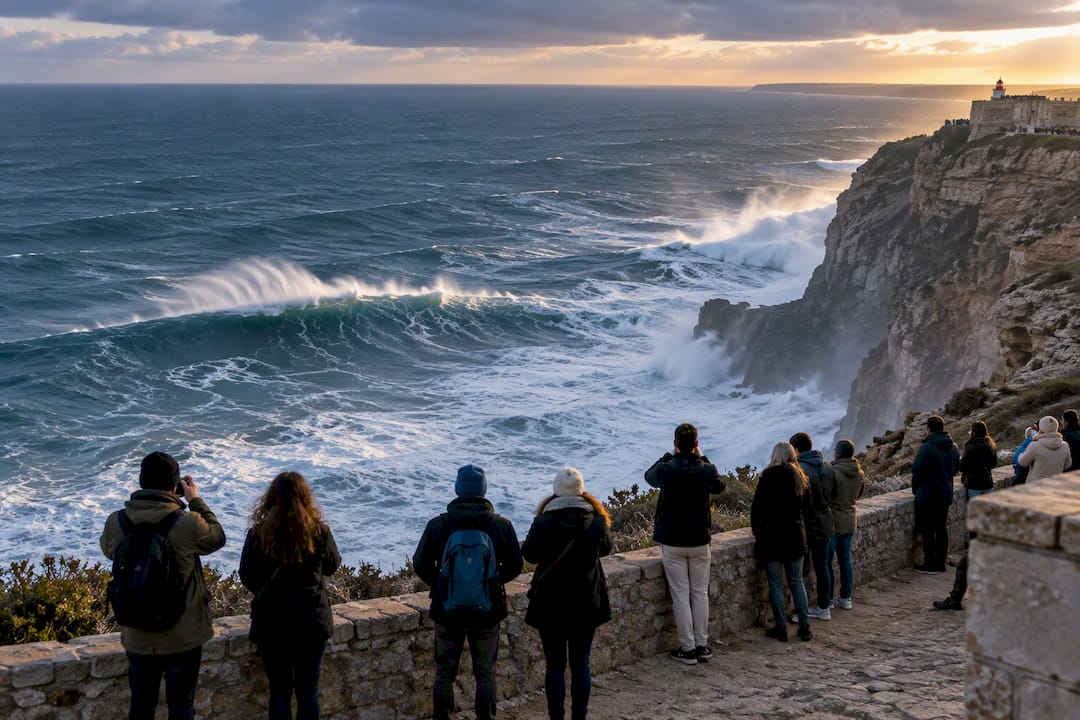
Winter also lines up with some of the country’s biggest surf moments. The World Surf League’s big-wave events at Nazaré draw crowds of spectators to the cliffs above Praia do Norte whenever a major swell is forecast, turning a normal Tuesday into an impromptu gathering. Even if you’re not paddling out there yourself, watching a session from the headland is worth building into a winter itinerary.
Getting Around: Reaching Portugal’s Winter Breaks
Peniche and Ericeira both sit within roughly an hour of Lisbon, making them the easiest winter bases to reach without a long drive. A rental car is close to essential in winter, since the best call some mornings is chasing a cleaner wind window an hour up or down the coast rather than sitting on one beach hoping it improves.
Public transport connects Lisbon to Ericeira and Peniche, but bus schedules thin out in the off-season and rarely align with the early starts a good winter dawn patrol demands. If Lisbon itself is your base, a handful of accessible breaks sit close to the city, and a rundown of Lisbon’s surf spots by skill level is worth checking before you commit to a longer drive north.
The Algarve requires more planning. It sits roughly three hours from Lisbon by car, so most winter trips either treat it as a standalone destination or as a fallback base once a west-coast storm makes the exposed breaks unsuitable.
A Local Take on Winter Surf Etiquette
Winter rewards patience more than any other season here. The swells are bigger, the lineups are smaller, and the surfers who’ve spent years on a break like Ribeira d’Ilhas or Supertubos deserve the priority that comes with that experience. Watch a lineup before you paddle into it, and don’t force your way onto a peak you don’t understand yet.
If a spot or swell size feels bigger than what you’re used to, book a lesson. A surf holiday built around local guidance beats guessing your way through unfamiliar winter conditions every time.
— Fernando
Book Your Winter Surf Session With Ripar Surf School
A surf school offers guidance from local instructors who surf Peniche and Ericeira year-round and help select appropriate spots and tide windows for different skill levels, rather than leaving surfers to piece together forecasts alone.

Ripar has run lessons and surf holidays out of Praia Areia Branca since 2001, with a lineup built for winter conditions specifically: a Beginner Surf Lesson starting from €40, Private Lessons for tighter, faster progression, and full surf camp packages that pair daily coaching with accommodation so you’re not managing logistics between sessions. Equipment rental is available on-site if you’d rather not travel with a winter-weight wetsuit and boots.
If you’re planning a winter trip, check dates and book a surf camp package before the best swell windows fill up.
Forecast Tools Worth Bookmarking
Surf-forecast’s Portugal maps for regional swell, period, and wind by spot.
Local tide tables for cross-checking reef and beach breaks before you paddle out.
Portugal-specific season guides for month-by-month water temperature and swell averages.
Sources
FAQ
What Are the Best Places to Surf in Portugal in Winter?
Peniche and Ericeira lead the list for their range of breaks and reliable winter swell, while the Algarve offers the warmest, most sheltered option when the west coast gets too big. Nazaré belongs to big-wave specialists only, and the north coast suits confident surfers comfortable with colder, less crowded conditions.
What Is There to Do in Peniche During Winter?
Beyond surfing Supertubos and the area’s other breaks, Peniche offers a working fishing harbor, seafood restaurants that stay open year-round, and easy access to the Berlengas islands viewpoint. It’s also one of the best bases for a surf lesson since instructors can pick from several nearby spots depending on the day’s swell and wind.
What Are the Best Wave Beaches in Portugal?
Supertubos in Peniche and Ribeira d’Ilhas in Ericeira are widely considered the country’s standout beaches for consistent, high-quality waves. Nazaré’s Praia do Norte holds the record for scale, but it’s built for professional big-wave surfing rather than a typical surf trip.
What Are the Best Surf Beaches Along the Costa Vicentina?
Praia do Amado, Arrifana, and Sagres anchor the Costa Vicentina and offer a mix of beginner-friendly beach breaks and more powerful reef and point setups. Their south and southwest exposure means they often hold cleaner, more sheltered conditions when the central and north coasts are blown out by winter storms.
How Much Does a Winter Surf Lesson Cost With Ripar Surf School?
A single Beginner Surf Lesson starts from €40, and Full-Day sessions run €70 per day. Private Lessons range from €100 to €190 depending on group size and duration, with current package pricing listed on the Ripar Surf School price list.
Recommended
Comments