

Surf lifestyle explained: Culture, skills & community

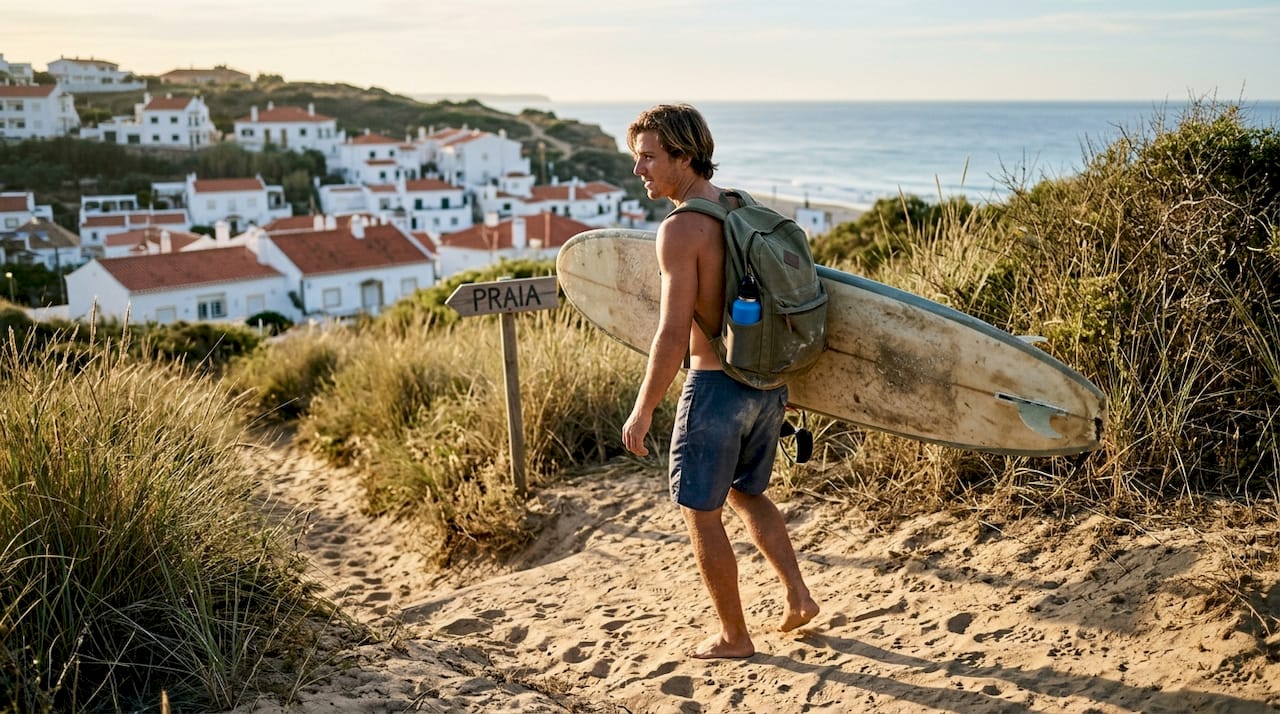
Portugal’s surf scene is one of the most compelling in the world, and yet most people who book their first lesson think it’s purely about standing on a board. It isn’t. Surf lifestyle is a full culture, built on physical discipline, ocean respect, community bonds, and a mindset that reshapes how you see the world. Portugal, which has hosted WSL events since 2009 and transformed fishing villages into globally recognized surf hubs, offers one of the richest environments to experience all of this firsthand. This guide walks you through every layer of that culture.
Table of Contents
Key Takeaways
Point | Details |
Surf lifestyle is holistic | It combines fitness, mindset, etiquette, and community, not just wave riding. |
Portugal offers unique surf culture | Fishing villages and modern hubs provide authentic surf experiences and global events. |
Daily habits make the difference | Consistent physical training, breathwork, and participation in lessons deepen immersion. |
Community and sustainability matter | Eco-friendly camps and local respect are central to Portugal’s surf lifestyle. |
Practical entry points available | Surf lessons, camps, and local guides help newcomers fully engage with the surf lifestyle. |
What defines the surf lifestyle
Surf lifestyle is not a trend. It’s a set of values and habits that shape how surfers move through the world, both in and out of the water. Think of it as a triangle: physical skill, mental approach, and community responsibility. Remove any one side and the whole thing collapses.
The physical side is more demanding than it looks. Paddling requires serious shoulder and core endurance. Popping up on a board needs explosive hip mobility. And staying calm when a wave holds you under requires practiced breathwork. According to surf fitness experts, breathwork and core stability are among the most overlooked yet highest-impact skills a surfer can develop.
The mental side is just as real. Surfing teaches patience in a way few sports do. You can’t force a wave. You wait, you read the ocean, and you act when the moment is right. That kind of attentiveness spills into daily life in surprisingly useful ways.
Then there’s community. The lineup, which is the area where surfers wait for waves, has its own social code. Key rules include:
Right of way: The surfer closest to the peak of the wave has priority.
No dropping in: Never take off on a wave someone else is already riding.
Communicate: A simple nod or call prevents most collisions.
Respect locals: They know the break and set the tone.
This etiquette isn’t just politeness. It’s safety. And learning it is part of what makes you a surfer, not just someone who surfs.
“The ocean doesn’t care how cool you look. It rewards preparation, awareness, and humility.”
Exploring authentic Portugal surf culture shows how deeply these values are embedded in the local scene. And the community atmosphere in surf camps is where many travelers first experience them in action.
Pro Tip: Practice box breathing (four counts in, four hold, four out) before paddling out. It lowers anxiety and improves your breath-hold tolerance if you get caught under a wave.
Surf lifestyle in Portugal: History and local flavor
Portugal didn’t become a surf destination by accident. Its Atlantic-facing coastline catches powerful swells year-round, and its fishing villages had the kind of raw, unpretentious character that early surf culture thrived on. Peniche, once known almost entirely for its fishing industry, is now one of Europe’s most respected surf towns.
The shift accelerated when Portugal began hosting WSL events since 2009, bringing global attention to breaks like Supertubos. That visibility attracted international surfers, surf schools, and tourism investment. But what makes Portugal different from, say, Bali or Hawaii is that the local culture didn’t disappear under the pressure. It adapted.
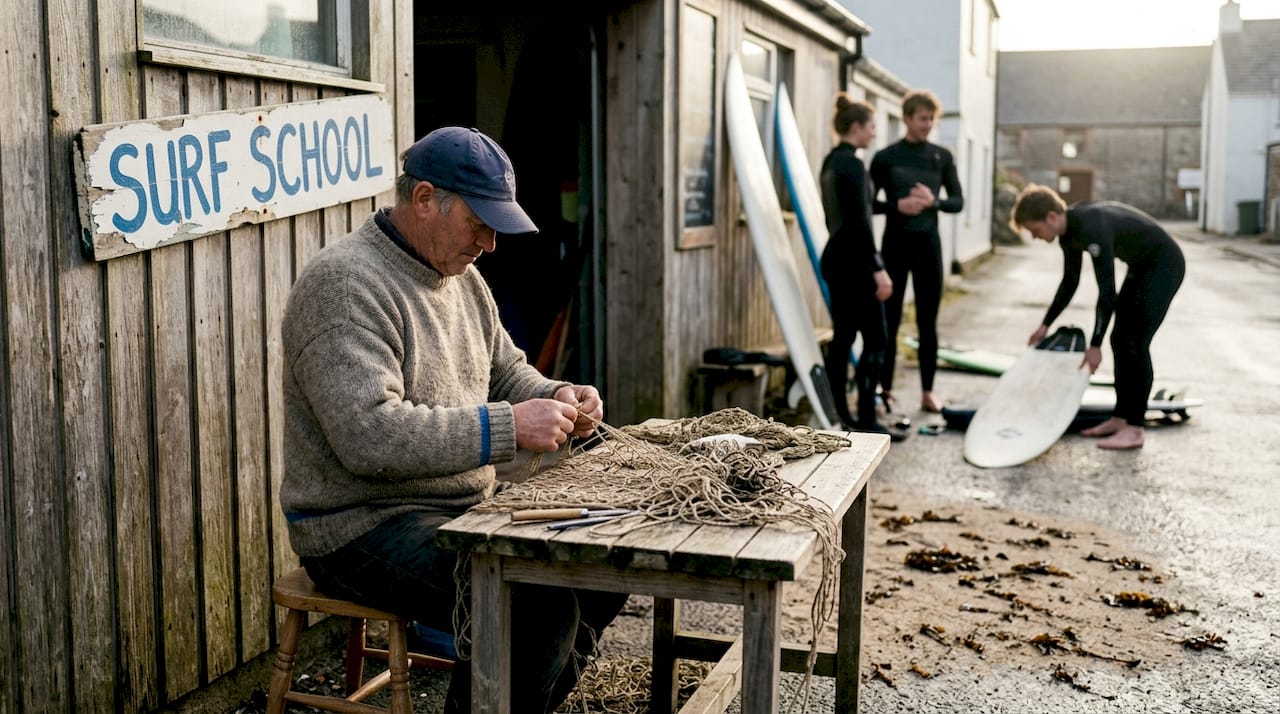
You still find fishermen mending nets near surf schools. You still eat grilled sardines at a table ten meters from the ocean. The surf community here balances tradition with modern tourism in a way that feels genuine rather than manufactured.
Feature | Portugal surf towns | Generic tourist beach towns |
Local food culture | Strong, seafood-centered | Often diluted or commercialized |
Surf event history | WSL-level since 2009 | Rarely hosts major events |
Community feel | Tight-knit, local-led | Often transient and impersonal |
Eco-awareness | Growing, camp-driven | Variable |
What you’ll find across Portugal’s coastal towns:
Fresh seafood markets steps from the beach
Live music at small bars frequented by locals and surfers alike
Eco-friendly surf camps that prioritize low-impact travel
Festivals that blend surf culture with regional traditions
Exploring authentic surf culture in Portugal gives you a deeper sense of how these elements connect. And checking out the top surf spots in Portugal helps you match the right location to your skill level and interests.
“Portugal’s surf scene is one of the few places where global surf culture and local identity have grown together rather than one replacing the other.”
Essential habits and skills for living the surf lifestyle
Knowing what surf lifestyle means is one thing. Building the habits that make it real is another. The good news is that you don’t need to be an athlete to start. You need consistency and the right framework.
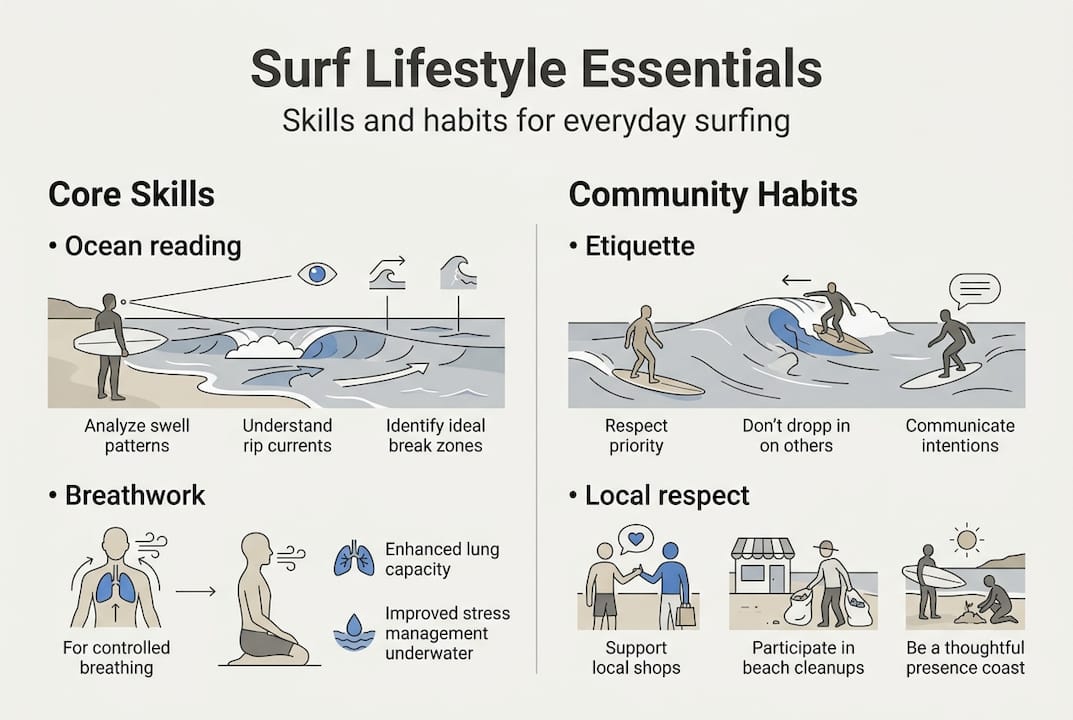
Here are the four core practices to build first:
Breathwork. Start with five minutes of controlled breathing each morning. This trains your nervous system to stay calm under pressure, which matters enormously when a wave pushes you underwater.
Pop-up drills. Practice the motion of going from lying flat to standing on your board on dry land. Muscle memory built on the beach transfers directly to the water.
Ocean reading. Learn to identify rip currents, wave sets, and how the tide affects the break. This is a skill that surf-specific training programs emphasize heavily because it keeps you safe and improves your wave selection.
Etiquette practice. Watch experienced surfers in the lineup before paddling out. Observe how priority works in real time.
Habit | Surf camp approach | Solo training approach |
Breathwork | Guided sessions with instructors | Self-directed, often inconsistent |
Pop-up drills | Daily structured practice | Irregular, easy to skip |
Ocean reading | Taught in context, real conditions | Learned slowly through trial and error |
Etiquette | Modeled by instructors and peers | Picked up informally, often after mistakes |
Understanding surf conditions in Portugal is a key part of ocean reading. Conditions here change fast, and knowing how to read a forecast is as important as knowing how to paddle.
Pro Tip: Joining immersive surf camp experiences compresses months of solo learning into days. You get real-time feedback, structured practice, and the social accountability that keeps you showing up.
Applying surf lifestyle: Lessons, camps, and community immersion
Skills and habits are built faster in the right environment. That’s why surf camps and structured lessons aren’t just convenient. They’re genuinely the most effective way to absorb surf lifestyle, not just surf technique.
Portugal’s surf camps stand out because many of them are locally run, small in scale, and deeply connected to the communities around them. That’s a meaningful difference. A camp run by local instructors who grew up surfing these breaks offers something no generic resort program can match: real context.
What you get from quality surf camp immersion:
Structured lessons that progress from beach safety to reading waves to riding green waves confidently
Community gatherings like evening bonfires, group meals, and local surf film screenings
Sustainability practices such as beach cleanups, reef-safe sunscreen policies, and support for local conservation efforts
Cultural access through local guides who know which spots to visit, which cafes to eat at, and which events to attend
Flexible lesson formats from group sessions for social learners to private coaching for faster technical progress
Portugal’s sustainable surf camps are increasingly recognized for balancing tourism growth with environmental responsibility. That balance matters because overcrowding is a real risk in popular surf towns, and camps that prioritize local respect help keep the culture healthy.
The surf camp atmosphere in Portugal is also worth experiencing simply for the people you’ll meet. Surf travelers tend to be curious, open, and adventurous. The friendships formed in a week at camp often outlast the trip itself.
Pro Tip: When choosing a camp, ask specifically whether your instructors are local. Local guides don’t just know the waves. They know the culture, the history, and the unwritten rules that make the experience authentic. You can also explore surf house Portugal options for accommodation that keeps you close to the action.
Why embracing surf lifestyle in Portugal is more than just a sport
Here’s something most surf articles won’t tell you: the biggest transformation that happens in Portugal’s surf scene isn’t physical. It’s attitudinal.
Surfers who commit to the lifestyle, not just the sport, come back different. More patient. More attuned to natural rhythms. More comfortable with uncertainty. These aren’t soft outcomes. They’re genuinely useful ways of moving through the world, and Portugal’s environment accelerates them.
The reason is that Portugal’s surf culture still rewards presence. You can’t scroll your phone while reading a swell. You can’t multitask your way through a lineup. The ocean demands full attention, and that demand is actually a gift.
Portugal’s eco-camps and balanced tourism approach also models something important: that enjoying a place and protecting it aren’t opposites. The camps that do this well show travelers that sustainability isn’t a sacrifice. It’s a better way to travel.
The authentic surf culture here is built on long-term relationships between surfers, locals, and the ocean itself. Visitors who engage with that culture, rather than just passing through it, leave with something that no souvenir can replicate.
Pro Tip: Spend at least one evening at a local surf bar or community event. The conversations you have onshore are often just as formative as anything that happens in the water.
Ready to dive in? Explore surf lessons and camps in Portugal
If this guide has made one thing clear, it’s that surf lifestyle is something you experience, not just read about. The fastest path into Portugal’s surf community is through hands-on immersion with people who know it best.
At Ripar Surf School and Surfcamp Portugal, we’ve been running lessons and camps from Praia Areia Branca since 2001. Our local instructors don’t just teach technique. They introduce you to the culture, the conditions, and the community that make this coastline special. You can book surf lessons online and choose the format that fits your level, from beginner group sessions to focused private coaching. If you want the full experience, check out our surf camp in Praia Areia Branca or stay at our surf house in Peniche for an immersive week on the Atlantic coast.
Frequently asked questions
What does surf lifestyle actually involve beyond surfing?
Surf lifestyle includes physical routines, etiquette, and community involvement, along with ocean awareness and sustainable choices that shape how surfers engage with both the water and the world around them.
How can beginners immerse themselves in Portugal’s surf culture?
Enrolling in a locally run surf camp is the most effective starting point. Eco-friendly camps with local guides teach etiquette, traditions, and cultural context alongside the physical skills.
Are surf camps in Portugal suitable for eco-conscious travelers?
Yes. Many of Portugal’s surf camps actively prioritize sustainability and local respect, offering eco-lodges, beach cleanup programs, and responsible tourism practices as part of the experience.
What daily habits help surfers live the surf lifestyle?
Regular breathwork, pop-up drills, ocean reading, and surf-specific fitness training are the core daily habits, along with consistent participation in local surf community activities.
Recommended
Comments