

How to learn to surf in Portugal: beginner's guide 2026
- Fernando Antunes

- Mar 31
- 8 min read
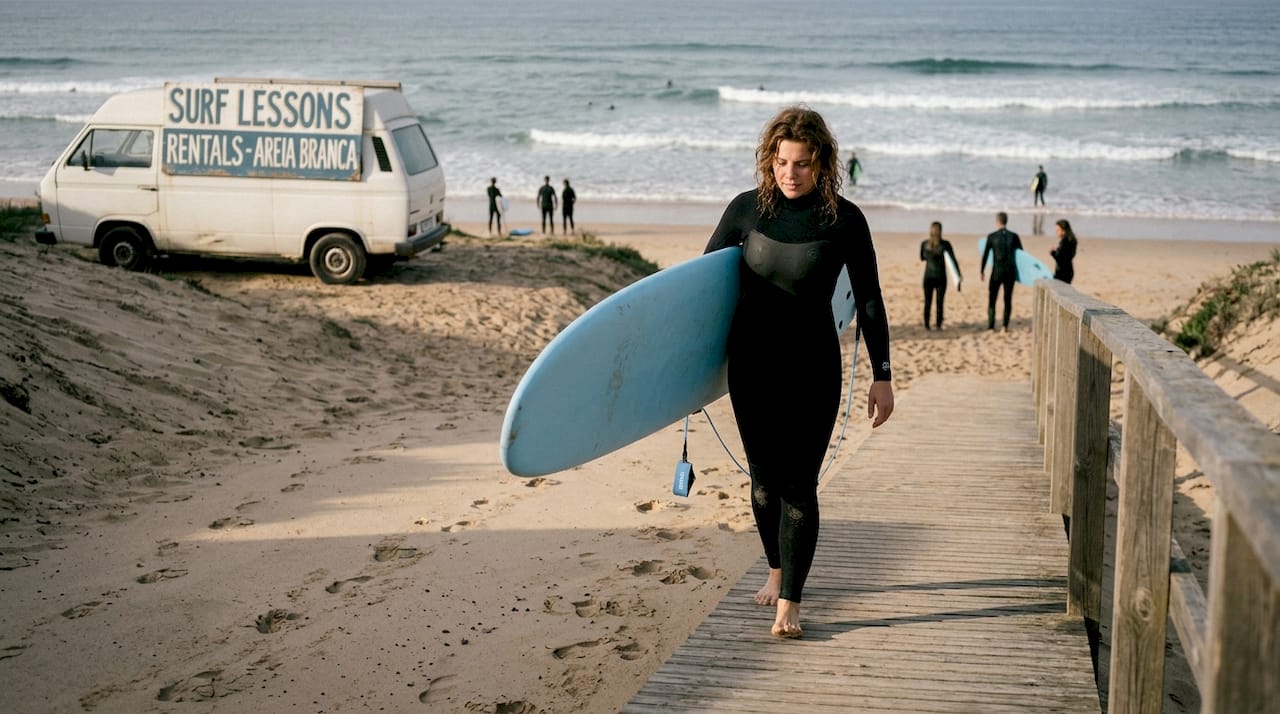
Standing on a beach in Portugal with a surfboard under your arm for the first time is equal parts terrifying and electric. The ocean looks bigger than you expected, the waves sound louder, and you have absolutely no idea what to do next. That feeling is completely normal, and it’s also the beginning of one of the most rewarding physical experiences you’ll ever have. This guide walks you through everything: why Portugal is the right place to start, what gear you need, how to actually stand up on a board, what mistakes to avoid, and how to track your progress so you keep coming back for more.
Table of Contents
Key Takeaways
Point | Details |
Portugal is beginner-friendly | Portugal’s mild weather and supportive surf community make it ideal for starting your surf journey. |
Preparation matters | Getting the right gear and basic swimming skills is essential before your first surf lesson. |
Step-by-step learning | Following a structured lesson plan accelerates your ability to stand up on a surfboard and ride waves. |
Mistakes are normal | Beginner surfers will make mistakes, but instructors provide guidance to overcome common challenges. |
Community boosts progress | Participating in group lessons and joining the beach community motivates you to improve faster. |
Why Portugal is perfect for beginner surfers
Portugal has quietly become one of Europe’s most sought-after surf destinations, and not just for the pros. The Atlantic coastline stretches for over 1,800 kilometers, offering a huge variety of beach breaks, reef breaks, and point breaks. For beginners, the key is finding beaches with consistent, gentle waves, and Portugal delivers that in abundance.
The surf culture here is genuinely welcoming. Unlike some crowded hotspots where beginners feel like they’re in the way, Portuguese surf beaches tend to have a relaxed, community-first vibe. You’ll find locals, instructors, and fellow travelers all sharing the same stoke. Beginner surfing in Portugal is made even more accessible by the sheer number of certified surf schools operating year-round.
Portugal is ranked among the best surf destinations for beginners due to its mild climate and gentle waves. That’s not marketing speak. The water temperature stays manageable even in winter, and the summer months bring long days, warm sand, and waves that are forgiving enough for first-timers to actually enjoy.
Here’s what makes Portugal stand out for beginner surfers:
Consistent, mellow waves at beaches like Praia Areia Branca near Peniche
Year-round surf schools with certified, English-speaking instructors
Affordable surf holiday packages compared to France, Spain, or the Canary Islands
Strong surf community with group lessons, social events, and shared accommodation
Easy access from major European cities with short flight times
“Portugal’s surf scene isn’t just about the waves. It’s about the people, the food, the sunsets, and the feeling that you belong here even on your very first day.”
If you want a preview of what the experience looks like, the surf camp photo gallery gives you a real sense of the atmosphere at Praia Areia Branca. Understanding the surfing basics before you arrive also helps you hit the ground running.
Essential gear and prerequisites for your first surf lesson
You don’t need to show up with a quiver of boards and a wetsuit collection. In fact, most beginners should arrive with almost nothing and let the surf school handle the rest.
Most surf schools provide wetsuits and boards as part of the lesson package. That means your main job before your first lesson is showing up with the right mindset and a basic level of physical readiness, not a credit card full of gear purchases.
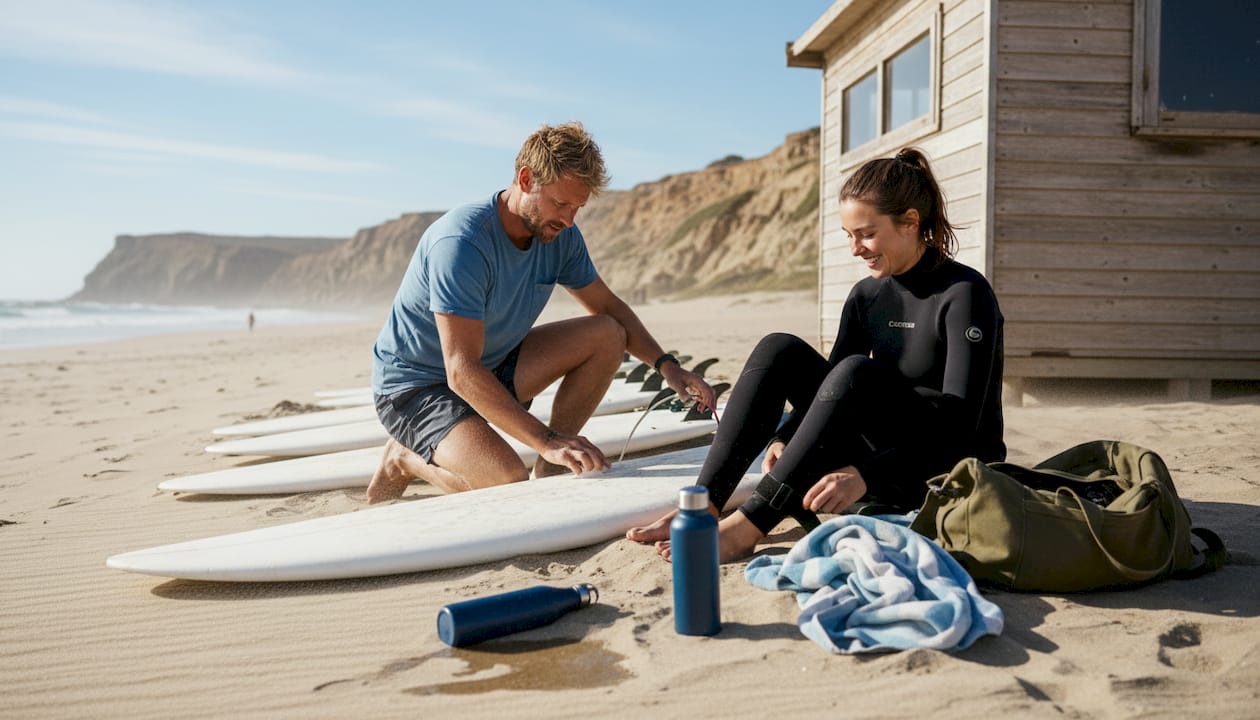
Here’s a quick comparison of renting versus buying gear in Portugal:
Renting | Buying | |
Cost | Low upfront, included in lessons | High upfront investment |
Convenience | Everything provided at the school | Must transport and store gear |
Best for | First-timers and holiday surfers | Committed surfers staying long-term |
Flexibility | Try different boards easily | Locked into one setup |
For your first few sessions, renting wins every time. Once you know you love it, then you can think about investing in your own equipment.
The core gear you’ll encounter includes:
Surfboard: Beginners start on a longboard or foam board (also called a “foamie”) for stability
Wetsuit: Keeps you warm in the Atlantic; thickness depends on the season
Leash: Attaches the board to your ankle so it doesn’t fly away after a wipeout
Wax: Applied to the board’s surface for grip
For fitness, you don’t need to be an athlete. Basic swimming ability is essential for safety, and a reasonable level of upper body strength helps with paddling. If you can swim 50 meters comfortably, you’re ready. Check out beginner surfing tips and guidance on choosing your first surfboard to go in prepared.
Pro Tip: Always start on a foam board. They’re softer, more buoyant, and far more forgiving when you fall, which you will, and that’s perfectly fine.
Step-by-step: How to learn to surf as a beginner
Learning to surf follows a clear progression. Skipping steps is tempting but counterproductive. Here’s the sequence that actually works:
Book a lesson with a certified instructor. This is non-negotiable for beginners. A good instructor spots your mistakes in real time and keeps you safe. Beginner surf lessons in Portugal focus on safety, paddling, and basic pop-up techniques from day one.
Learn paddling technique on land first. Paddling is 80% of surfing. You’ll practice the arm motion, body position, and head placement before you ever touch the water.
Master the pop-up on dry land. The pop-up is the move where you go from lying flat to standing in one fluid motion. It sounds simple. It isn’t. Practicing it on the sand dozens of times before entering the water makes a massive difference. Watch a breakdown of the basic pop-up technique to understand the mechanics.
Enter the water with your instructor. Follow their safety briefing exactly. Learn where to sit in the lineup, how to avoid other surfers, and how to fall safely.
Catch your first wave and ride it. Your instructor will push you into your first waves. Don’t overthink it. Trust the process and celebrate every single ride, even the two-second ones.
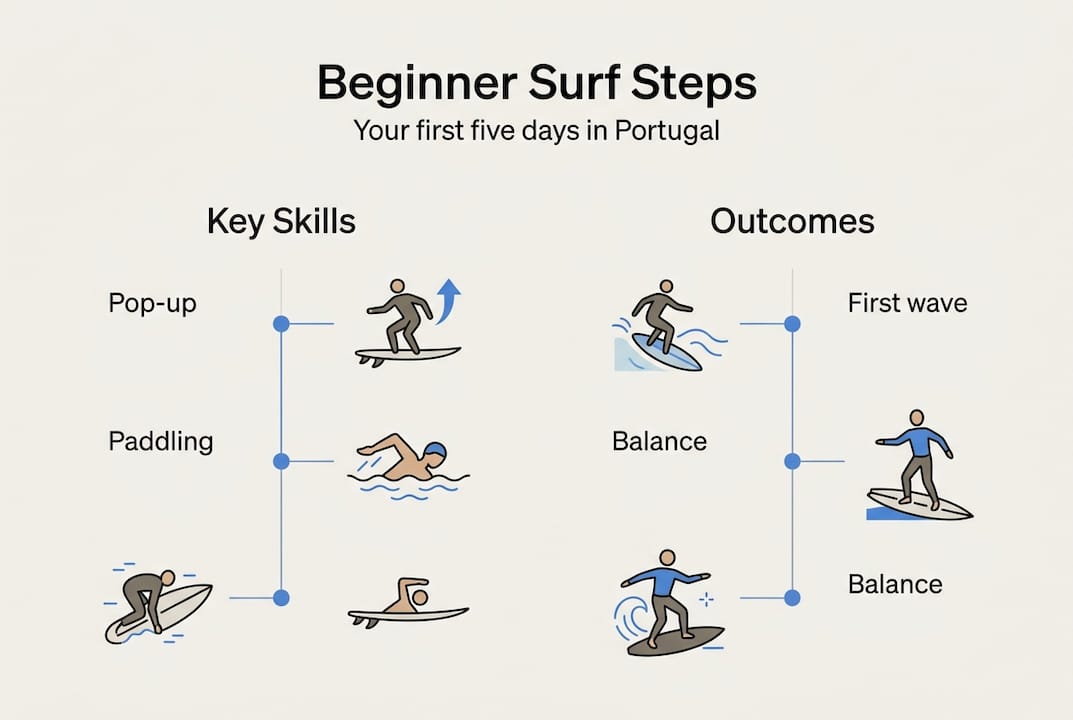
Here’s a rough timeline of what to expect:
Session | Focus | Expected outcome |
Day 1 | Pop-up, paddling, safety | First wave attempt |
Day 2-3 | Timing, balance, positioning | Riding whitewater consistently |
Day 4-5 | Turning, reading waves | Catching unbroken waves |
Week 2+ | Style, flow, wave selection | Building real confidence |
Joining all levels group surf lessons means you progress alongside other beginners, which takes the pressure off and makes the whole experience more fun. Reading about surf instructor essentials also helps you understand what to expect from your coach.
Pro Tip: Practice your pop-up at home on a yoga mat before your trip. Even five minutes a day for a week will noticeably speed up your progress in the water.
Common mistakes and how to troubleshoot as you learn
Every beginner makes the same mistakes. Knowing them in advance doesn’t mean you’ll avoid them entirely, but it does mean you’ll recognize them faster and fix them sooner.
New surfers often misjudge wave timing and position, but instructors help correct these quickly. That’s exactly why having a coach in the water with you is so valuable in the early stages.
Here are the most common beginner mistakes:
Wobbly stance: Standing too upright or with feet too close together. Fix it by widening your stance and bending your knees.
Looking down at the board: Your eyes should be on the horizon, not your feet. Where your eyes go, your body follows.
Misjudging wave timing: Paddling too early or too late. Your instructor will call the wave for you at first, so trust their timing.
Tensing up: Fear makes your body rigid, which kills your balance. Breathe, relax your shoulders, and let the board do the work.
Ignoring safety rules: Always check for other surfers before paddling for a wave. Right of way rules exist for a reason.
Overexerting yourself: Surfing is physically demanding. Rest when you need to. Fatigue leads to poor form and increases injury risk.
“The ocean doesn’t care how fit you are or how many YouTube videos you’ve watched. Respect it, listen to your instructor, and stay humble.”
If you’re struggling with any of these, surf instructor guidance is your best resource. You can also review the most common beginner surfer mistakes to get ahead of the curve. When you’re ready to put it all into practice, book surf lessons and get in the water.
How to measure progress and stay motivated
One of the trickiest parts of learning to surf is that progress doesn’t always feel linear. Some days you’ll feel unstoppable. Other days the ocean will humble you completely. Both are part of the process.
Surf schools in Portugal emphasize supportive group environments that boost motivation and progress. Being surrounded by people at the same level as you creates a natural accountability system. You cheer each other on, share tips, and laugh at the wipeouts together.
Here’s how to track your improvement in a meaningful way:
Paddling: Can you paddle out without exhausting yourself? Are you reaching the lineup faster?
Pop-up consistency: Are you landing on your feet more often than not?
Wave selection: Are you starting to read the ocean and choose better waves?
Ride length: Are your rides getting longer and more controlled?
Confidence: Do you feel less anxious entering the water?
Set short-term goals like “catch five waves in one session” and longer-term goals like “ride a green wave by the end of the week.” Small wins stack up fast and keep you motivated. For ongoing inspiration and practical advice, the surf school blog is packed with useful content. You can also explore strategies for progressing as a beginner surfer to keep your development on track.
Joining a group surf lesson is one of the single best things you can do for your motivation. The energy of a group is contagious.
Pro Tip: Keep a surf journal. After each session, write down what worked, what didn’t, and one thing to focus on next time. It sounds simple, but reviewing your notes after a week shows you just how far you’ve come.
Next steps for your surf adventure in Portugal
You’ve got the knowledge. Now it’s time to act on it. Portugal’s waves are waiting, and the best way to experience them is with the right school behind you.
At Ripar Surf School, based at Praia Areia Branca near Peniche and Ericeira, we’ve been helping beginners catch their first waves since 2001. Our certified local instructors keep groups small so you get real attention, not just a number in a crowd. You can book online in minutes and choose from flexible lesson formats that fit your schedule. If you want the full experience, our surfhouse Portugal puts you right in the heart of the surf community, with accommodation, equipment, and good vibes all in one place. Join a group surf lesson and meet your surf crew from day one.
Frequently asked questions
How long does it take to learn to surf?
Beginner surfers in Portugal report standing and riding a wave within their first few lessons. Mastering the basics consistently, however, typically takes about a week of daily practice.
Do you need swimming skills to join a surf lesson?
Surf schools require minimum swimming competence as a safety prerequisite. Basic swimming ability, enough to stay calm and move in open water, is assessed before lessons begin.
What surfboard is best for beginners?
Foam boards are recommended for beginner surfers due to their safety and ease of use. They’re more buoyant and far less dangerous when you fall on them.
Are group lessons better than private lessons for learning to surf?
Group surf lessons in Portugal emphasize community and peer support, which keeps motivation high. Private lessons offer more personalized feedback, so both formats work well depending on your learning style.
What is the best season to learn to surf in Portugal?
Portugal’s surf conditions are most favorable for beginners during spring and summer, when waves are gentler and the weather is warm enough to make long sessions in the water genuinely enjoyable.
Recommended
Comments