

Stand in 1–3 Lessons, Ride Green by 10–20: Portugal Surf Timeline

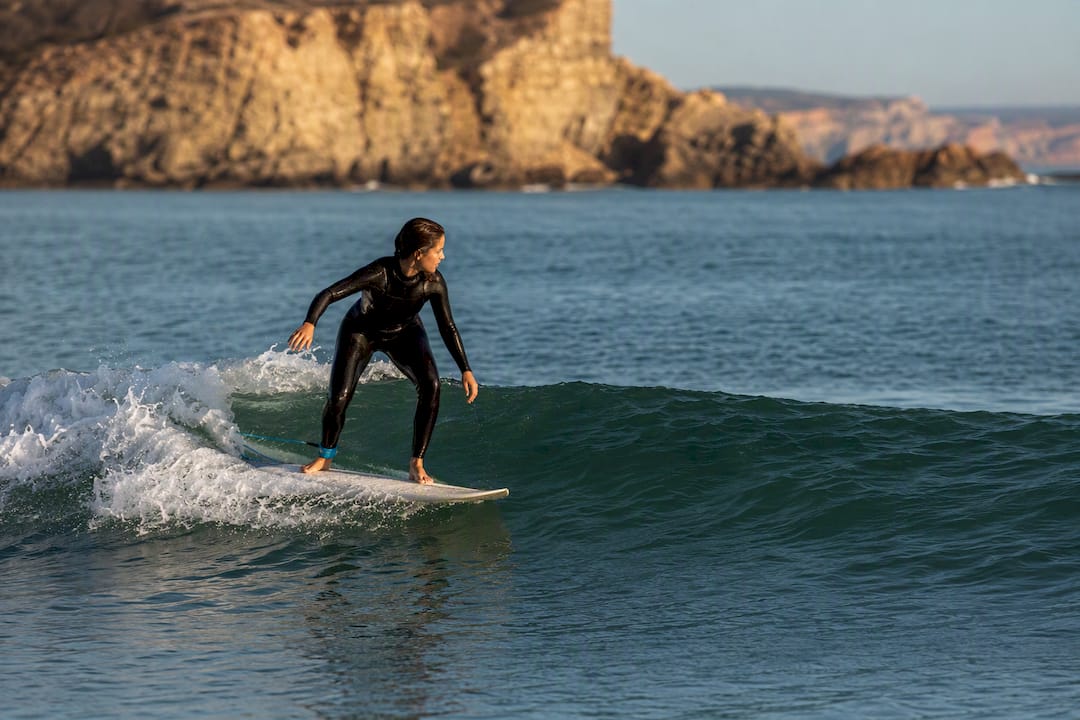
Most beginners stand up on whitewater within their first 1 to 3 lessons, but riding a green wave with any real control usually takes 10 to 20 sessions. That range shifts fast depending on how often you practice, what board you’re on, and how comfortable you already are in the ocean. Ripar Surf School has watched this pattern play out with hundreds of beginners since 2001, and it holds up more often than not.
TL;DR:
Progress beyond falling and muscle memory typically takes between 10 to 20 lessons, depending on practice frequency, equipment, and comfort level.
Consistent practice at least twice a week significantly accelerates skill development compared to weekly lessons or holiday cram sessions.
Using a high-volume soft-top board in the 7 to 9-foot range enhances progress by improving buoyancy, wave catching, and forgiving mistakes.
Structured lesson approaches, including starter packs and multi-day camps, compress progress from months into a shorter period through repetition and targeted feedback.
Key safety, equipment, and instructional quality factors influence the learning timeline, with beginner patience and regular attendance being the most critical.
Table of Contents
What Can You Do After 1, 5, or 20 Surf Lessons?
Your first lesson isn’t really about surfing yet. It’s about learning to fall safely, reading the whitewater, and getting your pop-up mechanics into muscle memory on dry sand before you ever paddle out. A solid first lesson usually includes a safety briefing, land-based pop-up drills, and a few assisted rides into the whitewater with an instructor pushing you into position, a format most beginner programs follow closely, including the structured first-lesson approach Ripar Surf School uses with new students.
From there, progress tends to follow a rough curve. It’s not linear, and it’s not guaranteed, but instructors see these patterns often enough to call them realistic benchmarks:
1 to 3 lessons: Consistent pop-ups on whitewater, better balance from nose to tail, and the beginning of directional control instead of just standing up and falling.
5 to 10 lessons: Catching small, unbroken green waves on your own, plus early attempts at turning and positioning your body correctly on the board.
10 to 20+ lessons: Reading the lineup, picking your own waves, paddling into green waves with growing reliability, and riding along the face instead of straight to shore.
Two people with the same number of lessons can land in very different places. Age, fitness, prior board sports experience, and how often they practiced whitewater fundamentals between sessions all move the needle. Most instructors log this progress lesson by lesson, tracking pop-up consistency, wave selection, and paddle strength so they can adjust the next session instead of repeating drills you’ve already mastered.
What Actually Speeds Up or Slows Down Your Progress?
Frequency matters more than almost anything else. Surfing twice a week builds muscle memory and ocean instincts far faster than one lesson a week, and it beats cramming everything into a single one-week holiday block, a pattern surf instructors consistently point to when explaining why some students plateau.
Equipment is the second biggest lever. A high-volume soft-top longboard, something in the about 7 to 9 feet in length, floats better, catches waves earlier, and forgives mistakes that would sink you on a smaller board. Trying to learn on a short, low-volume board is one of the most common reasons progress stalls.
A few other factors that shift the timeline:
Instructor quality: Real-time corrections in the water fix bad habits before they become permanent, cutting out months of trial-and-error.
Physical readiness: Comfort swimming, basic cardio, and balance all shorten the learning curve, especially for older beginners.
Conditions: Small, consistent whitewater at a gentle beach break is far more forgiving than a beach with strong currents or a steep, dumping shore break.
Pro Tip: If you’re not fully confident in open water, brush up with a basic water-safety guide for non-swimmers before your first lesson. It removes one variable that has nothing to do with surfing but slows almost everyone down.
How Should You Structure Your Lessons for Faster Progress?
The order you book lessons in matters almost as much as how many you book. Here’s a practical structure that works for most beginners:
Start with a 3-lesson starter pack to confirm you enjoy it and to nail the basics: pop-up, whitewater positioning, and paddling technique.
Move into a 5 to 7 lesson progression pack once you’re standing consistently. This is where green-wave catching and turning start to click.
Consider a multi-day surf camp if you can swing it. Daily repetition with the same instructor compresses months of once-weekly progress into a single week.
Add land and water drills between lessons. Pop-up reps on the sand, paddling sets, and simple balance work keep your muscle memory sharp without needing a wave.
Mix private and group lessons. Private sessions give you targeted feedback on your specific mistakes, while group lessons add repetition and a bit of friendly competitive push.
Rest days count too. Never practice alone in conditions you haven’t been cleared for, and keep unsupervised sessions limited to water you’ve already surfed with an instructor.
What Should You Bring, and What Does It Cost?
Pricing usually comes in two shapes: single lessons and multi-lesson packs or camps. Packs almost always work out cheaper per session, and most include board and wetsuit rental, so confirm that before comparing prices across schools.
For the lesson itself, bring:
Swimwear, plus a rashguard or wetsuit depending on water temperature
Sunscreen, a reusable water bottle, and a towel
A form of ID if the school requires a waiver or rental agreement
Before booking, check the instructor-to-student ratio, whether lifeguards are present, and if instructors hold recognized surf coaching certifications. Beginner-friendly guides consistently flag a proper safety briefing and assisted whitewater entry as the baseline you should expect from any first lesson, regardless of price.
Why Trust This Timeline?
Fernando has spent years around Ripar Surf School’s certified local instructors, watching how beginners actually progress rather than how marketing copy says they should. Ripar Surf School, running since 2001 out of Praia Areia Branca, has taught hundreds of first-timers through the exact staged approach described here: whitewater first, green waves later, frequency as the deciding factor throughout. The lesson-count ranges in this guide come from that pattern repeating across seasons, not from a single best-case student.
An Instructor’s Honest Take
Patience beats intensity. The beginners who progress fastest aren’t the most athletic, they’re the ones who show up consistently and swallow their ego on the wrong board. Skip the short board, skip the once-a-month lesson, and book a starter pack to see how your body actually responds to the water.
— Fernando
Ready to Start? Here’s How Ripar Surf School Fits In
Skipping the guesswork on board size, ratios, and lesson frequency is exactly what a structured program solves. Ripar Surf School runs group lessons for beginners who want repetition and a social pace, and private lessons for anyone who wants an instructor watching their pop-up on every single wave. Both formats use the high-volume soft-top boards this guide recommends, and wetsuits are included so you’re not renting gear from three different places.

If a single holiday isn’t enough time, the multi-day surf camp option stacks daily lessons back to back, the same intensive format that compresses a season’s worth of progress into a week. Starter packages and pricing details are laid out on the plans and pricing page, and every format is bookable directly through online scheduling. Pick your first lesson, check the dates, and get in the water while the timeline is still fresh in your head.
Sources
Recommended
Comments