

Complete guide to planning your surf holiday in Portugal

TL;DR:
Portugal offers year-round surf with options for all skill levels and manageable wave conditions.
Choosing the right surf spot, camp, and booking early enhance the overall surf holiday experience.
The community and connections made during the trip are key to memorable and lasting surf memories.
You’ve been dreaming about it for months: warm Atlantic air, a surfboard under your arm, and a wave rolling in just for you. But when you actually sit down to plan a surf holiday in Portugal, the choices pile up fast. Which beach? Which school? What gear do you even need? This guide cuts through the noise. Whether you’re a total beginner or someone who can already ride the green wave, we’ve laid out everything step by step, from packing essentials to booking the right camp, so you can focus on what matters: catching waves and making memories.
Table of Contents
Key Takeaways
Point | Details |
Pack smart | Choose only the surf essentials and check if your camp provides gear before you pack. |
Pick the right spot | Look for surf destinations in Portugal that match your skill and vibe preferences. |
Book early | Secure lessons, camps, and accommodation ahead of time for better prices and availability. |
Join the community | The relationships and group energy you find at surf camps make your holiday truly special. |
Learn from mistakes | Avoid common pitfalls by preparing, staying flexible, and embracing every wave and moment. |
What you need: Essentials for your Portugal surf holiday
With your motivation high, let’s start by making sure you know what’s essential before you pack for Portugal. Portugal is one of Europe’s top surf destinations with consistent waves year-round, which means you can realistically plan a trip in almost any season. That said, preparation still makes a huge difference between a smooth trip and a stressful one.
Here’s a quick breakdown of what the seasons look like for surfers:
Season | Months | Wave size | Crowd level | Water temp |
Spring | March to May | Medium | Low to medium | 16 to 18°C |
Summer | June to August | Small to medium | High | 19 to 22°C |
Fall | September to November | Medium to large | Low to medium | 18 to 20°C |
Winter | December to February | Large | Low | 14 to 16°C |
Spring and fall are generally the sweet spots for beginners and intermediates. The waves are manageable, the beaches aren’t packed, and the prices tend to be lower.
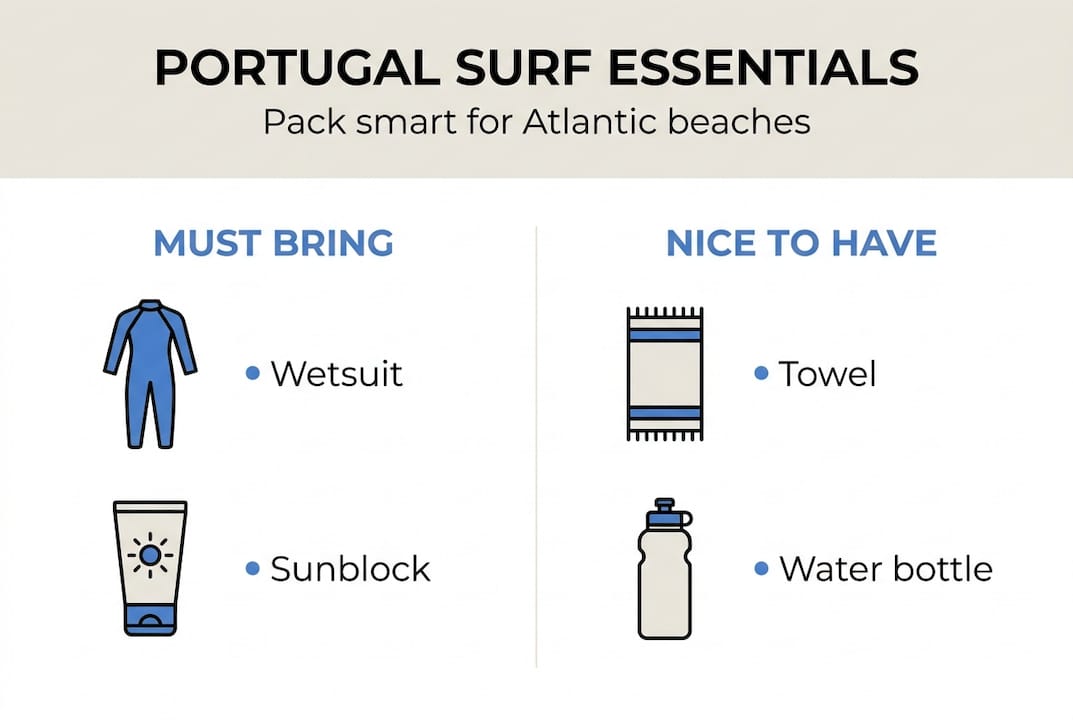
When it comes to gear, the good news is that most surf camps and schools supply or rent everything you need. Still, knowing the beginner surf essentials helps you pack smart and stay comfortable:
Wetsuit (at least 3/2 mm for most seasons)
Rash guard for sun protection under the suit
Sunscreen (reef-safe, SPF 50+)
Surf wax if you’re bringing your own board
Valid passport and any required visa documentation
Travel insurance that covers water sports
Basic first aid kit for minor cuts and scrapes
You can also browse the Portugal surf camp gallery to get a feel for what a typical setup looks like before you arrive.
Pro Tip: Always check the water temperature for the specific month you’re traveling. Portugal’s Atlantic waters stay cool even in summer, so a 3/2 mm wetsuit is a solid choice for most of the year. If you’re visiting in winter, go for a 4/3 mm.
How to choose the perfect Portuguese surf spot
Once you’ve packed the basics, it’s time to decide where in Portugal you’ll hit the waves. This is where a lot of first-timers get stuck, because the coastline stretches for hundreds of kilometers and every beach seems to promise the perfect wave.
Peniche and Praia Areia Branca are among the best surf spots for all levels, with affordable lessons and vibrant communities. Here’s how some of the top spots compare:
Location | Best for | Crowd level | Vibe | Avg. lesson cost |
Peniche | All levels | Medium | Energetic, social | €35 to €50/session |
Praia Areia Branca | Beginners and intermediates | Low | Relaxed, community | €30 to €45/session |
Ericeira | Intermediates and advanced | Medium to high | Lively, classic | €40 to €55/session |
Nazaré | Advanced only | Low | Raw, dramatic | Varies |
For most beginners and intermediates, Peniche and Praia Areia Branca hit the right balance. Peniche offers a wide variety of breaks, meaning instructors can always find a wave suited to your level on any given day. Praia Areia Branca sits just a short drive away and offers a quieter, more village-like setting that naturally builds a sense of community among surfers.
When choosing a surf school, think about more than just the waves. Ask yourself:
Do you want a social scene or something quieter?
Is accommodation included or nearby?
How important is affordability versus luxury?
Do you want a small group feel or a bigger camp atmosphere?
If community matters to you, smaller camps near Areia Branca tend to foster real friendships. You’ll find yourself sharing meals, swapping tips, and paddling out together every morning. Check out the Peniche surf house options to see what a community-focused setup can look like. For more on reading conditions and picking the right break, the local surf tips section is worth a look.
Pro Tip: Book your trip during shoulder seasons, specifically May to June or September to October. You’ll get excellent wave conditions, far fewer crowds in the lineup, and noticeably lower prices on lessons and accommodation.
Step-by-step: Booking surf lessons, camps, and accommodation
Now that you know where you want to go, let’s tackle how to lock in the essentials. The booking process doesn’t have to be complicated, but skipping steps can cost you money and limit your options, especially in peak months.
Here’s a simple process to follow:
Set your dates and budget. Know how many days you’re surfing and what you can realistically spend per day on lessons, food, and housing.
Research surf schools. Look for certified instructors, positive reviews, small group sizes (ideally 6 to 8 students per instructor), and clear communication in your language.
Compare lesson packages. Many schools offer combined lesson and accommodation deals that save you 20 to 30% compared to booking separately.
Check availability early. Booking surf lessons in advance increases your chances of securing lower rates and your preferred dates, especially in July and August.
Confirm the details. Before paying, verify instructor certification, what gear is included, cancellation policy, and group size.
Book accommodation. If it’s not included in your package, prioritize places close to the beach or within the surf camp community.
For beginner lesson options, look for schools that structure their first sessions around ocean safety, paddling technique, and reading waves, not just standing up. That foundation matters more than people realize. You can also explore surf coaching tips to understand what good instruction actually looks like before you commit.
“The best surf camps aren’t just about waves. They’re about the people you meet, the meals you share, and the feeling of belonging to something bigger than just a sport.”
Community-focused camps often organize group dinners, beach bonfires, and evening meetups. These aren’t extras; they’re the parts of a surf holiday that you’ll actually talk about for years.
Pro Tip: Ask your surf school directly about lesson and accommodation bundles. Many schools offer unpublished discounts for multi-day packages that aren’t listed on the main booking page.
Avoiding common mistakes and maximizing your surf holiday
You’ve booked the essentials. Here’s how to ensure your surf holiday is smooth and unforgettable. Even well-prepared travelers fall into traps that chip away at the experience. Knowing what to avoid puts you ahead before you even land.
Proper planning can save you significant hassle and unlock the best surf experiences. Here are the most common mistakes and how to sidestep them:
Booking too late. Peak season spots fill up fast. Aim to book at least four to six weeks in advance.
Overestimating your fitness. Surfing is physically demanding. Start light, especially on day one, and build up gradually.
Bringing the wrong wetsuit. Too thin and you’ll be cold and distracted. Too thick and you’ll overheat paddling. Match the suit to the season.
Ignoring local culture. Portugal has incredible food, warm locals, and a rich surf history. Don’t spend every evening in your room.
Skipping rest days. Fatigue leads to poor technique and higher injury risk. Build at least one rest day into a week-long trip.
Not confirming lesson quality. Always verify instructor credentials and ask about the student-to-instructor ratio before you arrive.
For timing, surf holidays in September consistently deliver great conditions with a relaxed atmosphere. September is arguably the most underrated month on the Portuguese coast.
“Take the time to plan your surf holiday, and you’ll have stories and skills for a lifetime.”
Beyond avoiding mistakes, the best thing you can do is stay open. Try the local pastel de nata. Chat with the instructor after your session. Paddle out even when you’re nervous. The surf trip experiences that stick with people are rarely about the perfect wave. They’re about showing up fully and letting the ocean do the rest.
What most surf guides miss: The real secret to a memorable surf holiday
Most surf holiday guides do a decent job covering logistics. Book early, bring the right wetsuit, pick a beginner-friendly beach. That’s all useful. But there’s something almost no guide talks about, and it’s the thing that separates a good trip from one you’ll remember for the rest of your life.
It’s the people.
When you’re paddling out next to someone who was just as terrified as you were yesterday, and now you’re both laughing at a wipeout, something shifts. You stop thinking about your technique and start actually surfing. That kind of building surf community experience doesn’t happen by accident. It happens when you choose a camp that prioritizes connection over throughput.
We’ve seen it happen hundreds of times at Ripar Surf School. Strangers arrive on Sunday. By Wednesday, they’re organizing evening walks to the village. By Friday, they’re exchanging contacts and planning next year’s trip together. The waves are the reason you come. The community is the reason you come back.
So when you’re evaluating surf camps, don’t just look at the wave quality or the price. Ask: does this place feel like somewhere I’d want to spend a week with strangers? If the answer is yes, you’ve found the right spot.
Plan your perfect surf holiday with us
Ready to put your surf holiday plan into action? Here’s how we can help make it a breeze.
At Ripar Surf School, we’ve been helping beginners and intermediates catch their first waves since 2001. Our certified local instructors, small group sizes, and community-first approach mean you get real progression and real friendships, not just a checkbox surf experience.
You can book affordable lessons directly on our site, or if you want the full experience, join our surf camp for a package that covers lessons, accommodation, and everything in between. Not sure which option fits you best? See our surf gallery for a real look at what life at our camp feels like. We’re also happy to answer questions personally before you commit to anything.
Frequently asked questions
What is the best month for a surf holiday in Portugal?
Shoulder seasons provide optimal conditions and affordability. May to June and September to October offer excellent waves, fewer crowds, and lower prices than peak summer.
Do I need to bring my own surfboard and wetsuit?
Most surf camps and schools in Portugal supply or rent all gear needed, so bringing your own equipment is entirely optional and often unnecessary for a first trip.
Are private or group surf lessons better for beginners?
Group lessons are cost-effective and great for socializing, while private lessons accelerate learning with individual attention and personalized feedback tailored to your specific technique.
How early should I book my surf lessons or camp?
Booking early secures best prices and your preferred lesson dates. Aim for at least one month ahead, and earlier if you’re traveling in July or August.
Is Portugal suitable for beginner surfers?
Absolutely. Peniche and Praia Areia Branca are fantastic for all levels, especially beginners, with user-friendly waves and surf schools that specialize in first-time instruction.
Recommended
Comments