

Surf camp vs surf school: Best for Portugal in 2026?

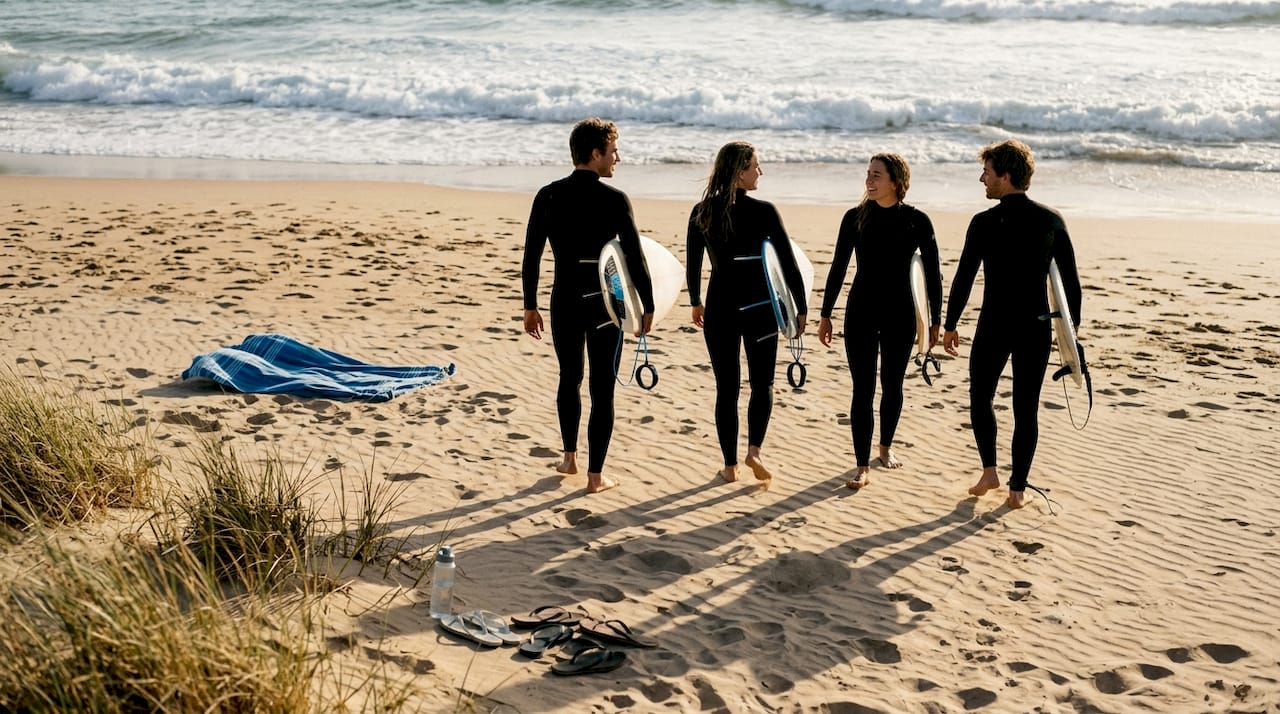
TL;DR:
Surf camps offer immersive, structured experiences that accelerate skill development through daily coaching and repetition.
They provide community, social activities, and authentic local environment, enhancing the overall surfing experience.
Surf schools are more flexible and budget-friendly for casual or one-off lessons, but progress slower.
Choosing between a surf camp and a surf school sounds simple until you realize the decision shapes your entire Portugal experience. Many first-time surfers assume all surfing instruction is basically the same: show up, get wet, catch a wave. But surf camps and schools deliver genuinely different experiences, and picking the wrong one can leave you frustrated, isolated, or simply bored. Whether you want rapid skill gains, a tight-knit community, or the freedom to book lessons on your own schedule, understanding the real differences will help you get the most out of Portugal’s world-class waves.
Table of Contents
Key Takeaways
Point | Details |
Immersive progression | Surf camps offer structured, daily lessons for faster skill advancement than surf schools. |
Community advantage | Camps foster friendships and authentic experiences in unique, rural Portuguese settings. |
Flexible options | Surf schools are ideal for those wanting flexible, cheap, standalone lessons. |
Budget comparison | Schools cost less per lesson but camps deliver more value for longer stays. |
Best fit for Portugal | Travelers seeking social, progression-focused surfing should prioritize eco/rural camps. |
Surf camps vs surf schools: Key differences explained
Let’s start with the basics. A surf school offers standalone lessons, typically lasting 1.5 to 2 hours. You book a session, show up, learn, and leave. You can choose your instructor, pick your time slot, and fit lessons around sightseeing or other activities. It’s flexible, low-commitment, and usually cheaper per session at around €65 per lesson.
A surf camp, on the other hand, is a full immersive package. You stay on-site or nearby for 5 to 7 days, and your schedule is built around surfing. Accommodation, meals, daily lessons, and social events are bundled together. Expect to pay around €780 per week for a quality all-inclusive camp, though prices range from €400 to €800 depending on location and amenities.
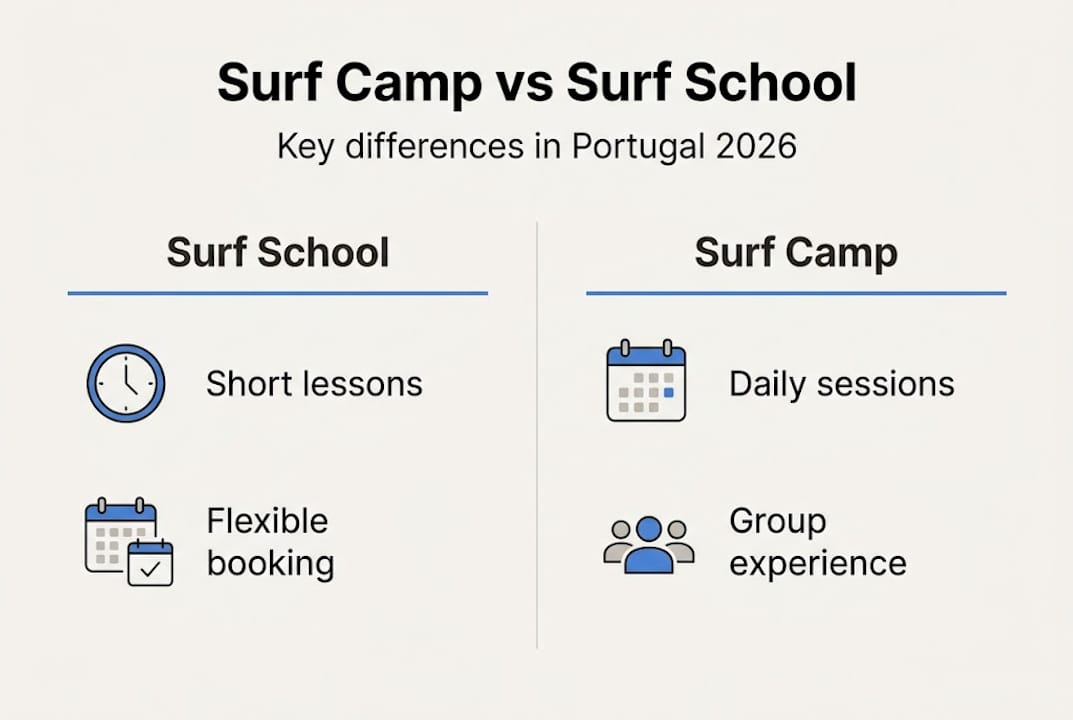
Here’s a quick side-by-side comparison:
Feature | Surf school | Surf camp |
Duration | 1.5 to 2 hours per session | 5 to 7 days |
Accommodation | Not included | Included |
Meals | Not included | Usually included |
Social activities | None | Daily group events |
Average cost | ~€65 per lesson | €400 to €800 per week |
Progression speed | Gradual | Accelerated |
The community and progression differences are significant. Surf schools focus on standalone lessons, while camps deliver immersive packages with accommodation, meals, and social activities. Beginners who attend consecutive daily sessions build muscle memory far faster than those who space out lessons over weeks.
Key advantages of surf camps at a glance:
Daily access to certified coaches
Consistent wave time builds faster reflexes
Built-in social circle from day one
Meals and logistics handled for you
Exposure to multiple surf spots
If you want to explore the community atmosphere surf camps create, or browse Portugal surf camp options before deciding, it’s worth seeing what a structured week actually looks like.
Learning methodologies and progression pathways
How you learn matters just as much as where you learn. Surf camps and surf schools take very different approaches to instruction, and those differences have a real impact on how quickly you improve.
At a surf camp, you typically work in small groups with a coach-to-student ratio of roughly 3 to 6 surfers per instructor. Each day follows a structured plan:
Morning theory or beach briefing
In-water session with active coaching
Video analysis of your technique
Debrief and next-day planning
Optional evening workshops or talks
This daily rhythm is powerful. Your body repeats the same movements every single day, which is exactly how muscle memory forms. Beginners often catch their first real wave within 2 to 3 lessons, and camps accelerate that timeline through sheer repetition.
Surf schools offer more flexibility but less structure. Lessons are often private or small-group, which can be great for focused attention. However, surf camps use structured progression and certified coaches with daily spot selection, while schools offer flexibility but less overall support. Without theory sessions or video review, it’s harder to identify and fix bad habits.
For intermediate surfers, the gap widens even further. Video analysis lets you see exactly what your body is doing wrong in the water. Spot selection, where your coach picks the best wave conditions for your current level, means you’re always learning in the right environment rather than just surviving whatever the ocean throws at you.
Methodology | Surf camp | Surf school |
Coach ratio | 3 to 6:1 | Varies (often 1:1 private) |
Video analysis | Common | Rare |
Theory sessions | Daily | Uncommon |
Spot selection | Coach-led | Self-directed |
Progression tracking | Structured | Informal |
Pro Tip: When researching camps, ask specifically whether they include daily feedback sessions and video review. These two features alone can cut your learning curve in half compared to standard lessons.
If you’re still in the planning stage, reading about planning surf lessons in Portugal or booking a surf camp can help you set realistic expectations before you arrive.
Community, environment, and unique experiences
Skill progression is important, but it’s not the only thing that makes a surf trip memorable. The environment you surf in and the people you share it with can define your entire experience.
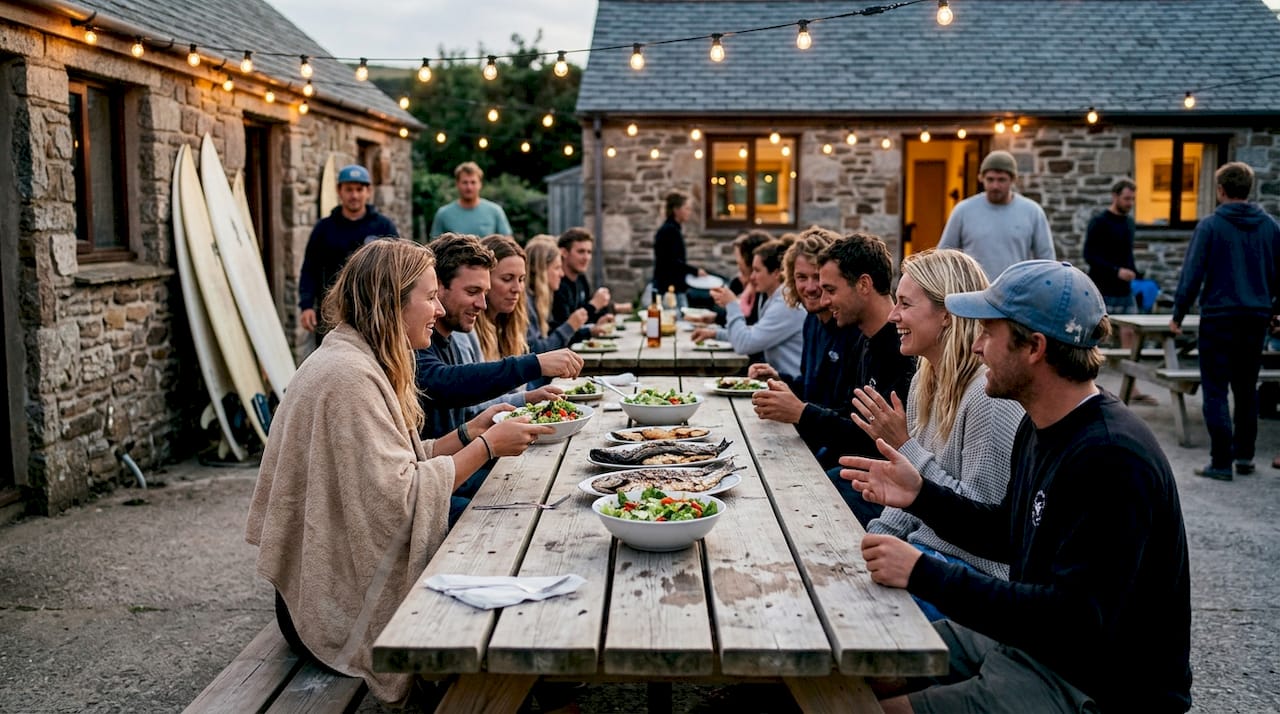
Surf schools are typically located at busy tourist beaches. You arrive, take your lesson, and leave. There’s limited interaction with other surfers, and the setting is often crowded and commercial. It works fine for a quick skill check, but it rarely leads to lasting friendships or a real sense of place.
Surf camps are built differently. They tend to sit in rural or eco-friendly settings, away from the tourist crowds. Think small coastal villages, local cafes within walking distance, and sunsets shared with people who are just as stoked about surfing as you are.
“Camps prioritize community and unique settings, far from crowded tourist centers.”
Surf camps better suit beginner and intermediate surfers seeking unique, community-oriented experiences away from mass tourism. That’s not just marketing language. It reflects a real structural difference: when you eat, sleep, and surf with the same group for a week, bonds form naturally.
Here’s what a typical camp week looks like beyond the water:
Group dinners at local restaurants
Evening bonfires or beach hangouts
Yoga or stretching sessions in the morning
Day trips to nearby surf spots or villages
Shared excitement after breakthrough sessions
Portugal’s north coast and the edges of the Algarve offer especially authentic settings. Places like Praia Areia Branca, near Peniche and Ericeira, give you access to world-class waves while keeping you rooted in a real fishing village rather than a resort strip.
Pro Tip: If connection matters to you, look for camps that cap group sizes at 10 to 12 people and include at least two organized social events per week. Smaller groups mean more coaching attention and more genuine friendships.
You can learn more about the surf camp community experience or check out what a Portugal surf house actually offers in terms of accommodation and atmosphere.
Pros and cons: Which is right for you?
Both options have genuine value. The right choice depends on your goals, your budget, and how you like to travel.
Surf camp pros and cons:
Pro: Fast skill progression through daily repetition
Pro: All-inclusive pricing covers accommodation, meals, and gear
Pro: Built-in community and social structure
Pro: Expert spot selection and structured coaching
Con: Higher upfront cost (€400 to €800 per week)
Con: Less scheduling flexibility
Con: You’re committed to a fixed program
Surf school pros and cons:
Pro: Lower cost per session at around €65
Pro: Flexible scheduling around your travel plans
Pro: Choose your own instructor
Con: Slower overall progression
Con: No accommodation or meal support
Con: Variable quality between providers
Con: Limited community or social experience
Here’s a simple decision framework:
Your situation | Best choice |
First trip, want fast results | Surf camp |
Already traveling, need one lesson | Surf school |
Value social experience | Surf camp |
Tight budget, short stay | Surf school |
Intermediate wanting to level up | Surf camp |
Testing surfing for the first time | Surf school |
Camps offer community, progression, and all-inclusiveness, while schools offer cheaper, flexible, instructor-choice sessions. Neither is wrong. But if your goal is genuine improvement and a Portugal experience that feels different from a standard holiday, the camp structure wins on almost every metric.
When you’re ready to commit, book a surf camp to lock in your spot before the best weeks fill up.
Our take: Why surf camps are the clear winner for Portugal adventurers
Here’s the honest truth most surf content won’t tell you: individual lessons feel productive in the moment but often don’t stick. You catch a few waves, feel great, and then lose most of that progress by the time your next session rolls around three days later.
Camps solve this problem by design. The consecutive daily structure means your body never forgets what it learned. Add in video analysis, peer motivation, and a coach who knows your tendencies by day three, and you’re looking at a completely different kind of learning.
But the skill gains aren’t even the most underrated part. Camps provide immersive, progression-focused, social experiences in eco and rural spots that are genuinely ideal for surfers who want more than a tourist checkbox. The friendships you build in a week of shared wipeouts and breakthroughs are the kind that last.
Portugal’s rural surf locations, places away from the Lisbon day-tripper crowds, give you access to authentic culture, uncrowded waves, and a pace of life that actually lets you absorb the experience. That’s something no 90-minute lesson at a busy beach can replicate.
Pro Tip: Prioritize camps in under-the-radar coastal villages over resort-based options. The community surf camp experience in those settings is genuinely transformative, not just a marketing promise.
Ready for your Portugal surf adventure? Explore your options
At Ripar Surf School, we’ve been running surf camps and lessons along Portugal’s coast since 2001, right in the heart of Praia Areia Branca near Peniche and Ericeira. Whether you’re ready to commit to a full immersive week or want to test the water with a flexible lesson first, we’ve got you covered.

You can book a surf camp for the full community experience, or book surf lessons if you prefer a more flexible start. We also offer all levels private lessons for surfers who want personalized coaching without the full camp commitment. Our local instructors know these waves inside out, and the small-beach-village setting means you get an authentic Portugal experience from day one.
Frequently asked questions
How much does a surf camp in Portugal typically cost?
A week-long surf camp with lodging, lessons, and gear usually costs €400 to €800 all-inclusive, depending on the location and amenities included.
Can I progress faster at a surf camp compared to a surf school?
Yes. Beginners progress faster in camps because consecutive daily sessions build muscle memory and consistent coaching catches bad habits before they set in.
Are surf camps suitable for intermediate surfers?
Absolutely. Camps offer structured progression including video analysis and coach-selected surf spots, which are especially valuable for intermediate surfers looking to break through plateaus.
What are the main benefits of choosing a surf camp over a surf school?
Surf camps provide community, progression, and all-inclusiveness in a single package, making them far more effective for surfers who want rapid improvement and a memorable social experience.
Recommended
Comments