

How to recognize great surf instructors: 5 clear signs

TL;DR:
High-quality surf instruction in Portugal requires ISA or FPS certification and local experience.
Prioritize schools that teach safety, etiquette, and ocean awareness from the first lesson.
A supportive surf community enhances learning, confidence, and enjoyment beyond technical skills.
Picking a surf instructor feels easy until you’re standing on the beach, board in hand, wondering if the person in front of you actually knows how to teach. Most beginners focus on price or location, but the quality of instruction shapes everything: your safety, your progress, and whether you fall in love with surfing or walk away frustrated. Portugal’s surf scene is world-class, but not every school delivers world-class teaching. Here’s a practical guide to spotting the instructors who will genuinely move you forward, covering credentials, teaching style, communication, and the community feel that makes surf holidays unforgettable.
Table of Contents
Key Takeaways
Point | Details |
Prioritize safety credentials | Certified instructors with local expertise ensure safer, better learning outcomes. |
Value etiquette and ocean awareness | Choose instructors who teach surf etiquette, line-up rules, and awareness of local hazards. |
Look for supportive teaching | Positive communication and structured feedback accelerate your progress. |
Seek community-driven schools | A welcoming, group-oriented culture enhances your surf experience and connects you to local traditions. |
Compare instructor qualities | Use side-by-side comparisons to make informed, confident choices for your surf lessons. |
Assessing surf instructor credentials
Credentials are your first filter. They tell you whether an instructor has met a recognized standard of safety and teaching knowledge before ever stepping onto the sand with students.
The two most relevant certifications for surf instructors in Portugal are issued by the International Surfing Association (ISA) and the Federação Portuguesa de Surf (FPS). ISA certification is globally recognized and covers water safety, rescue protocols, and structured lesson delivery. FPS certification aligns with Portuguese national standards and is legally required for instructors working at licensed surf schools in Portugal. Instructors with proper certifications contribute to safer, more effective learning for every student on the water.
Beyond paper qualifications, years of teaching experience at specific local spots matter enormously. An instructor who has spent seasons reading the waves at Praia Areia Branca, near Peniche and Ericeira, understands how the Atlantic swell behaves differently in summer versus autumn, where rip currents form on low tide, and which sections of the beach suit beginners versus more advanced riders. That local knowledge is not something a certificate can fully capture.
When evaluating a school, look for these key indicators:
Valid ISA or FPS certification, available to view on request
Minimum of two to three years of active teaching experience
Demonstrated familiarity with local tides, currents, and hazard zones
Positive reviews that mention specific instructor names, not just generic praise
Clear first-aid and water rescue training
Reputation at local surf spots also signals quality. Instructors who are known and respected by the local surf community tend to model good behavior in the water, which directly benefits their students. You can cross-reference this by checking basic surf etiquette discussion threads where experienced surfers share candid opinions about school standards. For a deeper look at what separates good from great, the instructor essentials Portugal guide breaks down what to expect from a quality surf holiday experience.
Pro Tip: Before booking, email the school and ask for proof of instructor certification and two or three recent student testimonials. A confident, professional school will send them without hesitation.
Teaching style: Safety, etiquette, and ocean awareness
Credentials are just the start. Next, let’s look at how teaching style shapes your surf experience.
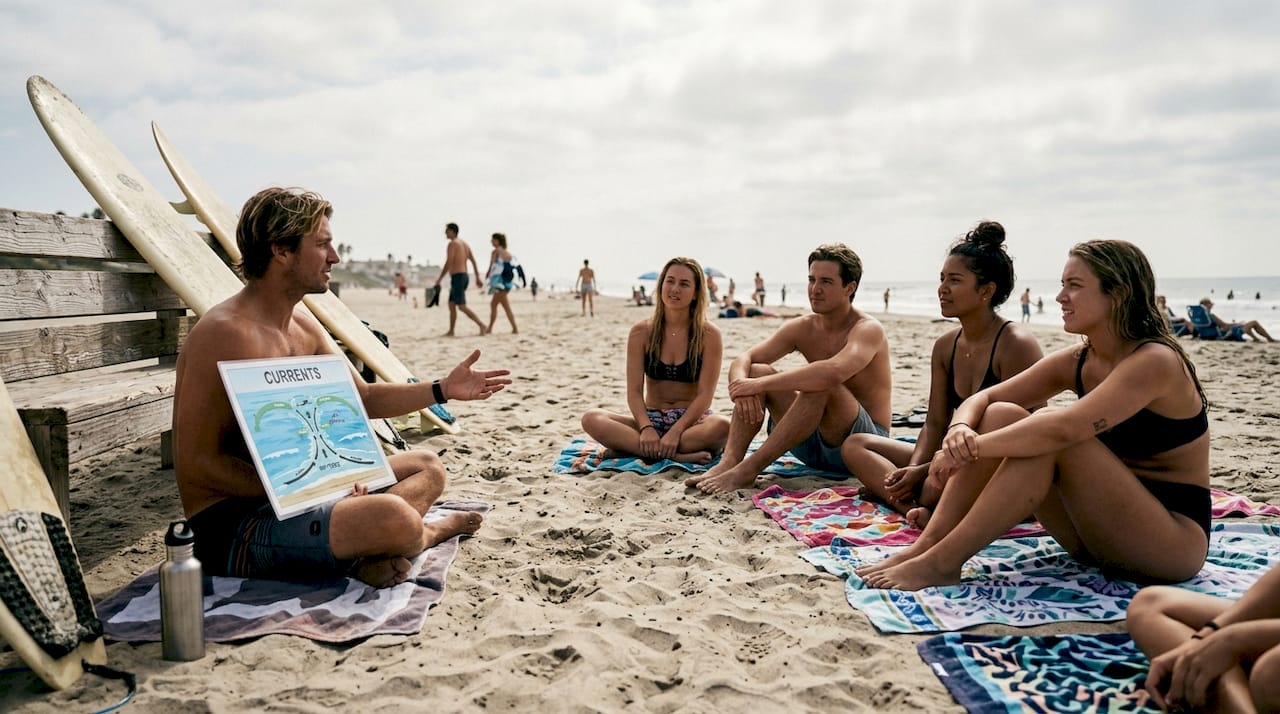
The best instructors spend a significant portion of lesson time on things that happen before you paddle out. A thorough safety briefing covers how to fall safely, how to protect your head when wiping out, and how to read the ocean for rip currents and changing conditions. This is not filler. It is the foundation that keeps beginners safe and builds genuine confidence.
Surf etiquette is where many schools fall short. Some instructors neglect etiquette, prioritizing quick stand-up successes over teaching students how to behave in a shared lineup. This creates problems: beginners who don’t understand right-of-way rules drop in on other surfers, cause collisions, and damage the social fabric of the surf community. A great instructor treats etiquette as non-negotiable from day one.
“Teaching someone to stand on a board in one session is easy. Teaching them to be a surfer who others want in the water takes real commitment to etiquette and awareness.” This is the standard worth holding instructors to.
Here are the signs that an instructor prioritizes the right things:
Safety briefing happens on land before every single session
Lineup rules (right of way, dropping in, snaking) are explained clearly
Students learn to identify rip currents and safe entry and exit points
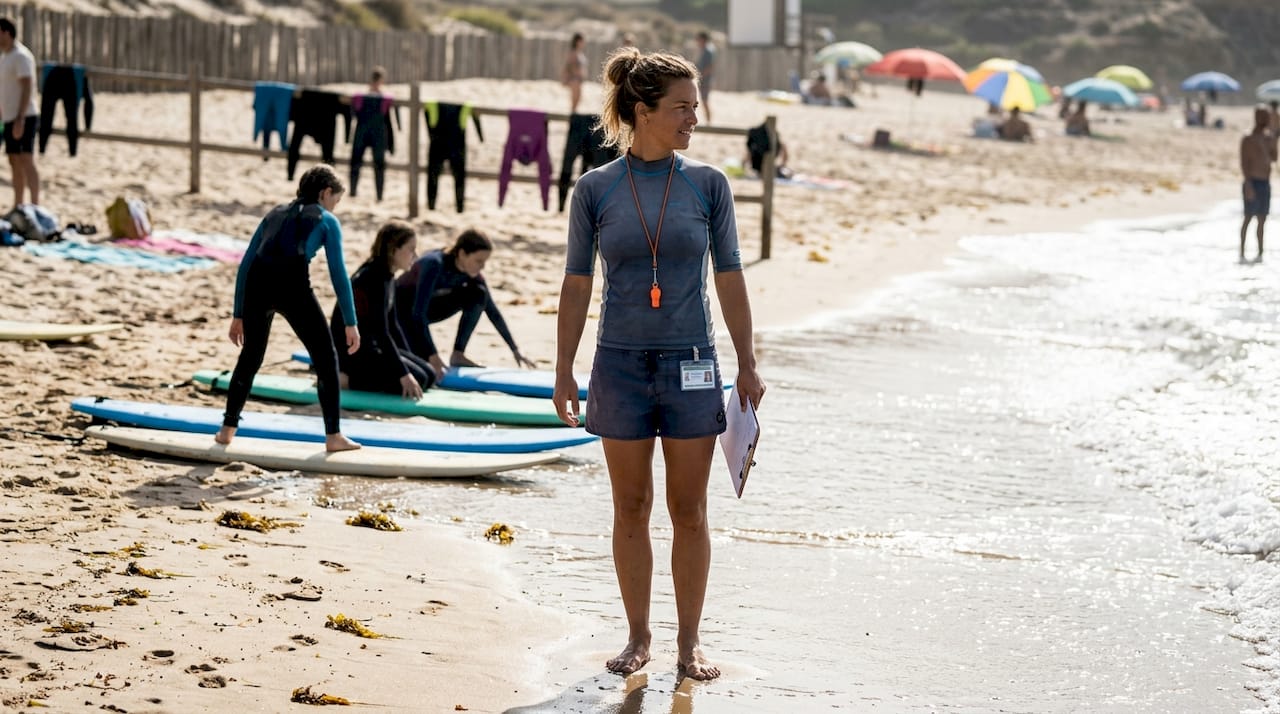
The instructor positions themselves to watch the whole group, not just the most advanced student
Ocean conditions are explained in simple language, not jargon
A good resource for understanding what proper surf etiquette expert insight looks like in practice can help you walk into your first lesson with sharper expectations. The instructor essentials Portugal overview also outlines what a well-structured lesson should include from a safety perspective.
Communication and feedback: Encouraging progress
Safety and etiquette are vital, but it’s effective communication that keeps students progressing.
A technically skilled surfer does not automatically make a skilled teacher. Communication is its own craft. The best instructors adjust their language and demonstration style based on who they’re working with. A nervous beginner needs calm, simple instructions and visible encouragement. An intermediate surfer working on their bottom turn needs specific, technical feedback delivered without making them feel like they’re failing.
Consistent feedback and encouragement lead to faster skill development and keep students motivated through the inevitable frustrating sessions. Positive reinforcement is not just being nice. It is a teaching tool that helps students internalize corrections without shutting down.
Here are the communication habits worth looking for in a great surf instructor:
They explain why a technique works, not just what to do
They demonstrate movements on land before asking students to try in the water
Feedback is specific: “bend your front knee more” beats “good job” every time
They check for understanding by asking questions, not just giving instructions
They celebrate small wins visibly, keeping group energy high
They adapt their tone if a student is struggling or frustrated
Group dynamics also play a role. A skilled communicator manages the energy of the whole group, making sure quieter students get attention and more confident ones don’t dominate the session.
Pro Tip: Before booking, ask the school to describe a typical lesson structure. If they can walk you through warm-up, land drills, water time, and debrief, that’s a strong sign they teach with intention rather than improvisation.
Creating a supportive surf community
Individual instruction matters, but being part of a supportive surf tribe can make lessons far more rewarding.
Surfing is inherently social. The lineup has its own culture, rituals, and unwritten rules. Great instructors don’t just teach technique. They introduce students to that culture in a way that feels welcoming rather than intimidating. When you understand the social side of surfing, you feel more confident paddling out anywhere in the world.
The best surf schools promote community and local culture as core parts of the experience, not optional extras. At Ripar Surf School, the village setting at Praia Areia Branca naturally supports this. Students share meals at local cafes, watch each other improve, and build friendships that often outlast the holiday itself.
Look for these indicators of a genuinely community-oriented surf school:
Group activities are organized beyond lesson hours (beach walks, sunset sessions, social evenings)
Instructors introduce students to local surfers and surf spots with cultural context
Peer encouragement is actively modeled by the instructor during sessions
Students from different ability levels are mixed thoughtfully, so beginners learn from watching intermediates
The school’s guest experience gallery shows real, candid moments rather than polished marketing shots
A school that invests in community creates an environment where asking questions feels safe, making mistakes feels normal, and progress feels shared. That psychological safety is often what separates a transformative surf holiday from a forgettable one.
Comparison of surf instructor qualities
To make everything easier, here’s how the main qualities stack up side by side.
All major instructor qualities contribute to better lesson outcomes, but knowing which ones to prioritize at each stage of your search makes the process faster and more reliable.
Quality | What to look for | Red flag |
Certifications | ISA or FPS certified, first-aid trained | No proof available on request |
Local knowledge | Knows tides, hazards, and lineup etiquette at your spot | Generic advice with no local detail |
Safety focus | Briefings before every session, group supervision | Rushes to the water without preparation |
Etiquette teaching | Covers right-of-way rules from lesson one | Only focuses on standing up quickly |
Communication style | Specific feedback, adapts to ability level | One-size-fits-all instructions |
Community building | Group activities, peer encouragement, local culture | Transactional, lesson-only interaction |
Use this table as a quick checklist when reading school websites, watching video content, or speaking with instructors directly. The schools that score well across all six categories are the ones worth your time and money.
The overlooked lessons: Beyond quick wins
Here’s an honest observation after years of watching people learn to surf: the schools that celebrate “everyone stood up on day one” the loudest are often the ones doing the least real teaching.
Standing up on a surfboard is genuinely exciting. But it is one small moment in a long journey. What shapes that journey is whether you understand the ocean, respect the community, and know how to behave in a lineup. Instructors neglecting etiquette can slow your long-term development significantly, because bad habits formed early are hard to unlearn.
The surfers who improve fastest are the ones who were taught to observe, listen, and respect from their very first lesson. They know when to paddle for a wave and when to wait. They understand that surfing is a shared resource. That mindset, more than any technique, is what makes someone a surfer rather than just someone who has been surfing.
When you evaluate schools, look for the ones that talk about effective teaching qualities in terms of the whole person, not just the highlight reel. The depth of what you learn in your first few sessions will determine how far you go.
Ready to surf with proven instructors in Portugal?
Now that you know what sets good instructors apart, here’s where to find them in Portugal.
At Ripar Surf School, every instructor is certified, locally experienced, and genuinely invested in your progress beyond just getting you to stand up. We cover safety, etiquette, and ocean awareness in every session, and our village setting at Praia Areia Branca makes community feel natural rather than forced.

Whether you’re looking for a group surf lesson with a social, supportive atmosphere or a private surf lesson for focused, personalized coaching, we have options that match what you’ve been reading about. Ready to take the next step? Book online and start your Portugal surf experience with instructors who teach the whole game.
Frequently asked questions
What certifications should a surf instructor in Portugal have?
Look for instructors certified by the International Surfing Association (ISA) or the Federação Portuguesa de Surf. Certified instructors consistently deliver safer, more structured lessons for beginners and intermediates alike.
How can I tell if a surf instructor emphasizes safety and etiquette?
A reliable sign is whether the instructor delivers a land-based safety briefing and covers lineup rules before every session. Schools that neglect etiquette in favor of quick stand-up moments are skipping the foundations that matter most.
Is group or private surf instruction better for beginners?
Both formats work well depending on your learning style. Private lessons give you focused, personalized attention, while group lessons build community, peer motivation, and a shared energy that many beginners find encouraging.
How important is local knowledge for surf instructors?
Very important. An instructor who knows the specific tides, currents, and hazards at your surf spot makes every session safer and more productive. Local knowledge is one of the clearest advantages of choosing a school rooted in a specific location.
What are signs of a welcoming surf school culture?
Look for schools that organize activities beyond lesson hours, encourage peer interaction, and connect students to local surf traditions. Schools promoting community create the kind of environment where learning feels natural and enjoyable.
Recommended
Comments