

Adventure Traveler Packing List: The 2026 Field Guide

Updated: Sep 25
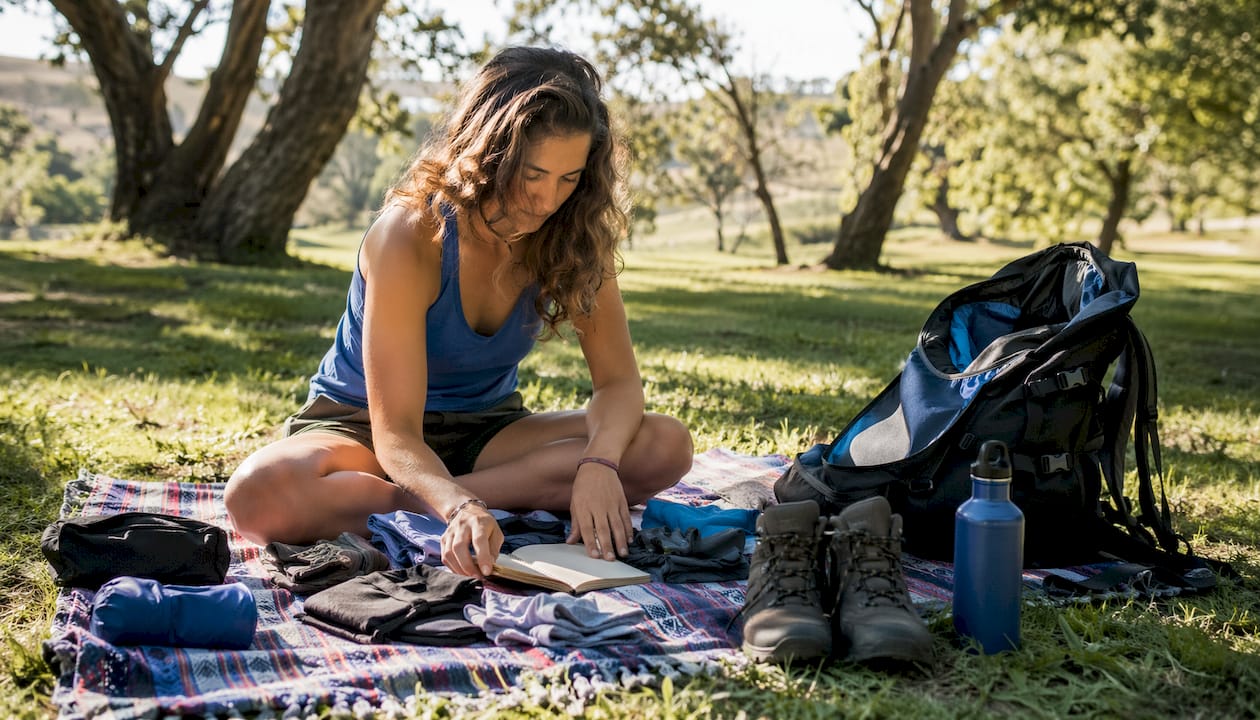
TL;DR:
The best adventure packing list emphasizes necessity over quantity, focusing on multi-purpose gear and proper weight. It recommends a 40-60 liter pack for multi-day trips, keeping weight under 12 kg for comfort and safety. Travelers should use a three-layer clothing system and adhere to the Ten Essentials for backcountry safety.
An effective adventure traveler packing list centers on one principle: every item must earn its place. The best outdoor travel gear list is not the longest one. It is the one that balances safety, mobility, and adaptability across changing conditions. The U.S. National Park Service’s Ten Essentials framework defines the baseline for backcountry preparedness, and experienced travelers build outward from there. What separates a smart travel packing checklist from a chaotic duffel bag is multi-purpose gear, disciplined weight limits, and clothing systems that work in multiple climates.
1. What backpack size and weight should you target?
The optimal backpack volume for adventure travel is 40–60 liters for your main pack and 15–25 liters for a daypack. That range gives you enough capacity for multi-day trips without forcing you to overload. Solo travelers should target a total carrying weight of 10–12 kg. Exceeding that threshold increases fatigue, reduces trail speed, and raises the risk of joint strain on long descents.
Most travelers pack too much on their first trip. The consequences are physical: sore shoulders, slower pace, and less enjoyment on the trail. The fix is not buying a bigger pack. It is cutting items that duplicate function.
Main pack: 40–60 liters for multi-day gear
Daypack: 15–25 liters for daily excursions and summit pushes
Total weight target: 10–12 kg for solo travelers
Avoid exceeding 20% of your body weight in total pack load
A properly fitted backpack transfers weight to your hips, not your shoulders. Hip belt fit is the single most important factor in all-day comfort. Ignoring proper backpack fit is the most common beginner mistake, regardless of how light the gear is.
Pro Tip: Load your pack with everything you plan to bring and walk around for 20 minutes before your trip. Any pressure points or imbalance will show up immediately, giving you time to adjust.
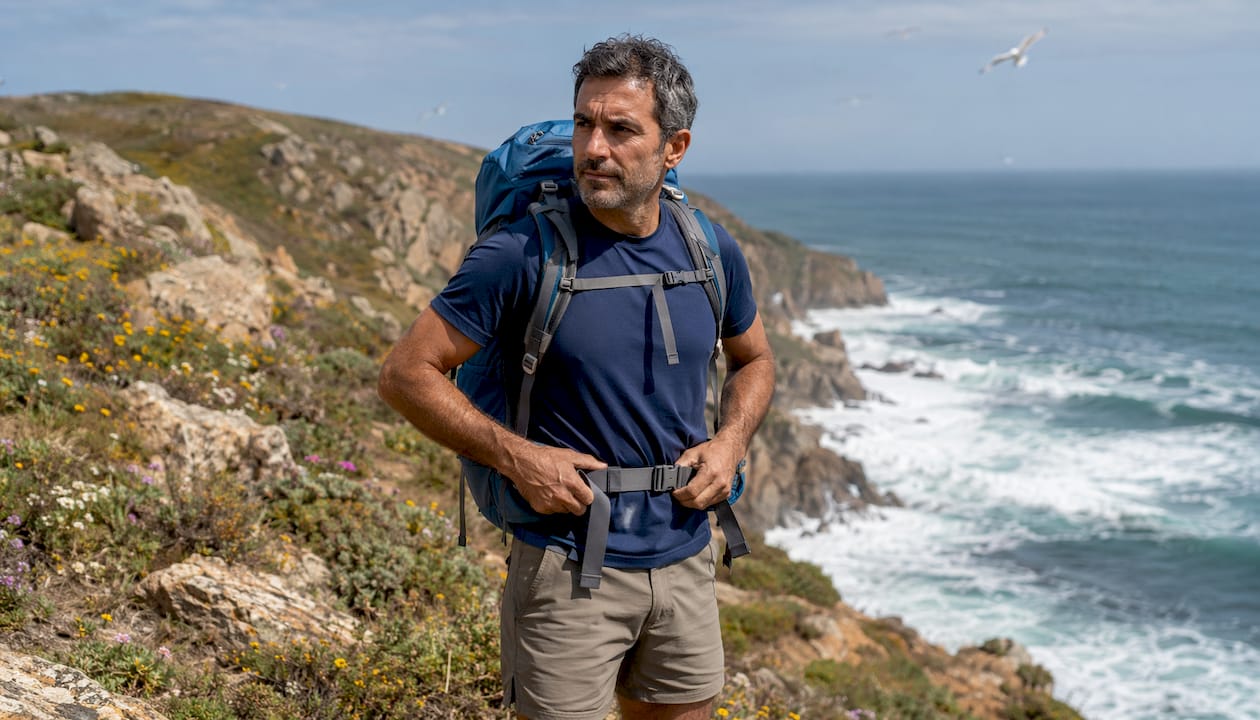
2. How to build a clothing system that works anywhere
Clothing is where most adventure travelers waste weight. The solution is a three-layer system: a moisture-wicking base layer, an insulating mid-layer, and a waterproof outer shell. Each layer handles a specific job, and together they cover a wide temperature range without requiring a separate outfit for every condition.
Pack 3–5 sets of moisture-wicking, quick-dry base layers. That number lets you wash and dry clothes overnight without running out of clean options. Merino wool and synthetic fabrics like polyester dry faster than cotton and resist odor through multiple wears.
Base layer (3–5 sets): moisture-wicking, quick-dry fabric in neutral colors
Mid-layer (1–2 pieces): fleece or down jacket for insulation
Outer layer (1 piece): waterproof, windproof shell that doubles as a windbreaker
Bottoms (2–3 pairs): convertible pants or quick-dry shorts
Socks (4–6 pairs): wool or synthetic, quick-dry
Footwear: one pair of trail shoes or boots plus lightweight sandals for camp
Neutral colors like gray, navy, and olive let you mix and match without looking mismatched. That flexibility means fewer total pieces. Selecting footwear is the most consequential clothing decision: trail shoes work for most trekking and light scrambling, while technical boots are necessary for rocky or icy terrain.
3. What are the essential gear categories every adventure traveler must pack?
The Ten Essentials framework, recommended by the U.S. National Park Service, defines the minimum gear categories for safe backcountry travel. These are not optional additions. They are the baseline that prevents a bad situation from becoming a dangerous one.
Gear Category | Key Function | Example Items |
Navigation | Route-finding and orientation | Map, compass, GPS device |
Sun protection | Prevent sunburn and eye damage | Sunscreen SPF 30+, sunglasses, hat |
Insulation | Temperature regulation in cold or wet conditions | Extra layers, emergency blanket |
Illumination | Visibility after dark or in emergencies | Headlamp with spare batteries |
First aid | Treat injuries and manage emergencies | Blister kit, bandages, antiseptic |
Fire | Warmth and signaling | Lighter, waterproof matches |
Repair tools | Fix gear in the field | Knife, duct tape, cord |
Nutrition | Sustain energy on long days | High-calorie snacks, emergency rations |
Hydration | Prevent dehydration | Water filter, reusable bottle |
Emergency shelter | Survive unexpected overnight exposure | Bivy sack, tarp, space blanket |
Beyond the Ten Essentials, three additional items belong in every pack: a power bank for charging devices, a copy of your travel documents stored separately from originals, and a reusable water bottle rated for filter compatibility. These additions address modern travel realities that the original framework predates.
4. How packing differs by activity and environment
A trekking checklist and a surf trip packing list share some overlap, but the differences matter. Researching local conditions and contacting your operator before you pack eliminates redundant gear and keeps weight down. Operators for activities like rafting, diving, and guided trekking often provide helmets, paddles, wetsuits, or trekking poles. Bringing your own duplicates that gear wastes space and money.
Trekking: Prioritize trail footwear, trekking poles if not provided, and a water filter. Skip bulky camp chairs.
Rafting: Bring quick-dry clothing and water shoes. Operators typically supply PFDs and helmets.
Diving: Pack a rash guard and reef-safe sunscreen. Tanks, BCDs, and regulators are almost always rentable.
Surfing: A surf trip to Portugal requires a rash guard, board shorts or a wetsuit, and reef-safe sunscreen. Boards and wetsuits are typically available through local schools.
Skydiving: Gear is always provided by the operator. Focus on comfortable, close-fitting clothing and closed-toe shoes.
Accommodation type also shapes your list. Camping requires a sleeping bag and pad. Hostel stays let you skip both. Knowing your lodging before you pack is not optional. It is the fastest way to cut 2–3 kg from your load.
Pro Tip: Divide your packing into two categories before you start: “on-body” items you wear or carry on your person, and “in-bag” items stored in your pack. Critical documents, medications, and your phone always go on-body.
5. Expert strategies to cut weight and stay organized
Multi-purpose gear is the single most effective weight-reduction tool available to adventure travelers. A rain jacket that doubles as a windbreaker eliminates one item. A stuff sack that doubles as a camp pillow eliminates another. Apply this logic to every item on your list and the savings add up fast.
Roll clothes instead of folding them to reduce volume by up to a third
Use packing cubes to separate categories and compress soft items
Wear your heaviest items during transit: boots, fleece, and outer shell
Pack heavier items close to your back and centered between your shoulder blades
Test technical gear like water filters and tents at home before departure
The on-body vs. in-bag system protects you from lost luggage risk. If your checked bag disappears, your passport, medications, and phone are still on your person. Experienced travelers treat this separation as non-negotiable, not a suggestion. For a broader nature travel checklist that covers hospitality and safety integration, the 2026 packing guide from Next View Tours offers a useful complement to this framework.
Weight distribution inside the pack matters as much as total weight. A poorly balanced load shifts your center of gravity and increases fatigue even when the pack is technically within the 10–12 kg limit. Heavy items belong closest to your spine, mid-weight items fill the center, and light or bulky items go at the bottom and outside pockets.
6. What to leave behind: the hardest part of any packing checklist
Most adventure travelers know what to bring. Fewer know what to cut. The items that get left behind on a second or third trip reveal more about smart packing than any gear list. Cotton clothing is the most common dead weight. It absorbs moisture, dries slowly, and adds unnecessary bulk. Replace every cotton piece with a synthetic or merino equivalent.
Duplicate tools are the second biggest offender. Two multi-tools, three lighters, and four charger cables are common in overpacked bags. One of each, chosen for quality, covers every realistic scenario. A summer tour packing checklist built around multi-day adventure tours reinforces this same principle: redundancy in gear is rarely justified by the weight cost.
Books, excessive toiletries, and “just in case” clothing round out the usual suspects. The “just in case” mindset is the enemy of a light pack. Every item added for a scenario that has less than a 20% chance of occurring is weight you carry for no return. Pack for the trip you are taking, not the worst-case version of it.
Key takeaways
The most effective adventure traveler packing list combines the Ten Essentials framework, a 10–12 kg weight limit, and multi-purpose gear to maximize safety and mobility across any outdoor activity.
Point | Details |
Backpack size and weight | Use a 40–60L main pack and stay under 10–12 kg total for solo travel. |
Three-layer clothing system | Base, mid, and outer layers cover most climates with fewer total pieces. |
Ten Essentials as baseline | The National Park Service framework defines the minimum safe gear categories. |
Multi-purpose gear cuts weight | Every item that serves two functions removes one item from your pack. |
Contact your operator first | Local operators often provide helmets, boards, and technical gear, eliminating redundant items. |
What I’ve learned from packing wrong (and then right)
My first multi-week trekking trip, I carried 18 kg. I remember the exact number because my hips reminded me of it every afternoon for two weeks. The pack was full of cotton shirts, a hardcover book, and three “just in case” layers I never touched. That trip taught me more about packing than any checklist ever could.
The shift to multi-purpose gear changed everything. One merino wool base layer that I wore for three days between washes replaced four cotton shirts. A rain jacket that doubled as a windbreaker replaced a separate fleece shell. The pack dropped to 11 kg and the trip became genuinely enjoyable rather than a test of endurance.
The lesson I keep coming back to is this: gear testing at home is not optional. I once arrived at a trailhead with a water filter I had never assembled. It took 20 minutes and a YouTube video to figure out. That is a manageable problem at a trailhead. It is a serious one at a backcountry water source with no cell signal.
For adventure travelers heading to coastal destinations, I also recommend checking what your surf school or activity operator provides before you pack a single piece of technical gear. When I visited Riparsurfschool in Portugal, boards, wetsuits, and instruction were all covered. I could have left half my surf gear at home. That kind of operator communication is the fastest weight cut available, and most travelers skip it entirely.
— Fernando
Riparsurfschool takes the gear guesswork out of surf travel
Planning a surf adventure in Portugal means one less packing headache. Riparsurfschool, based at Praia Areia Branca near Peniche and Ericeira, provides surf equipment, wetsuits, and certified instruction for all skill levels. You show up. The gear is ready.
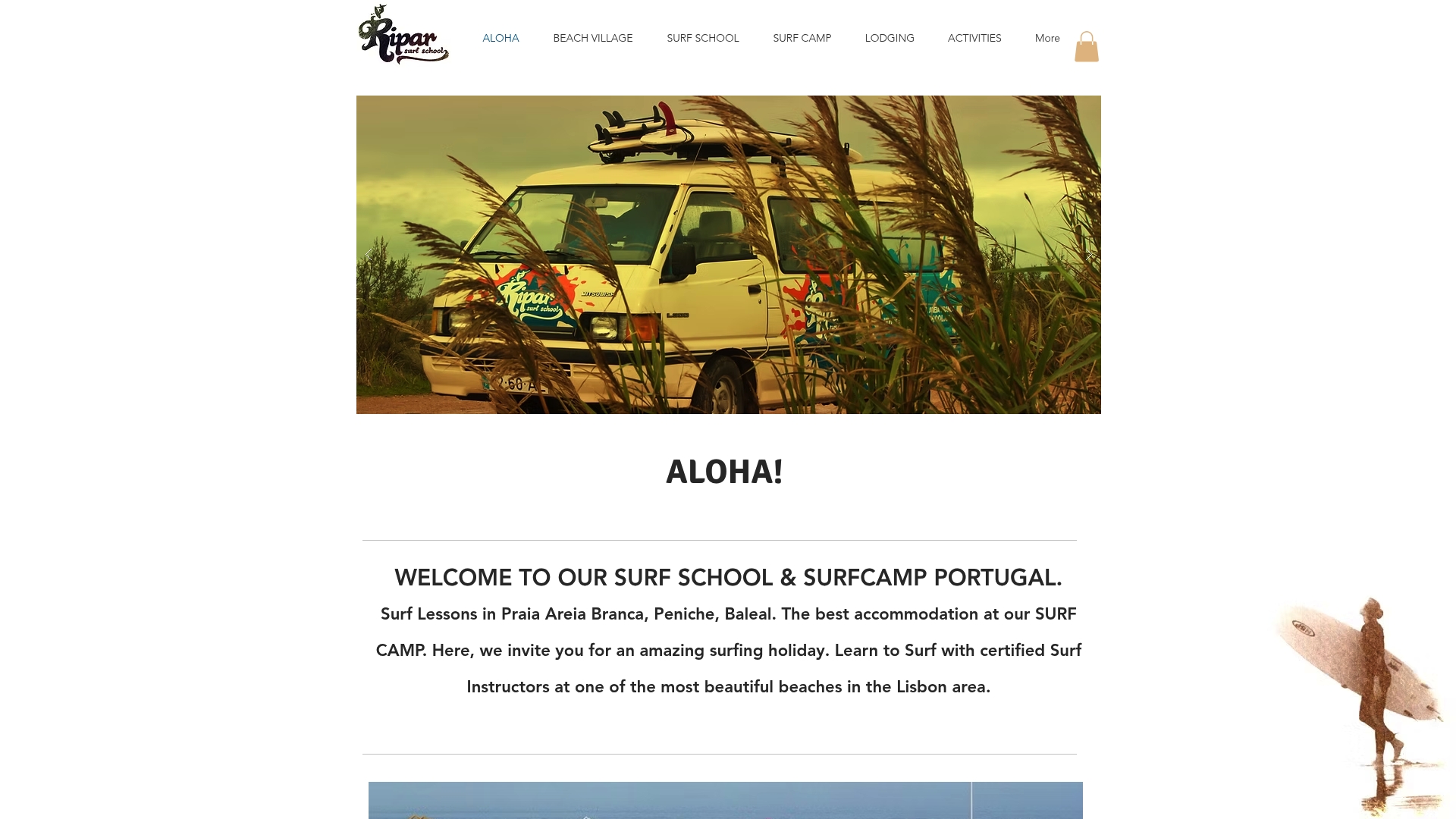
Whether you prefer a group surf lesson with other travelers or a focused private surf session tailored to your level, Riparsurfschool covers the technical side so you can travel light. The school also offers surf camps with lodging and yoga, giving you a complete adventure base without the weight of planning every detail yourself. Book your surf lesson online and arrive ready to get in the water.
FAQ
What is the ideal backpack size for adventure travel?
The ideal main pack size is 40–60 liters, paired with a 15–25 liter daypack for daily excursions. Solo travelers should keep total pack weight at 10–12 kg to maintain mobility and reduce fatigue.
What are the Ten Essentials for backcountry travel?
The Ten Essentials, defined by the U.S. National Park Service, are navigation, sun protection, insulation, illumination, first aid, fire, repair tools, nutrition, hydration, and emergency shelter. These categories form the safety baseline for any backcountry or remote adventure.
How many clothing sets should I pack for an adventure trip?
Pack 3–5 sets of moisture-wicking, quick-dry base layers. That number supports overnight washing and drying without running out of clean options on multi-day trips.
Should I bring my own gear or rely on local operators?
Contact your operator before packing any technical gear. Operators for activities like surfing, rafting, and diving typically provide helmets, boards, wetsuits, and paddles, which eliminates the need to carry or check bulky equipment.
What is the biggest packing mistake adventure travelers make?
Ignoring backpack fit is the most common mistake. A pack that does not transfer weight to the hips causes shoulder and back strain regardless of how light the load is. Always test your loaded pack before departure.
Recommended
Comments