

Why Early Arrival at Surf Spots Pays Off for Surfers

TL;DR:
Surf early to enjoy clean, glassy waves created by offshore winds before onshore breezes arrive.
Checking the wind, tide, and live cams the night before improves chances of optimal dawn conditions.
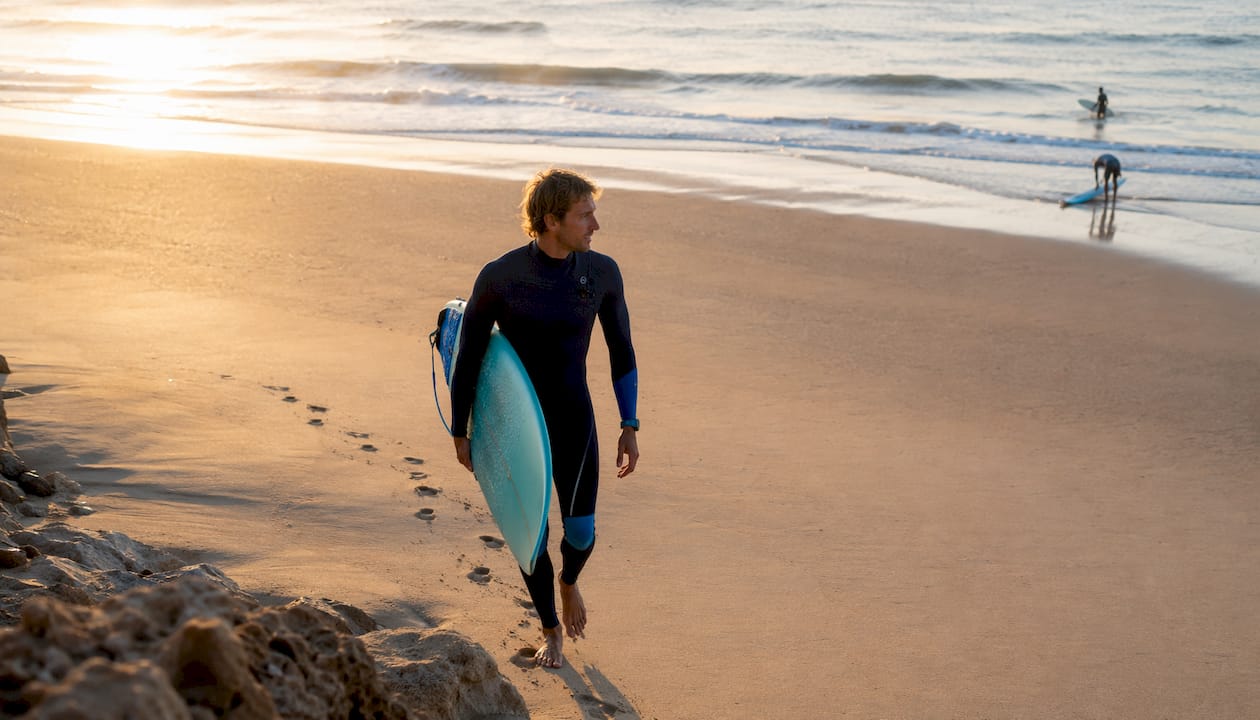
Show up before the sun clears the horizon and you’ll find something most surfers never experience: a lineup that’s clean, quiet, and yours. Dawn patrol consistently delivers glassy wave faces driven by offshore winds typically running 3–8 knots, before onshore sea breezes kick in and chop up the surface by mid-morning. That window is the core reason why early arrival at surf spots matters so much, and it’s physics, not luck.
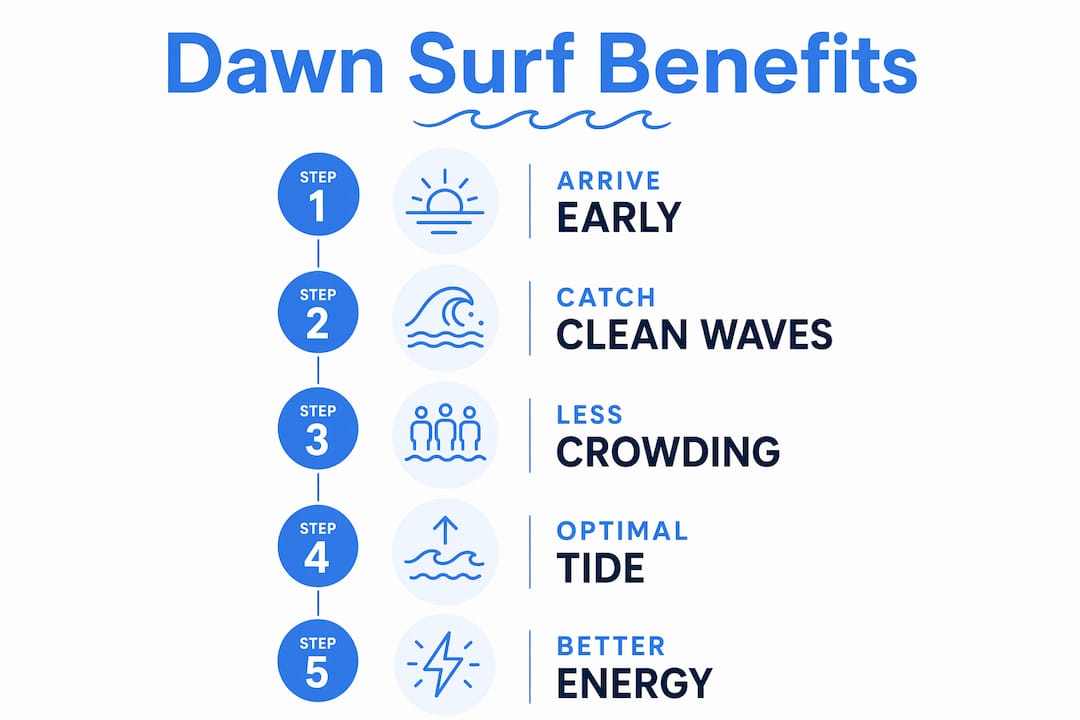
The benefits stack fast. Fewer bodies in the water means more wave attempts, cleaner takeoffs, and none of the shoulder-to-shoulder jostling that defines a weekend afternoon at any popular break. Tide and swell are also more likely to be in their optimal phase early, since many beach breaks peak on a rising tide after low, which often falls in the pre-dawn or early morning hours. Add the cold-water dopamine boost that sharpens focus for hours afterward, and the case for getting up early is hard to argue against.
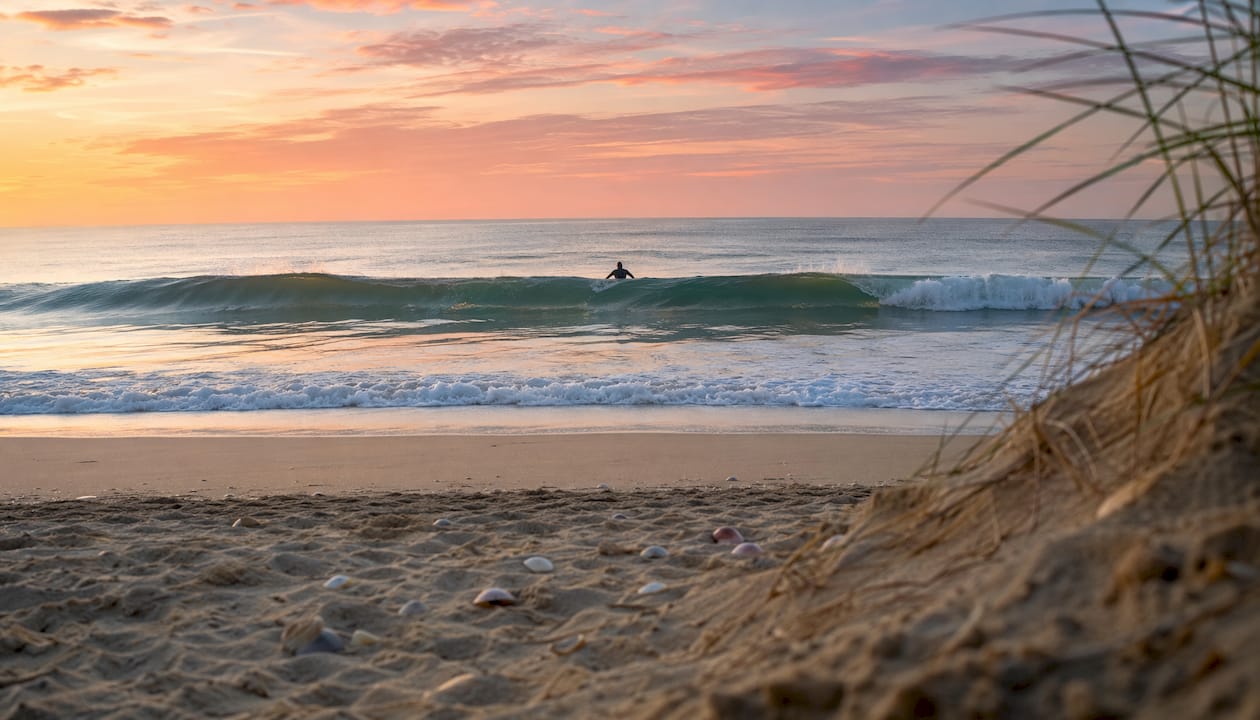
The short version: check your 3-hour wind forecast, tide chart, and a live cam the night before. Aim to arrive 30–60 minutes before sunrise on thermal days. Paddle out before the crowd does.

Table of Contents
How the land–sea breeze creates glassy conditions at dawn
The physics behind a glassy morning are straightforward once you see them. Overnight, land cools faster than the ocean. By dawn, the sea surface is warmer than the adjacent land, so air flows from land toward the water — an offshore breeze. That flow holds up the back of each wave face, producing the clean, steep walls surfers call “glassy.”
Offshore winds at dawn typically run 3–8 knots. Once the sun heats the land, the gradient reverses. By mid-morning, onshore winds of 8–15+ knots are common, and those winds blow directly into the wave face, creating surface chop and collapsing the shape. The land and sea temperatures equalize right around sunrise and sunset, which is exactly why those two windows are the calmest of the day.
Typical glassy window: 2–3 hours around sunrise. The glass-off at sunset, by comparison, usually lasts only 30–90 minutes and is far less predictable.
Geography modifies this pattern significantly. A break facing directly offshore relative to the prevailing land breeze gets the full benefit. A break sheltered by cliffs or oriented toward the sea may see the thermal effect muted or arrive later. Urban heat islands can also delay land cooling overnight, shortening the offshore window in city-adjacent breaks.
One important caveat: synoptic-scale weather overrides thermal patterns. A cold front or a persistent onshore high-pressure system will blow out a break regardless of the time of day. Dawn is not automatically better — it’s better when the large-scale pattern allows the thermal cycle to run.
Signs a good dawn window is likely:
Clear skies the night before (faster land cooling)
Light synoptic winds in the forecast (under 10 knots)
Forecast shows offshore or cross-shore direction at 6–7 AM
No approaching fronts in the 48-hour outlook
For a deeper look at how weather shapes surf conditions, Riparsurfschool’s weather guide covers the full picture.
Why lineups thin at dawn and what that actually buys you
Most surfers are not morning people. Work schedules, surf lessons that start at 9 AM, and the simple gravitational pull of a warm bed mean the lineup at 6:30 AM looks nothing like the lineup at 10 AM. That gap is your opportunity.
Crowd ramps follow a predictable pattern: a trickle of dedicated surfers at dawn, a noticeable jump when surf schools arrive (typically 8:30–10 AM), and a full weekend peak by late morning. Beat that ramp and you get more waves per hour, cleaner peak selection, and takeoffs without someone already dropping in from the shoulder.
Concrete benefits of an empty lineup:
More wave attempts per hour, which accelerates skill development faster than any lesson
Freedom to choose your peak rather than defaulting to wherever space opens up
Safer takeoffs with clear sight lines and no one paddling into your path
Better light for photos and video — the golden hour is real and brief
Parking matters more than most surfers admit. Popular breaks on weekends fill their lots by 8 AM. Arriving at 6 AM means a front-row spot, a short walk to the water, and no scramble to find your gear after a session.
Pro Tip: Claim your lineup spot by paddling to the peak you want, then sitting slightly inside of it. This signals intent without aggression. Rotate into waves in order, respect whoever was there first, and you’ll earn goodwill from the locals who are always watching how newcomers behave at dawn.
How tide, swell period, and swell direction interact with the morning window
Dawn helps, but it doesn’t override oceanography. The same 6 AM window that produces perfect barrels at one break can deliver flat, mushy nothing at another, depending entirely on tide phase and swell direction.
Tide phase interacts with bathymetry in ways that are break-specific. Many beach breaks peak on a rising tide after low, when water is pushing over sandbars and steepening the faces. Point breaks often prefer mid to high tide. Checking which phase your break favors is as important as checking the wind.
Swell period changes everything about wave shape. A 14-second swell at 4 feet produces a completely different wave than a 9-second swell at the same height — longer period means more energy, steeper faces, and more power in the barrel. Short-period wind swell tends to be choppy and close-together regardless of wind conditions. Long-period groundswell rewards patience and rewards early arrival because those waves hold their shape even as wind picks up slightly.
Actionable rule: prioritize sessions where the dawn window overlaps your break’s preferred tide. For most beach breaks, that means a rising tide in the first two hours after low. Check the tide chart the night before, not the morning of.
Pro Tip: Don’t rely on time-of-day alone. Pull up a live local cam and a tide chart the night before. If the tide phase is wrong for your break, a 5 AM alarm won’t save the session. The optimal surf time is always the overlap of offshore wind, correct tide, and adequate swell — not just “early.”
For a full breakdown of how tides shape wave quality, Riparsurfschool’s tidal patterns guide is worth bookmarking.
When “early” is best: coast, season, and how long the window lasts
“Early” means different things depending on where you surf and what month it is. The thermal cycle that creates glassy mornings is most reliable in summer, when clear skies and stable high-pressure systems let land cool overnight and warm quickly after sunrise. Winter sessions are often driven by synoptic weather — fronts, swells, and wind patterns that don’t follow a daily thermal rhythm at all.
Dawn windows typically last 2–3 hours, centered on sunrise. Glass-off windows at sunset run 30–90 minutes and are less predictable. If you can only pick one, dawn wins on reliability.
Coast type | Typical glassy window | Seasonal notes |
Temperate west coast (e.g., California, Pacific Northwest) | 5:30–8:30 AM summer | Strong thermal cycle in summer; winter driven by storm swell, less predictable mornings |
Temperate east coast (e.g., East Coast US) | 2–3 hours around sunrise | Thermal cycle present but weaker; afternoon sea breezes arrive earlier |
Tropical coasts | Year-round dawn window | Trade winds dominate; offshore mornings common but vary by season and orientation |
Leeward coasts | Extended morning calm | Sheltered from prevailing wind; dawn window can stretch to mid-morning |
Quick rules by coast type:
West-facing coasts in summer: set the alarm for 30 minutes before sunrise, no exceptions
East-facing coasts: check the forecast carefully — prevailing winds can already be onshore at dawn in some seasons
Tropical breaks: trade wind direction matters more than time of day; leeward sides of islands often stay glassy longer
Estuary-influenced breaks: tidal flow can override wind effects entirely; tide chart is your primary tool
For timing your surf holiday around seasonal conditions, Riparsurfschool’s September surf guide covers one of the best windows on the Portuguese coast.
The instructor-tested checklist for nailing dawn patrol
Getting up early is the easy part. Getting up early and having a productive session requires a routine. Here’s what actually works, built from years of teaching dawn sessions at Riparsurfschool.
The night before:
Check the 3-hour wind forecast for your break (target: offshore, under 8 knots at 6–7 AM)
Pull the tide chart and confirm the phase matches your break’s preference
Open a live cam if available — a 10-second look tells you more than any forecast
Set two alarms: one to wake up, one as a “leave now” reminder
Pack your bag and lay out your wetsuit the night before; decision fatigue at 5 AM is real
Sleep and preparation:
Avoid vigorous exercise within an hour of bedtime and cut screen time in the final hour before sleep
Place your alarm across the room so you have to stand up to silence it
Keep your pre-session breakfast simple and ready to grab
Morning of:
Arrive 30–60 minutes before sunrise to rig up in daylight and check conditions before paddling out
Bring a headlamp for pre-dawn parking lot navigation and leash checks
Do a quick buddy check: confirm your exit points, note rip locations, and tell someone your plan
Pro Tip: Spend five minutes on the beach before paddling out. Watch three to five sets. Identify the peak, note the rip, and pick your entry point. Surfers who skip this step spend the first 20 minutes of a session fighting the water instead of reading it.
The morning surf routine guide from Riparsurfschool walks through the full pre-session sequence in detail.
Early morning sunlight also works in your favor. Viewing morning sunlight within the first hours after waking supports cortisol levels that drive wakefulness and cognitive sharpness — which means the walk from the parking lot to the water is doing you good before you even paddle out. The mental health benefits of connecting with nature through surfing extend well beyond the session itself, and spending time outdoors in the early morning amplifies those effects.
The one-minute pre-go checklist: tools and quick reads
You don’t need 30 minutes of forecast research to decide whether to go. You need four data points, checked in the right order.
One-minute pre-go checklist:
Wind direction — offshore or cross-shore? If it’s onshore, reconsider.
Wind speed — under 8 knots? Green light. 8–15 knots? Marginal. Over 15 knots? Stay home.
Swell height and period — is there enough swell, and is the period long enough (10+ seconds) to hold shape?
Tide phase — does it match your break’s preference for the next 2 hours?
Live cam — does it look glassy? Trust your eyes over any model.
Tools that deliver fast, reliable reads:
Live surf cams — the fastest reality check; a 10-second clip beats any forecast model
3-hour wind forecast (Windy, Windguru, or NOAA’s marine forecast service) — short-range accuracy is high; 24-hour forecasts are directional only
Buoy anemometer readings — real-time wind speed and direction from offshore buoys; NOAA’s buoy network covers most US coastal areas
Tide widgets (NOAA Tides & Currents, Tide-Forecast) — free, accurate, and takes 10 seconds to read
When signals conflict: trust the live cam and the buoy over the model. Models lag reality by 1–3 hours at the local level. If the cam shows glassy and the forecast says 12 knots onshore, go — but paddle out quickly before conditions shift.
Key Takeaways
Arriving early at surf spots works because offshore dawn winds of 3–8 knots create clean, glassy wave faces before onshore breezes of 8–15+ knots arrive and chop up the surface by mid-morning.
Point | Details |
Dawn wind window | Offshore winds of 3–8 knots typically hold for 2–3 hours around sunrise — longer and more reliable than the glass-off. |
Tide alignment matters | Check that your break’s preferred tide phase overlaps the dawn window; many beach breaks peak on a rising tide after low. |
Night-before prep | Check the 3-hour wind forecast, tide chart, and a live cam the night before — not the morning of. |
Crowd advantage | Arriving before surf schools (typically 8:30–10 AM) gives you more waves, cleaner peaks, and safer takeoffs. |
Sleep hygiene | Avoid exercise and screens in the hour before bed; place your alarm across the room to make waking up non-negotiable. |
The part no forecast can tell you
Most articles about dawn patrol stop at meteorology. What they miss is the social layer — and it’s the one that determines whether you’re welcome at a break long-term.
Showing up consistently at dawn signals something to the locals who are already there. It says you’re serious, you respect the spot, and you’re not there to burn people on a weekend visit. That reputation builds slowly and matters enormously at competitive breaks. Surfers who arrive early, sit in the right spot, and rotate into waves in order earn goodwill that no amount of skill can substitute for.
Dawn patrol also functions as a meditative practice for many experienced surfers — the quiet water, the low light, the absence of noise from the beach. That’s not incidental. It’s a reason to go even on days when the waves are average.
If you’re planning a surf trip and want to make the most of early sessions, staying close to the water changes everything. Riparsurfschool’s surf accommodation guide explains how proximity to the break affects your ability to catch those first-light windows consistently. When you’re ready to put this into practice, a private surf lesson at Praia Areia Branca — timed to the morning window — is the fastest way to turn early arrival into actual wave count.
Useful sources and where to start
Cross-referencing at least two sources before a session is always smarter than trusting one forecast alone. Open them in this order: live cam first, wind forecast second, tide chart third.
Quiver Surf App — clear explanations of dawn vs. glass-off windows and best-time-of-day logic; start here for timing questions
BreakFinder optimal surf time calculator — combines tide, swell period, and wind direction for break-specific timing; the closest thing to a sniper’s tool for scheduling sessions
NOAA Marine Forecasts — authoritative short-range wind and sea-state forecasts for US coastal waters; use the 3-hour model
NOAA Tides & Currents — free, accurate tide predictions for every US coastal station; takes 10 seconds to read
Surfer Magazine — Dawn Patrol — covers the mental and cultural side of early sessions; useful for understanding why the habit sticks
SurferToday — Dawn Patrol Wake-Up Guide — practical sleep hygiene and behavioral tricks for making early alarms sustainable
Quick reminder: no single tool is always right. When the live cam contradicts the forecast, trust the cam. When the buoy contradicts the model, trust the buoy. Real-time data beats a prediction every time.
Recommended
Comments