

Surf Peniche: Your Complete 2026 Guide to Portugal's Best Waves

Why Peniche is Portugal’s top surf destination
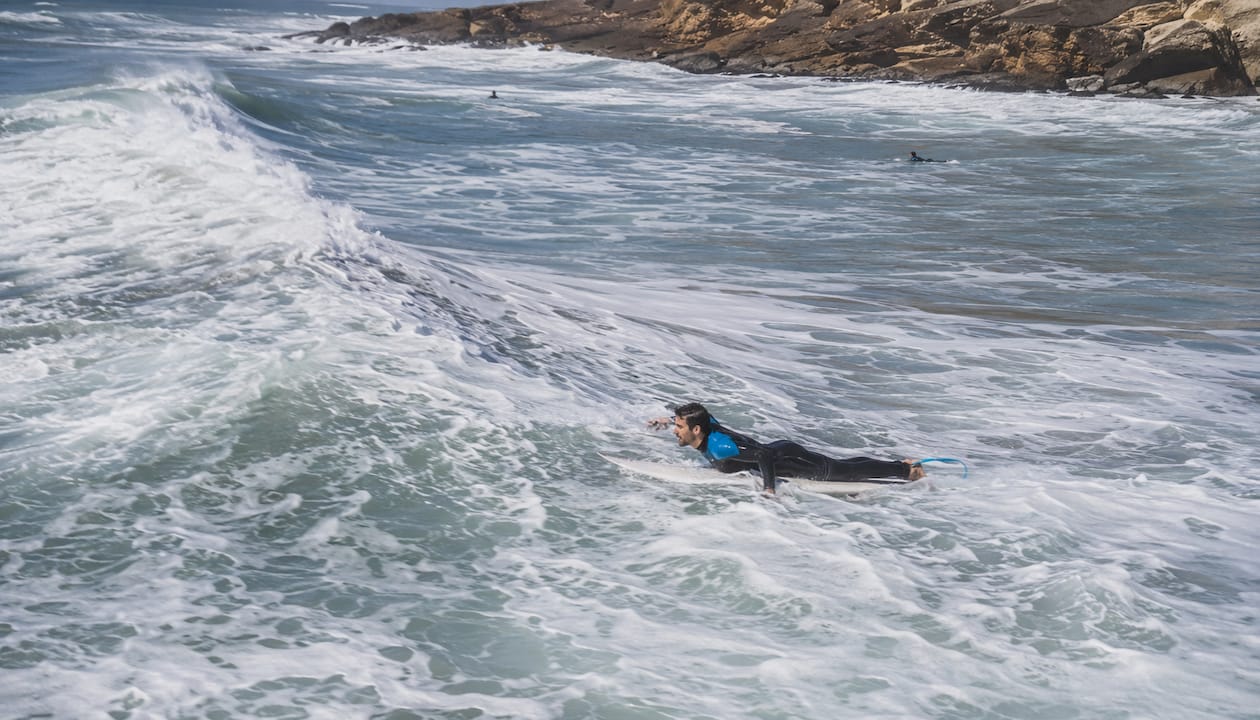
Peniche delivers something rare: genuinely surfable waves every single day of the year. The town sits on a rocky peninsula jutting into the Atlantic about 90 minutes north of Lisbon, and that geography is everything. Three coastlines face different directions, which means when one side is blown out or flat, another is almost always clean. You’re not gambling on a single beach break. You’re choosing from a menu.
The wave range here is equally impressive. Over 30 surf breaks sit within 20 minutes of the town center, covering everything from gentle, protected bays to world-class hollow barrels. Beginners find their footing at Baleal and Cantinho da Baía. Advanced surfers chase Supertubos, one of the most powerful beach breaks in Europe. That spread is what makes Peniche work for nearly every type of surfer.
Riparsurfschool has been running certified surf instruction here since 2001, and the local knowledge that comes with two decades on these beaches is hard to replicate. Their instructors know which spot fires on a given swell direction, which tides to avoid, and where beginners can progress without getting in over their heads.
Key surfing features at a glance:
Year-round surfable conditions thanks to peninsula geography
Multiple coastal orientations providing daily offshore wind options
Beginner-friendly breaks at Baleal and Cantinho da Baía
World-class barrels at Supertubos, host of the WSL Championship Tour
Water temperatures ranging from 14°C in winter to 19°C in late summer
Certified local instructors and surf camps for all skill levels
Table of Contents
The main surf spots in Peniche you need to know
Peniche’s breaks are spread across the peninsula, and each one has a distinct personality. Knowing which spot suits your level on a given day is half the battle.
Supertubos
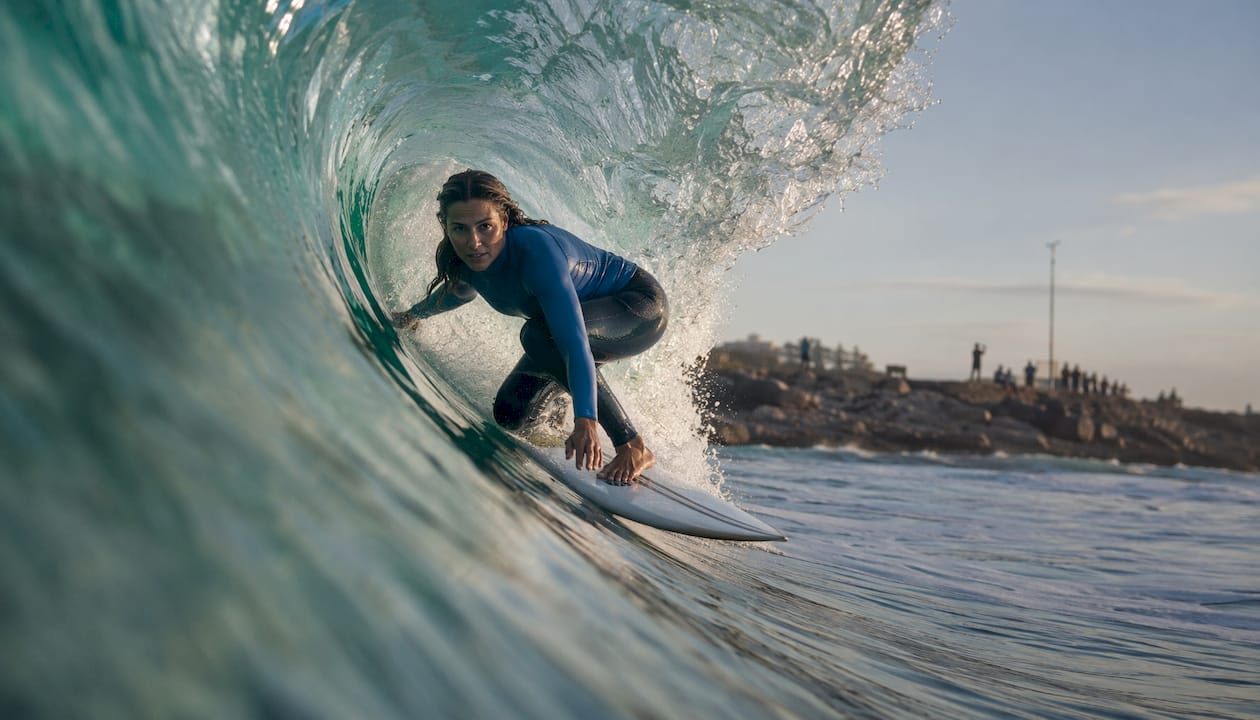
Supertubos is the headline act. Located on the southern side of the peninsula, it produces fast, hollow barrels that rival anything in the surfing world. The WSL Championship Tour stops here every October for the MEO Rip Curl Pro Portugal, and watching the world’s best surfers navigate these tubes in person is worth the trip alone. The sandbars shift seasonally, which changes the wave character significantly. On a good day, catching 2–3 waves per hour at Supertubos is considered a solid session. The crowd is competitive, localism is moderate, and the wave power demands experience. This is not a spot to learn on.
Baleal
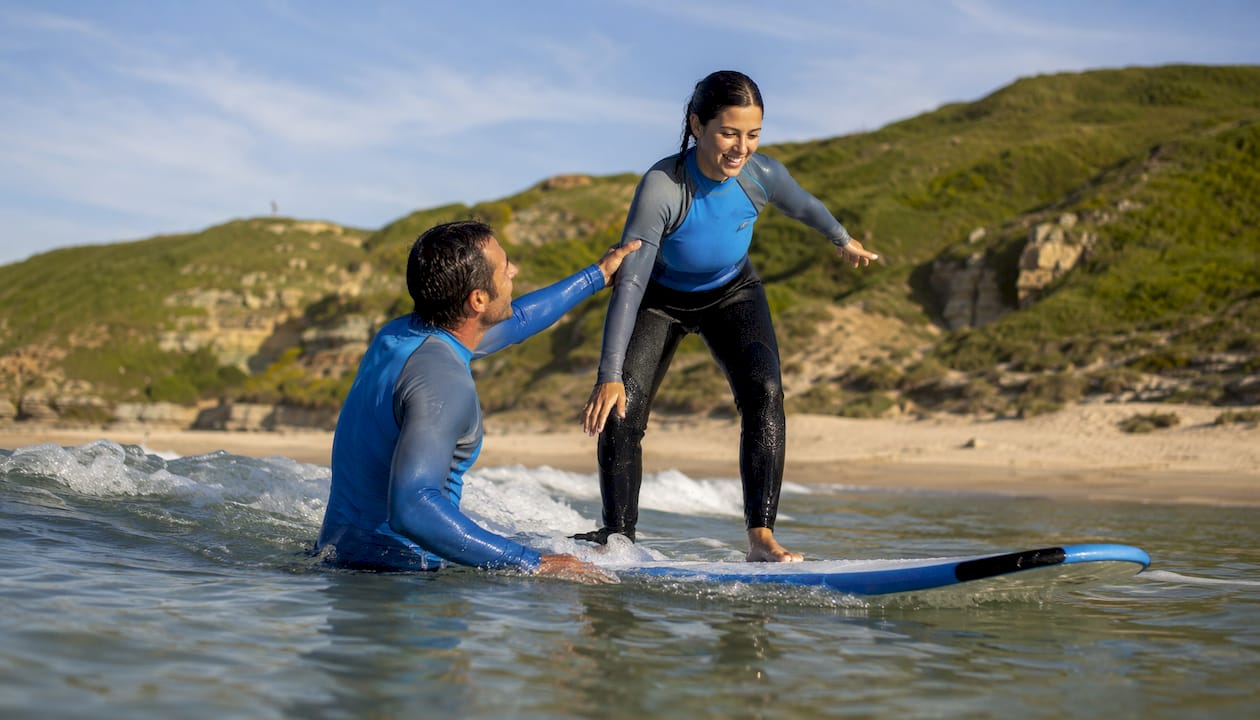
Baleal sits on its own small island connected to the mainland by a sandy isthmus, and the northern side produces mellow, forgiving waves that are ideal for beginners and intermediates. The peninsula’s geography filters the raw Atlantic swell here, softening it into waist-high rollers that give learners time to read the wave and practice technique. The southern exposure at Baleal delivers more punch when north swells arrive, making it a genuinely versatile spot.
Cantinho da Baía
Cantinho da Baía is the go-to beginner beach in the Baleal area. It’s sheltered, consistent, and far enough from the competitive lineups that new surfers can focus on actually surfing rather than dodging experienced riders. Surf schools cluster here in summer for good reason.
Molhe Leste
Near the harbor wall, Molhe Leste comes alive on big south swells when other spots are maxed out. It’s a useful alternative when the main breaks are too powerful or too crowded, and it rewards surfers who know how to read a less obvious lineup.
Lagide, Papoa, and Prainha
These three spots sit on the northern and western edges of the peninsula. Lagide works well on smaller swells and is less crowded than Baleal. Papoa and Prainha are rockier, better suited to intermediate surfers who can handle reef-adjacent conditions and want to escape the summer crowds entirely.
Spot comparison at a glance:
Spot | Level | Wave Type | Best Conditions |
Supertubos | Advanced | Fast, hollow barrels | NE/E wind, mid tide |
Baleal (north) | Beginner/Intermediate | Mellow rollers | Any swell under 2m |
Cantinho da Baía | Beginner | Gentle, sheltered | Small to moderate swell |
Molhe Leste | Intermediate | Punchy beach break | Big south swells |
Lagide | Intermediate | Clean, consistent | Small NW swell |
Papoa/Prainha | Intermediate | Rocky reef-adjacent | Low crowd days |
When should you surf in Peniche?
The short answer: October is the peak month for wave quality, but May through June and September through October are the smartest windows for most surfers.
Autumn (September–October) is when Peniche truly fires. Atlantic storm systems start generating organized swell, water temperatures are still around 64°F, and the WSL event in October brings the best conditions of the year. Wind averages around 14 mph in October, typically from the northwest, which cleans up the southern breaks nicely.
Shoulder seasons (May–June and September–October) are consistently underrated by travelers. Crowds drop significantly, prices follow, and the waves remain consistent enough for real progression. Intermediate surfers in particular get more out of these windows than they would fighting for space in August.
Summer (July–August) brings warmer water (up to 69°F in August) but smaller, less powerful waves. Peak August sees 20+ surf schools operating near Baleal simultaneously. If you’re visiting in August, surf at dawn (6:30–8:30 AM) or late afternoon to avoid the school rush.
Winter (November–March) delivers the biggest, most powerful swells. Wave heights regularly hit 7–10 feet. This is advanced territory, and a 4/3mm wetsuit is the minimum. The upside: crowds thin out dramatically, and you can have world-class breaks nearly to yourself.
Shoulder season surfing consistently delivers better value and better lineups than peak summer. Plan accordingly.
Getting to Peniche and finding a place to stay
Getting there
Driving from Lisbon Airport takes about 90 minutes on the A8 freeway. Rental cars run roughly €25–60 per day, and having your own wheels makes a real difference here. Peniche’s breaks are spread across the peninsula, and chasing the best conditions on a given day means moving between spots. Public buses connect Lisbon to Peniche regularly and cost a fraction of a rental, but you lose the flexibility to follow the swell.
From Porto, the drive is around 2.5 hours south on the A1 and A8. Flying into Lisbon and renting a car is the most practical option for most international travelers.
Where to stay
Peniche has accommodation for every budget and surf style:
Surf hostels: Social, affordable, and usually within walking distance of the breaks. Board storage is standard.
Boutique hotels: A handful of mid-range options in town offer more comfort without sacrificing proximity to the water.
Surf camps: The most immersive option. Riparsurfschool’s surf house options near Praia Areia Branca combine lodging with daily instruction, equipment, and a community of surfers at a similar level.
For a Portugal vacation package that includes surf-focused itineraries, Elite Travel Group offers curated options worth checking if you want logistics handled end-to-end.
Local amenities worth knowing:
Surf shops throughout town stock boards, wetsuits, wax, and leashes
Seafood restaurants are everywhere and genuinely excellent
Peniche Fortress (Fortaleza de Peniche) is a 16th-century landmark worth an afternoon
Boat trips to the Berlengas Islands run regularly in summer
Surf equipment and rentals in Peniche
Traveling with a surfboard is a hassle most surfers don’t need. Peniche’s rental shops are well-stocked, and the staff know local conditions well enough to point you toward the right board for the day’s swell.
Most shops carry a full range: longboards, mid-lengths, shortboards, and fish shapes, plus wetsuits in every thickness. Rental prices are reasonable, and renting locally means you’re not paying airline board bag fees or risking damage in transit.
Ripar Surf School provides equipment rentals alongside lessons, which simplifies things considerably for visitors who want instruction and gear sorted in one place. Their instructors match equipment to skill level, which matters more than most beginners realize. A board that’s too small or too narrow makes learning exponentially harder.
Equipment recommendations by season:
Summer: 3/2mm wetsuit, mid-length or longboard for smaller waves
Autumn/Winter: 4/3mm wetsuit with booties, shortboard or gun for bigger swells
Spring: 3/2mm wetsuit, versatile mid-length
For beginners, renting is always the right call. Buying your own board before you’ve surfed more than a handful of times usually means buying the wrong board. Rent, progress, then invest.
How Peniche’s geography gives you surfable waves every day
Peniche’s peninsula forms three distinct coastlines, each exposed differently to Atlantic swells and wind. That’s not a minor detail. It’s the reason surfers can almost always find clean conditions somewhere on the peninsula, regardless of what the wind is doing.
When a northwest wind blows, the southern breaks like Supertubos get offshore conditions and clean up beautifully. When the wind swings northeast, the northern and western spots benefit. The Baleal peninsula filters raw Atlantic swell into gentler, more manageable waves on its sheltered side, while the exposed south coast takes the full force of the ocean.
This daily flexibility is what separates Peniche from most European surf destinations. A spot like Hossegor in France fires hard when conditions align, but when the wind is wrong, options are limited. Peniche almost always has a workable alternative.
What drives Peniche’s surf reliability:
Three coastline orientations catching swell from multiple directions
Peninsula geography creating natural swell filtering at Baleal
Consistent Atlantic groundswell from September through April
Morning sessions typically lighter wind than afternoon across all spots
Northeast and east winds clean up Supertubos; west winds favor northern breaks
Pro Tip: Check Windguru or Magicseaweed the night before and again at 6 AM. Wind direction at dawn often differs from the afternoon forecast, and knowing which side of the peninsula is offshore at first light lets you pick the right spot before anyone else does.
Safety and surf etiquette in Peniche
Supertubos produces dangerous rip currents, particularly after heavy swell. The wave’s power and the beach’s geography limit rescue access, which means your entry and exit strategy matters before you ever paddle out. Spend 30–45 minutes watching from the beach first. Identify where experienced surfers enter, where the current runs, and where the channel sits. That reconnaissance prevents the kind of paddling mistakes that turn a surf session into an emergency.
At Baleal and Cantinho da Baía, the risks are lower but still real. Rip currents exist at every beach break. If you get caught in one, don’t fight it by paddling directly toward shore. Paddle parallel to the beach until you’re out of the current, then angle back in.
Surf etiquette at Peniche follows standard lineup rules, with a few local nuances:
The surfer closest to the peak has priority. Don’t drop in.
At Supertubos, the crowd is competitive and experienced. Beginners should stay out of this lineup entirely.
Beginners belong at designated learner beaches like Cantinho da Baía, not at advanced spots where they create hazards for themselves and others.
Paddle wide around the break, not through the lineup.
If you wipe out, protect your head with your arms before surfacing.
A solid surf etiquette guide covers the fundamentals in detail. Reading it before your first session in Peniche is time well spent.
How tides and swell shape each session in Peniche
Tides affect wave quality at every Peniche break, and the effect is dramatic enough that timing your session around the tide table is standard practice here, not optional.
Supertubos works best around mid tide. At low tide, the wave can become shallow and unpredictable over the sandbar. At high tide, it tends to back off and lose its characteristic hollow shape. The sandbars shift seasonally, so what worked at mid tide in October may behave differently in March.
Baleal’s northern side is more forgiving across the tidal range, which is part of why it suits beginners. The sheltered bay maintains rideable conditions through most of the tide cycle, though the wave quality peaks on an incoming mid tide.
Atlantic groundswell is the engine behind Peniche’s consistency. From September through April, North Atlantic storm systems generate organized swell that arrives with enough period (typically 12–16 seconds on good days) to produce clean, defined waves rather than choppy chop. Summer swell is shorter-period and smaller, generated by local wind rather than distant storms.
Swell direction matters too. Northwest swells hit Supertubos and the southern breaks most directly. North swells wrap around the peninsula and light up Baleal’s southern side. West swells tend to be messier and less organized but can still produce rideable conditions on the more sheltered spots.
Buy a tide table at any local surf shop, or use an app like Tide Alert or Tides Near Me calibrated to Peniche. Checking it the night before takes two minutes and can save you a wasted session.
What to do in Peniche when you’re not surfing
Peniche is a genuine working fishing town, not a resort, and that authenticity makes the non-surf hours genuinely interesting rather than just filler between sessions.
Berlengas Islands: A UNESCO Biosphere Reserve about 12 km offshore, the Berlengas archipelago is one of Portugal’s most striking natural sites. Boat trips run regularly from Peniche harbor in summer. The water clarity is exceptional, and snorkeling around the rocky outcrops is worth the trip. Book ahead in July and August.
Peniche Fortress: The Fortaleza de Peniche is a 16th-century fortification that served as a political prison under the Salazar dictatorship until 1974. The museum inside is genuinely moving and gives context to Portugal’s recent history that most coastal towns don’t offer.
Seafood: Peniche’s fishing fleet supplies restaurants that serve caldeirada (Portuguese fish stew), grilled sea bass, and percebes (barnacles) that are among the freshest you’ll find anywhere in the country. The restaurants along the harbor are the real deal.
Yoga and recovery: Several surf camps, including Riparsurfschool, offer yoga sessions alongside surf instruction. After a heavy swell day, an hour of yoga does more for your next session than sitting on the couch.
Exploring the peninsula: The coastal road around the peninsula passes dramatic cliff scenery, sea caves, and viewpoints that reward a slow drive or a bike ride. Sunset from the western cliffs is hard to beat.
Riparsurfschool: surf instruction and camps built for this coastline
Riparsurfschool has been operating on this stretch of Portuguese coast since 2001. That’s not a marketing line. It means their instructors have watched these breaks through hundreds of swell cycles, know which sandbars are firing in a given season, and can read a student’s progression and adjust accordingly in real time.
The school is based at Praia Areia Branca, a small beach village between Peniche and Ericeira that sits well outside the mass-tourism circuit. The setup is intentionally intimate: a deck area with showers, easy access to local cafes, and a community feel that larger surf camps can’t replicate. Beginners get the attention they need. Experienced surfers get honest coaching rather than cheerleading.
Riparsurfschool offers group surf lessons, private sessions, and multi-day surf camps with accommodation included. The surf camps are the most complete option for anyone spending a week on the coast. Lodging, instruction, equipment, and local knowledge come bundled, which removes the logistical friction that can eat into a surf trip.
If you’re ready to book, reserve your spot online directly. Availability fills up fast in shoulder season, and the best camp dates go first.
Key Takeaways
Peniche’s peninsula geography creates daily offshore conditions on at least one side of the coast, making it the most consistently surfable destination in Portugal for surfers at every level.
Point | Details |
Year-round surf access | Three coastline orientations mean clean conditions exist somewhere on the peninsula every day. |
Best timing for most surfers | May–June and September–October balance consistent waves, lower crowds, and better prices. |
Spot selection by level | Beginners belong at Baleal and Cantinho da Baía; Supertubos is for experienced surfers only. |
Gear and tides matter | Rent locally and check the tide table nightly — mid tide is optimal at most Peniche breaks. |
Riparsurfschool | Certified local instructors, surf camps, and lodging at Praia Areia Branca since 2001. |
Recommended
Comments