

7 Day Intermediate Surf Camp in Portugal With Diagnostic Coaching

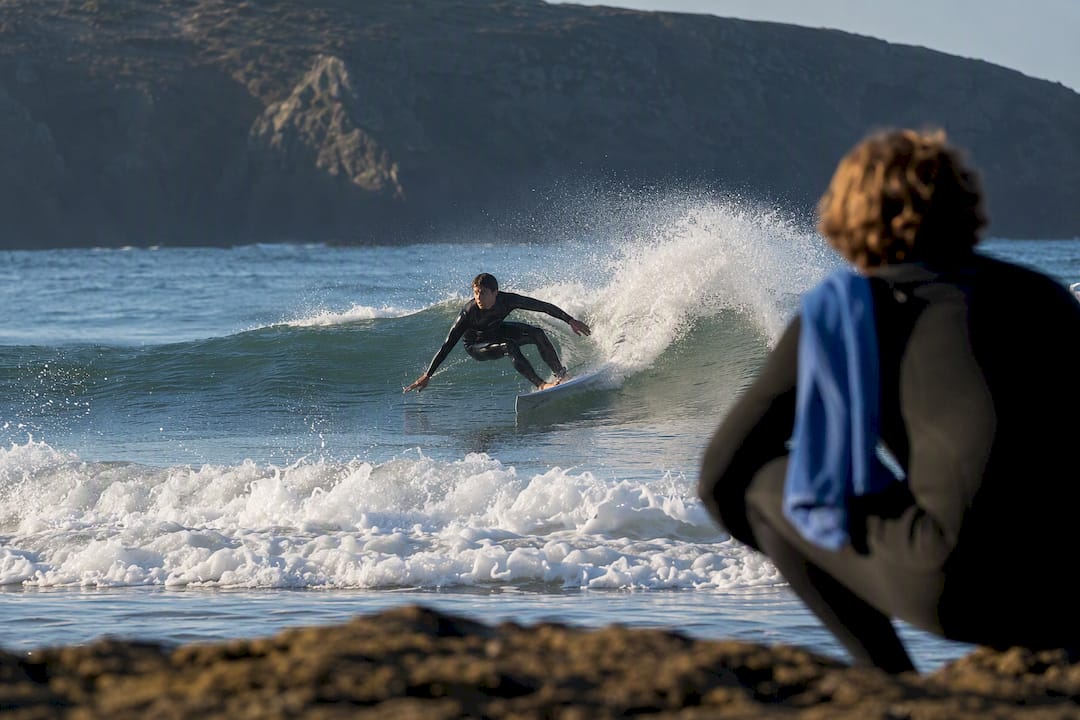
The fastest way to move past the intermediate plateau is a structured surf camp that pairs diagnostic coaching with small groups and video review, not another week of unguided beach breaks. Ripar Surf School & Surfcamp Portugal, based near Peniche and Ericeira, builds its intermediate programs around exactly that model. Check availability or ask about a diagnostic session before you book anything else.
TL;DR:
An effective intermediate surf camp relies on diagnostic assessments, small groups, and video analysis, not just more time in the water.
The program should include a structured progression focusing on paddle efficiency, takeoff timing, and linking maneuvers with measurable goals.
Coaches need recognized certification and experienced instructors who tailor instruction to specific surf spots and conditions.
Accommodation options vary, but the schedule centers around tide and swell conditions, with daily assessments and adjustments.
Progress is best measured through baseline and end-of-week evaluations, highlighting tangible improvements like linked turns or better wave reading.
Table of Contents
What Does a Surf Camp Nivel Intermédio Actually Teach?
A surf camp nivel intermédio, or intermediate-level surf camp, targets the skills that separate someone who can catch unbroken waves from someone who can actually surf them with control. That gap is technical, not about bravery, and closing it takes specific drills rather than more time in the water.
The Academy of Surfing Instructors organizes this stage into its Level 4 through 6 Surf Wise progression, which is a useful benchmark even if your camp doesn’t reference it by name. Those levels cover:
Paddling efficiently to the backline without wasting energy before the set arrives
Reading takeoff timing so you catch the wave at the right point, not late or too early
Trimming along the open face instead of pointing straight at the beach
Bottom turn mechanics: rail engagement, body position, and generating speed off the bottom
Top turns and cutbacks that redirect speed back toward the pocket
Linking two or more maneuvers in a single ride instead of one move and a kickout
ASI also flags a detail worth knowing before you pack: this is typically when surfers move off soft-top boards and onto fiberglass, since the extra glide and reactivity actually reward better technique instead of masking bad habits. A camp that skips this transition, or hands everyone the same soft-top regardless of ability, isn’t really coaching to level. The components that produce real gains are diagnostics on day one, focused in-water repetitions, and video analysis between sessions, not just more waves.
How Do You Choose the Right Intermediate Surf Camp in Portugal?
Portugal has no shortage of surf camps advertising “intermediate” programs, but the label alone tells you almost nothing. The difference between a camp that moves your surfing forward and one that just keeps you busy comes down to a handful of concrete questions.
Ask about coach-to-student ratio. A ratio of 1 coach to 4 or 5 students in the water is workable for intermediate drills; anything looser turns your “coached session” into a supervised free surf.
Confirm instructor certification. Look for ASI or an equivalent recognized qualification, and ask how long the instructor has coached at that specific break.
Ask if private lessons or video analysis are included or available as an add-on. Camps that build in video review tend to produce faster, more durable technical fixes than verbal feedback alone.
Get specifics on the program structure. A real intermediate week starts with an assessment and sets a progression plan with measurable goals, not a repeated daily template.
Ask which local spots the camp uses and why. Peniche/Baleal, Ericeira, Caparica, and Santa Cruz all offer different wave shapes, and a camp that can explain the match between spot and skill level knows what it’s doing.
Check accommodation type, distance to the surf, transport arrangements, meals, and equipment condition.
Red flags are easy to spot once you’re looking: no mention of an initial assessment, vague answers about instructor background, or a schedule that reads identically for every day of the week.
Pro Tip: Email the camp and ask one direct question: “What will my instructor be watching for in my bottom turn on day one?” A camp with a real coaching system will give you a specific answer. One that just says “we’ll see how it goes” is telling you something.
Which Coaching Methods Actually Speed Up Progress?
Not all coaching produces the same result, even at camps that look similar on a website. Ripar Surf School structures its intermediate coaching around a diagnostic assessment first, then small groups or private lessons built around what that assessment reveals, using local, certified instructors who know the area’s breaks day to day.
The tools that move the needle in the water are specific rather than general:
A diagnostic session that identifies your actual limiting factor, whether that’s positioning, timing, or rail control
Video analysis reviewed between sessions so you can see the gap between what you felt and what actually happened on the wave
Focused bottom-turn drills practiced in a repeatable, well-shaped section rather than random waves
Paddling technique sessions aimed at conserving energy for the maneuvers that matter
Repetition in appropriately sized, peeling waves rather than chasing bigger, less consistent sets
A detailed bottom-turn coaching breakdown makes a point that applies directly here: quality improvement comes from mechanics and repetition in a defined pocket, not from surfing more waves of random shape and size. That’s precisely why small, peeling breaks near Peniche often teach more in a week than a bigger, inconsistent beach would.
The gap between a coached rep and an unguided one isn’t intensity, it’s specificity. One measurable focus per set, whether that’s exit speed or rail angle, turns repetition into actual learning instead of just mileage.
Where Do You Stay and How Do the Days Flow?
Accommodation for intermediate camps in Portugal generally falls into three categories, and each suits a different kind of traveler. Surf houses work well for solo travelers or anyone who wants a social, shared environment. Bungalows and private studios suit couples or those who want quiet after a physical day in the water. Guesthouses sit in between, often with shared common areas but private rooms.
A typical intermediate day follows a rhythm built around conditions, not the clock:
Morning coached session, usually timed to the tide and swell rather than a fixed hour
Midday break for food and rest, sometimes paired with a short video review of the morning’s footage
Afternoon practice session, either coached or semi-independent depending on the day’s plan
Evening wrap-up or free surf, occasionally alongside a group activity
Most travelers fly into Lisbon, with transfers to Peniche or Ericeira running roughly 45 minutes to an hour depending on traffic. Wetsuits and board rental are standard inclusions at most Portuguese camps, though intermediate surfers should expect a shift toward performance shortboards or funboards rather than the soft-tops used for beginner lessons. Bring reef shoes or sandals for rocky entries, since not every break here has a sandy walk-in.
What Does a Realistic Intermediate Week Look Like?
A well-built week isn’t a repeated loop of the same lesson seven times. It builds, adjusts to swell, and ends somewhere measurably different from where it started. Here’s a realistic structure based on how in-market intermediate itineraries are actually built.
Day 1: Arrival and assessment. Coach observes your paddling, positioning, and wave selection to set your baseline.
Day 2: Paddling and positioning drills. Focused work on getting out back efficiently and reading the lineup.
Day 3: Coached out-back sessions. First real reps at picking unbroken waves and improving takeoff timing.
Day 4: Technical session on bottom turns. Drills isolating rail engagement and body position, often reviewed on video the same evening.
Day 5: Top turns and linking maneuvers. Building on the bottom turn to connect two movements per wave.
Day 6: Guided practice and video review. Applying the week’s corrections in a full session, then reviewing footage as a group or one-on-one.
Day 7: Free surf or private lesson add-on, often used to fine-tune whatever skill needs the most attention.
Swell size and direction will shift this order around. A good coach adapts the plan to conditions rather than forcing the schedule to match a printed itinerary regardless of what the ocean is doing that day.
What Does an Intermediate Surf Camp Cost in Portugal?
Week-long intermediate packages in Portugal generally include daily coached lessons, shared or private accommodation, and equipment, with prices varying by group size, lesson intensity, and lodging quality. Ripar Surf School’s Regular package starts from €304 per person, while the Intensive package, designed for surfers seeking more coaching volume, has a price range detailed on the school’s official pricing page.
Extras usually fall into a few predictable categories:
Private lessons for one-on-one correction on a specific weakness
Airport transfers, if not already bundled into the package
Video analysis sessions, where offered as a standalone add-on
Yoga classes for recovery and mobility between surf sessions
Book shoulder season (spring or fall) for more consistent, less crowded conditions and better rates. Ask directly about deposit requirements and cancellation terms before paying anything, and read recent reviews rather than the testimonials pinned to the homepage, since those tend to be curated for the best cases rather than the typical one.
What Do Guests Say About Intermediate Programs?
Feedback on intermediate surf camps tends to cluster around two things: whether the coaching actually addressed a specific weakness, and whether the accommodation and pace matched expectations. Surfers who’ve already got the basics down are usually the most critical audience a camp faces, because they can tell the difference between generic encouragement and a coach who’s actually watching their bottom turn mechanics.
The common thread in verified feedback for well-run intermediate programs is specificity: guests mention a particular correction that clicked, a particular wave where something changed, or a moment on video where they finally saw what the coach had been describing verbally. Vague five-star reviews that just praise “good vibes” are common everywhere in the surf industry and tell you almost nothing about coaching quality.
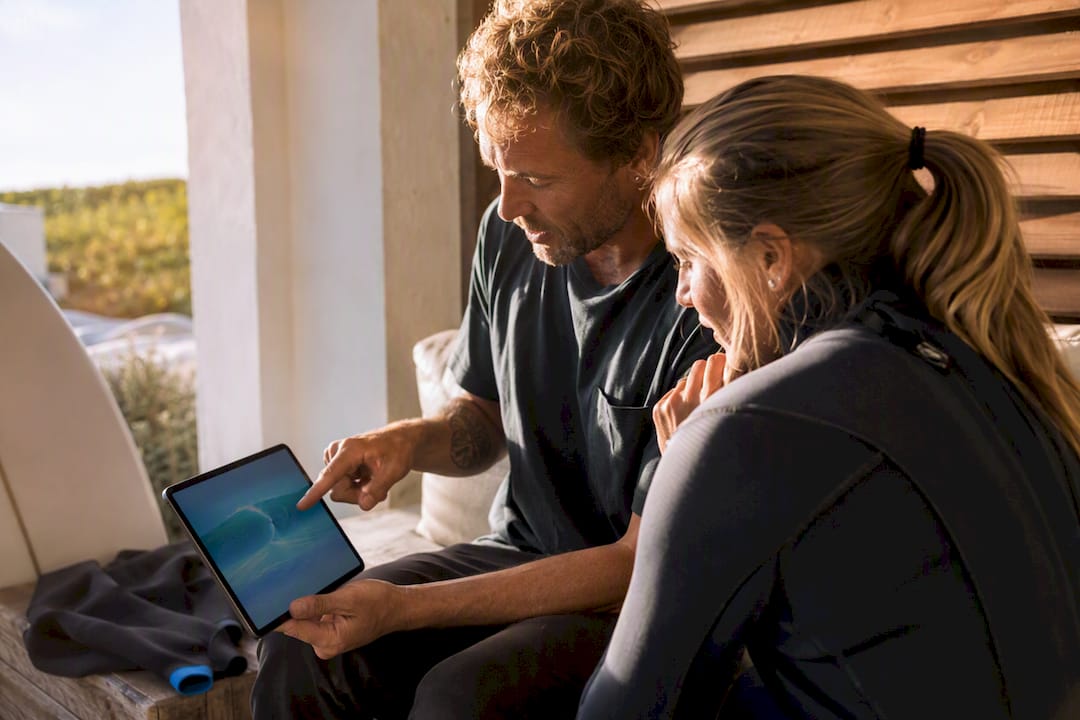
When you’re comparing camps, look for reviews that mention concrete outcomes: linking a cutback for the first time, catching unbroken waves consistently on the backline, or finally understanding wave selection at a specific break like Baleal or Ericeira’s Ribeira d’Ilhas. Reviews that reference a named instructor or a specific drill carry more weight than generic praise, since they suggest the reviewer actually went through a structured process rather than a loosely supervised week of surfing.
How Is Your Progress Measured During the Camp?
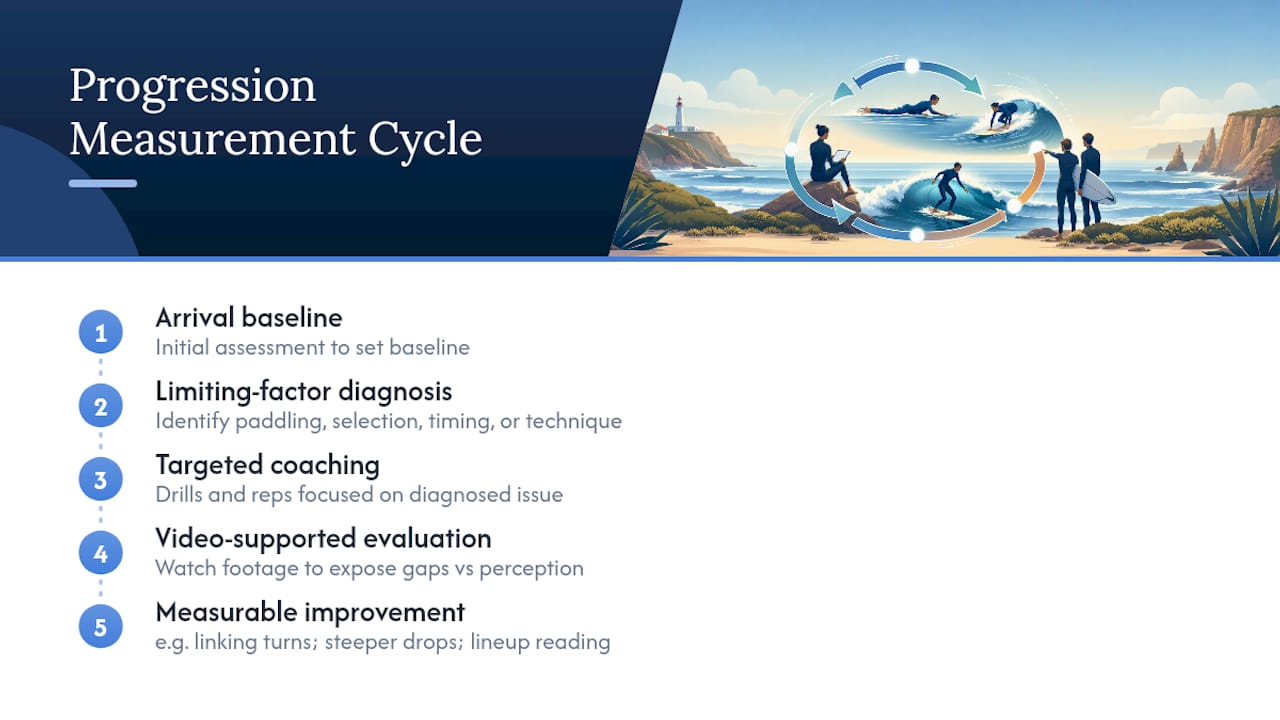
A credible intermediate program assesses you twice at minimum: once on arrival, to set a baseline, and again partway or at the end of the week, to measure what actually changed. The first session isn’t just a formality. It’s how a coach decides whether your limiting factor is paddling efficiency, wave selection, timing, or technique on the wave itself, and that diagnosis shapes everything that follows.
Progression evaluation during the week typically combines direct observation with video review, since watching your own footage exposes gaps between what you think you’re doing and what’s actually happening on the wave. A coach might track something as specific as your exit speed off the bottom turn or how consistently you’re catching waves before they’ve already broken.
By the end of a well-run week, you should be able to name at least one thing you couldn’t do on day one that you can do now, whether that’s linking two turns, consistently making the drop on a steeper wave, or simply reading a lineup at a new break without hesitation. If a camp can’t articulate what improved and how they know, the assessment process probably wasn’t real to begin with.
Fernando’s Perspective: Coaching Intermediates in Portugal
The technical gap I see most often in intermediate surfers isn’t ability, it’s habit. Most have taught themselves to catch waves through trial and error, which works until you hit a plateau that repetition alone can’t fix. What actually moves someone forward is watching their own footage and seeing, for the first time, that their back leg collapses on every bottom turn, or that they’re paddling into position a half second too late.
Portugal’s coast helps here in a way that’s easy to underestimate. Spots like Baleal and the beaches around Lisbon offer enough variety in wave shape that a coach can match the break to the specific skill being worked on that day, rather than forcing every lesson into whatever the nearest beach happens to be doing.
Ripar’s small-beach-village setting near Areia Branca matters more than it sounds. Fewer surfers in the water means more usable waves per session, and that repetition is where the real learning happens.
— Fernando
Book Your Intermediate Surf Camp With Ripar Surf School
If you’ve read this far, you already know what separates real progress from another week of guessing: diagnostic coaching, small groups, and video feedback tied to specific goals. That’s the structure Ripar Surf School builds every intermediate program around, from Praia Areia Branca near Peniche and Ericeira, without the mass-tourism crowding that dilutes coaching time at bigger surf towns.

For surfers who want a full week of structured progression, the Surf Camp package covers Regular and Intensive options with accommodation included. If you’d rather test the coaching first, the 5 Lessons Surf Pack or a standalone Private Lesson gives you a one-on-one diagnostic without committing to a full package. Lodging ranges from shared surf houses to private options like the Limoeiro Pool House and Studio Martins Apartment, depending on how much privacy you want after a day in the water.
Check dates and reserve your spot through online booking, or book your surf camp week directly through the surf camp booking page.
Sources
FAQ
What Level Do I Need to Join an Intermediate Surf Camp?
You should already have efficient pop-ups and be catching whitewater waves reliably before moving to intermediate coaching focused on backline sessions and wave selection.
How Long Does It Take to See Real Progress?
A focused week with daily coaching and video review typically produces at least one measurable change, such as a cleaner bottom turn or better wave selection, though full comfort with linking maneuvers usually takes several sessions beyond that.
Does Ripar Surf School Offer Private Coaching for Intermediates?
Yes, Ripar offers Private Lessons priced from €100 to €190 depending on session length and format, alongside its group and surf camp packages.
What Board Should I Use as an Intermediate Surfer?
Most intermediate surfers transition from soft-top boards to fiberglass shortboards or funboards, since the added glide and responsiveness reward improving technique rather than masking it.
How Much Does a Week-Long Intermediate Surf Camp Cost?
The school’s surf camp packages come in different options; current prices are available on the official pricing page.
Which Portuguese Surf Spots Work Best for Intermediate Training?
Peniche/Baleal, Ericeira, Caparica, and Santa Cruz are the most commonly used spots for intermediate coaching, each offering different wave shapes suited to specific skills like bottom turns or timing drills.
Recommended
Comments