

Match Your Skill to Ericeira Surf Months: When to Go and What to Pack

Beginners get the friendliest waves from June through September at beach breaks. Intermediates should target April through June or September through November. Advanced surfers want October through March, when Coxos and Pedra Branca fire on long-period groundswell. If you only get to pick one window, take September or October: swells are already building past 1.6 meters with 10.5 to 11.1 second periods, and the summer crowds and wind have mostly cleared out.
TL;DR:
The best months for beginners are June through September, when swell heights are manageable and wind conditions are more forgiving.
Intermediate surfers should aim for April to June or September to November for optimal swell growth and cleaner conditions.
Advanced surfers will find the most powerful and organized swell from October to March, but should be cautious of dangerous reef and reef breaks.
Long-period groundswell, which produces more organized waves, dominates from October to March, compared to the flatter summer months.
Booking early for July and August is essential, especially for accommodations and lessons, due to high demand during peak summer.
Table of Contents
When Should You Go to Ericeira for Surfing?
The honest answer depends less on the calendar and more on what kind of session you’re chasing. Ericeira runs four distinct seasons for surf, and each one rewards a different type of surfer.
Summer (June to August) is the forgiving season. Average swell heights sit around 1.4 to 1.7 meters with periods of 8.5 to 9.9 seconds, small enough for longboards and first-timers to find their footing. The catch is wind. Northerly trade winds blow 20 to 40 kph on up to 44% of summer days, turning glassy mornings choppy by early afternoon.
Autumn (September to November) is when Ericeira actually looks like the surf town everyone talks about. Groundswell lengthens out, periods stretch to 10.5 to 11.1 seconds by September, and the wind backs off. This is the shoulder season locals quietly protect from tourist crowds.
Winter (December to February) belongs to the North Atlantic. Swells regularly hit 2.0 to 2.6 meters with periods pushing past 12 seconds, and water temperature drops to 14 to 16°C. This is serious-surfer territory, not a place to be learning your pop-up.
Spring (March to May) is the quiet reset. Swell eases off winter’s peak, lineups thin out, and the water is at its coldest, around 15°C in March, before slowly warming.
A quick side-by-side:
Summer: Small, playful, windy in the afternoon. Best for beginners on beach breaks.
Autumn: Long-period, clean, consistent. Best all-round season.
Winter: Big, powerful, cold. Advanced surfers and reef breaks only.
Spring: Transitional, uncrowded, cool water. Good for progression if you watch the forecast.
Swell snapshot: Winter averages run 2.0 to 2.6 meters at 12+ second periods, nearly double the height and a third longer in period than a typical summer day at 1.4 to 1.7 meters and 8.5 to 9.9 seconds. That period difference matters more than the height. Longer periods mean more organized, powerful waves rather than choppy wind swell.
Ericeira’s reputation isn’t accidental. The stretch of coastline from Foz do Lizandro to São Julião was named a World Surfing Reserve in 2011, one of only a handful in the world, protecting the quality and consistency of breaks like Ribeira d’Ilhas and Coxos.
What’s the Best Time to Surf in Ericeira for Your Level?
Skill level should drive your dates more than the month name on the calendar. Here’s how to match your ability to a realistic window.
Beginners: June through September. Head to the beach breaks south of town, Foz do Lizandro and São Julião, where sand bottoms mean a forgiving wideout and the average summer swell of 1.4 to 1.7 meters stays manageable for whitewater practice and early green-wave attempts. Book sessions for mid-tide and early morning, before the trade wind picks up and turns the surface bumpy. If you’ve never surfed Portugal before, a guided lesson shortens the learning curve dramatically compared to renting a board and guessing at the lineup.
Intermediates: April through June, or September through November. These shoulder months hand you the best trade: swell that’s grown up from summer’s soft chop but hasn’t yet turned into winter’s heavy groundswell. Ribeira d’Ilhas is the obvious target on cleaner, longer-period days. It’s a point break with enough consistency to let you string turns together instead of scrambling for position. Watch the forecast closely in April and September specifically. Conditions swing fast in these transitional weeks, and the surfers who check swell and wind charts daily get noticeably better sessions than those who just show up.
Advanced: October through March. This is when Coxos and Pedra Branca earn their reputation. Long-period groundswell, often generated by extratropical storm tracks crossing the North Atlantic, arrives with enough organization to make these reef and point breaks genuinely world-class. It’s also when things get dangerous fast. Heavy swell days at Coxos can produce powerful barrels over a shallow reef shelf, and Pedra Branca’s exposed rock formations punish anyone caught inside on a big set. If you’re new to the area even as an experienced surfer, hiring a local guide or checking in with an instructor before your first session pays off. They know which peaks are firing and which ones are best left alone that day.
One thing worth saying plainly: Ericeira’s core identity is built around intermediate to advanced reef and point breaks, not gentle learning waves. If you want a guaranteed mellow week regardless of season, nearby Baleal near Peniche offers more consistently forgiving conditions for absolute beginners.
Month-by-Month Guide to Ericeira Surf Conditions
Here’s a practical breakdown for planning exact travel dates, month by month.
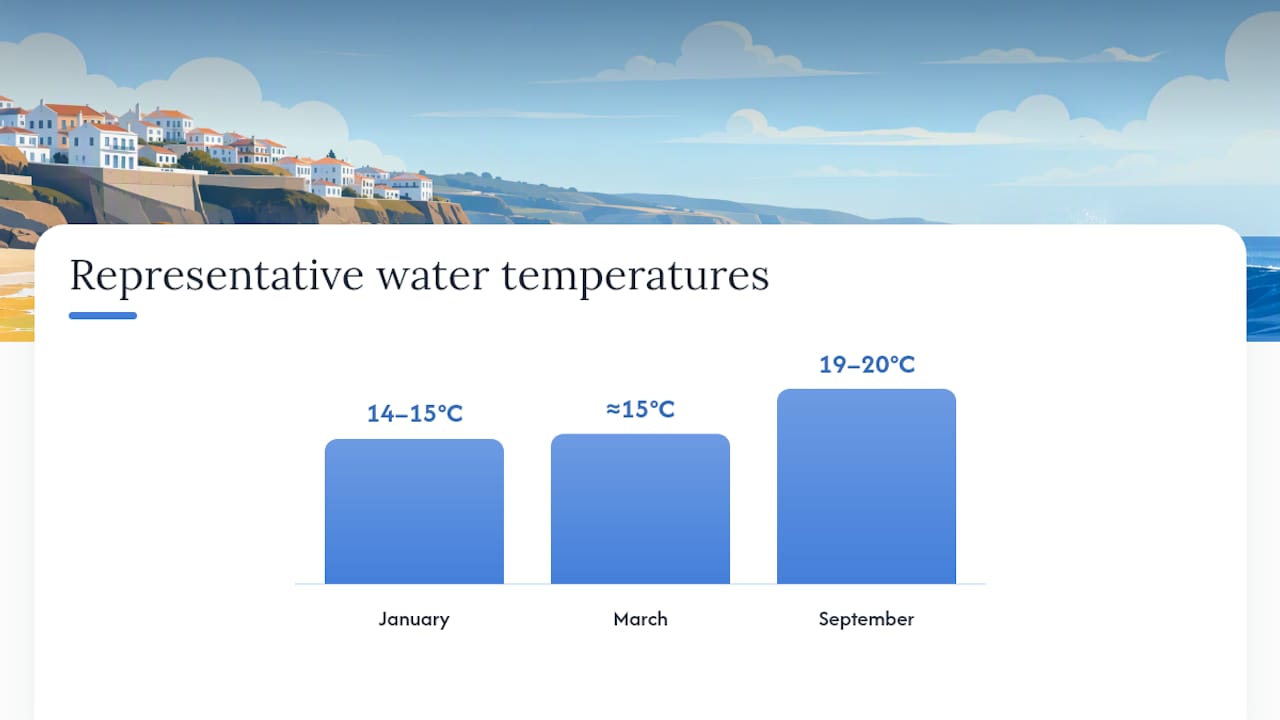
January: Big winter groundswell, 2.0 to 2.6 meters, periods over 12 seconds. Cold water near 14 to 15°C. Advanced only, and rough for anyone still learning.
February: Similar to January. Powerful, consistent, cold. Not a beginner month.
March: Swell starts easing but water hits its coldest point, around 15°C. Good for advanced and confident intermediates willing to layer up.
April: Transitional and unpredictable. Watch the charts daily. Intermediate surfers who time it right get some of the best uncrowded sessions of the year.
May: Trade winds start creeping in. Swell softens toward summer averages. Decent for intermediates in the morning before wind picks up.
June: Beginner season opens. Smaller swell, warmer water, more forgiving beach breaks.
July: Peak tourist month. Warm water, small swell, biggest crowds of the year at Foz do Lizandro and São Julião.
August: Same profile as July. Warmest water of summer, but afternoon wind chop is common.
September: The standout month. Water warms to its yearly peak around 19 to 20°C, swell builds to 1.6 to 2.0 meters with periods stretching past 10.5 seconds, and crowds thin as tourist season winds down.
October: Arguably the single best month to visit. Consistent groundswell, clean lines, water still comfortable, and far fewer people in the lineup than summer.
November: Swell keeps building toward winter size. Good for intermediates and advanced surfers who don’t mind cooling water.
December: Winter arrives in full. Big, powerful, cold. Reserve for experienced surfers only.
Seasonal reality check: October to March is statistically the most consistent stretch of the year for long-period groundswell, while May through August is the flattest window with the highest frequency of onshore trade wind. If your trip dates are flexible, that six-month split is the single most useful piece of planning data you’ll find.
December through February deserves a specific warning for beginners: the combination of cold water, powerful swell, and shorter daylight makes these months genuinely unsuitable for anyone still learning to read waves. Save that trip for summer or early autumn instead.
Which Ericeira Surf Spots Match Your Skill Level?
Matching the right break to your ability isn’t optional here. Ericeira’s coastline mixes gentle sand-bottom beaches with serious reef setups, often within a few minutes’ drive of each other.
Foz do Lizandro and São Julião: Sand-bottom beach breaks south of town, ideal for beginners because a fall doesn’t mean landing on rock. Waves here are generally softer and more forgiving, especially at mid to low tide.
Ribeira d’Ilhas: A point and reef setup that’s the intermediate staple of the region, known for long, predictable rides and clean peaks on the right swell direction. It’s also one of the breaks covered under the World Surfing Reserve designation.
Coxos: A world-class reef break for advanced surfers only. Shallow, fast, and unforgiving on bigger days, but capable of producing some of the best barrels in Europe when the groundswell lines up.
Pedra Branca: Another advanced-level reef, exposed and rocky, best approached with local knowledge of the tide and swell direction before paddling out.
Local etiquette matters more here than in most tourist surf towns, because the lineups skew experienced. Learn the paddle channels before you paddle out, respect priority on the wave, and don’t sit inside on a peak you haven’t earned. Ericeira’s surf culture rewards patience and punishes surfers who paddle straight to the top of a crowded lineup without paying attention to who’s already riding.
Pro Tip: Check conditions in person before committing to a spot. Wind and swell direction change fast along this coastline, and a break that looked perfect on the forecast app can be blown out by the time you arrive.
What Gear and Forecast Habits Do You Need for Ericeira?
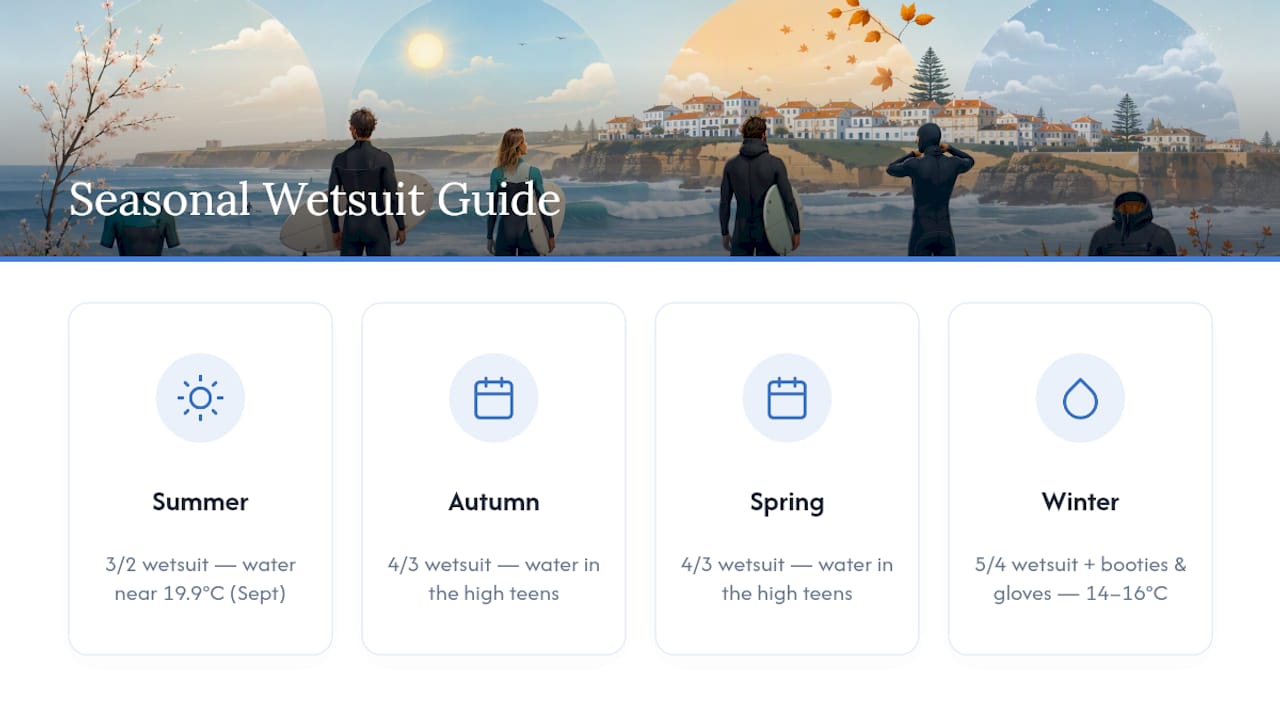
Wetsuit choice changes completely by season. In summer, a 3/2 does the job comfortably. Shift to a 4/3 for autumn and spring, when water temperatures hover in the high teens. Winter demands a 5/4, plus booties and gloves once temperatures drop toward 14 to 16°C.
Tide and wind determine whether a session is worth paddling out for. Beach breaks like Foz do Lizandro tend to work best around mid tide, while reef spots like Coxos need a specific tide and swell direction combination to avoid exposing the rock shelf. Offshore wind (blowing from land to sea) cleans up wave faces, while the onshore trade winds common in May through August create the choppy conditions surfers try to avoid.
Get comfortable reading swell period alongside height. A 1.5 meter swell at 9 seconds feels weak and disorganized. The same height at 12 seconds arrives with real power. Most surf forecast tools display both figures side by side, so check period before deciding a day is worth the drive.
Quick numbers to remember: water swings from a summer high near 19.9°C in September down to roughly 15°C in March, a four to five degree range that decides your entire wetsuit strategy for the trip.
For a packing shortlist: a versatile board suited to your level, the right wetsuit thickness for your travel month, booties and gloves if you’re coming between December and March, and always a spare leash. Our full packing checklist covers the rest in more detail.
How Do You Get to Ericeira and When Should You Book?
Ericeira sits roughly 45 to 55 minutes from Lisbon by car, taking the A8 motorway and then the N116. If you’re not driving, Mafrense coaches run scheduled routes from Lisbon directly into town, a straightforward option for surfers traveling without a rental car.
Timing your booking matters almost as much as timing your trip. July and August fill up fast, both for accommodation and for lesson slots, so reserve well ahead if those are your only available dates. Shoulder season travelers get far more flexibility and usually better rates.
Drive time from Lisbon: approximately 45 to 55 minutes via A8 and N116.
Bus option: Mafrense coaches connect Lisbon to Ericeira on a regular schedule.
Book early for July and August; shoulder months allow last-minute flexibility.
Beginners and anyone visiting during unpredictable winter stretches benefit strongly from a structured surf camp rather than going it alone.
If lessons or a multi-day package fit your plans, our surf camp in Praia Areia Branca is built around exactly this kind of skill-matched, season-aware approach.
Why a Local Surf School Matters in Ericeira’s Changing Conditions
A local surf school has run surf lessons and surf camps from Praia Areia Branca, near Peniche and Ericeira, since 2001. Our certified local instructors know which breaks are firing on any given morning and which ones to skip. That local read matters most for beginners, because Ericeira’s conditions shift within hours, not days. A guided lesson turns a confusing, wind-affected morning into real progress instead of a wasted session paddling in the wrong spot.
Ready to Plan Your Ericeira Surf Trip?
Picking dates based on swell charts alone only gets you halfway there. What actually decides whether your trip goes well is whether you’re on the right wave for your level, on the right tide, with someone who knows the coastline reading the conditions with you. If you’re coming as a beginner or intermediate and want that guidance built in from day one, book a surf lesson online with our team at Praia Areia Branca, or look into our group surf lessons if you’re traveling with friends or family. Either way, you’ll spend less time guessing and more time actually surfing.
The Timing Question Nobody Answers Honestly
Most surf guides treat “best time to visit” as a single, universal answer, and that’s the core problem with how this topic usually gets covered. Ericeira doesn’t have one best season. It has three, depending entirely on who’s asking. The conventional advice, pointing everyone toward autumn, isn’t wrong exactly. It’s just incomplete, because it assumes every reader is already an intermediate or advanced surfer chasing quality groundswell.
What the data actually supports is a matching exercise, not a ranking. A beginner chasing October groundswell at Coxos is setting themselves up for a bad week, maybe a dangerous one. An advanced surfer showing up in July for “the season everyone recommends” is going to find soft, wind-affected mush and wonder what the hype was about.
Prioritize honesty about your own skill level before you prioritize the calendar. Once that’s settled, the month-by-month numbers in this guide do the rest of the work for you.
— Fernando
Sources
Recommended
Comments